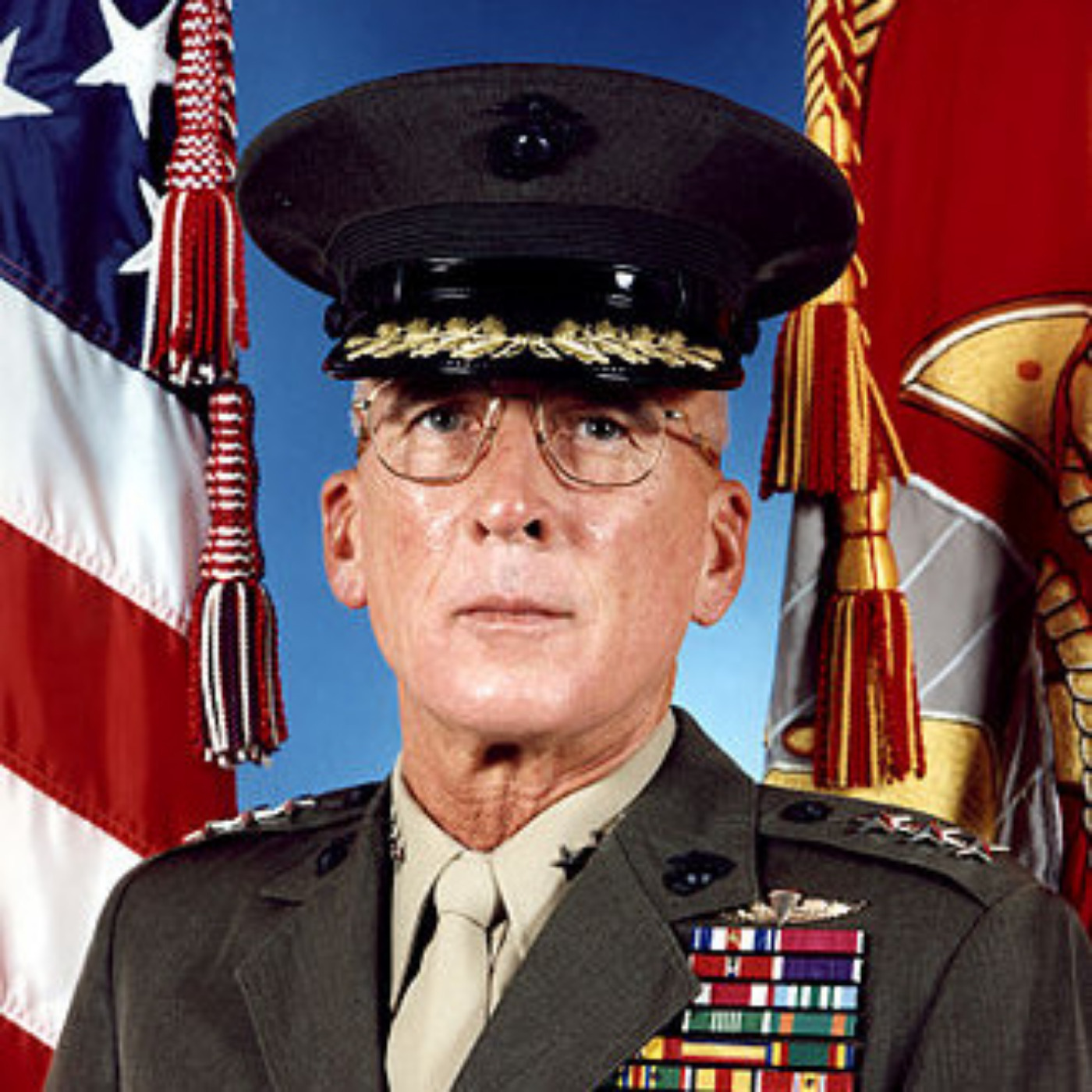
241: Lt. General Paul Van Riper USMC, part 1: Thoughtful strategy before technology episode artwork

EPISODE · Nov 6, 2019 · 1H 12M

241: Lt. General Paul Van Riper USMC, part 1: Thoughtful strategy before technology

from This Sustainable Life

Why a military general? Isn't the US military one of the greatest polluters on the planet?My goal is to bring effective leadership to the environment and your life because spreading facts, figures, doom, and gloom isn't doing it. Leadership is about people. Technology and innovation have historically increased pollution, as I described in other episodes. Nearly everyone promoting technological solutions is unwittingly continuing the drive toward efficiency that created our environmental situation and continues to augment it.They miss that increasing efficiency doesn't necessarily lower total waste, which is our problem, as a glance at any plastic-covered beach or Beijing sky will attest. Again: efficiency has overall increased total waste.I invited Rip after reading about the Millennium Challenge, where, in preparation for Desert Storm, the military invited him to come out of retirement to lead the "red team"---a ragtag group to fight the "blue team", representing the 21st century US military strategy using every advantage they could---technology, data, weaponry, size, intelligence, and so on.It sounded like a setup---not a test but a cake walk to showcase what they considered an unstoppable, titanic force.Titanic might be the best term because he mopped up the floor with them. I'll put links in the text for write-ups on this historic David and Goliath exchange.You'll hear in this conversation why they so miscalculated and how he saw things differently that worked. More importantly, I hope to focus you on the value of focusing on people.Rip shares the inside story you won't find in those accounts. I was rivited, and he built it up from talking about his beginnings as a lieutenant, learning strategy like Von Clausewitz that remains timeless, US military development since WWII and Vietnam.If the relevance to the environment isn't obvious, I'll clarify. Acting environmentally means facing an apparently unstoppable juggernaut. It's not CO2, plastic, and mercury but the beliefs and goals driving people to keep doing what they used to---meat, flying, having as many kids as they feel like, buying SUVs, and so on.Everyone who says that's human nature is confusing following a system. Systems can change. Growth wasn't always a goal, nor did people ship their garbage halfway around the world, nor did it take centuries to decompose. Cultures that had to deal with their garbage learned to live sustainably.So can we. We can learn from Rip's teamwork, historical knowledge, vision, and all the things that make up leadership to lead ourselves and humanity to overcome our Goliath: the beliefs keeping us doing what got us here.Rip has made a big impression on me. I don't know what makes a general. Talking to him, I think it means learning at a cultural level, or learning deeply about people.I think we who want to influence human effects on the environment can learn from this experience and view. He talked about senior leadership. In my view, we lack senior leadershipPBS Frontline interview with Paul Van RiperPBS Nova interview, The Immutable Nature of WarWikipedia on the Millennium Challenge 2002 Hosted on Acast. See acast.com/privacy for more information.

Why a military general? Isn't the US military one of the greatest polluters on the planet?My goal is to bring effective leadership to the environment and your life because spreading facts, figures, doom, and gloom isn't doing it. Leadership is about people. Technology and innovation have historically increased pollution, as I described in other episodes. Nearly everyone promoting technological solutions is unwittingly continuing the drive toward efficiency that created our environmental situation and continues to augment it.They miss that increasing efficiency doesn't necessarily lower total waste, which is our problem, as a glance at any plastic-covered beach or Beijing sky will attest. Again: efficiency has overall increased total waste.I invited Rip after reading about the Millennium Challenge, where, in preparation for Desert Storm, the military invited him to come out of retirement to lead the "red team"---a ragtag group to fight the "blue team", representing the 21st century US military strategy using every advantage they could---technology, data, weaponry, size, intelligence, and so on.It sounded like a setup---not a test but a cake walk to showcase what they considered an unstoppable, titanic force.Titanic might be the best term because he mopped up the floor with them. I'll put links in the text for write-ups on this historic David and Goliath exchange.You'll hear in this conversation why they so miscalculated and how he saw things differently that worked. More importantly, I hope to focus you on the value of focusing on people.Rip shares the inside story you won't find in those accounts. I was rivited, and he built it up from talking about his beginnings as a lieutenant, learning strategy like Von Clausewitz that remains timeless, US military development since WWII and Vietnam.If the relevance to the environment isn't obvious, I'll clarify. Acting environmentally means facing an apparently unstoppable juggernaut. It's not CO2, plastic, and mercury but the beliefs and goals driving people to keep doing what they used to---meat, flying, having as many kids as they feel like, buying SUVs, and so on.Everyone who says that's human nature is confusing following a system. Systems can change. Growth wasn't always a goal, nor did people ship their garbage halfway around the world, nor did it take centuries to decompose. Cultures that had to deal with their garbage learned to live sustainably.So can we. We can learn from Rip's teamwork, historical knowledge, vision, and all the things that make up leadership to lead ourselves and humanity to overcome our Goliath: the beliefs keeping us doing what got us here.Rip has made a big impression on me. I don't know what makes a general. Talking to him, I think it means learning at a cultural level, or learning deeply about people.I think we who want to influence human effects on the environment can learn from this experience and view. He talked about senior leadership. In my view, we lack senior leadershipPBS Frontline interview with Paul Van RiperPBS Nova interview, The Immutable Nature of WarWikipedia on the Millennium Challenge 2002 Hosted on Acast. See acast.com/privacy for more information.

NOW PLAYING

241: Lt. General Paul Van Riper USMC, part 1: Thoughtful strategy before technology

0:00 1:12:00

No transcript for this episode yet

We transcribe on demand. Request one and we'll notify you when it's ready — usually under 10 minutes.

Big Old Life: Heather Blackbird interviews people on planet earth. Heather Blackbird loves asking questions. This podcast is a learning experience. Join me, Heather Blackbird, as I talk to people about their lives. Frequency of new episodes is a little all over the place and I'm learning as I go. Big Old Life is a small way of talking about the vastness of life, one person at a time. If you are reading this or found this podcast it's probably because someone you know gave you a link to it. :) Explicit Tales Of A Superstar DJ The Insomniac Spun seemingly out of nowhere from her complacent life in the corporate world, turned seemingly overnight from 16-Hour shift work and into the life of a literally starving artist and working musician, The Protagonist navigates her supposed rise to fame and superstardom on a journey through spiritual awakening, coming-of-age, and intimate self-realization--guided by an omnipresent force and equipped with the power of love, magic, and music. {Enter The Multiverse.} [The Festival Project] The Festival Project, Inc.™ is a multidimensional multimedia platform which encompasses exploratory and artistic social personifications and expressions on cosmic theory, spirituality, growth, health & wellness, philosophy and theoretic dynamics in entertainment such as music, design, film, television, radio, dance and festival culture, art, fashion, literature, and science. The Festival Project™ and its subsidiary Non-Profit, The Collective Complex © aims to challenge modern artistic and philosop Explicit The Sacred +Profane Podcast nephtaragrace The Sacred + Profane Podcast is a provocative conversation dedicated to cementing a better future for all. We specialize in unpacking the nuances of what is considered sacred and profane, particularly focusing on sex, death, and all that pertains to the circle of life. Our aim in focusing on such ”taboo” subject matter is to demystify what is unconscious, bring to light what has been known for centuries as ”the occult,” and empower the rapid transformation that is occurring on the Planet. Explicit Northern Sass and Southern Class Tay and Ani Come sit in on girl talk with Tay and Ani as we discuss life in Texas, girl math, food, wine and roasting each other. Explicit

Frequently Asked Questions

How long is this episode of This Sustainable Life?

This episode is 1 hour and 12 minutes long.

When was this This Sustainable Life episode published?

This episode was published on November 6, 2019.

What is this episode about?

Why a military general? Isn't the US military one of the greatest polluters on the planet?My goal is to bring effective leadership to the environment and your life because spreading facts, figures, doom, and gloom isn't doing it. Leadership is about...

Can I download this This Sustainable Life episode?

Yes, you can download this episode by clicking the download button on the episode player, or subscribe to the podcast in your preferred podcast app for automatic downloads.
URL copied to clipboard!