Markets, speculation, and risk. This is the Chat with Traders podcast. You're listening to episode 243. I'm Tessa, co-host of Chat with Traders. This is a special episode with Aaron hosting alone with our guest. It doesn't contain talk on how to read charts, how to pick the direction of stocks, or how to handle your trading psyche. But for some of you, this episode will spin your mind and bend any preconceived notions that you might have about trading because it shines a spotlight on what happens if you were to uncover a structural inefficiency that can be exploited.
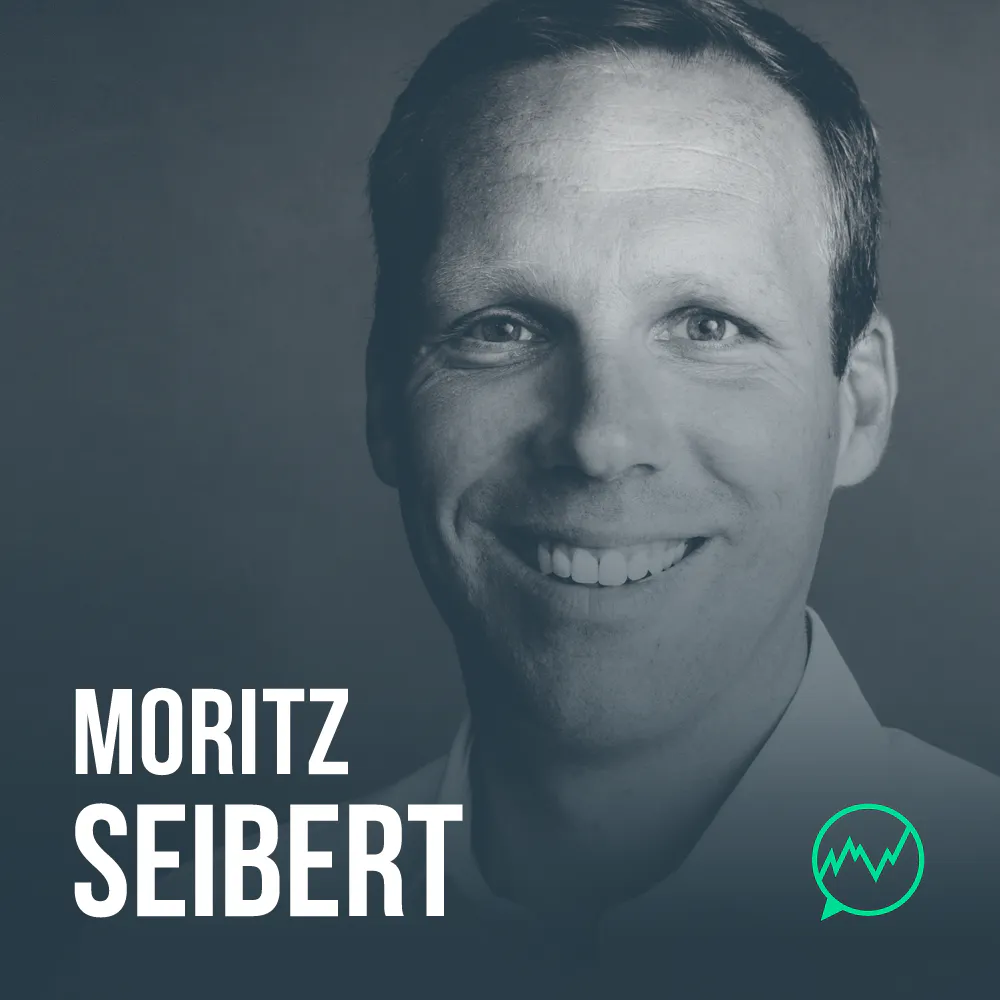
The featured guest on this episode is Moritz Siebert. A few of you may already know Moritz, and if so, you probably know him as the trend follower and for his crypto-related interests. But almost no one knows that he was actively arbitraging warrants on Germany's DAX for nearly three and a half years. He's never spoken about it publicly until now on this episode. You'll soon hear Aaron has Moritz detail out all aspects in his recap. The market, the efficiency, the trade, and the inevitable decay.
Now we could be totally wrong, but this might be easier to digest for those who have basic knowledge about options and volatility. But regardless, it might be worth taking time to understand just from a high level because many traders have launched their careers on the back of an obscure edge. To help with this, Moritz has also written an assisting article, which we've linked to in the show notes. Plus in the show notes, you can view the incredibly smooth equity curve Moritz generated from trading this strategy. See the show notes at chatwithtraders.com slash 243.
Finally, as I alluded in the prior episode, this is Aaron's final episode hosting Chat with Traders. If you'd like to keep in touch with Aaron and stay connected, then the best way is to follow his personal Twitter account at Aaron Fifield. Erin, on behalf of myself and our listeners, we thank you so much for all that you do with creating this podcast and bringing on such great guests to the show all these years. This podcast has been making a great impact and is a valuable contribution in the trading community. We've listened to you since episode one and witnessed you develop into one of the greatest interviewers in trading and you truly pioneered podcasting in the trading world. And we thank you again and wish you all the best in your next chapter.
Listeners, don't go anywhere. As Chat with Traders continues to bring you more great episodes. Again, this is episode 243. Now, coming to you from Germany, here is Moritz Siebert. Before we walk through the actual trade and its specifics, I think it'd be beneficial just to take a few moments to give some context of the product slash market of which you were trading. Now, I know this strategy or this trade used warrants. You were trading warrants. I understand that they share some similarities to options.
In what ways are they the same? And in what ways do they differ? And just generally, what are warrants? So warrants are like options. They have essentially the same economics. An option is something that is quoted and traded on an exchange, such as, for instance, the Eurex Exchange or the CME. And a warrant is an option that is wrapped into a note or paper that's issued by a bank. So we're talking about a bank such as, say, HSBC or Citibank or Goldman issuing a warrant. So they're essentially issuing an option that is wrapped into the bank's paper, and they make that available to retail traders. That is essentially the key difference. Economics are the same.
They're quoted a little bit different. I'll get into that in a bit. But essentially, it's like an option, just as you buy it back. Okay. So when you say it's issued by a bank, I mean, what does that mean? And you use the term bank's paper again, like what does this kind of refer to? Right. Let's start at the beginning. So there's a big structured product market, not only here in Europe, but I think it also exists in Australia. It definitely does exist in the US, but in Asia as well. But Europe has a very large structured products market. That is a market where banks offer specific investment products to retail clients, sometimes professional traders as well, but mostly retail clients. And it's kind of like slicing and dicing.
put options and call options and putting things together where you can have an upside participation, say, linked to the Eurostox 50 index, but with less of a downside and it has all the callable features. So all these type of things, that is a space that is dominated by the banks. And the banks will issue the products. Now, in order to make them tradable, in order for these products to have an ISIN or a QSIP code, they need to be wrapped or they need to be packaged into something that becomes a tradable product. And that is usually a note. And a note is a debt instrument that's issued by the bank. They would issue that paper. I call that paper. It's a note.
the terms of that node would essentially stipulate that the node is supposed to track the performance of an index or it's supposed to track the performance of whatever strategy, you know, underlies the product. So that is how that works. Okay. And these are exchange listed products, just like options. They are exchange listed, but not on the Eurex exchange. They are listed on specific exchanges that cater to the structured product retail market, and they're also traded OTC. Think about Robinhood and retail brokers. You would have the same here in Germany and all around Europe. You will have brokers through which you can access these products. There are quite a few. I was using all of them. I can explain to you why I did that, because I needed to get the best execution.
rates and they were changing all the time. So I needed to flip around between brokers. But let's say there's like 10 retail brokers and these brokers, they connect to the banks directly. So that's essentially an OTC trade. There's no exchange. And the bank would quote its bits and offers to the brokers. And then you can just trade against the broker. Okay. And when you were describing it there, you said that these are products kind of packaged specifically for retail customers. Why is that the case? Like why would retail not just trade options? Is it
Are they creating a product that's kind of more accessible through like more retail brokers? Like to trade the actual options, you need to have a specific options broker, right? You hit the nail on the head. That's exactly the reason. You know, I do trade options. I do trade, you know, DAX options and futures options on the S&P 500. But in order to do that, you need to have a futures account or a margin account. You know, Interactive Brokers is an example. You can open an Interactive Brokers account or, you know, I do some of my trading through RJO. But these are futures brokers. And while everybody can go to them and try to open an account, it is...
Not as easy to open an account there as it is to open an account with, say, OnVista brokers or Cortel Consos and Comdirect. I mean, all these retail brokers where you can essentially just show up with, I don't know, a thousand bucks, two thousand bucks and open an account and they will let you in. Whereas if you want to open, I'm not sure what the requirements are now to open an account with interactive brokers and margin accounts and then start trading options. But I guess you need to have substantially more money than that, right? So retail traders don't usually do that.
And that's why there is that specific market for them. Okay, understood. So who are the predominant counterparts to the trades? Like it is the banks behind most of these trades or is it other retail participants as well who might be posting bids and offers? You're only trading against the banks. And this is an interesting part here because on a two-sided market, such as, for instance, on the Eurex exchange, which is where the options are traded on the DAX. And by the way, that's the only underlying I traded. I'll explain to you in a second why that is. But if I trade on the Eurex exchange, I might be facing a market maker, right? So market maker quotes bits and offers. And if there's no other person or other trader taking the other side of my trade, that trader will essentially create inventory and assume the position, right? And then hedge. But there is a chance that if I buy somebody else in the market sells and...
the market maker just sits in the middle and collects the spread. That is great for the market maker, but that's not always the case. In the case of the warrants market in the banks, there is never another trader because it's a one-sided market. The banks only sell warrants. They don't allow...
traders to go short. And that is important to understand because coming back to that interactive broker's margin account, I can open a short position because I trade on margin and there's a clearinghouse behind it on the exchange that manages the risk, right? And they would boot me out of the position if, or margin call me, if the position went against me and didn't have the funding in the account to support the position. That is not something that a bank would ever be willing to do in the retail market against or with traders who they absolutely have no idea who they are. They don't want the retail traders to open naked short positions on essentially convex products.
So they would only sell. It's a one-sided market. They only show offers. You can buy the warrant from them to get along the warrant and you can sell it back to them to close the position, but you cannot go short. So you will always trade against the bank and you will always create inventory for the bank. If I buy a call option.
I'm Delta long, the bank's Delta short, and they will need to hedge. They will need to buy Delta in order to hedge that position on their book and all the other Greeks as well. But it's always against the bank's balance sheet. Okay. So when you come to, let's just say you're long a warrant and you come to sell it, is there a bid there for you to hit or does the bank just take it back off you? Yeah, they will show bits, but not all the time. You know, this is going to be the interesting part of the story that I'll tell you in a second, I guess, is, you know, I can lift their offers and I will only lift their offers, you know.
specifically when I think or when my system and strategy showed me that now it is a good time to actually buy warrants from them because the warrants became too cheap. I'm now long that warrant at some point I need to get out of the position and my holding period is kind of like, you know, three to five minutes. So that point is not too far away in the future. So I need the bid. I need there to be a bid in order to get out of the position and realize my P&L. Now, because of the fact that I left a little bit of a footprint in that market and it became after a while, after I was doing that for 3.5 years, it became kind of like clear that I was arbitraging them and taking their money. They knew that it was me.
trying to get out of the position. And they were using all tricks of the book in order to prevent that. And one way of doing that is to not show the bid or to increase the bid off the spread and move the bid down, to not quote at all and pretend that there's a fire drill and they had to close down the systems. I can tell you all the stories when we get there, but you're right. I need the bid in order to get out of the position. And if the bid isn't there, I have a problem. Sorry, we'll move on from this in just a second, but would you be able to put a bid into the book? Are you able to do that? No. Okay.
I can on the Eurex, right? If we're trading or on the CME or in any other options exchange, you can put a bid into the book, which means you're willing to sell, open a short position, and then your bid sits there in the order book. And depending on where you are, you get hit or not. You can't do that with the warrants. All right. I think that's important to note for where we're going here. You were trading warrants on just the DAX, is that correct?
Only the DAX index, correct. That is one of the most liquid, or I don't want to say liquid, that's probably wrong, but it's one of the most widely and actively quoted warrant markets here in Germany. You know, it's kind of like the house underlier, the DAX is a German equity index. It used to be the DAX 30 when I traded it. I think it now has 40 members and it's called the DAX 40. But you had all the banks, and let me give you some names. I mean, it was Goldman, BNP, Sokchen, Citibank, UBS, Deutsche, Commerzbank. I mean, all the banks, you name them.
They're in that space, in the structured products retail market, of which there's so many structured retail products that DAX warrants. It's just one piece of that market. But they were quoting a big strike range. They were quoting, or they still are quoting. I mean, the market still exists. They're quoting a big strike range, and they're quoting a big maturity range. So everything from, say, it expires in a week's time to it expires in, say, three years' time. And strikes, the DAX is now at around 13,000 points. They would usually have strikes in the 5,000 to 20,000 point strike range.
And they would actively quote that all of these banks. So there's a big kind of like pool of products to look at. And that's just the DAX index, right? They will do the same on the euro stocks. They do the same on the S&P. They suit on single stocks. And then all the structured products where they create packaged products with specific payout profiles. So it's a big, big, messy markets where, and that is also important for you and the listeners to understand every single bank there. And, you know, I used to be on that side. Every single bank needs to manage tens of thousands of ISINs and QSIPs and products because they're quoting so much. There's so much issuance out there. And that's a big.
complex problem because every single one of these underliers has a repo curve and dividends and implied volatility curve and all of that stuff needs to be updated in real time. So you can already understand the dimension of the, say, tech problem and the IT requirements that come along with it in order to manage these complex books. Tell me, what was the inefficiency that you uncovered? Not how you traded it, we'll get to that in a moment, but just what was the market inefficiency which you discovered? Right. Two things. The trade worked because the banks quoted a too tight bit off a spread for DAX warrants. That's reason number one. And reason number two relates to that complexity of managing all of these tens of thousands of products is they were too slow or the technology used to be too slow to update volatility surfaces, to update, to react to change of implied volatilities that's quoted in the two-sided Eurex market quickly enough. Let me explain that because that I think is important to understand.
When we look at the options market on Eurx for DAX warrants today, and the market is around 13,000. So let's say that's at the money. I'm not sure if it is exactly at 13,000, but it's kind of like around there. Then on the Eurx, an at the money call or put option will usually have a bid offer spread between three to six points. That is how wide that market is. That's actually not that much when you think about it. When you translate that back into strike terms, it would translate to something like a three to five basis point bid offer spread in strike terms.
And that we need to say is, or that we define or I define as the fair market bid offer spread. Fair because it is determined on a two-sided market, which is Eurex, where people can meet to buy and sell and trade on both sides of the order book. So that is market standard. The DAX warrants, however, didn't have a three to five point spread. They always had a one point spread. So they were quoted much, much tighter than market rates.
The reason for that is the banks didn't care. They kind of knew that on average, with me being the exception, but they didn't know my identity. On average, their warrants would be purchased by retail traders. And they were quoting their warrants too expensively, right? They were always kind of like 0.5 vol points or even one vol point and implant vol terms higher than the market. So they didn't really care about them having a tight open office, especially because.
most retail traders would purchase a DAX warrant or any other warrant and hold it long term because they have a view on the market, right? They would hold it overnight. They would hold it for a week or two or three because they think the market goes up or down. So it didn't really matter that the bid offer spread was one cent because these people didn't want to kind of like, you know, go back and forth all the time. But I did. That was, you know, I had a three to five minute holding period. So I wanted to get in and out quickly, which means that I needed to have a tight bid offer spread. So reason one, too tight of a bid offer spread, given the notional trading size of the market, 30,000 points, it's a big, big market. And then reason number two is,
Because the banks, as I've mentioned, they need to have data and updated volatility surfaces and skew data and dividend data on all the thousands of underlies that they trade. You know, obviously there's no person sitting there doing this manually. It needs to be configured and it needs to run in an automated fashion. And the way that works is they would, you know, look at the Eurex market where the true volatility is traded and they would kind of like take a snapshot of the volatility surface that they would see there. and translate that into their systems, create a configuration, you know, kind of like a skewness, steepness, slope, all these type of things. And then just, you know, essentially press enter and save that and say, okay, this is how we're trading it.
So most of the time, if there's nothing really happening in the market, that configuration is roughly correct. If there's no big moves in the market, the volatility surface stays relatively stable, and there's no need for them to really meaningfully update their configuration. But every once in a while, something happens in the market. That could just be an announcement, rate announcement, whatever. It could just be a big move in the market for whatever reason. Just assume that the DAX index...
drops 500 points which can easily happen right it happened many many times now when something like this happens the eurex market immediately reacts to that implied volatilities would rise spreads would widen skew steepens all of that happens in real time but the banks they still sit on their old configuration of the volatility surface it hasn't updated yet it hasn't automatically updated yet they need to create a new configuration and i have created technology and software to spot that. You know, my computer was kind of like, you know, showing me the alarms and showing me, okay, now the banks are too cheap given what they have historically quoted, the volatility surface. I can spot, I could spot when the volatility surface was out of whack, when they became too cheap relative to the market. And when I saw that, I was trying to buy as much as I could because the anticipation is that, you know, they would, within the next couple of minutes, update their volatility surface in order to prevent for a clean arbitrage opportunity to pop up, which could actually pop up if they became cheaper than the Eurex, right? Because if they become cheaper than the Eurex, I will buy their warrant and I will sell on Eurex because that's where I can sell for a clean profit. So they never wanted to be there. So they were kind of like forcing their hand to update the volatility surface to make it more expensive. Now, when I have the position and I'm long the option, I'm long Vega, I'm long Gamma, I'm long the volatility, I will profit if they update the volatility surface and they mark up their volatilities again. I was waiting for that and then sell it back to them.
Okay, the term volatility surface, what is that specifically related to? No, volatility surface is essentially a map of all the implant volatility. So there's a term structure. A term structure is essentially just volatility over time. It's just a line. It would show you the three-month volatility, the six-month volatility, the 18-month volatility, whatever, the three-year volatility for the same strike. So you could see for the same strike, how does volatility change over time? And usually the longer dated...
the longer-dated volatilities are more expensive than the shorter-dated volatilities. That may flip around. And then you have skew, which is different volatilities for the same maturity but different strikes. And when you put these things together, the skew and the term structure creates a surface. And essentially, the surface shows you all the volatilities for an underlying market.
How did you discover this? How did you stumble across it? Because from my understanding, most of your trading is more related to bigger picture trend following or spread trading in the futures markets. This seems a little bit out of your lane. How did you come across it? Yeah, it is completely out of my lane. You're right. Most of my trading is systematic trend following trading. So many small losers, the occasional big outlier winner, that makes my P&L. And that's what I do still to the present day.
Now, in earlier years, like, you know, this is now 20 years ago, I used to be working for banks on the derivatives trading and structuring side. So what I'm talking about is actually I used to be on their side. I used to be on that side of the book, which is, you know, I know the market. And so I got interested, not because I immediately discovered that there's an arbitrage opportunity in the warrants market. There's, remember, I mentioned all of these many structured products that exist. And, you know, there was...
i think in 2015 or 2014 um for a specific reason i got interested in a certain type of structure with an autocallable feature where you know i wanted to get exposure to i don't remember even the underlying name i'm pretty sure it was a single stock So I had a look at what's out there. And I hadn't looked at that market for like years and years. So I was just browsing around the internet, looking at the websites of the different banks, seeing what they have, trying to understand the prices, calculating whether they were pricing it fairly. I stumbled across the DAX warrants. I was just like, hmm, interesting. They're quoted with a one cent bid offer spread. And I can see that they're quoted with a three to five point spread on the UREX. So I just gave that a little bit more of a look.
one thing came to the next, I just then understood that, okay, so this is actually too tight. They're quoting it too tight. How can I take advantage of that? And it wasn't immediately clear to me because I knew that I can only buy their warrants. I also knew that their warrants are priced too expensively. They're always more expensive than what I could trade on Eurex. So it's kind of like that's off-putting. But then over time, I figured out that if I'm quick enough to get in and out.
I'm essentially exploiting their two-type offer spread and their slowness on updating volatility markets. So one thing came to the next. It wasn't immediately clear to me that this is how I would do it. Really, it evolved over time. Eventually, I had it together in 2015. And I started with a bunch of paper trades, by the way, because I needed to get into the swing of things. It wasn't really clear to me that I could execute this cleanly. So I was testing it and playing around with it. I did 80, 80 to 100 or so paper trades, where it was just...
simulating, actually doing the trade, but not executing it. But I understood, okay, so that it would have worked, it would have worked, it would have made money. And then I just went for it and tried it out and adjusted over time. I mean, they were throwing a lot of things in my way because over time they figured out that I was eating into their P&L. They didn't know, they don't know, maybe they do now, they didn't know who I was. And I took great care of never revealing my identity. Sometimes I was kind of like forced to call them in order to have them start quoting again, but I never used my clear name. So they were trying to...
prevent me from doing it. But yeah, there's so much going on on their desk, I every once in a while just sneaked in and took their money. The paper trading bit's quite interesting. I would have thought a trade like this was probably, and I know we haven't got to the specifics about how you were actually executing and exploiting this ARB, but a trade like this, I would have thought that paper trading would be quite hard to accurately simulate the trade, was it not? It is. It is. Exactly. Because, you know, I was just essentially typing down the position, the theoretical position into a spreadsheet and monitoring its P&L. But I didn't, I couldn't know whether I would actually, whether I'd be able to execute that trade in reality. So I did it. I did this for like 8,200 times only because I wanted to work on my entry time and exit timing. So what I think is important for you to understand is I had this strategy sucks in so many ways. It's great. And it sucks in so many ways because it's extremely time consuming. You're essentially.
You need to look at the screen, you need to look at the market all the time. It's very difficult slash impossible to really automate this and kind of like create software that would systematically and automatically execute these trades. You have to do it manually. And that means you need to look at the screen, which is not something that I usually do. I mean, we all sit in front of the computer essentially all day working, but sitting in front of the computer, staring at prices and volatility markets all the time, that is very stressful and very time consuming. But for that strategy to work, I had to do that.
I needed to find a way where that didn't become overwhelming, where it's just like, you know, it's not my entire day. I need to do other stuff. I need to do my trend following trading. You know, I work on other things. So I had to keep this market kind of like I was watching that with my left eye and I was doing other things, you know, with my right eye, so to say. But I had to kind of like get into the rhythm and figure out, OK, how do I how do I detect when they become too cheap? How what do I need to do when I see this? You know, I need to open all sorts of order entry masks from different brokers type in the ice in.
you know, request for quote, execute, then be quick to have the other leg executed. So it's always, by the way, I always trade straddles and strangles, right? So calls and puts at the same time so that I'm delta neutral because I didn't have a delta view on the market. I only have a volatility view on the market. So I needed to execute and get into the routine.
of doing these trades, like copying over the IC, the identifier number for the product, putting that into the order entry mask, requesting for quote, executing it, trading it, booking it. These type of things, I needed to become like a robot with that. That needed to be something that I would have to be able to do super, super quick and fast. So at first I was using paper trades to kind of get a feel for the timing. Now's the right time to do it. But then I had to go real because I can only play around with these order entry masks in reality. So I just went for it. I came out of the gates blazing. It's just like,
I rarely had it down there. I never had it down a week. I mean, this strategy was unfortunately not scalable, but extremely, extremely successful from a risk reward point of view. Yeah. Well, up to this point, we've set the scene of the market, the product, we've kind of outlined the inefficiency there. Let's speak more specifically about how you would execute the trade. So how you would execute the ARB, like how would you specifically exploit the inefficiency that existed?
All right. So think of me sitting in front of a spreadsheet. It actually is a spreadsheet. It wasn't any other software. It is an Excel spreadsheet. And that spreadsheet had a couple of API and DDE connections to all sorts of data sources. So for instance, I was taking the Eurex, the true DAX volatility market.
from interactive brokers. So there's like, you can, and your listeners will probably know that, you can connect to interactive brokers and source data from interactive brokers. So I was subscribed to the DAX market on interactive brokers, and I was pulling essentially their volatility data into a spreadsheet. So now I have what kind of like is the fair market price. And then I had a bunch of other connections where I was connecting to all the different brokers that I was doing business with, and I was pulling in their quotes all in real time into an Excel spreadsheet for the warrants market.
I now have the two together in a spreadsheet. And that allowed me to create or to calculate a simple spread between how expensive is the warrant relative to what I can see in real time on the Eurex. And so let's just say that the warrant is five to six, seven cents more expensive than what's quoted on Eurex. And I would have, you know, I could calculate the implied volatilities and I did calculate all sorts of metrics in order to determine relative expensiveness and cheapness. And then a code would run.
For the entire day, every two seconds, I would create a snapshot, essentially store that into a database in order to get a feeling for how much more expensive are the warrants on average quoted on that specific day that I'm looking at it. So the market opens at nine, it closes at 530. For the entire period, I was kind of like, you know, measuring the relative expensiveness of the spread. And then using simple statistics, I can now calculate something like, you know, percentiles or quintiles. And I could now over time see, okay, the warrant market is now becoming...
too cheap in volatility terms relative to the urex and we're moving into the you know the top percentile of cheapness it's like okay that's interesting we're not really relative cheap so an alarm would kind of like go off and indicate to me that hey this is this is not getting interesting warrants are now relatively cheap or in the like top 10 percent of cheapness for that day so i would give that a closer look now what i need to also be the case is i need for there to be a market move If the warrant is just cheap, but the market is moving higher, so an equity market that moves higher usually results in a drop in implied volatilities. The volatilities get lower and lower and lower. That's not a great environment to put a long volatility trade on. That's not a great environment to be long a call and put at the same time. You might be long a position that is relatively cheap, but it can still get cheaper. But I now knew that the warrants were cheap. And if I did see that the market is actually going down, that implied volatilities are rising, that there's something happening in the market that just moves, then I would get in.
Probability is relatively high that the banks will be forced to update their volatility surface and become more expensive again, essentially resolving the cheapness that has been created because they were too slow to update the volatility surface. And then I would like to be long the call and the put. And immediately, as soon as they did it, as soon as they update the volatility surface because I had a real-time view, that would also show up in my spreadsheet. I would get another alarm. It's like, boom, here we go. They've updated their vol surface. I could immediately see the P&L, which I had in real-time as well. And then I would go back.
and try to hit the bit and close the position. Okay. I might just ask you to maybe slow down the bit where the alarm goes off and you say, then I get in. Like when you get in, what exactly are you doing there? So when I get in, I was looking.
at all the issuing banks at the same time. So my spreadsheet would have the Goldman's and the BNP's and the HSBC's and the Deutsche's and all of them displayed at the same time. And I coded it in such a way with VBA or just the standard Excel type of stuff that you do that my spreadsheet would... for me, without me doing anything, select the strikes and select the issuing bank and calculate the position size automatically for delta neutrality. So I might have something like a minus 25 delta put and a plus 50 delta call. So I would have a ratio of two to one. All that stuff is automatically. So essentially the spreadsheet was designed in such a way that it would show me the position that I needed to put on, including the ISINs and everything. But what's an example of that position? Because you'd used the term, we spoke about strangles and straddles very briefly before. Can you speak to that part of it? How did you know exactly where you buy and put warrants or calls?
What was the, how would you determine like what kind of position you had to put on? So just for definition, a straddle is the combination of a call and put option with the same strike price and the same maturity. So let's just assume for a sec that the DAX index trades at 13,000 points. A straddle would be a 13,000 strike put and a 13,000 strike call with the same maturity and you're buying it together as a package. There are two legs, right?
A strangle is essentially the same thing, but with different strikes. So it could be a 12,500 strike put and a 13,500 strike call. That is a strangle. But because one is a put and the other one is a call, they have opposing deltas. The call is delta long, the put is delta short. I had no business in forecasting the direction of the market. I'm very bad at doing that. So I don't want to have a delta position. I needed to create the position in such way that it's delta neutral.
When you trade a straddle, so same strike price, you're very close to delta neutrality because the put will usually have a delta of minus 50% and the call is going to have a delta of plus 50% at the money. So it's kind of like the same position size. It's slight differences, but I don't want to get into the technicalities here with the strangles. It's a little bit different. The 12,500 put is going to have a different delta, say minus 25, and the 13,500 strike call is going to have a different delta. It could be whatever, plus 20 only. So I would have to trade slightly different position sizes on each of these two legs in order to assure delta neutrality. I had programmed my system to do that for me. It would not only calculate the position size, it would also find out from the spreadsheet what the most attractive strike prices to trade are. And that depended on...
the bank's configuration of their volatility surface. Sometimes they had the SKU wrong, sometimes they had the term structure wrong, sometimes they had both wrong at the same time. But it was kind of like always the case that there were some strikes specifically more mispriced than other strikes. So I had programmed my system to kind of like go in with a laser pointer and figure out and search for the most mispriced item. And I had one other side condition that I couldn't always adhere to, but I was essentially trying to do that, is to trade the call and the put with two different banks.
and not do both legs with the same bank because that would make them suspicious. If I come in with a relatively big size and I'm trading a call and a put at the same time, say against Deutsche. usually the trade would just automatically route through their trading desk and there would be an auto-hatching feature and the person sitting on their derivatives trading desk may not necessarily see that trade. Because it's too much, right? They can't react to every single trade that comes in. But they have security measures in place where if somebody comes in with too big a size, that person has to request for a quote, that was me. So I was always creating a pop-up on their screen. They always had to manually allow me to trade. But when I go to them with both legs at the same time...
they would see that and they would kind of like smell it as, oh, there's something wrong. And they would therefore then not accept my request for quota, not trade with me. But if I only showed them one leg, they were like, okay, so there's a person. I don't know the person who wants to go long or short on the DAX, relatively large size, but who cares? Let that person do it. So I would do one leg at Deutsche and the other one at Commerzbank or Goldman. They wouldn't speak to each other, of course. And that would allow me to get into the trade more efficiently.
Just for the sake of clarity, you didn't have like a direct kind of account with these banks though, did you? You went through a broker who then connected to the banks. So there was kind of like a middleman in between. So if that's the case, how did you kind of determine which bank you could route your order to if you were going through a broker? Like wouldn't the broker take care of which bank they route the order to?
No, the ISIN or the product code that you're using specifically, you know, determines the bank. So you can, essentially I'm using 10 different retail brokers, you know, listeners, unless they are German listeners probably won't know the names, but there's like, you know, Comdirect and OnVista Bank and there's all sorts of retail brokers. And essentially their business is just to be the connecting tissue between these banks and the retail trader. And you would have, I would have to enter my order into that broker's system. And these systems, they all worked differently, by the way. So I also had to, with my paper trading, get to a custom.
to the way their order entry systems worked. Like, how many clicks do I have to do? All of this, by the way, is very time sensitive because the market moves, right? You know, if I have one position on, if I have the call position on or the put position on, I need to be super fast in order to get the other leg on as well. Otherwise, I have a directional exposure. That, by the way, didn't happen all the time. I mean, I can tell you all these, you know, accidents that happened, but time is of the essence. So I needed to understand intimately well how exactly these order systems work. You know, how many clicks do I need to make in order to get to my destination? And I also had to develop a feeling for
like their speediness of their execution. They were all kind of like, you know, some brokers were slower, the other were, some others were faster. They also had different prices. You know, sometimes you had these free trading months, like Robinhood, zero cost or zero commission trading, where a specific broker had a corporation with a bank and they offered for a month, you know, zero commission trading. So I was actually very keen to do business with them and trade for free because my strategy is also commission sensitive, right? Especially because it's so short term and I was doing a lot of trades. So yeah, I need to go through these brokers and then the broker would essentially en route, route my order to the bank.
And it's now the banks, the bank usually just accepts the order because they're coding in an automated fashion through their systems. It's a big tech setup, right? And they would not, they would not kind of like, you know, react to a single trade and the trader on their desk would not necessarily click the mouse and say, I accept the trade. 99% of the trades will just automatically flow through and just show up on the traders. So the bank traders desk and that trader now has a position, but given the size that I traded.
my trades usually resulted in a request for quote and it would create a pop-up on that trader's desk and they would have to manually accept it. And what was the average trade duration? Before you could flatten the position, how long was it before the spreads or the prices came into line? Usually three to five minutes, sometimes shorter. I mean, I had trades where, and that was just probably a case of luck, where I would establish the position. And as soon as they had it, like two seconds later, they updated their volatility surface, and I would immediately sell it back to them. And it's kind of like a 15 to 20 second turnaround time. Lots of clicking, but boom, you've made the money. Sometimes I had to stay in for longer. And this is where the games start, right?
So let's just say I have the position. I have a clean execution. I get in with the call and the put, two different banks. And there wasn't too much of a time difference between the call and the put entry. I now have the position. I'm now waiting for the volatility surface to update. And let's just say the market goes down and volatility moves higher.
But the bank or the two banks that I traded with, they kind of like know that I had just established the position. They knew it because of the size that I traded, because I was trying to do as much as I possibly could in order to scale that strategy. So I would go in and trade 10,000 warrants. I would go and trade another 10,000 warrants, another 10,000 warrants. I was trying to do as much as I can, but that became a big position and it showed up on their book. Now, therefore, they knew that as soon as they update their volatility surface, I would go out. They just knew that over time it became clear.
Now, when they update the volatility surface, they know that they're going to lose money because I will sell that position back to them and I will essentially take their money. I will eat into their P&L, right? So they don't want that to happen. But it's kind of like a game of chicken because if they don't update the volatility surface and the markets move lower on the Eurex and the volatility move higher, they create another arbitrage opportunity for me where I can buy more of their warrants and actually sell on Eurex for them. for an arbitrage, right? So they don't want that to happen because then I can really go for their book. So what they did is they're trying to stay cheap. They don't want to let me out of the position. And they're now using every trick that you can possibly think of. And this is widening the bid-office spread, moving down the bid, stopping to quote on everything that relates to DexWords or stopping to quote just the product that they know that I'm long, right? And then, so when that happens, that is really a problem because they're forcing me to stay in the position. I have no other way to get out. I need to get out through the bank, right? So I would call their hotline desk.
with the name of Helmut Meier or Herman Muller. I would never give them my name, right? And so, hey, I'm this retail trader here and, you know, I have a position on. It's a small position. I was just playing along. It's like, you know, but it's kind of like, it looks weird. You're quoting it in a weird way. And they kind of like knew it was me, right? So I was asking to speak to the trader. I said, I can't put you through to the trader. You have to speak to the marketing representative. And it's like, you know, look, I mean, it seems to be out of whack. Everything else you're quoting is kind of like in line, but why are you treating that product differently? I don't understand it. And then they, you know,
Look, we have a fire drill going on. There's nobody at the desk. And it's like, oh, really? It's like, you know, this is the third fire drill. You have to stay. This is kind of funny. They were doing everything they could to keep me in the trade because that creates optionality for them as well. That's why I say, it's the game of chicken. If the market moves lower and implied volatilities rise, then it forces their hand. They need to react because otherwise arbitrage them on your X. But they're long an option on essentially the market moving higher again. The stress in the market subsiding, volatility is coming down. And then all of a sudden, you know, their volatilities wouldn't be too cheap anymore.
they automatically come back in line with the market. My position would then show a loss because volatility have come down. They're priced fairly again in the warrant market. And then they would show me the bid again and say, oh, here, now I let you out of the trade, but obviously for a loss. So, you know, it was all these type of games that I needed to play with them. Sometimes to the extent, like, you know, I became...
I'm very familiar with, you know, quoting regulations and all these, this being Germany, obviously everything's regulated, right? So the banks are regulated when they quote these products, they need to adhere to certain rules and they need to, you know, quote during a certain period of time and blah, blah, blah, blah. I don't remember exactly what the rules are. It's too long ago. I mean, this is the period 2015 to 2019 when I did this, so I don't remember what they were. But back in the day, I knew exactly what they were and I could quote it to them on the phone and say, hey guys, just so you know, you need to do this and this and this, otherwise I'll sue you. So, and then, you know, they let me out of the trade.
so that's ultimately what led to the edge decaying right as they sort of just caught on and made it too difficult for you They caught on. They knew it was going on for three, 3.5 years is for how long I took it. And, you know, I send you my penile curve and you can see at the very end, it just started flatlining. And the reason it started flatlining is they essentially, all of them over time, increased the bit of the spread from one cent to two cents. And that killed it. You know, the bank that started doing that was actually Deutsche. Deutsche was the first bank. Actually, I think I also made most money from Deutsche. It was the most profitable counterparty. But so, yeah, I took their money. And over time, they just said, look, I mean, this is.
This guy is taking our money. Let's just increase the spread from one cent to two cents. Now you have to be, if you put yourself in the position of the bank, that is not an easy decision to make, right? Because there's BNP and Stockgen and Goldman and HSBC and all the other banks out there who are still quoting at one. So they would have a competitive advantage in the retail market. They could go and show, hey, we're still quoting at one. You should come and trade with me. Don't trade with Deutsche. They're obviously more expensive. So it's a difficult decision for the bank to make. But Deutsche did make that decision and they increased the bid offer spread to two cents. So it was very difficult then for me, slash impossible, to trade with Deutsche Bank because it was just too high of a bid offer cost.
given the short-termness of the trade that I had on. And so I focused my activity on BNP and Sakshin and Goldman, who were still trading at one cent. But then over time, they also changed to two cents. And that is kind of like what killed it. And ever since, the market is at two cents. So I guess I've been one of the reasons why the German warrant market no longer quotes at one cent spread, but is now trading at two, which is still a tad cheaper than what you would see on your X, but big enough for there not to be an easy arbitrage opportunity.
This may be a silly question that kind of misses the point, but I'll ask it regardless. How come you would never execute one leg on the warrants, so the structured retail product, and then the other leg on your ex? Well, because Eurex is fairly priced, right? Eurex is a two-sided market where volatility is, let's just say fair, because it's determined by buyers and sellers in real time. But you've got one leg, which is fair, and then the warrants, which are inaccurately priced. Oh, I see. Yeah, no, but so when the volatility surface of the bank is out of whack, it makes their calls and the puts too cheap, right? So yes, you're right. I could have traded just one leg with the bank or against the bank, buying volatility on the cheap there.
putting on the hedge on Eurex where it would be more expensive. But obviously I have an incentive to do both with the bank because the bank on both has two types of offer spread and on both they're too cheap. So that's just more bang for the buck there. Okay. Yeah, that's probably quite a key point. Glad I asked that question. I mean, I guess this is probably my lack of knowledge about options kind of showing through there, but yeah, thanks for clarifying that.
No worries. And the other thing that is maybe, well, it's probably interesting to know, but a volatility, especially when you're trading options, you're trading volatility, right? And the volatility has a bid and an offer. Think about the volatility surface being quoted on the bid and being quoted on the offer. There's a spread between offer volatility and bid volatility. Now, the warrants, obviously, when you buy them, they're always long volatility. So the bank would quote the offer side of the volatility surface if they had one.
But they have a bunch of other products, autocallables and all sorts of structure products where the end customer is short volatility as opposed to long volatility, as I was with the warrants. Most of the bank's business is actually in products where clients end up being shortfall because clients like to sell volatility for a premium, thinking about this in a yield context, if you will. And so that created another opportunity for me to arbitrage that because the true market on Eurex needs the DAX index to be open because the options are actually tied to the DAX and not to the DAX futures contracts, but to the DAX index itself, which trades between 9 a.m. and 5.30 p.m. my time. But the retail structured products market has a pre-market and has a post-market. It's kind of like they start quoting at 8 in the morning, which is before the market opens, and they continue to quote after 5.30 all the way until 10 p.m.
So that's interesting because I now have a volatility market on the DAX warrants between eight and nine when the market is actually still black. The true market isn't even open yet, but those guys are already quoting volatility in anticipation of where the market is going to be in an hour's time. And after the market had closed at 5.30, they continued to quote volatility until 10 and they're no longer in a position to see the market. Now the pre and the post market quoting. You know, the post market, they were kind of like tying that to what's happening in the NASDAQ and the S&P 500 using this kind of like as a beta or kind of like correlating it, tying it to the movement of the American markets. But the market coded between eight and nine is a little bit more difficult because it's kind of like, oh, well, what does Nikkei do? What did the American markets do overnight? You just don't know whether there's going to be a big gap in the market, right? So they were super conservative, therefore.
on their quoting between eight and nine. They made volatility very expensive. If you're a trader on these desks, that is a reasonable thing to do. You would say, well, I really don't know where volatility markets are going to be. We'll open at 9 a.m. Anything could happen. Let's be conservative. Let's just assume something bad will happen and quote it expensively, which is what they did. So buying warrants pre-market is not a good thing to do because the volatility is super, super expensive. And as soon as the market opens, they would become way cheaper and I would lose money. But I could find trades.
go into the pre-market and trade their products where they are actually short volatility or where I would be short volatility, right? So they had marked up the volatility surface. Their volatility surface is too expensive. I'm trading a product where I sell volatility. So that's great. So I'm selling volatility to the pre-market. And then they update at 9am when the market opens and I make a profit on that product as well. So yeah. So when you were selling volatility, what product were you using to get exposure there? Think about a call spread. They call that discount options. It's a weird name.
But let's go back to the example, because we've used this a couple of times where the DAX trades at 13,000, which is roughly where it trades today. They would create a package where you can trade a call spread, such as long the 10,000 strike call and short 13,000 strike call. That's a call spread, long 10, short 13, right? And they would package that together, again, on the bank's paper in a note with a QSIP and an ISIN, and you can trade that package in one go. Now, the 10,000 strike call, and by the way, we're talking about something that has only, let's say, a month.
or five weeks or six weeks left to maturity, right? So the 10,000 strike call is way in the money because the market trades at 13,000, which means that that call has a delta of close to one. It had almost no more vega. It has no more gamma. It has all the other sensitivities are kind of gone. The action is on the 13,000 strike call, which is the short leg, right? Because that is at the money. That has a delta of 0.50. That has a great deal of gamma. That is long volatility. But because the package is short that option, if I buy it, I'm short the 30,000 strike call. And sometimes I was doing this in the pre-market.
when they had the volatility surfaces marked way too expensively. And I would buy this between, say, 8.15 in the morning and 8, close to 9 a.m. before they opened. And then immediately when the market opened, it took them kind of like a minute or two, like a minute past nine or two minutes past nine, they would recalibrate the volatility surface because that's when Eurex starts trading. And then it would all come back in line and I would show profit on these products.
Fantastic. Yeah. The funny thing is, I was doing this and they didn't know me by name, but the brokers, they knew my name because my orders were going through these brokers. But the brokers didn't really care because I wasn't eating into the broker's P&L. The brokers loved me because I was trading so much. And twice a year, these brokers, they would do something special for their best clients. They would invite their best clients, the most active traders, the people that pay the most commission.
to something that's really nice. Like, you know, a big soccer game. I live in the proximity of Munich, so there's Bayern Munich. And, you know, they would invite you to the lounge and you see a Champions League match and it's like champagne and beer and dinner and everything, right? But they would also invite the banks because the banks were kind of like subsidizing or sponsoring the events and they were doing presentations on their latest products. So they would, it was so funny because, you know, I was there and then the Deutsche Bank trader or whoever, Goldman trader, who I was actually trading against was also there. I knew that I was trading against the guy, but this person.
didn't know me, right? So I needed to pretend that, oh yeah, you know, I'm just bullish, I'm just long, I'm just, you know, dabbling around. Funny. Yeah, little did they know. Anyway, let's leave it there, Moritz. Share your Twitter, your website, and you're still doing your podcast, right?
Yeah, every once in a while I do that podcast. People can probably find me on Real Vision, where every once in a while I interview some of who I think are the best traders in our space, both in traditional markets and also in the crypto markets. You can find me on twoquants.com. That's a website that I run together with a friend of mine who's also called Moritz, funnily enough. And my Twitter handle is Moritz Seabird. So if you type in my name, it'll pop up and you'll find me. Okay. Well, we'll put links to everything you just mentioned there in the show notes, of course.
like we do every time. Actually, just real quick, a quick word from myself to the listeners. As Tessa has probably mentioned at the front of this episode, this is my final episode hosting Chat with Traders. If you didn't catch that news for some reason, I will refer you to the public service announcement I did on episode 238. So check that out. Otherwise, if you'd like to keep in touch with me, best thing to do is follow my personal Twitter, which is at Aaron Fifield. Pretty simple. Of course, guys, appreciate all the love and support over the years. It's been real.
Maritz, thank you very much for doing this. I'm glad we got the opportunity to have this discussion because I just find this sort of thing, like these true kind of inefficiencies, just really fascinating. So I'm very grateful to have had you on. So I appreciate your time. Well, I am more than grateful. It's my honor to have the final episode with you. And I guess on behalf of everybody who has ever listened to Chat With Traders, a big thank you to you, Aaron, for doing this and for coming up with that great show, which I really enjoy, love. So you've done a great job and thank you for doing it.
Right back at you. Thanks for coming on the podcast. Over and out. You've reached the end of this episode of Chat with Traders, but rest assured there are more episodes loaded with real market insight and zero hype on the way soon. So to stay updated with each great new release, subscribe to the podcast on iTunes, and we'd love it if you'd leave a rating and review. We'll catch you next time on Chat with Traders.