
EPISODE · Jan 16, 2026 · 41 MIN
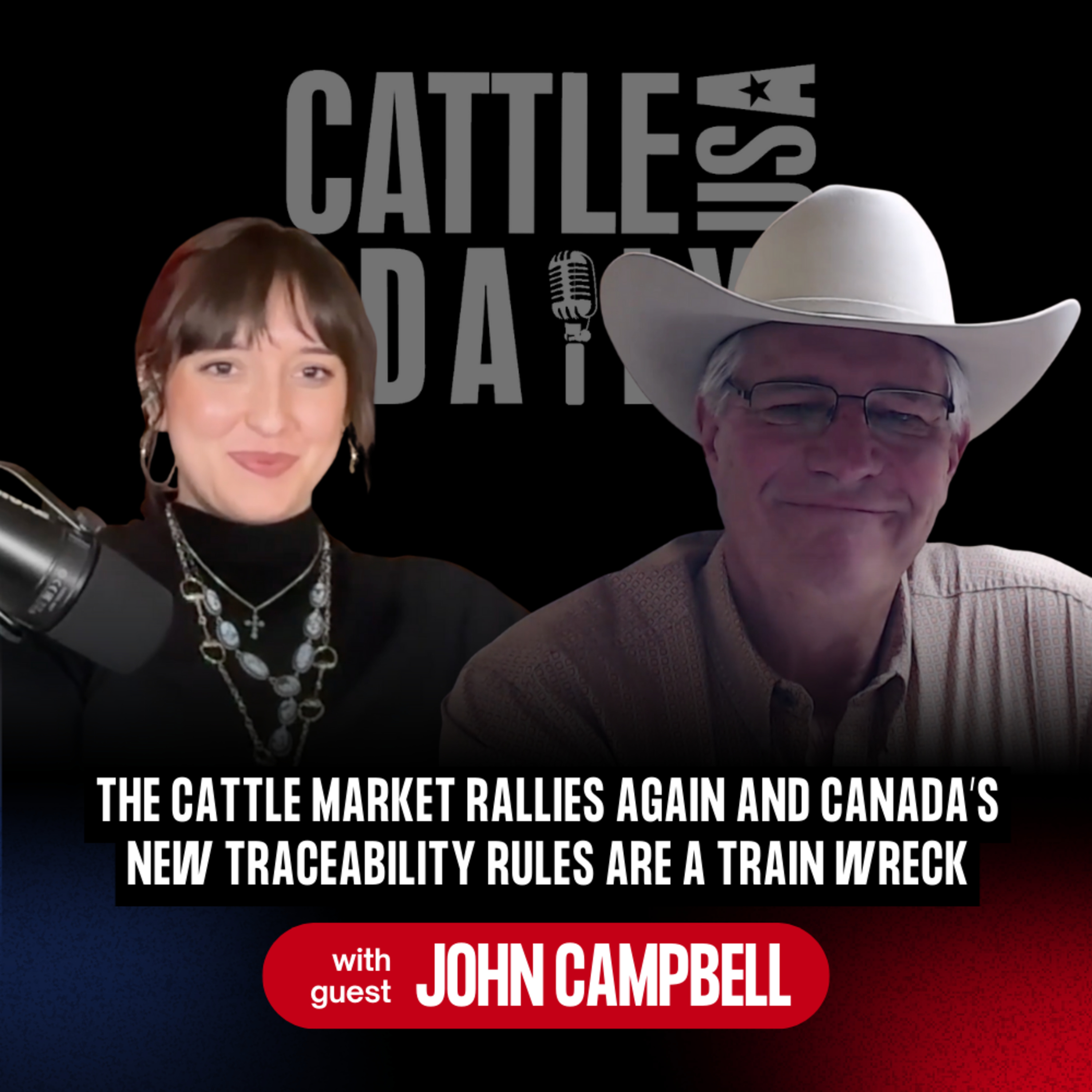
244: The Cattle Market Rallies Again and Canada’s New Traceability Rules Are a Train Wreck with John Campbell
from CattleUSA Daily · host Lauren Moylan | Cattle USA
John opens with a strong market week and even stronger prices on lightweight calves, then the episode turns into a blunt reality check on Canada’s new cattle traceability rules. The core issue is not tagging cattle. It’s the expectation that producers log every movement, location, and ID detail within seven days, even in real-world ranch scenarios where premise IDs don’t exist, cattle are commingled, and logistics change mid-haul. John lays out why the policy reads clean on a PowerPoint but collapses the second it hits pasture gates, portable pens, community grazing, and normal neighbor-help situations. The takeaway is simple: paperwork doesn’t stop disease, but it can absolutely stop commerce.LinksNominate or request to be a guest - forms.gle/fRkvzRenh7mqkDXV7 CattleUSA Insurance - https://info.cattleusainsurance.com/l/1102253/2025-06-04/288f5mCattleUSA Website - https://www.cattleusa.com/Facebook - https://www.facebook.com/cattleusamediaInstagram - https://www.instagram.com/cattleusa.media/Subscribe to our newsletter - https://www.cattleusadrive.com/CattleUSA Media - https://www.cattleusamedia.com/Lauren’s Instagram - https://www.instagram.com/_laurenmoylan/Lauren’s Youtube - https://www.youtube.com/@ShowboatmediacoThe Next Generation Podcast Website - https://www.thenextgenag.com/Takeaways• The cattle market stayed strong again this week, with lightweight steer calves continuing to climb and heavy steers also higher.• Some heifer classes were steadier this week, but the overall tone stayed firm to higher.• Regional markets were also higher, with places like Salina showing eye-watering strength on multiple weight classes.• Canada’s updated cattle traceability requirements push the reporting burden onto the producer with tight timelines.• The policy assumes every location has a usable premise ID, but many real grazing setups do not.• Portable pens, remote pastures, commingled grazing, and mixed ownership areas make “perfect traceability” unrealistic in practice.• Everyday ranch logistics break the system: split loads, last-minute hauling help, gate cuts, multiple drop locations, and cows that blend back into big groups.• The rule set creates a bookkeeping and compliance nightmare that will hit small and mid-sized producers hardest.• John’s argument is that this goes beyond disease traceability and drifts toward data collection that can later be used to control behavior and participation.• The biggest risk is policy creep: once the framework exists, fines and enforcement become the lever that forces consolidation.Chapters00:00 Snow and moisture, then straight into a strong market week01:20 Lahana market recap: calves higher, feeders strong, replacements still hot04:10 Regional check-in: Salina and Dodge City staying firm to higher07:20 Topic shift: Canada’s new traceability rules and why they’re a practical disaster12:30 Real-world ranch scenarios that break the system: premise IDs, commingling, portable pens, split loads19:10 The real consequence: compliance pressure, fines, and forcing people out23:20 Why this matters to U.S. producers and what to watch before it shows up here44:00 Wrap-upcattle market, cattle prices, feeder cattle, stocker cattle, heifer market, replacement heifers, auction market recap, Salina cattle market, Dodge City cattle market, Canada cattle regulations, Canadian traceability, cattle ID rules, premise ID, EID tags, cattle movement reporting, commingled grazing, community pastures, portable pens, compliance burden, producer regulation, cattle industry policy
Embed this episode
NOW PLAYING
244: The Cattle Market Rallies Again and Canada’s New Traceability Rules Are a Train Wreck with John Campbell
No transcript for this episode yet
Similar Episodes
No similar episodes found.
Similar Podcasts
No similar podcasts found.