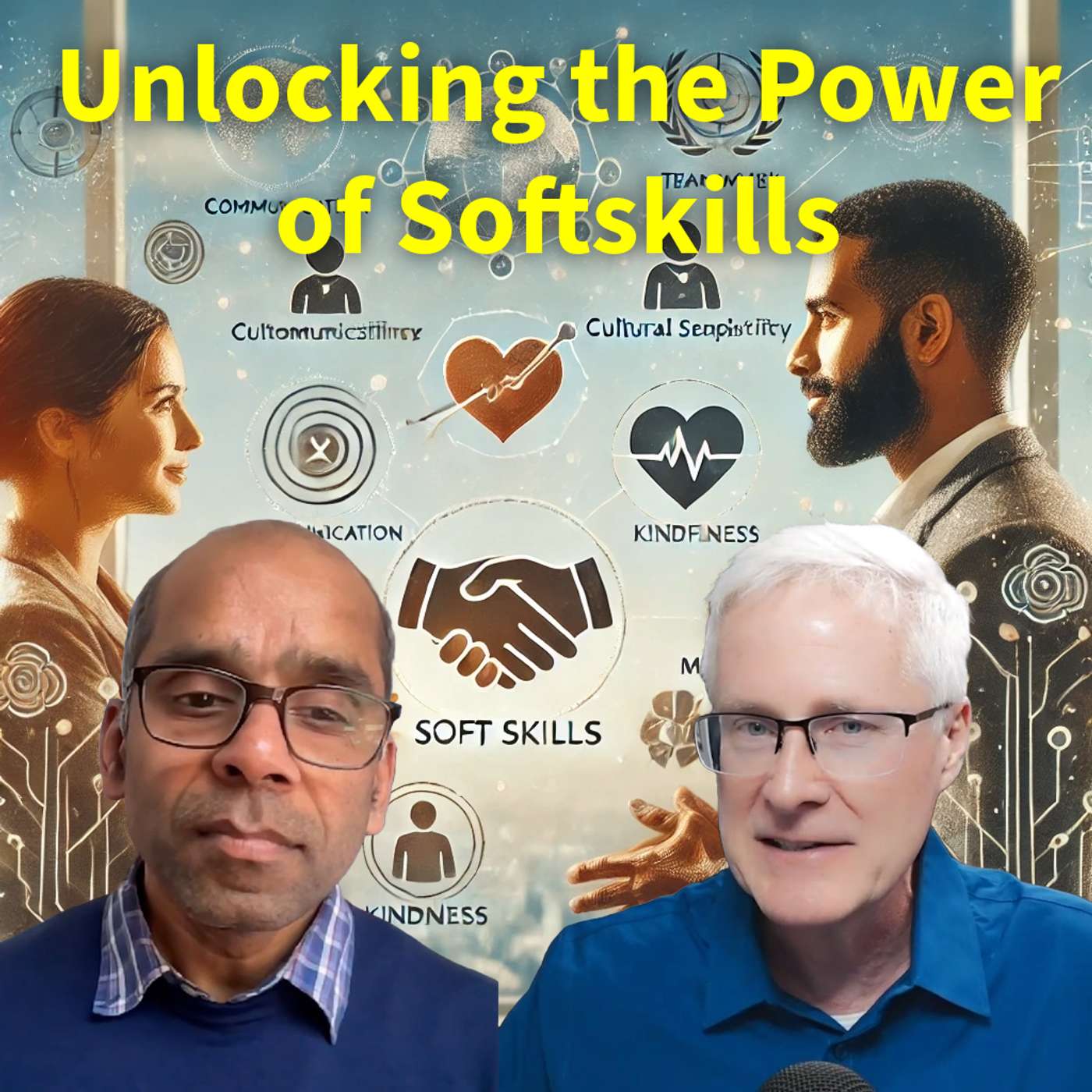
#245 Unlocking the power of soft-skills episode artwork

EPISODE · Feb 25, 2025 · 26 MIN

#245 Unlocking the power of soft-skills

from Embracing Digital Transformation · host Dr. Darren Pulsipher

Check out my new book AI Augmented Teams on Amazon or on my website paidar.ai/books.In this episode, Dr. Darren and Arun discuss the critical importance of non-technical or soft skills for technical professionals. They explore how these skills can be learned and developed, the significance of effective communication in team dynamics, and the impact of cultural sensitivity in diverse work environments. The discussion also highlights the role of mindfulness in professional life and the increasing relevance of soft skills in emerging technologies like AI. The conversation emphasizes that kindness and gratitude are essential to a positive workplace culture. ## Takeaways Non-technical skills are essential for success in technical roles. Soft skills can be learned and developed over time. Effective communication is crucial for team dynamics. Cultural sensitivity enhances workplace interactions. Mindfulness helps manage stress and improve focus. Soft skills will become more critical with the rise of AI. Kindness and gratitude foster a positive work environment. Organizations should prioritize training in soft skills. Understanding different communication styles is vital in diverse teams. Building relationships takes time and effort, especially in new environments.In the fast-paced world of technology, hard skills often take the limelight. However, a growing body of research and anecdotal evidence highlights the importance of soft skills—those non-technical interpersonal traits that can make or break a team's success. From communication to empathy, these competencies are essential for engineers and technologists navigating diverse environments. In this blog post, we will explore the relevance of soft skills, the importance of cultivating them, and practical strategies for enhancing them. The Importance of Soft Skills in TechnologyUnderstanding the fundamental differences between hard and soft skills can help illuminate why the latter is crucial in a tech environment. Hard skills typically refer to the technical expertise needed to perform specific job functions, such as coding in Java or using particular software tools. In contrast, soft skills encompass the personal attributes that enable someone to interact effectively with others. This can include communication, teamwork, conflict resolution, and emotional intelligence.With the rise of collaborative projects often involving cross-functional teams, practical soft skills have become more critical than ever. In a scenario where engineers must work in sync with designers, marketers, and stakeholders, technical proficiency alone isn't enough. Effective communication can minimize misunderstandings and foster a more inclusive atmosphere, while emotional intelligence can help navigate conflicts that invariably arise in team dynamics. Thus, elevating soft skills to the same importance as hard skills can improve project outcomes and create a healthier workplace culture. Cultivating Soft Skills: A Lifelong JourneyOne of the most common misconceptions about soft skills is that they are innate qualities—traits you possess or don't. While it's true that some individuals may have a natural affinity for strong interpersonal skills, everyone can refine these skills over time. Soft skills can be learned through practice and dedication, like any technical skill.For instance, public speaking, often seen as an intimidating soft skill to master, can be improved through structured feedback and constant practice. Similarly, skills related to emotional intelligence, like empathy and active listening, can be enhanced by conscious effort and self-awareness. Workshops, seminars, and personal development courses can provide the tools and frameworks to cultivate these essential traits. Over time, with commitment and mindfulness, anyone can traverse this journey and emerge as more effective communicators and collaborators. Practical Strategies to Enhance Your Soft SkillsTo harness soft skills' individuals can adopt strategies that encourage development. One effective approach is to create a culture of feedback. Welcoming constructive criticism fosters an environment that promotes open communication and continuous improvement. Make it a norm to discuss challenges and celebrate successes regularly.Mindfulness practices like box breathing can help regulate emotions, enhance focus, and boost overall conversation presence. Understanding how one's emotional landscape influences interactions is vital for effective communication. Additionally, actively engaging in team-building exercises can foster relationships that enhance trust and collaboration. The entire team benefits by building an environment where people feel valued and respected, boosting morale, increasing productivity, and reducing friction in collaborative work.In conclusion, soft skills are not simply a nice-to-have but a critical component of success in technology and any field that emphasizes teamwork and collaboration. By prioritizing the development of these competencies, both individuals and organizations can thrive—navigating challenges more effectively and fostering innovative solutions. As we embrace the digital transformation, remember that the human side of technology remains as vital as ever.---Feel free to share your thoughts in the comments below! What soft skills are the most crucial for success in your field? Would you like more content surrounding strategies to enhance these critical skills? Let's start a conversation!

Check out my new book AI Augmented Teams on Amazon or on my website paidar.ai/books.In this episode, Dr. Darren and Arun discuss the critical importance of non-technical or soft skills for technical professionals. They explore how these skills can be learned and developed, the significance of effective communication in team dynamics, and the impact of cultural sensitivity in diverse work environments. The discussion also highlights the role of mindfulness in professional life and the increasing relevance of soft skills in emerging technologies like AI. The conversation emphasizes that kindness and gratitude are essential to a positive workplace culture. ## Takeaways Non-technical skills are essential for success in technical roles. Soft skills can be learned and developed over time. Effective communication is crucial for team dynamics. Cultural sensitivity enhances workplace interactions. Mindfulness helps manage stress and improve focus. Soft skills will become more critical with the rise of AI. Kindness and gratitude foster a positive work environment. Organizations should prioritize training in soft skills. Understanding different communication styles is vital in diverse teams. Building relationships takes time and effort, especially in new environments.In the fast-paced world of technology, hard skills often take the limelight. However, a growing body of research and anecdotal evidence highlights the importance of soft skills—those non-technical interpersonal traits that can make or break a team's success. From communication to empathy, these competencies are essential for engineers and technologists navigating diverse environments. In this blog post, we will explore the relevance of soft skills, the importance of cultivating them, and practical strategies for enhancing them. The Importance of Soft Skills in TechnologyUnderstanding the fundamental differences between hard and soft skills can help illuminate why the latter is crucial in a tech environment. Hard skills typically refer to the technical expertise needed to perform specific job functions, such as coding in Java or using particular software tools. In contrast, soft skills encompass the personal attributes that enable someone to interact effectively with others. This can include communication, teamwork, conflict resolution, and emotional intelligence.With the rise of collaborative projects often involving cross-functional teams, practical soft skills have become more critical than ever. In a scenario where engineers must work in sync with designers, marketers, and stakeholders, technical proficiency alone isn't enough. Effective communication can minimize misunderstandings and foster a more inclusive atmosphere, while emotional intelligence can help navigate conflicts that invariably arise in team dynamics. Thus, elevating soft skills to the same importance as hard skills can improve project outcomes and create a healthier workplace culture. Cultivating Soft Skills: A Lifelong JourneyOne of the most common misconceptions about soft skills is that they are innate qualities—traits you possess or don't. While it's true that some individuals may have a natural affinity for strong interpersonal skills, everyone can refine these skills over time. Soft skills can be learned through practice and dedication, like any technical skill.For instance, public speaking, often seen as an intimidating soft skill to master, can be improved through structured feedback and constant practice. Similarly, skills related to emotional intelligence, like empathy and active listening, can be enhanced by conscious effort and self-awareness. Workshops, seminars, and personal development courses can provide the tools and frameworks to cultivate these essential traits. Over time, with commitment and mindfulness, anyone can traverse this journey and emerge as more effective communicators and collaborators. Practical Strategies to Enhance Your Soft SkillsTo harness soft skills' individuals can adopt strategies that encourage development. One effective approach is to create a culture of feedback. Welcoming constructive criticism fosters an environment that promotes open communication and continuous improvement. Make it a norm to discuss challenges and celebrate successes regularly.Mindfulness practices like box breathing can help regulate emotions, enhance focus, and boost overall conversation presence. Understanding how one's emotional landscape influences interactions is vital for effective communication. Additionally, actively engaging in team-building exercises can foster relationships that enhance trust and collaboration. The entire team benefits by building an environment where people feel valued and respected, boosting morale, increasing productivity, and reducing friction in collaborative work.In conclusion, soft skills are not simply a nice-to-have but a critical component of success in technology and any field that emphasizes teamwork and collaboration. By prioritizing the development of these competencies, both individuals and organizations can thrive—navigating challenges more effectively and fostering innovative solutions. As we embrace the digital transformation, remember that the human side of technology remains as vital as ever.---Feel free to share your thoughts in the comments below! What soft skills are the most crucial for success in your field? Would you like more content surrounding strategies to enhance these critical skills? Let's start a conversation!

NOW PLAYING

#245 Unlocking the power of soft-skills

0:00 26:55

No transcript for this episode yet

We transcribe on demand. Request one and we'll notify you when it's ready — usually under 10 minutes.

Solving for Change MOBIA Technology Innovations Solving for Change welcomes business and technology leaders to share stories of bold business transformation within complex organizations. In an era when technology and markets are changing around businesses, the key to staying competitive is to evolve in response to those changes.  MOBIA’s Mike Reeves and Marc LeBlanc investigate business transformation, deconstructing the challenges, ambitions, and market disruptions that drive companies to embark on transformation journeys, and exploring their unique approaches to achieving meaningful outcomes.  What sparks leaders to pursue business transformation? How do they overcome the challenges along the way? What are the keys to creating enduring change?  Through in-depth conversations with business and technology leaders, Mike and Marc answer these questions and explore how businesses evolve by pulling four key transformation levers: people, process, technology, and culture. Darknet Discussions Darknet Discussions Welcome to "Darknet Discussions," the podcast that gets into the shadows of the internet to bring you the most intriguing, enlightening, and sometimes unsettling stories from the dark web. Hosted by seasoned darknet aficionados, each episode of "Darknet Discussions" explores the intricate dynamics of darknet markets, cybersecurity threats, and the digital underworld. Join us as we interview experts, discuss the latest trends in cybercrime, and shed light on the technologies that operate beneath the surface of everyday internet use. Also, we occasionally go off on a tangent about something completely unrelated. The Digital Experience Show by Enonic Enonic All you need to know about digital strategy, digital experiences, and CMS are covered in this podcast. Powered by NotebookLM. Tips, News and Stories for Older Adults Esther C Kane CAPS, C.D.S. "Tips, News, and Stories for Older Adults" delivers weekly insights tailored for seniors. We bring you summaries of curated news, practical advice, and inspiring stories that matter to the 55+ community. From health and finance to technology and lifestyle, our content keeps you informed and engaged. Sourced from trusted outlets, each episode offers valuable information for navigating your golden years. Join us as we explore aging with positivity, wisdom, and engaging stories. Your perfect companion for staying active, learning, and embracing life's later chapters.

Frequently Asked Questions

How long is this episode of Embracing Digital Transformation?

This episode is 26 minutes long.

When was this Embracing Digital Transformation episode published?

This episode was published on February 25, 2025.

What is this episode about?

Check out my new book AI Augmented Teams on Amazon or on my website paidar.ai/books.In this episode, Dr. Darren and Arun discuss the critical importance of non-technical or soft skills for technical professionals. They explore how these skills can...

Can I download this Embracing Digital Transformation episode?

Yes, you can download this episode by clicking the download button on the episode player, or subscribe to the podcast in your preferred podcast app for automatic downloads.
URL copied to clipboard!