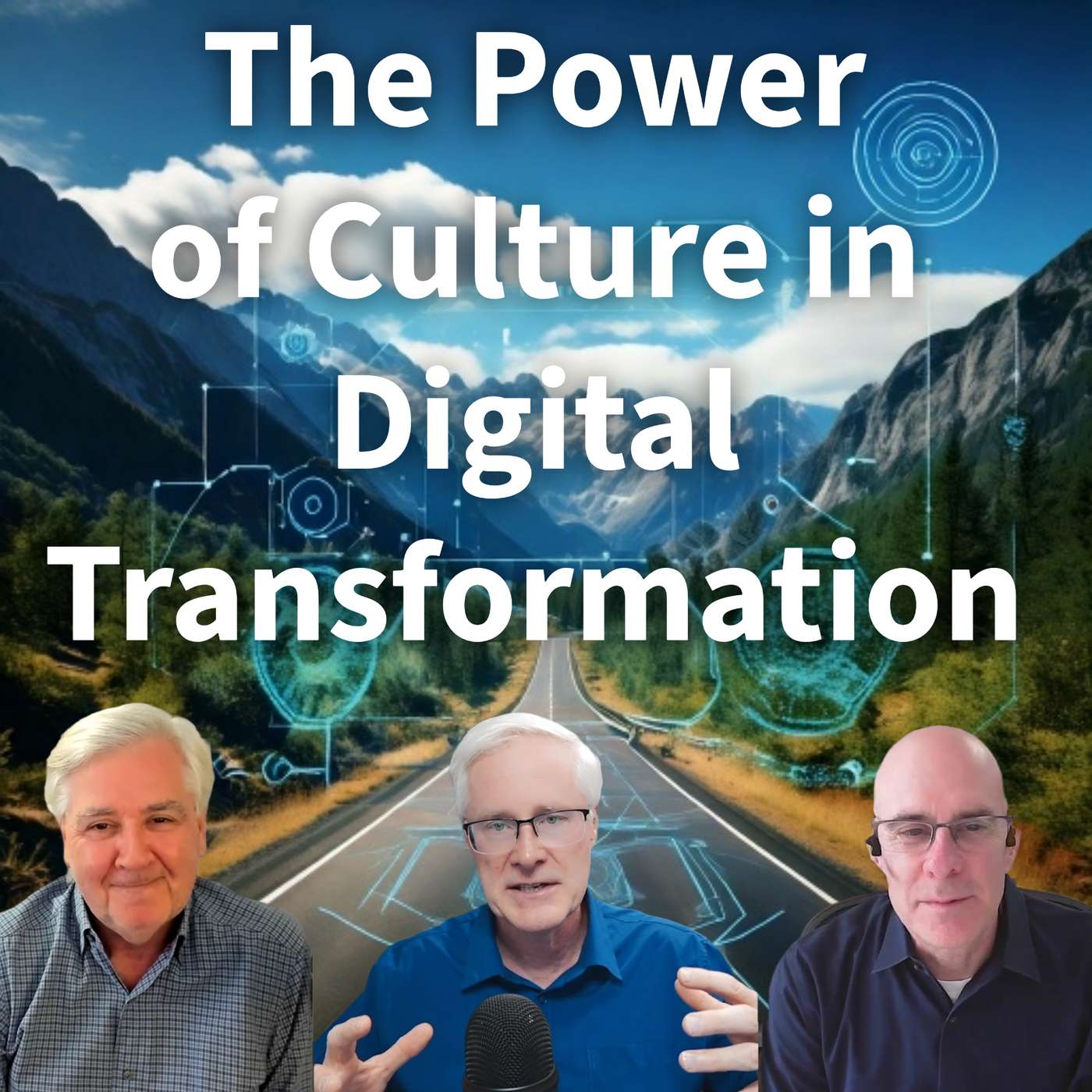
#248 The Power of Culture in Digital Transformation episode artwork

EPISODE · Mar 5, 2025 · 32 MIN

#248 The Power of Culture in Digital Transformation

from Embracing Digital Transformation · host Dr. Darren Pulsipher

Check out my new book AI Augmented Teams on Amazon or on my website paidar.ai/books.In this engaging conversation, Darren Pulsipher hosts Len Gilbert and Jonathan Murray, two experts in digital transformation. They share their superhero backstories, highlighting their extensive experience guiding organizations through digital change. The discussion delves into the importance of leadership, culture, and strategy in driving successful transformations, particularly in the face of emerging technologies like GenAI. They underscore the need for a structured approach to innovation, providing a clear roadmap for digital transformation. They also stress the significance of continuous value delivery and the importance of having a long-term vision or 'North Star' to guide organizations through their transformation journeys. ## Takeaways * Every superhero has a backstory that shapes their journey. * Digital transformation starts with people and culture. * Leadership is crucial for driving organizational change. * Technology should not dictate the transformation process. * Building use cases is essential before adopting new technology. * Centers of excellence can channel creative energy effectively. * Continuous value delivery is key to maintaining stakeholder support. * Organizations must adapt their North Star as markets change. * Iterative progress helps prevent stagnation in transformation efforts. * A long-term vision is necessary for sustained growth and innovation.In today's rapidly evolving business landscape, digital transformation has become a central focus for organizations looking to thrive. The intersection of people, process, and technology is crucial for navigating these changes effectively. At the core of these transformations lies the often-overlooked component: organizational culture. This blog post will delve into the importance of culture in digital transformation, how to foster a culture of innovation, and the principles that can guide organizations down their transformation journey. The Significance of Organizational CultureOrganizational culture shapes how a company operates and adapts to changes. A strong culture is particularly vital in the context of digital transformation, as it influences how receptive employees are to change and innovation. For instance, businesses that encourage open communication, collaboration, and risk-taking are more likely to embrace new technologies and processes. The transformation journey can be daunting, particularly for mid-sized companies that are competing against larger enterprises with more resources. However, by fostering a culture that empowers employees to embrace change, organizations can inspire innovation and drive success.Culture is not just a buzzword; it's a critical driver for success in any transformation initiative. Companies must recognize that leading change starts from the top – leaders must model and advocate for the desired culture, making it easier for employees at all levels to align with the shared vision. When leaders prioritize culture, it creates a foundation for employees to feel safe taking risks and experimenting with new ideas. This nurturing environment fosters innovative thinking, ultimately making the transition smoother and more successful. As a leader, your role in shaping the culture is pivotal and can significantly impact the success of the transformation. Creating a Culture of InnovationTo build a culture that embraces change, organizations should focus on key strategies. First, investing in continuous learning opportunities is crucial. Offering training programs, workshops, and mentorship can empower employees to enhance their skills and adapt to new technologies. In today's fast-paced digital landscape, continuous learning is not just a choice, but a necessity. For instance, creating centers of excellence within the organization allows enthusiastic employees to experiment with new tools and approaches. These centers not only promote learning but also enable collaboration across departments, resulting in a more significant impact on the organization as a whole.Another important aspect is to establish clear principles and guidelines. While organizations want to encourage exploration and creativity, providing structure that keeps initiatives aligned with the overall goals is equally important. Establishing principles can serve as a framework, allowing employees to innovate while adhering to the organization’s core values. This balance helps channel creative energy effectively, leading to meaningful outcomes without overwhelming the system. Guiding Principles for TransformationOne effective approach to ensure a successful digital transformation is the adoption of principle-based governance models. These models are built on a set of guiding principles that outline how technology should be used within the company. These principles can include considerations around data usage, security protocols, and ethical guidelines for deploying new technologies. By adhering to these principles, organizations can ensure that their digital transformation is not only successful but also ethical and secure.Adherence to these principles becomes essential as organizations experiment with innovative tools. Teams can explore new ways of working within defined boundaries, leading to increased agility. This approach encourages stakeholders to embrace the changes facilitated by technology while ensuring that risks are managed appropriately. In a world where rapid advancements in technology are common, establishing responsive governance becomes a critical asset for organizations looking to thrive. The Journey AheadNavigating the complexities of digital transformation requires a keen focus on culture, innovation, and guiding principles. By prioritizing a positive organizational culture and encouraging open communication, companies can foster an environment where change is embraced rather than resisted. The iterative nature of this journey means that organizations must continuously measure their progress towards their North Star, adjusting as necessary to stay aligned with evolving market demands. This could involve regular assessments of employee satisfaction, innovation output, and alignment with strategic goals.As businesses face increasing pressure from competitors and technological advancements, now is the time to invest in transforming organizational culture and strategies. Embracing these concepts will promote successful transitions and establish a foundation for ongoing growth and improvement, empowering organizations to meet the challenges of the digital age head-on.Ready to embark on your digital transformation journey? Take the first step by investing in building a culture that champions change. Share your thoughts, insights, or experiences in the comments below!

Check out my new book AI Augmented Teams on Amazon or on my website paidar.ai/books.In this engaging conversation, Darren Pulsipher hosts Len Gilbert and Jonathan Murray, two experts in digital transformation. They share their superhero backstories, highlighting their extensive experience guiding organizations through digital change. The discussion delves into the importance of leadership, culture, and strategy in driving successful transformations, particularly in the face of emerging technologies like GenAI. They underscore the need for a structured approach to innovation, providing a clear roadmap for digital transformation. They also stress the significance of continuous value delivery and the importance of having a long-term vision or 'North Star' to guide organizations through their transformation journeys. ## Takeaways * Every superhero has a backstory that shapes their journey. * Digital transformation starts with people and culture. * Leadership is crucial for driving organizational change. * Technology should not dictate the transformation process. * Building use cases is essential before adopting new technology. * Centers of excellence can channel creative energy effectively. * Continuous value delivery is key to maintaining stakeholder support. * Organizations must adapt their North Star as markets change. * Iterative progress helps prevent stagnation in transformation efforts. * A long-term vision is necessary for sustained growth and innovation.In today's rapidly evolving business landscape, digital transformation has become a central focus for organizations looking to thrive. The intersection of people, process, and technology is crucial for navigating these changes effectively. At the core of these transformations lies the often-overlooked component: organizational culture. This blog post will delve into the importance of culture in digital transformation, how to foster a culture of innovation, and the principles that can guide organizations down their transformation journey. The Significance of Organizational CultureOrganizational culture shapes how a company operates and adapts to changes. A strong culture is particularly vital in the context of digital transformation, as it influences how receptive employees are to change and innovation. For instance, businesses that encourage open communication, collaboration, and risk-taking are more likely to embrace new technologies and processes. The transformation journey can be daunting, particularly for mid-sized companies that are competing against larger enterprises with more resources. However, by fostering a culture that empowers employees to embrace change, organizations can inspire innovation and drive success.Culture is not just a buzzword; it's a critical driver for success in any transformation initiative. Companies must recognize that leading change starts from the top – leaders must model and advocate for the desired culture, making it easier for employees at all levels to align with the shared vision. When leaders prioritize culture, it creates a foundation for employees to feel safe taking risks and experimenting with new ideas. This nurturing environment fosters innovative thinking, ultimately making the transition smoother and more successful. As a leader, your role in shaping the culture is pivotal and can significantly impact the success of the transformation. Creating a Culture of InnovationTo build a culture that embraces change, organizations should focus on key strategies. First, investing in continuous learning opportunities is crucial. Offering training programs, workshops, and mentorship can empower employees to enhance their skills and adapt to new technologies. In today's fast-paced digital landscape, continuous learning is not just a choice, but a necessity. For instance, creating centers of excellence within the organization allows enthusiastic employees to experiment with new tools and approaches. These centers not only promote learning but also enable collaboration across departments, resulting in a more significant impact on the organization as a whole.Another important aspect is to establish clear principles and guidelines. While organizations want to encourage exploration and creativity, providing structure that keeps initiatives aligned with the overall goals is equally important. Establishing principles can serve as a framework, allowing employees to innovate while adhering to the organization’s core values. This balance helps channel creative energy effectively, leading to meaningful outcomes without overwhelming the system. Guiding Principles for TransformationOne effective approach to ensure a successful digital transformation is the adoption of principle-based governance models. These models are built on a set of guiding principles that outline how technology should be used within the company. These principles can include considerations around data usage, security protocols, and ethical guidelines for deploying new technologies. By adhering to these principles, organizations can ensure that their digital transformation is not only successful but also ethical and secure.Adherence to these principles becomes essential as organizations experiment with innovative tools. Teams can explore new ways of working within defined boundaries, leading to increased agility. This approach encourages stakeholders to embrace the changes facilitated by technology while ensuring that risks are managed appropriately. In a world where rapid advancements in technology are common, establishing responsive governance becomes a critical asset for organizations looking to thrive. The Journey AheadNavigating the complexities of digital transformation requires a keen focus on culture, innovation, and guiding principles. By prioritizing a positive organizational culture and encouraging open communication, companies can foster an environment where change is embraced rather than resisted. The iterative nature of this journey means that organizations must continuously measure their progress towards their North Star, adjusting as necessary to stay aligned with evolving market demands. This could involve regular assessments of employee satisfaction, innovation output, and alignment with strategic goals.As businesses face increasing pressure from competitors and technological advancements, now is the time to invest in transforming organizational culture and strategies. Embracing these concepts will promote successful transitions and establish a foundation for ongoing growth and improvement, empowering organizations to meet the challenges of the digital age head-on.Ready to embark on your digital transformation journey? Take the first step by investing in building a culture that champions change. Share your thoughts, insights, or experiences in the comments below!

NOW PLAYING

#248 The Power of Culture in Digital Transformation

0:00 32:53

No transcript for this episode yet

We transcribe on demand. Request one and we'll notify you when it's ready — usually under 10 minutes.

Solving for Change MOBIA Technology Innovations Solving for Change welcomes business and technology leaders to share stories of bold business transformation within complex organizations. In an era when technology and markets are changing around businesses, the key to staying competitive is to evolve in response to those changes.  MOBIA’s Mike Reeves and Marc LeBlanc investigate business transformation, deconstructing the challenges, ambitions, and market disruptions that drive companies to embark on transformation journeys, and exploring their unique approaches to achieving meaningful outcomes.  What sparks leaders to pursue business transformation? How do they overcome the challenges along the way? What are the keys to creating enduring change?  Through in-depth conversations with business and technology leaders, Mike and Marc answer these questions and explore how businesses evolve by pulling four key transformation levers: people, process, technology, and culture. Darknet Discussions Darknet Discussions Welcome to "Darknet Discussions," the podcast that gets into the shadows of the internet to bring you the most intriguing, enlightening, and sometimes unsettling stories from the dark web. Hosted by seasoned darknet aficionados, each episode of "Darknet Discussions" explores the intricate dynamics of darknet markets, cybersecurity threats, and the digital underworld. Join us as we interview experts, discuss the latest trends in cybercrime, and shed light on the technologies that operate beneath the surface of everyday internet use. Also, we occasionally go off on a tangent about something completely unrelated. The Digital Experience Show by Enonic Enonic All you need to know about digital strategy, digital experiences, and CMS are covered in this podcast. Powered by NotebookLM. Tips, News and Stories for Older Adults Esther C Kane CAPS, C.D.S. "Tips, News, and Stories for Older Adults" delivers weekly insights tailored for seniors. We bring you summaries of curated news, practical advice, and inspiring stories that matter to the 55+ community. From health and finance to technology and lifestyle, our content keeps you informed and engaged. Sourced from trusted outlets, each episode offers valuable information for navigating your golden years. Join us as we explore aging with positivity, wisdom, and engaging stories. Your perfect companion for staying active, learning, and embracing life's later chapters.

Frequently Asked Questions

How long is this episode of Embracing Digital Transformation?

This episode is 32 minutes long.

When was this Embracing Digital Transformation episode published?

This episode was published on March 5, 2025.

What is this episode about?

Check out my new book AI Augmented Teams on Amazon or on my website paidar.ai/books.In this engaging conversation, Darren Pulsipher hosts Len Gilbert and Jonathan Murray, two experts in digital transformation. They share their superhero backstories,...

Can I download this Embracing Digital Transformation episode?

Yes, you can download this episode by clicking the download button on the episode player, or subscribe to the podcast in your preferred podcast app for automatic downloads.
URL copied to clipboard!