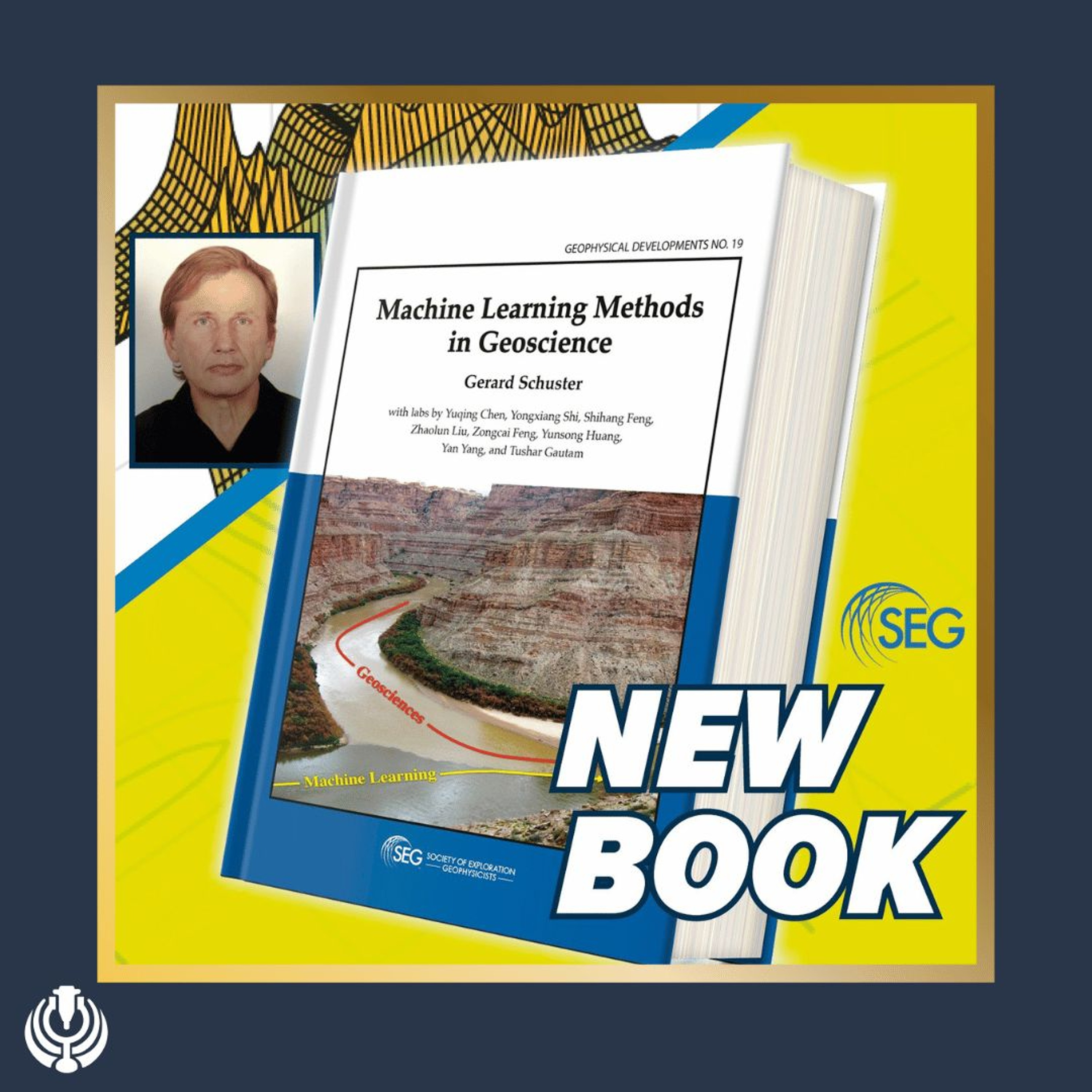
249: Machine Learning Methods in Geoscience episode artwork

EPISODE · Feb 13, 2025 · 24 MIN

249: Machine Learning Methods in Geoscience

from Seismic Soundoff

“The biggest challenge for geophysicists? Learning machine learning's ‘new language’ from the world of statistics.” Machine learning is transforming geoscience, and Gerard Schuster explains how. This conversation explores key ML applications in seismic interpretation, the role of convolutional neural networks in fault detection, and why hands-on labs are essential for mastering these techniques. With real-world examples and insights from his new book, Machine Learning Methods in Geoscience, this episode delivers practical knowledge for integrating ML into geophysics. KEY TAKEAWAYS > Why ML matters for geoscientists – The demand for ML skills is growing, and Jerry shares how this shift shapes education and careers. > CNNs in action – Convolutional neural networks are used to detect rock cracks in Saudi Arabia through drone imagery. > Transformers vs. traditional neural networks – Transformers process seismic data differently by capturing long-range dependencies, offering new advantages. NEXT STEP Explore Machine Learning Methods in Geoscience by Gerard Schuster, featuring hands-on MATLAB and Colab labs. Get the book and start applying ML techniques today! https://library.seg.org/doi/epdf/10.1190/1.9781560804048.fm TEXT A FRIEND These are great insights on how ML is actually being used in seismic work, not just theory. https://seg.org/podcasts/episode-249-machine-learning-methods-in-geoscience GUEST BIO Gerard Schuster has an M.S. (1982) and a Ph.D. (1984) from Columbia University and was a postdoctoral researcher there from 1984 to 1985. From 1985 to 2009, he was a professor of geophysics at the University of Utah and became a professor of geophysics at KAUST (2009–2021). He is currently a research professor at the University of Utah. He received several teaching and research awards while at the University of Utah. He was editor of GEOPHYSICS 2004–2005 and was awarded SEG’s Virgil Kauffman Gold Medal in 2010 for his work in seismic interferometry. His previous books are Seismic Interferometry (2009, Cambridge Press) and Seismic Inversion (2017, SEG). LINKS * Buy the Print Book at https://seg.org/shop/product/?id=fe5a3cd3-77b2-ef11-b8e8-6045bda82e05 * Visit https://seg.org/podcasts/episode-249-machine-learning-methods-in-geoscience for the full guest bios and show notes. CALL FOR ABSTRACTS Technical Program Chairs Yingcai Zheng and Molly Turko invite you to submit your best work. This year, we're fostering deeper collaboration between SEG, AAPG, and SEPM. Focus on regional challenges and how integrated geoscience can unlock solutions. Submit short or expanded abstracts for oral and poster presentations. The Call for Abstracts is open and closes on 15 March at 5:00 PM CT. Don't miss this opportunity to share your research and connect with the broader geoscience community at https://www.imageevent.org/. SHOW CREDITS Andrew Geary at TreasureMint hosted, edited, and produced this episode. The SEG podcast team comprises Jennifer Cobb, Kathy Gamble, and Ally McGinnis. If you have episode ideas or feedback for the show or want to sponsor a future episode, email the show at [email protected].

Episode metadata supplied by the publisher feed · Published Feb 13, 2025

“The biggest challenge for geophysicists? Learning machine learning's ‘new language’ from the world of statistics.” Machine learning is transforming geoscience, and Gerard Schuster explains how. This conversation explores key ML applications in seismic interpretation, the role of convolutional neural networks in fault detection, and why hands-on labs are essential for mastering these techniques. With real-world examples and insights from his new book, Machine Learning Methods in Geoscience, this episode delivers practical knowledge for integrating ML into geophysics. KEY TAKEAWAYS > Why ML matters for geoscientists – The demand for ML skills is growing, and Jerry shares how this shift shapes education and careers. > CNNs in action – Convolutional neural networks are used to detect rock cracks in Saudi Arabia through drone imagery. > Transformers vs. traditional neural networks – Transformers process seismic data differently by capturing long-range dependencies, offering new advantages. NEXT STEP Explore Machine Learning Methods in Geoscience by Gerard Schuster, featuring hands-on MATLAB and Colab labs. Get the book and start applying ML techniques today! https://library.seg.org/doi/epdf/10.1190/1.9781560804048.fm TEXT A FRIEND These are great insights on how ML is actually being used in seismic work, not just theory. https://seg.org/podcasts/episode-249-machine-learning-methods-in-geoscience GUEST BIO Gerard Schuster has an M.S. (1982) and a Ph.D. (1984) from Columbia University and was a postdoctoral researcher there from 1984 to 1985. From 1985 to 2009, he was a professor of geophysics at the University of Utah and became a professor of geophysics at KAUST (2009–2021). He is currently a research professor at the University of Utah. He received several teaching and research awards while at the University of Utah. He was editor of GEOPHYSICS 2004–2005 and was awarded SEG’s Virgil Kauffman Gold Medal in 2010 for his work in seismic interferometry. His previous books are Seismic Interferometry (2009, Cambridge Press) and Seismic Inversion (2017, SEG). LINKS * Buy the Print Book at https://seg.org/shop/product/?id=fe5a3cd3-77b2-ef11-b8e8-6045bda82e05 * Visit https://seg.org/podcasts/episode-249-machine-learning-methods-in-geoscience for the full guest bios and show notes. CALL FOR ABSTRACTS Technical Program Chairs Yingcai Zheng and Molly Turko invite you to submit your best work. This year, we're fostering deeper collaboration between SEG, AAPG, and SEPM. Focus on regional challenges and how integrated geoscience can unlock solutions. Submit short or expanded abstracts for oral and poster presentations. The Call for Abstracts is open and closes on 15 March at 5:00 PM CT. Don't miss this opportunity to share your research and connect with the broader geoscience community at https://www.imageevent.org/. SHOW CREDITS Andrew Geary at TreasureMint hosted, edited, and produced this episode. The SEG podcast team comprises Jennifer Cobb, Kathy Gamble, and Ally McGinnis. If you have episode ideas or feedback for the show or want to sponsor a future episode, email the show at [email protected].

PodParley-generated summary based on available episode metadata and transcript content.

NOW PLAYING

249: Machine Learning Methods in Geoscience

0:00 24:14

No transcript for this episode yet

We transcribe on demand. Request one and we'll notify you when it's ready — usually under 10 minutes.

Waves Clips Mitzi & Mike Payne A series of high-impact clips taken from full episodes of Waves.Waves is a podcast for marketers, creators, and entrepreneurs who want to stop chasing the tide and start making waves online. We sit down with the tastemakers and strategic minds behind some of the most engaged communities and up-and-coming brands to uncover the methodology behind their seismic impact. Full Disclosure The Rich Dad Media Network Worried about your financial future? Let's be real, the world shapes your wallet. We're diving deep and going behind the scenes to expose what's genuinely unfolding in the real world, because these seismic events shape your financial destiny.Your host, John MacGregor, is an internationally recognized best-selling author, renowned keynote speaker, and an empowering wealth coach. MacGregor has inspired thousands to make more astute financial decisions, catering to every stage of their journey in life. We're here to enlighten, equip, and empower you. This isn't just a podcast—it's your roadmap to financial literacy and your security. Welcome to the 'Full Disclosure' podcast, with John MacGregor. Unshaken Saints Jared Halverson Seismic shifts in the religious and secular landscapes are destabilizing the faith of millions. Join religion scholar Jared Halverson as he explores restored scripture, doctrine, history, and practice; examines patterns and pitfalls in navigating faith crisis; and wrestles with ways to make your faith unshaken. Life, Changing Tortoise Media Over only a generation, early childhood in Britain has become radically different. Across three cities, we’re speaking to parents and children about their lives, worries, and dreams, and – with the help of the Nuffield Foundation – uncovering the hidden stories behind these seismic changes.  Hosted on Acast. See acast.com/privacy for more information.

Frequently Asked Questions

How long is this episode of Seismic Soundoff?

This episode is 24 minutes long.

When was this Seismic Soundoff episode published?

This episode was published on February 13, 2025.

What is this episode about?

“The biggest challenge for geophysicists? Learning machine learning's ‘new language’ from the world of statistics.” Machine learning is transforming geoscience, and Gerard Schuster explains how. This conversation explores key ML applications in...

Can I download this Seismic Soundoff episode?

Yes, you can download this episode by clicking the download button on the episode player, or subscribe to the podcast in your preferred podcast app for automatic downloads.
URL copied to clipboard!