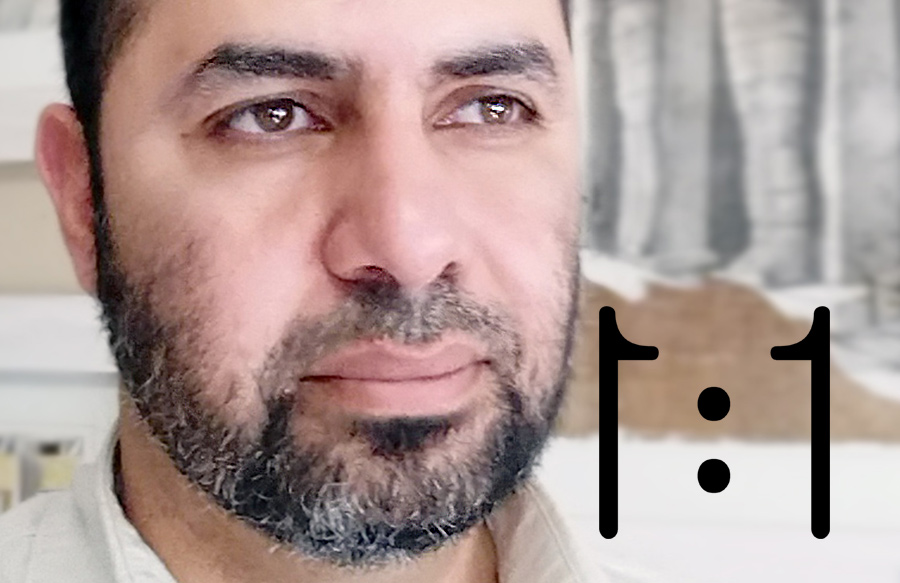
The refugee crisis was just sort of a circumstance. It was the elephant in the room that we couldn't ignore anymore. In fact, my personal focus was, you know, I wanted to really begin to the problem of informal settlements and upgrading with informal settlements in my home, City of Cairo, and trying to do more research-oriented projects. Welcome to Archniac sessions one-to-one.
I'm Amelia Taylor-Hockberg, and this week I'm speaking with Amro Salom, one of the architects behind architects for society. Form last year by a collective of international architects, the firm's name kind of says it all. They focus on humanitarian and social welfare projects from the perspective of a diverse set of experienced practitioners. One of their first projects, Hex House, is a solar-powered single-family unit designed for deployment in refugee camps and other displaced communities.
Salom shared with me the firm's origin story and their mindset towards architecture's involvement with humanitarian efforts. I'm Rosalom, thank you so much for coming on to Archniac sessions one-to-one. So you started Archiac's first society in September of 2015, but before that, you were working for Herzung-Demmeron. Can you tell us a little bit about your background prior to starting Archiac's first society?
Well, thanks for having me as a representative of Archiac's first society. The idea of Archiac's first society started probably five or six years before we actually started and myself and the gentleman in another fellow architect in Montreal, we had started this sort of online Facebook group called Archiac's Vergaza and it was during the incursion on Gaza and we thought that Archiac's could somehow mitigate the fact that they weren't able to bring in construction materials and we would sort of come up with ways of doing without typical concrete and steel. So within that sort of realm, we also did projects on our own Murad who was the other architect in Canada. He was working on other projects outside of his normal practice doing pro bono work for his local community and I was doing the same.
And then we thought, well, let's formalize this. And meanwhile, I was in Switzerland. I've also met a lot of like-minded people, although working on very high-end design and projects with very large budgets. We were always thinking that and we would spend many hours discussing the issues around me personally because I have a background from Cairo, Egypt.
I've always researched informal settlements and have been fascinated by them. And other people, one of our other partners was in Jordan. And he was also from a Palestinian background, has done the same. And we also have an Indian architect and even architects that are in Northern Europe.
We've always had discussions around how we could, how architects need, especially in the future, need to be a little bit more engaged or a lot more engaged with the environments that they live in and be aware of, let's say, the 99% that don't have sufficient housing. So essentially, nine months ago, I moved, I left, I brought my family back to the Twin Cities where I do have roots here. And we decided together that while we're in between jobs, a few of them also left hurts on in general. And a few that I met here in Chicago are still working with other firms.
But we collectively got together and said, this is a great idea. The refugee crisis hit. And friends in Northern Europe were very keen on getting something started. So we started quickly mobilizing and doing sketching and designing and trying to contact our contacts in Hamburg and in other parts of Europe and Amsterdam.
And just to design, just to be able to say, look, let's get started and do something that's real. So this began as very much, very much specifically as a response to the current refugee crisis. Is that the target group of the so-called disadvantaged communities that you're trying to focus your work towards? No, not at all.
In fact, the refugee crisis, it was just sort of a circumstance. It was the elephant in the room that we couldn't ignore anymore. In fact, my personal focus was, you know, I wanted to really dig into the problem of informal settlements and upgrading with informal settlements in my home city of Cairo and trying to do more research oriented projects. So then the people David Koh who one of our partners was in, he's in Spain, but he's originally German, started saying, well, wait a minute, guys, our country is being swamped with refugees.
What can we do? And winter was around the corner and there was an influx of refugees that were living out in the open on lawns. And so we did an initial concept that he took it to his contacts and government where it involved a hay bale construction and mobilizing the residents or the refugees themselves to put together very simple construction techniques that were local to that climate. Of course, they laughed at us and said, hey, bale, hey, that's, you know, we have fire code and we couldn't convince them that in fact it has a higher fire rating than timber construction.
So we had to sort of keep going. And eventually we found an organization at university in Sweden who was a Chalmers University, who was working on a project, a studio project to develop rapidly deployable shelters for El Zottari Camp, Jordan, where one of our partners was living and working at the time. And so we started helping them gather, you know, doing research, gathering video and images and interviews. And then that sort of transpired into, well, why don't we, you know, so they developed a pretty theoretical project that they use the robotic robotic arm to cut foam and very beautiful projects we actually featured on our website also.
But we thought, you know, we're experienced architects, can't we come up with a solution? And that was the premise for the Hexhouse. So we'll get to the Hexhouse specifically in a little bit. I want to ask you a little bit about that.
But I'm also wondering about the specific composition of architects in architects for society, because as it mentions on your website, they're hail from all over. But I'm wondering, are they all based in Minneapolis now where the firm exists? Or are they working remotely from those different locations? No, they're all remote.
There's three of us here in Minnesota. One of them is a physicist. So it's not even architect, it's an academic physicist. The others are in literally in Monjordin, there's two in another lens in Amsterdam, one in Madrid, one in Phoenix, one in Montreal, Chicago and so around India.
So these are, this is where they are actually located. And the idea is that we would be able to collaborate on projects that are sort of global like the Hexhouse. But then that we would also engage our local communities and be able to kind of leverage each other's experience and knowledge. And because also not all of us are architects, there's a, like I mentioned, one is a physicist, there's another woman who's in another lens, she's in development and she's worked for UNESCO and is kind of building up the the public development sector of AFS.
And some of us are academic architects, like Sonal from India. She's more of an academic as well as Altaaf, who happens to be from India but lives in Phoenix. So what was the motivation for having, for example, the physicist? What is his role in the organization?
We wanted a non-architect to simply somebody who was intellectual, somebody who understands processes. And he's also, Dr. Steve, he's also very involved in community-based development in this small city of St. Peter, Minnesota.
So we thought that he was a perfect sort of outsider to the architecture thinking. So I wanted to ask specifically about in the kind of business practice of the firm and this collaborative nature of working with all these architects and non-architects all over the world, what was your familiarity with other similarly-minded organizations, but ones that are more charitable rather than actual design firms? I'm thinking specifically of ones like Architecture for Humanity or other nonprofits or charitable organizations that try to serve similar communities but aren't formatted as traditional design firms. What was your experience working with those in the past?
Or did you have any? No, like I mentioned, we were strictly, I mean, okay, so there was one gentleman, Morad, who's in his Montreal. He's worked with them and collaborated with them as an individual architect. Me personally, I didn't.
And I know most of our group did not. We are strictly design architects from different sort of different scopes of design. Some of us are more into development, some of us are more into project management, some of us are into redevelopment or upgrading of urban environments. So we really don't have much experience as a group working under those kind of those business models, if you will.
So I guess I'm asking because I'm interested in how then you decide to choose to do similar kinds of work, but also knowing that or thinking that maybe the best way to do it is from starting this firm rather than trying to align yourselves with other organizations already involved in similar work. Well, I think if I understand your question correctly, I think we would like to be able to collaborate with some of these organizations. I think what's interesting is we see as a double-edged sword or two sides of a coin or however you want to name it, but it's the fact that we don't have this kind of public service experience, at least the majority of us. So we're coming at the problem and from a purely commercial aspect, and we're trying to build a model that is and we don't know what that model is yet, but we're trying to build a model that is makes it profitable for architects to do public work.
And we don't know if that involves just a you know, being in the middle of a crisis, and therefore it sort of propels you into this, or being creative in figuring out, for example, I keep coming back to the hex house, the hex house was sort of self-generated. And it wasn't, you know, it was sort of like the, we sometimes we use the example of Banksy, who he goes out and he's not commissioned by anybody. And in spite of people, he does his own work, he does his own art. And I'm not sure if he's making it a good business model, but he's made a footprint for himself and the art world.
And that model is interesting to us, where we see a problem, we go after a solution from different points of view, and we put it forward to the public. And then we seek the funding for it, where the other sort of established organizations work in a, you know, as you know, slightly different way. This is kind of generally speaking how we would like to do things. Is that, have we been successful?
Not yet. We're still, you know, we're struggling with it. It's been nine months. We haven't necessarily brought in any financial support yet.
We're still applying for grants. But yeah, I mean, I hope that answers your question. Well, it is interesting because it is definitely a model that you see all types of firms adopting, regardless of the type of work that they're doing that they are more becoming more, there's a higher prevalence of, or at least seemingly higher prevalence of self-initiated projects, of ones that have no client per se, or certainly no backing per se, that are being proposed kind of out of a perceived need. And with something like the refugee crisis, which the hex house is in response to, there's clearly perceived need.
But I'm wondering, maybe you could tell us a little bit more about the background for that proposal and who you were working with to kind of make it a reality, or a potential reality. Yeah, the background is the work that we were doing with the Chalmers University in, in Gothenburg, Sweden. We had one of our old colleagues who we worked with at Herzog Demoral was still finishing his school. And so he invited us because he knew that we had just formed this organization.
And he knew that Yusif, one of our members was, was in Jordan. So we helped them develop kind of a bio or biography of the area, and especially the Ozotori camp. And so that's spawned this idea of, okay, well, what can we do as architects for society, if we had the opportunity. So we gave our self the opportunity, and we looked around and we said, typically the upgrade from the tent locally is a caravan, what they call a caravan.
It's essentially the cool events of a mobile home. And it is constructed out of a SIP, which is a structural insulated panel. In fact, there it's not really a SIP, it's not structural, but it's an insulated sandwich, if you will, of two layers of steel and a very thin layer of insulation. And so we use that as a, you know, we thought that's a readily available material.
It's fairly, fairly cheap. And let's use that as our basis. So we started, we just started designing it, and we put our, we put constraints on ourselves. We said it has to be first and foremost, because of some of the extremely tough images that we saw in the camps, we said it had to be dignified, meaning it had to have all the amenities to last the people the 10 or 20 years that the typical refugee camp has a lifespan of, which, and it's not the one or two years that the tent allows them to live, or even the caravan.
And it had to be rapidly deployable. And it had to be, it had to address certain features of being off the grid. So we went to, because of the fact that we got a lot of our information from there, we discussed some, you know, some needs that the locals had, and understanding how the typical Syrian families lived in Damascus and other, and other large cities. We knew we needed to create something that has to do, that has the form of a courtyard home.
So all these, all these constraints, we decided to use the hexagonal shape because of it was the shape that allowed us to not have any structure in the walls and the sea and the roof. And then it also allowed us to, it was a nice generative structure that allowed us to create interesting exterior spaces. And so we started discussing with some local manufacturers of these caravans and we started designing at the same time. And yeah, and in terms of backing, we were still going after support from foundations.
We were trying to partner up, we haven't completely signed the contract with a SIF manufacturer in Florida, who the plan is to have them put forward the structure and the shell and erect it and test it in Florida and then ship it to Minneapolis, where we can then fit it out, fit it out the interior, by also kind of soliciting donations from interior material manufacturers. So was there a particular method that you decided on before heading out to kind of consult with communities that this project would be serving and that one that you would be using in the future to collaborate and build for these disadvantaged communities? You mean a methodology of gathering what the needs are of the community? Precisely.
The methodology was simply interviewing and looking at videos that Yousaf had brought back and listening to the people and then just understanding a little bit about the Middle East and crush culture because he's from that location and it's sort of an errant desert climate. So part of it was the technical understanding of what's needed in that environment, which kind of gave way to some of the passive cooling techniques, for instance, and that sort of traced back to Hassan Fatih in Egypt, these kind of cooling towers, which we did a miniature version of it in the house. And then a combination of the social aspect of how these people lived and we needed to create something that is sort of a more radial orientation. When this unit was meant to be produced and generated over a plan, over an urban plan, it had to have a sort of a central plaza and an area of gathering because this is how these people mostly tribal and they have kind of family structures.
So it was a combination of these issues. And what are some other communities that you would see in the future working with as part of architect society? Well, locally here, I mean locally in the US, there is also a very large problem with specifically with the hex house as an application. Hex house is just one solution.
We hope that our work is not just a hex house, the refugee crisis, but we see that in the inner city, there is a lot of problems and a lot of problems that have to do with policy, not necessarily this bad design, but policy of from the urban planning policies and zoning policies that sort of keep the situation as it is for the urban dwellers and inner city. People who have problems with public transport, who don't have cars, who jobs are very limited to a small radius from where they live. So we hope to start taking on some of these projects. And one of our team members in Chicago, Adam Whipple, that's exactly what he does is he goes into neighborhoods and he does a performance and tries to understand what it takes to upgrade that neighborhood.
Now it might be from a more commercial perspective, but we hope to apply some of those same forces that are for profits and leverage that knowledge to the disadvantaged or those very difficult communities. Could you say a little bit more about specifically who that might be in the course of those kind of, I guess you're casting it as those who are disadvantaged by zoning? Can you tell me a little bit more about what exactly you mean by that? So yeah, I'll give you a microcosm here in Minneapolis.
We have North Minneapolis, which is predominantly African American. And it's gone through the sort of the shifts of people moving out of the city in the 80s and living out in the suburbs and then sort of the depressing the area and then those people being sort of pushed back into the city because that's where they can afford. And then now, you know, the quote unquote gentrification is happening in most urban places as well as in Minneapolis. And it's sort of starting to price those people out of their homes.
So then they're getting pushed out. And so that's one group. There's also a very important group, the American Indian communities who right now we're going through a pretty difficult housing crisis. And then, you know, and then globally also, I can speak for for Kaggle, for instance, there's a huge, huge problem.
I mean, the very fact that we have these informal settlements is because of lack of government interest and policy that addresses the overcrowding or the housing of those people. They spend billions and billions of dollars building these sort of out these gated communities outside the city that only people with cars can commute to. And the other 99% are not even on the radar. And if they are, they're more of a problem that needs to be addressed rather than a resource.
I really believe these communities should be looked at as a resource, not as a flight, not as a difficulty. And this is also why in our organization, we're not just designers, we're also researchers and we're also artists. And we use art as an educational tool to educate people about some of these environments because of the strong impact of artwork and image making. What kind of art is that?
And where has it been exhibited? So because of my research and the informal settlement site, I've been developing a lot of these images. You could see them, some of them on our website under art and education. And they mostly involve the informal settlements in Cairo and how it's essentially trying to extract and highlight the ingenuity, the urban structures and the linking, the rich sort of entrepreneurship of even the youngest of the young, the whole idea of decentralizing economies and sort of the micro-entrepreneurial ship.
There's so many great things that are happening there. And not just in Cairo, there's there in the squatters of India and many others across the world and South America for sure. And we need to kind of leverage some of the knowledge and ingenuity that the people are taking on completely self-organized and try to understand that here in our formal world of the West, just as a way of learning, as a way of understanding how we can organize and not to always rely on the systems and the formalized systems that we have. So I want to ask you about your, if you had any comments or any opinions on this year's Ben Espianale theme recording from the front, as it's been interpreted and what we've seen coming out of it so far, as I should note, this podcast has been recorded before the actual opening, but it will air once the finale has already opened.
But what has been viewed so far does have this bend or at least interest in socially minded architecture, architecture that does take more of its own agency in determining which projects to go for in regards to addressing social issues worldwide, many of them around housing shortages or explicitly the ongoing refugee crisis. So I was wondering if you in particular or others within your firm have any opinions or comments on what's going on in the Biennale or the Biennale theme just in general? Well, you know, I think it's a great thing. Of course, some would say, well, what's the Biennale got to do with this in terms of their high, sort of high design and high budgets and high, you know, it's a show of the world's top designers and within the world of star-catecture, how is this fitting?
Yes, and I think it's a valid critique. However, I think it's only, if you're looking at the situation and the dire needs of some of these communities, especially the displaced, internally displaced or certainly displaced people, it can only help. So if it helps, great, that's great that the star-catecture and the high, sort of high designers are looking at this. You know, I myself and a lot of my colleagues have come from that world of high design where we spend millions and millions on just building a model, you know, and the design fees are enormous.
And a mock-up for a facade is a couple hundred thousand euros. So, and this is just a mock-up that is not going to be thrown away. It could only help. In the long term, it's great because our philosophy is if you can come at this this problem or this challenge of inadequate housing or refugee housing, if you can come at it from a perspective of a high designer, what does a high designer do?
They spend time refining and refining and refining the design because the economics allows them to do that. Okay, so we just need to figure out a way to make the economics allow us to do the same thing for disadvantaged communities or let's say projects that are disadvantaged so that the projects are themselves are a work of art and a work of architectural wonder. You know, I think those people deserve the same, if not better considering their displacement and their disposition in life. And I think overall, if we start to look at that way, A gives our work as architects and designers, gives it self-sentence and meaning and it makes our other work.
Let's say our sort of high design or high end world, those projects, it gives them another edge where it's you're working because on one hand you're working in an area of completely isolated and limited resources and then on the other hand you're working with unlimited resources. So, if you can begin to sway or let's say bring some of the knowledge from one into the other and have them feed into each other in terms of what you learn from one project versus the other. I think it enriches both and we shouldn't be this kind of, oh these guys they do public interest design, oh and then these guys they do high end design. I think it should just be design.
The funding and the economics, we need to work on that because I'm not an economist and I'm not a, most architects are not very good business people and I would have to admit that I'm not one of those either but thankfully I have someone on the board that are. We will figure it out, we'll figure out that economic link. Well, I'm also, thank you so much for joining me on the podcast today and talking a little bit about architect for society and tax house and all of the future projects that might come along. Thanks again.
Thank you, it's my pleasure. Thanks for listening to our Connect Sessions one-to-one with Amro Salaam. Danilo Voinov edits the podcast and Matt Scaling's composed our music. Myself and Paul Petunia are the producers of one-to-one.
New episodes come on every Monday. You can subscribe to us on iTunes and Google Play Music and if you like the podcast please consider leaving us a review. We are at Art Sessions on Twitter and you can email us at connect.com. Thanks again for listening to one-to-one.