
EPISODE · Mar 3, 2026 · 6 MIN
#25 Learn Japanese: Kansai Spring Flavors | Izakaya Recipe: Nanohana no Karashi-ae (Week 1)
from Learn Delicious Japanese · host Learn Delicious Japanese
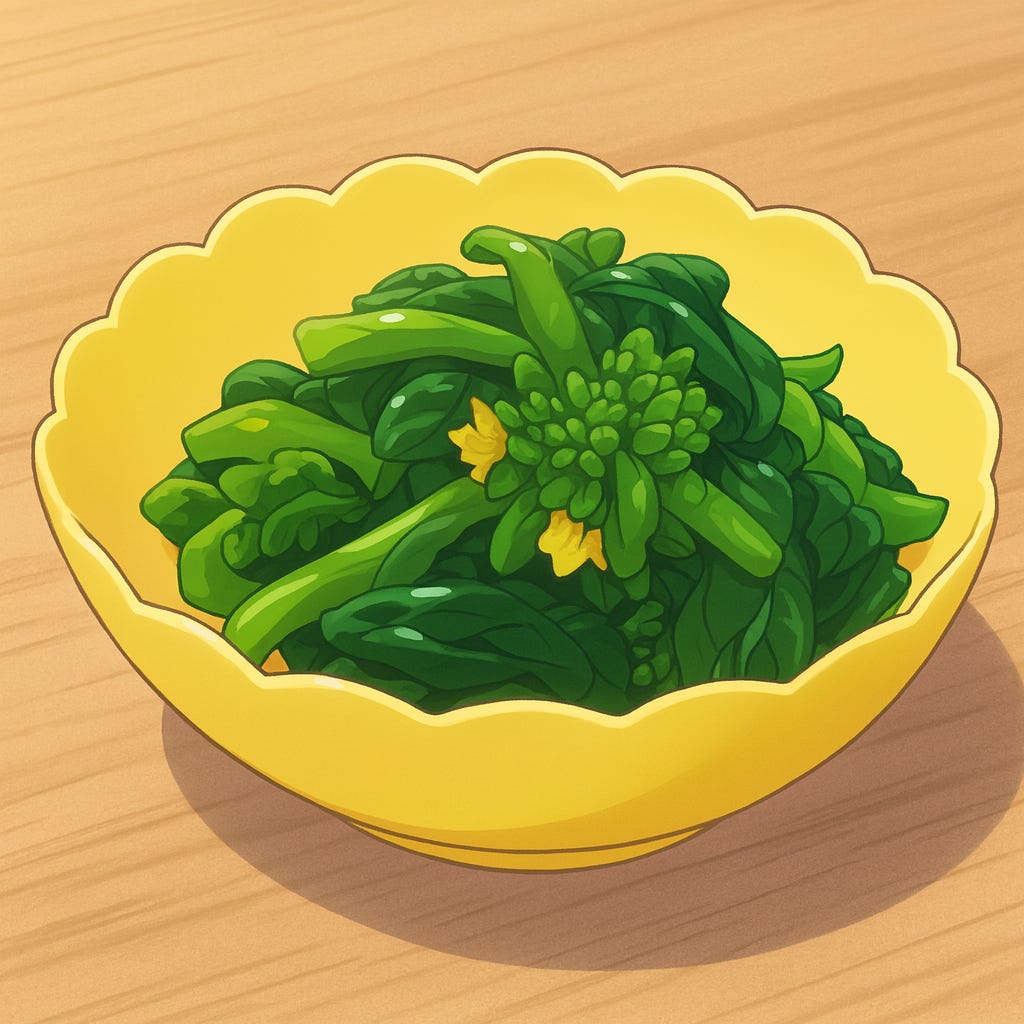
This is a free preview of a paid episode. To hear more, visit learndeliciousjapanese.substack.com#25 Learn Japanese: Kansai Spring Flavors | Izakaya Recipe: Nanohana no Karashi-ae (Week 1) Step into Level 3 — and into the warm, energetic world of かんさいべん (Kansai dialect)! This week, Nami and Namihei welcome spring at the izakaya in Osaka's Ura-Tennoji with a beautifully simple dish: なのはなのからしあえ (mustard-dressed canola flowers). As nanohana blooms outside the shop, Nami faces two new challenges at once — a vegetable she's never cooked before, and a dialect she's never spoken. Namihei cheers her on in full Kansai mode: 「だいじょうぶや!はるのにがみと、からしのからみがあわさったら、さいこうのいっぴんになるで!」Master the heart of Kansai dialect with key expressions: や (Kansai copula replacing だ), 〜とる/さいとる (ongoing action, Kansai version of 〜ている), したる (determined "I'm going to do it!"), ほんま (really/truly), めっちゃ (very/extremely), そうやね (that's right), やで/やな/やろ (sentence-ending particles full of warmth and personality). Learn spring vocabulary that brings the season to life: なのはな (canola flowers), はるのめぐみ (spring's blessing), はるのみかく (spring flavors), にがみ (bitterness), からみ (spiciness), あわさる (to come together/combine), おとなのあじ (adult taste), いっぴん (finest dish). Discover the cultural philosophy of はるのにがみ — why bitterness in spring vegetables is celebrated in Japanese food culture as からだのめざめ (the body's awakening after winter), きせつのかんしゃ (gratitude for the season), and a sign of みかくのせいじゅく (palate maturity). Explore the rich world of かんさいぶんか (Kansai culture) — the difference between おおさかべん and きょうとことば, why Kansai dialect is described as 「きもちがこもった、あたたかいことば」(a warm language full of feeling), and the famous おんていのちがい (pitch differences) that make Kansai Japanese sound so distinctive. Follow the complete traditional なのはなのからしあえ recipe: the いろどめ (color-fixing) technique of plunging blanched nanohana into ice water, why うすくちしょうゆ is essential to preserve the beautiful green and yellow colors, how to dissolve こなからし (mustard powder) in だしじる for a smooth dressing, and the golden rule — たべるちょくぜんにあえる (dress just before eating). Plus five アレンジバリエーション (arrangement variations): ぽんずからしあえ (ponzu citrus twist), ごまあえ (sesame dressing), あぶらあげいり (with crispy fried tofu — inspired by the Kyoto はつうま tradition), からしマヨネーズあえ (karashi mayo for a milder, Western-friendly version), and みそからしあえ (white miso for rich fermented depth). Feel the spirit of Level 3 begin when Nami declares: 「よし!ちょうせんしたる!」(Alright, I'll take on the challenge!) — and understand why Namihei says かんさいべんは、こころのことばやで (Kansai dialect is the language of the heart). Level 3 スタートおめでとうございます!Perfect for intermediate learners (JLPT N3-N2) ready to explore regional dialects, deepen their understanding of Japanese seasonal food culture, and discover how the language of Osaka brings warmth and energy to every conversation in the kitchen. 📚📚Check Out the Full Study Guide on Substack https://learndeliciousjapanese.substack.com/
Embed this episode
NOW PLAYING
#25 Learn Japanese: Kansai Spring Flavors | Izakaya Recipe: Nanohana no Karashi-ae (Week 1)
No transcript for this episode yet
Similar Episodes
No similar episodes found.
Similar Podcasts
No similar podcasts found.