
EPISODE · Apr 3, 2025 · 31 MIN
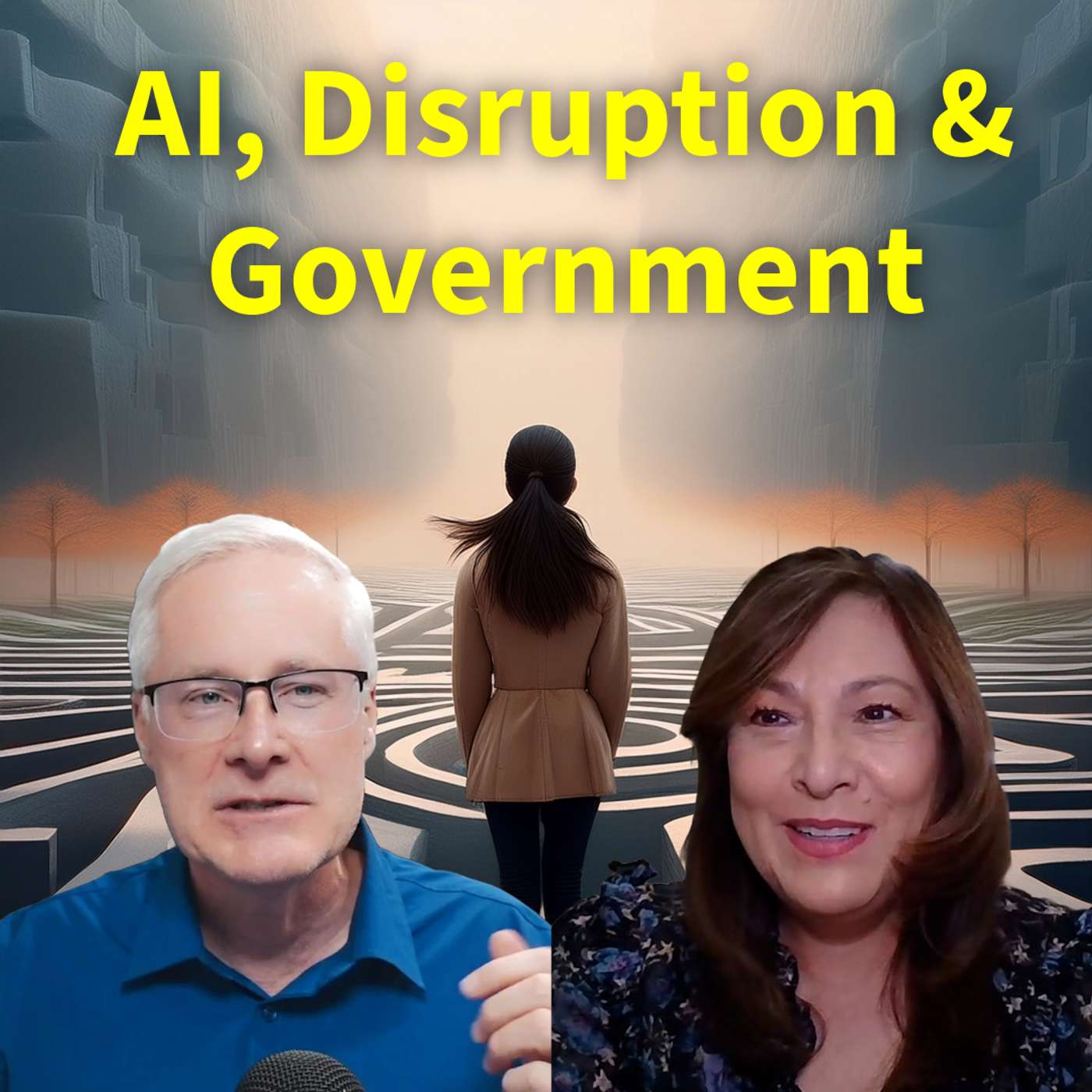
#255 AI, Disruption and Government, Managing Career Growth
from Embracing Digital Transformation · host Dr. Darren Pulsipher
Check out my new book AI Augmented Teams on Amazon or on my website paidar.ai/books.In this engaging episode, Dr. Darren and Dr. Madeleine Wallace discuss the current disruptions in the government and consulting sectors, emphasizing the importance of efficiency and effectiveness in programs. They explore the challenges of navigating government structures, the importance of data management, and the pressing need for upskilling and reskilling in the era of AI. The discussion underscores the importance of individual responsibility in career development and the evolving nature of work in response to technological advancements, particularly the urgency of adapting to the AI era. Takeaways Darren has completed his PhD dissertation. Disruption is affecting both the government and consulting sectors. Understanding the difference between efficiency and effectiveness is crucial. Government structures can complicate communication and data sharing. Data management challenges hinder effective program evaluation. The urgent need for upskilling and reskilling in the era of AI. Individuals must take responsibility for their career development. Agility is necessary for adapting to changes in the workforce. The importance of merging data for effective evaluations. The workbook concept in Madeline's book provides practical tools for career development.In today's rapidly evolving digital landscape, individuals and organizations alike must navigate the complexities of technological disruption. From advances in artificial intelligence (AI) to shifting government policies, we find ourselves at the intersection of efficiency, effectiveness, and career growth. By embracing these changes rather than resisting them, we can harness new skills that enable us to thrive. In this post, we will explore the responsibilities of individuals in adapting to the digital age, the distinctions between efficiency and effectiveness, and the crucial role of continuous learning in staying ahead of the curve. Taking Ownership of Your Career DevelopmentAs technology continues to advance at an unprecedented pace, individuals must take charge of their career trajectories. Relying solely on employers to provide training and development opportunities is no longer a sustainable strategy. Today, it is essential for professionals to seek out resources such as online courses, industry publications, and professional networks, and engage in self-education actively. This proactive approach enables individuals to remain relevant in their fields and develop skills that enhance their marketability.One way to assess your current skill set is to identify your transferable skills—those abilities that can be applied across different roles and industries. Evaluate your strengths and weaknesses and determine how they align with emerging trends in your field. This self-reflection can help you create a personalized development plan. Start by setting specific goals, such as obtaining a certain certification or gaining experience in a particular area. Then, outline the steps you need to take to achieve these goals, such as enrolling in a course or seeking a mentor. Remember, you have the agency and responsibility to shape your future. The Balance Between Efficiency and EffectivenessUnderstanding the difference between efficiency and effectiveness can significantly impact the outcomes of organizational programs and initiatives. Efficiency focuses on the optimal use of resources—how quickly and cost-effectively tasks can be completed. Conversely, effectiveness is concerned with achieving the desired outcomes—whether a program meets its goals and delivers expected results. For example, a program designed to recruit underrepresented groups into STEM fields may be efficient but not effective if it fails to retain participants or foster career advancement. Therefore, organizations must evaluate both efficiency and effectiveness when assessing their processes. This dual approach involves not only measuring how quickly and cost-effectively tasks are completed but also ensuring that the program is achieving its goals and delivering expected results. By balancing these two factors, companies can refine their programs and contribute to a more equitable, inclusive workforce.Organizations must implement ongoing assessments of both efficiency and effectiveness to create a culture that values continuous improvement. This involves collecting data, analyzing performance metrics, and soliciting feedback from employees. In doing so, leadership can make informed decisions that promote growth and resilience in the face of change. Fostering a Culture of UpskillingIn an era of rapid technological advancement, organizations must prioritize upskilling to remain competitive. This cultural shift not only benefits employees by preparing them for future challenges but also positions organizations to adapt and thrive in an evolving marketplace. While companies should take responsibility for providing learning opportunities, employees must also embrace personal responsibility for their professional development.Investing in a growth mindset is not just beneficial, it's essential for fostering a culture of continuous learning. Organizations can support this by encouraging employees to engage in exploratory learning experiences, such as hackathons, workshops, and collaborative projects. By embracing the agile methodology and iterative design, individuals can experiment, gather feedback, and refine their learning processes through iteration. This can lead to innovative solutions that drive business success while empowering employees to take ownership of their careers.Moreover, organizations should recognize the critical role that human capital plays in navigating technological disruption. As technology continues to evolve, skilled individuals—those who can effectively leverage new tools and methods—are increasingly valuable assets. Companies that prioritize employee development will position themselves as leaders in their industries, ultimately benefiting from enhanced performance, innovation, and morale. Embrace the Digital TransformationThe advent of AI and other disruptive technologies brings both challenges and opportunities for individuals and organizations alike. By embracing personal responsibility for career development, understanding the distinctions between efficiency and effectiveness, and cultivating a culture of continuous learning and upskilling, we position ourselves to thrive in the digital age.As we navigate these changes, let us commit to being active participants in our economic future, equipping ourselves with the necessary skills to succeed. Here’s to embracing change and transforming our careers—because the future is ours to shape!
Embed this episode
NOW PLAYING
#255 AI, Disruption and Government, Managing Career Growth
No transcript for this episode yet
Similar Episodes
No similar episodes found.
Similar Podcasts
No similar podcasts found.