
EPISODE · Feb 4, 2026 · 26 MIN
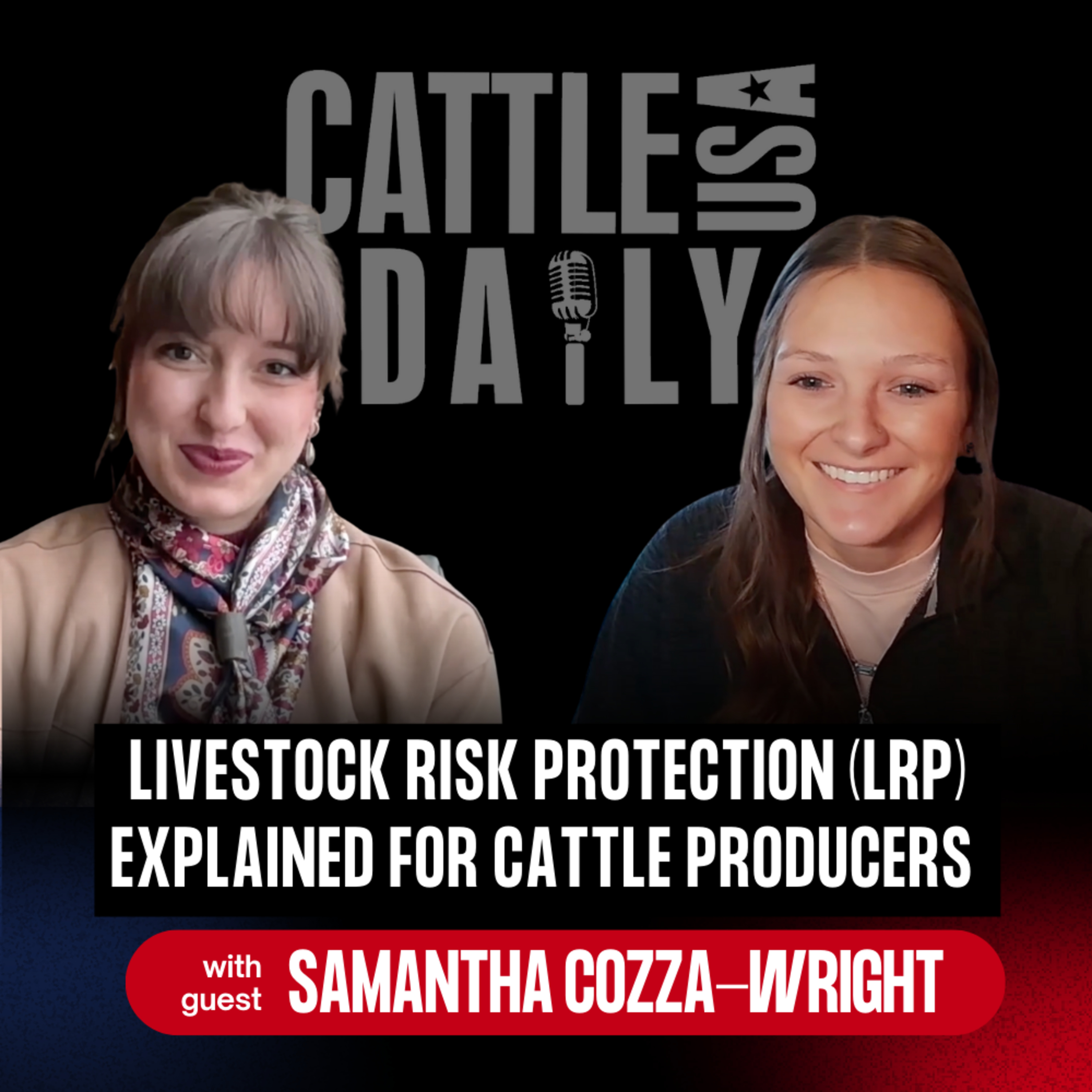
257: Livestock Risk Protection (LRP) Explained for Cattle Producers with Samantha Cozza-Wright
from CattleUSA Daily · host Lauren Moylan | Cattle USA
Livestock Risk Protection has carried a bad reputation for years, often built on misinformation, outdated assumptions, and overly complicated explanations. In this episode, Lauren is joined by Samantha Cozza-Wright to break LRP down at a practical, producer-first level. From what LRP actually is to how it settles, how weights and timing work, and why flexibility is one of its biggest strengths, this conversation strips away the noise and focuses on how producers can realistically use LRP as a risk management tool. This episode is a true foundation-builder designed to educate, not sell.LinksCattleUSA Insurance - https://info.cattleusainsurance.com/l/1102253/2025-06-04/288f5mCattleUSA Website - https://www.cattleusa.com/Facebook - https://www.facebook.com/cattleusamediaInstagram - https://www.instagram.com/cattleusa.media/Subscribe to our newsletter - https://www.cattleusadrive.com/premiumCattleUSA Media - https://www.cattleusamedia.com/Lauren’s Instagram - https://www.instagram.com/_laurenmoylan/Lauren’s Youtube - https://www.youtube.com/@ShowboatmediacoThe Next Generation Podcast Website - https://www.thenextgenag.com/Takeaways• LRP is a government-subsidized insurance product, not a futures contract• It functions like a put option designed to protect downside risk• Producers keep full upside participation if markets rally• LRP does not settle on your individual cash sale price• Coverage is based on national market indices, not local prices• Weight flexibility exists as long as cattle remain within class ranges• Feeder cattle do not have to be sold by the coverage end date• Fed cattle must be marketed within the allowable window to remain eligible• Premiums are not due upfront and include a grace period after coverage ends• LRP premiums are typically cheaper than traditional futures options• Additional subsidies are available for beginning and veteran producers• Coverage can be booked per head, allowing small-scale participation• Applications do not obligate producers to purchase coverage• Quotes are updated daily and tied directly to futures markets• LRP is best used to protect breakevens, not predict market highsChapters00:00 Why LRP carries a bad reputation01:45 What Livestock Risk Protection actually is02:45 How indemnity payments work04:00 Weight classes and flexibility explained05:00 Why LRP does not settle on cash sales06:30 Feeder cattle vs fed cattle coverage rules07:25 How ending values are determined08:45 Premium costs, subsidies, and affordability10:30 Why per-head coverage matters12:10 The LRP application process13:55 Daily quotes and booking windows15:45 Coverage levels and timelines18:15 Premium examples and cost breakdown20:20 Claim process and documentation22:45 Using LRP for peace of mind, not perfectionlivestock risk protection, LRP insurance, cattle market risk management, feeder cattle insurance, fed cattle insurance, cattle price protection, USDA LRP program, cattle hedging alternatives, risk management for ranchers, cattle market volatility, producer education, cattle marketing strategies
Embed this episode
NOW PLAYING
257: Livestock Risk Protection (LRP) Explained for Cattle Producers with Samantha Cozza-Wright
No transcript for this episode yet
Similar Episodes
No similar episodes found.
Similar Podcasts
No similar podcasts found.