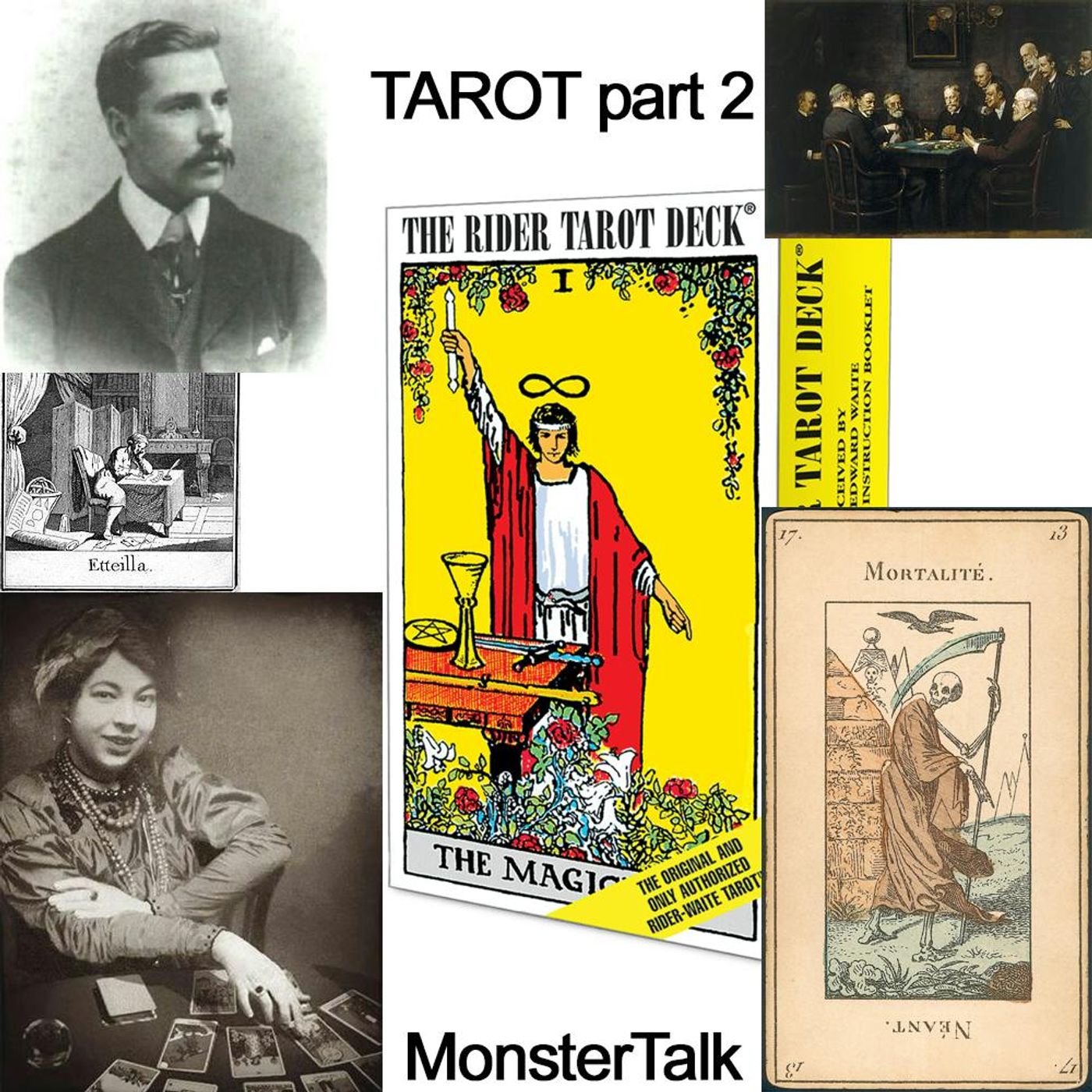
263 - Tarot (Part 2) episode artwork

EPISODE · Oct 10, 2022 · 36 MIN

263 - Tarot (Part 2)

from MonsterTalk · host Blake Smith

S02E02 - We continue our discussion of Tarot with some (hopefully interesting) digressions into Kabbalah and more. This episode is brought to you by BetterHelp. Give online therapy a try at betterhelp.com/monstertalk and get on your way to being your best self. Show Notes: The "egg trick" - article by Joe Nickell The Sefirot "explained" - video (there are many of these and I don't know which are most accurate) Ultima IV (from the intro) The lovely art of the Rider Waite Smith deck (from Tartot.com) Kabbalah (wikipedia) The Sefirot (wikipedia) the tree of life of the Kabbalah An interesting video that explains the concepts in the Sefirot (there are MANY of these on YouTube and I'm not endorsing any of them - just sharing an example) Because this is a two-parter and I don't know who will catch only 1 part, I'm including the notes from part 1 here as well: Trick-Taking Games - card games where each round has a winner, usually seeking most points over the duration of multiple rounds. Playing card suits The Marseilles Deck (tarot.com) see also Wikipedia coverage. A lot of what we know about historical Tarot and its relationship to divination comes from Michael Dummett (1925 - 1911) an English philosopher and academic. The Game of Tarot: From Ferrara to Salt Lake City (1980) is out of print and way, way overpriced but you can read it on Scribd with a basic subscription. A brief history of Playing Cards and further reading on the same topic over at Britannica. A history of Cartomancy (wikipedia) Forms of Divination (wikipedia) What is a stripped deck? A history of Tarot cards (from Bicycle playing card company) Jean-Baptiste Alliette aka "Etteilla" (1738 - 1791) the Frenchman who "invented" the use of Tarot for divination and tied it to ancient Egypt (via a false history, prior to the Rosetta stone and rediscovery of how to read hieroglyphs from Egypt) He wrote a book called Etteilla, ou manière de se récréer avec un jeu de cartes ("Etteilla, or a Way to Entertain Yourself With a Deck of Cards") in 1770. Excerpt from Wikipedia: "In 1781 the French Swiss Protestant clergyman and occultist Antoine Court who named himself Court de Gébelin published in his massive work Le Monde primitif his idea that the Tarot was actually an ancient Egyptian book of arcane wisdom; his work included an essay by the Comte de Mellet who first called tarot cards the Book of Thoth and, crucially, claimed that the Egyptians used the cards for fortune-telling and described what purported to be their method of divination." Note: The key to unlocking ancient Egyptian (the Rosetta Stone) hadn't even been recovered yet so the idea that people are reading ancient Egyptian wisdom and using it to develop card divination to preserve some ancient wisdom is preposterous. The stone with its multiple languages repeating the same text was found in 1799 but wasn't translated until 1822. After the popularity of Court's book, Alliette quickly produces: Manière de se récréer avec le jeu de cartes nommées Tarots ("How to Entertain Yourself With the Deck of Cards Called Tarot") in 1785 Rider-Waite (Smith) Tarot Deck How to play the game Tarot (French style) A Wicked Pack of Cards: Origins of the Occult Tarot - by Michael Dummett and Ronald Decker U. S. Games Systems Inc. brought Tarot to America in 1967. Founder Stuart Kaplan (who passed away in 2021) spent a lot of time researching illustrator Pamela Coleman Smith and restoring her long overdue historical significance. Previous episodes on Western EsotericismBecome a supporter of this podcast: https://www.spreaker.com/podcast/monstertalk--6267523/support.Some product links may be affiliated with Amazon revenue sharing.

Episode metadata supplied by the publisher feed · Published Oct 10, 2022

S02E02 - We continue our discussion of Tarot with some (hopefully interesting) digressions into Kabbalah and more. This episode is brought to you by BetterHelp. Give online therapy a try at betterhelp.com/monstertalk and get on your way to being your best self. Show Notes: The "egg trick" - article by Joe Nickell The Sefirot "explained" - video (there are many of these and I don't know which are most accurate) Ultima IV (from the intro) The lovely art of the Rider Waite Smith deck (from Tartot.com) Kabbalah (wikipedia) The Sefirot (wikipedia) the tree of life of the Kabbalah An interesting video that explains the concepts in the Sefirot (there are MANY of these on YouTube and I'm not endorsing any of them - just sharing an example) Because this is a two-parter and I don't know who will catch only 1 part, I'm including the notes from part 1 here as well: Trick-Taking Games - card games where each round has a winner, usually seeking most points over the duration of multiple rounds. Playing card suits The Marseilles Deck (tarot.com) see also Wikipedia coverage. A lot of what we know about historical Tarot and its relationship to divination comes from Michael Dummett (1925 - 1911) an English philosopher and academic. The Game of Tarot: From Ferrara to Salt Lake City (1980) is out of print and way, way overpriced but you can read it on Scribd with a basic subscription. A brief history of Playing Cards and further reading on the same topic over at Britannica. A history of Cartomancy (wikipedia) Forms of Divination (wikipedia) What is a stripped deck? A history of Tarot cards (from Bicycle playing card company) Jean-Baptiste Alliette aka "Etteilla" (1738 - 1791) the Frenchman who "invented" the use of Tarot for divination and tied it to ancient Egypt (via a false history, prior to the Rosetta stone and rediscovery of how to read hieroglyphs from Egypt) He wrote a book called Etteilla, ou manière de se récréer avec un jeu de cartes ("Etteilla, or a Way to Entertain Yourself With a Deck of Cards") in 1770. Excerpt from Wikipedia: "In 1781 the French Swiss Protestant clergyman and occultist Antoine Court who named himself Court de Gébelin published in his massive work Le Monde primitif his idea that the Tarot was actually an ancient Egyptian book of arcane wisdom; his work included an essay by the Comte de Mellet who first called tarot cards the Book of Thoth and, crucially, claimed that the Egyptians used the cards for fortune-telling and described what purported to be their method of divination." Note: The key to unlocking ancient Egyptian (the Rosetta Stone) hadn't even been recovered yet so the idea that people are reading ancient Egyptian wisdom and using it to develop card divination to preserve some ancient wisdom is preposterous. The stone with its multiple languages repeating the same text was found in 1799 but wasn't translated until 1822. After the popularity of Court's book, Alliette quickly produces: Manière de se récréer avec le jeu de cartes nommées Tarots ("How to Entertain Yourself With the Deck of Cards Called Tarot") in 1785 Rider-Waite (Smith) Tarot Deck How to play the game Tarot (French style) A Wicked Pack of Cards: Origins of the Occult Tarot - by Michael Dummett and Ronald Decker U. S. Games Systems Inc. brought Tarot to America in 1967. Founder Stuart Kaplan (who passed away in 2021) spent a lot of time researching illustrator Pamela Coleman Smith and restoring her long overdue historical significance. Previous episodes on Western EsotericismBecome a supporter of this podcast: https://www.spreaker.com/podcast/monstertalk--6267523/support.Some product links may be affiliated with Amazon revenue sharing.

PodParley-generated summary based on available episode metadata and transcript content.

NOW PLAYING

263 - Tarot (Part 2)

0:00 36:55

No transcript for this episode yet

We transcribe on demand. Request one and we'll notify you when it's ready — usually under 10 minutes.

No similar episodes found.

No similar podcasts found.

Frequently Asked Questions

How long is this episode of MonsterTalk?

This episode is 36 minutes long.

When was this MonsterTalk episode published?

This episode was published on October 10, 2022.

What is this episode about?

S02E02 - We continue our discussion of Tarot with some (hopefully interesting) digressions into Kabbalah and more. This episode is brought to you by BetterHelp. Give online therapy a try at betterhelp.com/monstertalk and get on your way to being...

Can I download this MonsterTalk episode?

Yes, you can download this episode by clicking the download button on the episode player, or subscribe to the podcast in your preferred podcast app for automatic downloads.
URL copied to clipboard!