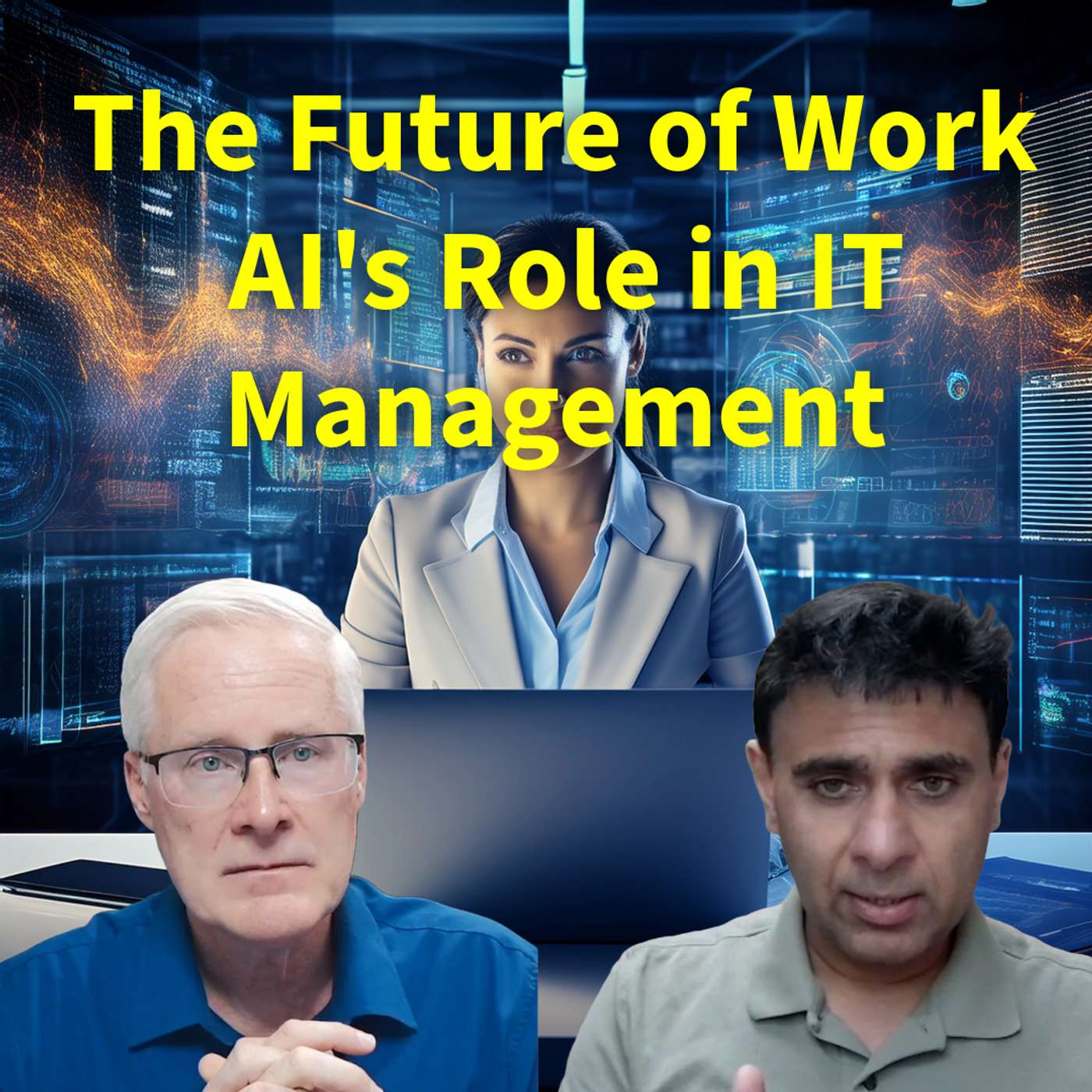
#275 The Future of Work: AI's Role in IT Management episode artwork

EPISODE · Jul 10, 2025 · 34 MIN

#275 The Future of Work: AI's Role in IT Management

from Embracing Digital Transformation · host Dr. Darren Pulsipher

Check out my new book AI Augmented Teams on Amazon or on my website paidar.ai/books.In this episode of "Embracing Digital Transformation," host Dr. Darren welcomes special guest Shirish Nimgaonkar, founder and CEO of eBlissAI, to explore the topic "The Future of Work: AI's Role in IT Management." This insightful discussion delves into how AI is transforming the workplace, with a specific focus on the complexities of device management. Together, they investigate the balance between automation and human intervention, emphasizing the need for effective diagnosis and root cause analysis in device management. Tim shares his journey from a passion for experimentation to creating AI solutions that not only solve issues but also predict and prevent future problems, ultimately aiming to enhance employee productivity and satisfaction in an increasingly tech-driven world. ## Takeaways - AI is not just replacing workers; it's evolving the nature of jobs, requiring reskilling and adaptation. - The importance of a deeper diagnosis in IT management to address root causes rather than just symptoms of problems. - A collaborative approach between AI and human specialists can lead to enhanced problem-solving capabilities. - Predictive capabilities in AI can revolutionize device management by minimizing downtime and improving productivity. - The effective interplay of general knowledge and specialized expertise is crucial for successful AI integration. ## Chapters - **0:00 - Introduction** - **1:30 - The Evolution of Work and Technology** - **4:30 - Background and Journey** - **10:00 - The Complexities of Device Management** - **15:00 - Moving Beyond Symptoms to Root Causes** - **22:00 - The Role of AI in Diagnosis and Automation** - **30:00 - Human and AI Collaboration**In today's fast-paced technological environment, the workplace is undergoing a transformative shift driven by advancements in artificial intelligence (AI) and automation. As economies evolve, a standard narrative emerges—one of increasing productivity, reskilling, and ultimately, human happiness. Understanding this evolution requires not only examining how AI impacts management but also dissecting how it reshapes the workforce landscape. The Shift in Role: From Labor to StrategyHistorically, the introduction of new technologies has often raised concerns about job displacement. However, much like prior industrial revolutions, the current wave of digital transformation paves the way for a shift in job roles rather than outright elimination. Today, we find ourselves in an era where repetitive and mundane tasks are increasingly automated, enabling workers to transition to more strategic roles.This shift should not be viewed through the lens of loss but rather as a reevaluation of workforce skills. The real challenge lies in reskilling—equipping employees with the knowledge and expertise to navigate an AI-supported landscape. Training in new skills that align with AI capabilities is crucial, as it prepares employees to tackle complex problem-solving and fosters innovation, creativity, and interpersonal interactions that machines cannot replicate.Moreover, organizations that embrace this transformation and invest in their workforce's continual development often see an increase in employee satisfaction and engagement. As employees gain confidence in their roles and adapt to the changing job landscape, their productivity tends to surge, creating a positive cycle of personal and organizational growth. Proactive Problem Solving: Moving Beyond ReactionWith the integration of AI, the focus within organizations is shifting from reactive problem-solving to proactive measures that enhance efficiency and effectiveness. Instead of merely addressing symptoms—akin to treating a fever without understanding the underlying illness—companies can leverage AI to diagnose and resolve fundamental issues.For instance, employing an AI-driven self-learning knowledge base allows organizations to track and analyze a vast array of device performance data. This continuous monitoring enables a clear understanding of both generic and personalized abnormal patterns, allowing for tailored interventions. By predicting potential issues before they arise, businesses can minimize downtime and enhance the overall productivity of their workforce.Additionally, proactive approaches foster a smoother workflow, allowing employees to focus on their primary responsibilities without the distractions of constant troubleshooting. This not only enhances the employee experience but also contributes to better customer service, as satisfied employees are more equipped to provide exceptional support. The Human-Machine Interplay: Embracing CollaborationAs AI tools take over repetitive tasks, the emphasis is shifting increasingly to the collaborative relationship between humans and machines. In any organization, fostering an environment where both sides work harmoniously is essential. AI can serve as a powerful ally by assisting employees in decision-making processes, prompting them to think more critically about challenges they encounter.The human element remains vital, especially when it comes to understanding complex problems that machines may struggle to interpret fully. AI's capacity for pattern recognition can be complemented by human intuition and expertise, ultimately unearthing solutions that may not have been otherwise apparent. As a result, organizations need to cultivate roles that leverage AI's data-processing capabilities in conjunction with human creativity and judgment.Furthermore, promoting an atmosphere of open communication and iterative feedback between employees and AI systems can enhance the effectiveness of this collaboration. As employees become more comfortable with AI tools, they can actively participate in refining processes and improving outcomes, leading to sustained innovation and growth. Preparing for a New TomorrowThe landscape of work is undoubtedly changing, fueled by the rise of AI and automation. As we navigate these shifts, embracing a mindset of adaptability and resilience will be critical. By focusing on reskilling the workforce, prioritizing proactive problem-solving approaches, and fostering collaborative efforts between humans and machines, organizations can position themselves for success in an increasingly complex world.As you consider the implications of these changes, think about how you can leverage new skills and tools to remain relevant in your field. The future of work is not just about technology; it's about enhancing the human experience and reimagining how we define productivity and job satisfaction in this exciting new era.

Check out my new book AI Augmented Teams on Amazon or on my website paidar.ai/books.In this episode of "Embracing Digital Transformation," host Dr. Darren welcomes special guest Shirish Nimgaonkar, founder and CEO of eBlissAI, to explore the topic "The Future of Work: AI's Role in IT Management." This insightful discussion delves into how AI is transforming the workplace, with a specific focus on the complexities of device management. Together, they investigate the balance between automation and human intervention, emphasizing the need for effective diagnosis and root cause analysis in device management. Tim shares his journey from a passion for experimentation to creating AI solutions that not only solve issues but also predict and prevent future problems, ultimately aiming to enhance employee productivity and satisfaction in an increasingly tech-driven world. ## Takeaways - AI is not just replacing workers; it's evolving the nature of jobs, requiring reskilling and adaptation. - The importance of a deeper diagnosis in IT management to address root causes rather than just symptoms of problems. - A collaborative approach between AI and human specialists can lead to enhanced problem-solving capabilities. - Predictive capabilities in AI can revolutionize device management by minimizing downtime and improving productivity. - The effective interplay of general knowledge and specialized expertise is crucial for successful AI integration. ## Chapters - **0:00 - Introduction** - **1:30 - The Evolution of Work and Technology** - **4:30 - Background and Journey** - **10:00 - The Complexities of Device Management** - **15:00 - Moving Beyond Symptoms to Root Causes** - **22:00 - The Role of AI in Diagnosis and Automation** - **30:00 - Human and AI Collaboration**In today's fast-paced technological environment, the workplace is undergoing a transformative shift driven by advancements in artificial intelligence (AI) and automation. As economies evolve, a standard narrative emerges—one of increasing productivity, reskilling, and ultimately, human happiness. Understanding this evolution requires not only examining how AI impacts management but also dissecting how it reshapes the workforce landscape. The Shift in Role: From Labor to StrategyHistorically, the introduction of new technologies has often raised concerns about job displacement. However, much like prior industrial revolutions, the current wave of digital transformation paves the way for a shift in job roles rather than outright elimination. Today, we find ourselves in an era where repetitive and mundane tasks are increasingly automated, enabling workers to transition to more strategic roles.This shift should not be viewed through the lens of loss but rather as a reevaluation of workforce skills. The real challenge lies in reskilling—equipping employees with the knowledge and expertise to navigate an AI-supported landscape. Training in new skills that align with AI capabilities is crucial, as it prepares employees to tackle complex problem-solving and fosters innovation, creativity, and interpersonal interactions that machines cannot replicate.Moreover, organizations that embrace this transformation and invest in their workforce's continual development often see an increase in employee satisfaction and engagement. As employees gain confidence in their roles and adapt to the changing job landscape, their productivity tends to surge, creating a positive cycle of personal and organizational growth. Proactive Problem Solving: Moving Beyond ReactionWith the integration of AI, the focus within organizations is shifting from reactive problem-solving to proactive measures that enhance efficiency and effectiveness. Instead of merely addressing symptoms—akin to treating a fever without understanding the underlying illness—companies can leverage AI to diagnose and resolve fundamental issues.For instance, employing an AI-driven self-learning knowledge base allows organizations to track and analyze a vast array of device performance data. This continuous monitoring enables a clear understanding of both generic and personalized abnormal patterns, allowing for tailored interventions. By predicting potential issues before they arise, businesses can minimize downtime and enhance the overall productivity of their workforce.Additionally, proactive approaches foster a smoother workflow, allowing employees to focus on their primary responsibilities without the distractions of constant troubleshooting. This not only enhances the employee experience but also contributes to better customer service, as satisfied employees are more equipped to provide exceptional support. The Human-Machine Interplay: Embracing CollaborationAs AI tools take over repetitive tasks, the emphasis is shifting increasingly to the collaborative relationship between humans and machines. In any organization, fostering an environment where both sides work harmoniously is essential. AI can serve as a powerful ally by assisting employees in decision-making processes, prompting them to think more critically about challenges they encounter.The human element remains vital, especially when it comes to understanding complex problems that machines may struggle to interpret fully. AI's capacity for pattern recognition can be complemented by human intuition and expertise, ultimately unearthing solutions that may not have been otherwise apparent. As a result, organizations need to cultivate roles that leverage AI's data-processing capabilities in conjunction with human creativity and judgment.Furthermore, promoting an atmosphere of open communication and iterative feedback between employees and AI systems can enhance the effectiveness of this collaboration. As employees become more comfortable with AI tools, they can actively participate in refining processes and improving outcomes, leading to sustained innovation and growth. Preparing for a New TomorrowThe landscape of work is undoubtedly changing, fueled by the rise of AI and automation. As we navigate these shifts, embracing a mindset of adaptability and resilience will be critical. By focusing on reskilling the workforce, prioritizing proactive problem-solving approaches, and fostering collaborative efforts between humans and machines, organizations can position themselves for success in an increasingly complex world.As you consider the implications of these changes, think about how you can leverage new skills and tools to remain relevant in your field. The future of work is not just about technology; it's about enhancing the human experience and reimagining how we define productivity and job satisfaction in this exciting new era.

NOW PLAYING

#275 The Future of Work: AI's Role in IT Management

0:00 34:05

No transcript for this episode yet

We transcribe on demand. Request one and we'll notify you when it's ready — usually under 10 minutes.

Solving for Change MOBIA Technology Innovations Solving for Change welcomes business and technology leaders to share stories of bold business transformation within complex organizations. In an era when technology and markets are changing around businesses, the key to staying competitive is to evolve in response to those changes.  MOBIA’s Mike Reeves and Marc LeBlanc investigate business transformation, deconstructing the challenges, ambitions, and market disruptions that drive companies to embark on transformation journeys, and exploring their unique approaches to achieving meaningful outcomes.  What sparks leaders to pursue business transformation? How do they overcome the challenges along the way? What are the keys to creating enduring change?  Through in-depth conversations with business and technology leaders, Mike and Marc answer these questions and explore how businesses evolve by pulling four key transformation levers: people, process, technology, and culture. Darknet Discussions Darknet Discussions Welcome to "Darknet Discussions," the podcast that gets into the shadows of the internet to bring you the most intriguing, enlightening, and sometimes unsettling stories from the dark web. Hosted by seasoned darknet aficionados, each episode of "Darknet Discussions" explores the intricate dynamics of darknet markets, cybersecurity threats, and the digital underworld. Join us as we interview experts, discuss the latest trends in cybercrime, and shed light on the technologies that operate beneath the surface of everyday internet use. Also, we occasionally go off on a tangent about something completely unrelated. The Digital Experience Show by Enonic Enonic All you need to know about digital strategy, digital experiences, and CMS are covered in this podcast. Powered by NotebookLM. Tips, News and Stories for Older Adults Esther C Kane CAPS, C.D.S. "Tips, News, and Stories for Older Adults" delivers weekly insights tailored for seniors. We bring you summaries of curated news, practical advice, and inspiring stories that matter to the 55+ community. From health and finance to technology and lifestyle, our content keeps you informed and engaged. Sourced from trusted outlets, each episode offers valuable information for navigating your golden years. Join us as we explore aging with positivity, wisdom, and engaging stories. Your perfect companion for staying active, learning, and embracing life's later chapters.

Frequently Asked Questions

How long is this episode of Embracing Digital Transformation?

This episode is 34 minutes long.

When was this Embracing Digital Transformation episode published?

This episode was published on July 10, 2025.

What is this episode about?

Check out my new book AI Augmented Teams on Amazon or on my website paidar.ai/books.In this episode of "Embracing Digital Transformation," host Dr. Darren welcomes special guest Shirish Nimgaonkar, founder and CEO of eBlissAI, to explore the topic...

Can I download this Embracing Digital Transformation episode?

Yes, you can download this episode by clicking the download button on the episode player, or subscribe to the podcast in your preferred podcast app for automatic downloads.
URL copied to clipboard!