
EPISODE · Mar 25, 2026 · 15 MIN
#28 Learn Japanese Drama | Izakaya Recipe: Nanohana no Karashi-ae (Week 4)
from Learn Delicious Japanese · host Learn Delicious Japanese
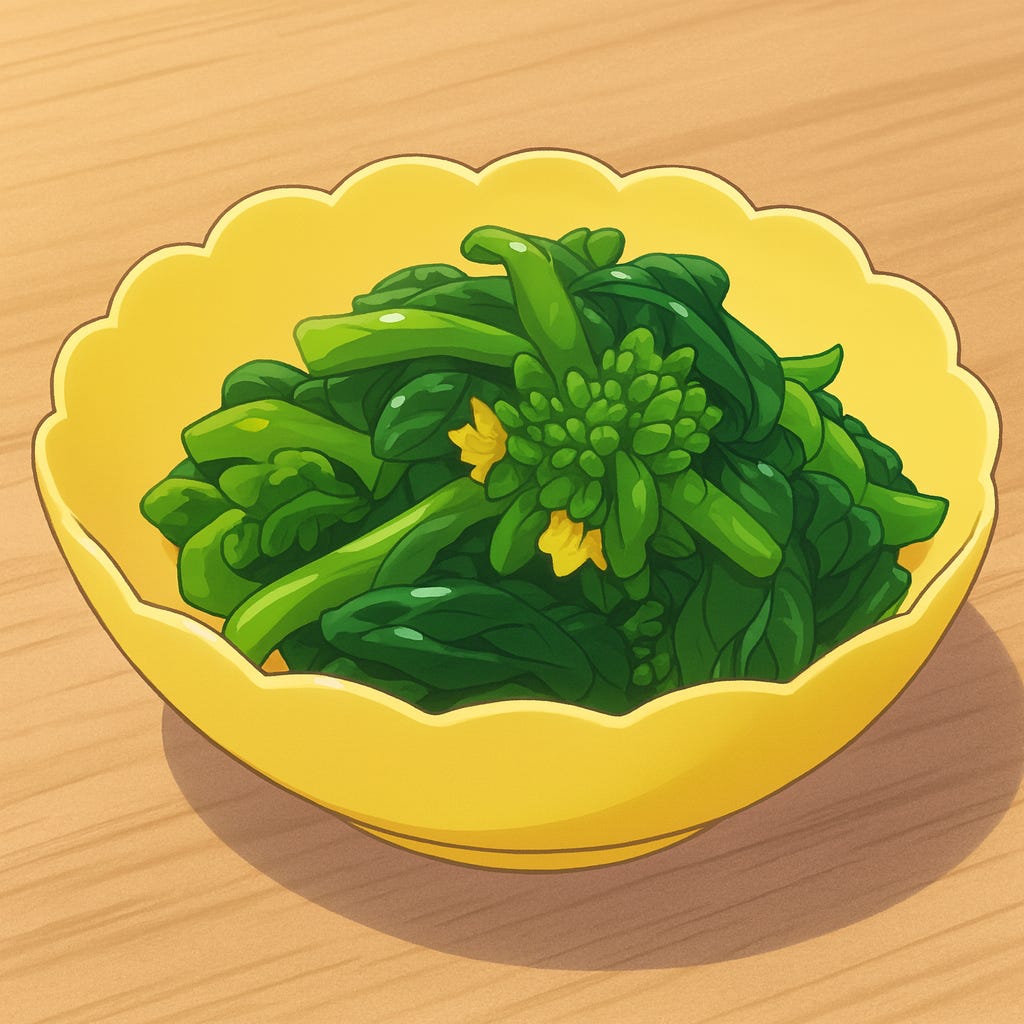
This is a free preview of a paid episode. To hear more, visit learndeliciousjapanese.substack.com#28 Learn Japanese Drama | Izakaya Recipe: Nanohana no Karashi-ae (Week 4)Level 3 Week 4 — the finale! This week, everything comes together in a complete Kansai dialect drama set in Nami's izakaya. No isolated lessons, no step-by-step breakdowns — just Nami and Namihei living the whole なのはなのからしあえ (mustard-dressed canola flowers) story from start to finish, entirely in the warm, direct language of Osaka. From the first scent of spring at the izakaya door to the final philosophical conversation over sake, this is your chance to hear everything you've learned in Weeks 1-3 flowing together as natural, emotional storytelling. Watch Nami go from doubt — 「このにがそうなやさい...ほんまにおいしくなるんかなあ?」— to determination — 「よし!ちょうせんしたる!」— to wonder — 「じんせいのあじ...ふかいなあ!」— all in one spring izakaya evening. Experience the full arc of cooking in Kansai dialect: Namihei's confident encouragement 〜になるで!(it will become the perfect dish!), Nami's ちょうせんしたる!(I'll show you I can do it!), and the cooking scene's cascade of ぎおんご (onomatopoeia) that makes Japanese kitchen language so alive — じゃばじゃば〜 (washing), ざくっ (cutting), ぼこぼこ (boiling), ざっぱーん (dropping into water), ちょろり・たらり (pouring seasonings), ぎゅっ (squeezing). Learn why ぎおんご are not just sound effects but a completely different way of experiencing action: when Namihei says 「じゃばじゃば〜」, you don't just understand "washing" — you feel the water moving. These twelve cooking onomatopoeia are your key to sounding natural and expressive in any Japanese kitchen conversation. Revisit the three-layered taste of spring one more time: 「にがみ」「からみ」「うまみ」のさんじゅうそう — and feel how much more naturally you understand it now than you did in Week 1. Hear Namihei's narrator voice weave the philosophy of おとなのあじ (adult taste) back into the story — and discover the grammar pattern 〜をとおして (through / by means of), a quietly powerful expression that sits at the very heart of what Learn Delicious Japanese is about: 「りょうりをとおして、にほんごをまなぶ。」Learn Kansai declaration expressions that carry real energy: ちょうせんしたる!(I'll take it on!), そのとおりや!(exactly right!), and feel the difference between Kansai's warm, direct emotional language and standard Japanese — 「かんさいべんは、きもちがストレートにつたわるんが、ええところやな。」Plus a deep dive into the world of はるのさんさい (spring mountain vegetables) — the wild, seasonal ingredients that tell Japanese people winter is truly over. Discover what さんさい (wild mountain vegetables) are, why their short season makes them so treasured, and why the slight bitterness that defines them — the same はるのにがみ from this whole series — is something Japanese people look forward to all year. Five new アレンジバリエーション introduce you to Japan's most beloved spring sansai, each paired with an aemono dressing that connects back to the techniques you've learned: たけのことなのはなの2しゅもり (takenoko and nanohana together on one plate — two spring blessings, one dish), ふきのとうのみそあえ (butterbur bud — the very first sansai to push up through the snow, its strong bitterness softened with the richness of miso), たらのめのごまあえ (aralia bud — 「やまのおうさま」, the king of the mountains, dressed in fragrant ground sesame), わらびのからしあえ (bracken fern — the same dressing as this series' own からしあえ, so if you can make nanohana karashi-ae, you can make this too), and うどのあえもの (Japanese spikenard — crisp, refreshing, aromatic, with a fragrance that Japanese people say makes you feel the spring mountains). Perfect for intermediate learners (JLPT N3-N2) ready to experience the full emotional range of Kansai dialect in a complete story, understand how ぎおんご bring Japanese cooking to life, and discover why spring in Japan is not just a season but a feeling you can taste — 「はるがきた!」📚Check Out the Full Study Guide on Substack https://learndeliciousjapanese.substack.com/
Embed this episode
NOW PLAYING
#28 Learn Japanese Drama | Izakaya Recipe: Nanohana no Karashi-ae (Week 4)
No transcript for this episode yet
Similar Episodes
No similar episodes found.
Similar Podcasts
No similar podcasts found.