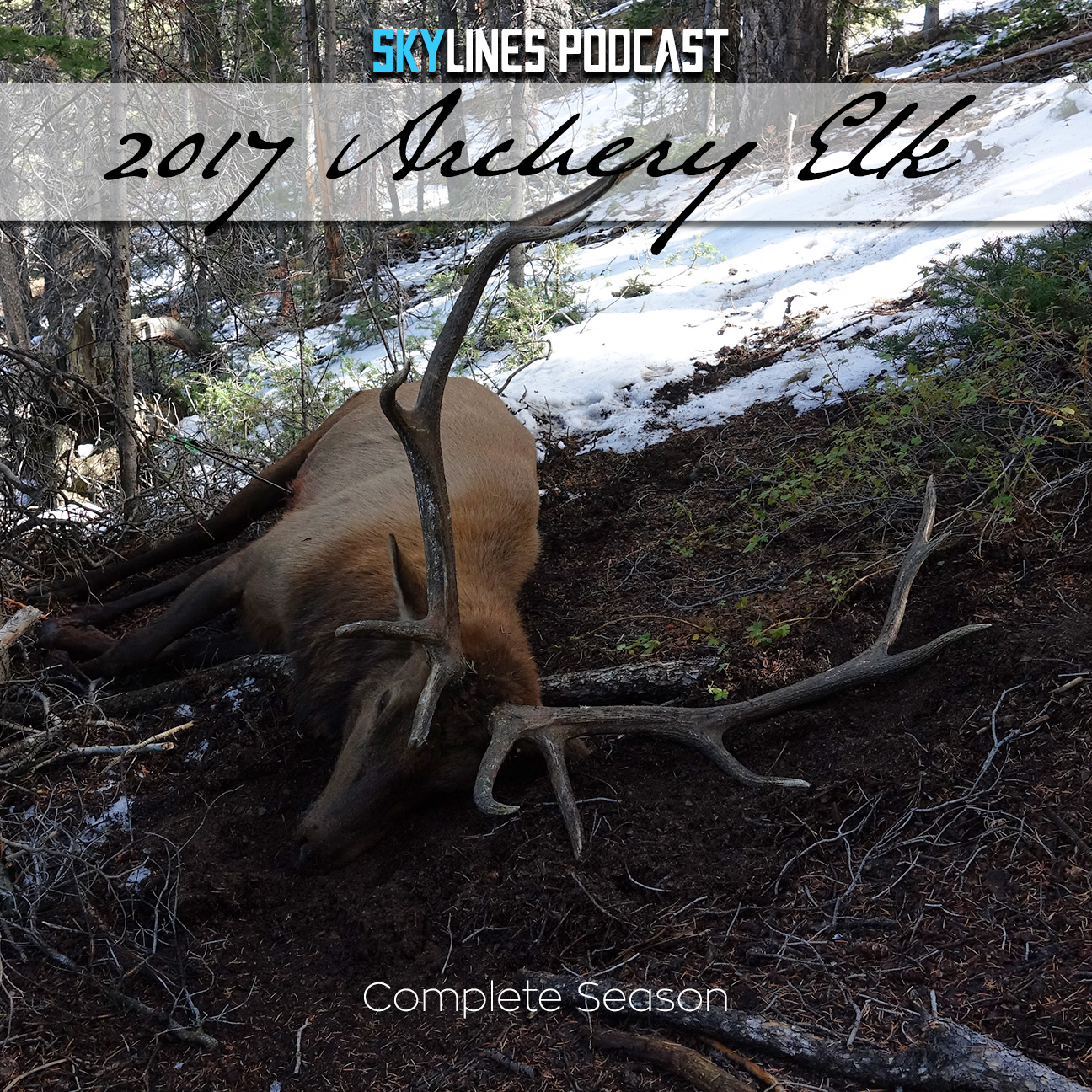
The 2017 archery season approached in a state of tremendous confidence and optimism. I'd begun a respectable training regimen in July that consisted of trail running with weights three days a week. For the first time in nine years, my longtime hunting buddy Adam from Oregon was again going to Annie up to hunt with me in Idaho. Another first since 2004, I'd finally upgraded to a bow with current technology, and we were setting our sights on an entirely new area that appeared to have great potential.
Most importantly, as a new father, my wife, Ali, had secured a full week off work to allow a nine-day venture in the backcountry. And finally, my great friend Ian from the 2014 and 2015 RUT reports cleared his week and the three of us planned a luxurious RV base camp to shoulder both sides of a wilderness spike camp elk hunt. The table was set for epic results. My season was officially underway the second week of September when I was able to sneak out for a preliminary solo outing.
This would be my first opportunity to see these new areas in person and get a real sense that they'd hunt as well as they seemed they would from the computer screen. I strapped on my pack and put my body through a hardcore pre-season scrimmage, covering over 20 miles and gobs of elevation, getting a sense of the country. I was not disappointed. Although the season was open, my objective was to explore as many drainages as possible and gain understanding of where Ian, Adam, and I should invest our week-long hunt later that season.
I put myself in way too deep in the backcountry to effectively hunt as the mid-80-degree temperatures, thick wildfire smoke, and limited schedule would make it logistically impossible for me to recover any harvest. I carried my bow anyways, and as luck would have it, found myself among countless critters in the forest rubbed raw by decades of running elk. I saw big bowls, little bowls, single elk, and herds over 60. Bowls bugled in cows, saying, but I kept my calls stowed in pocket and arrows in queer, more than content to simply savor all the potential that laid in store.
The days leading up to our hunt were as struggle to get through. My productivity at everything suffered. This new place, its expansive roadless areas, and a wide array of occupied elk habitat gave my imagination license to run wild. More than ever before, I allowed myself to hope for and barely even expect daydream-like encounters with mature running bowls.
I let myself go, head over heels in love with what I envisioned the season would deliver. There's always a caveat though, right? Always. And in this case, it was the weather forecast.
I can't count many of the 17 seasons I've hunted in Idaho that didn't include snow. Typically camped at elevations over 8,000 feet. Adam and I had been especially hard-hit and nearly stranded on several occasions. So just like that, as we rolled into our chosen base camp, the wind blew shower after shower up the canyon, each colder than the last.
And by our first night at Spike Camp, it was flat out cold and nasty. Elk and the zone were thick. After packing a few miles in, we set up our camps and had a few minutes left before sunset. A 10-minute jaunt up the steep canyon wall revealed a panoramic vantage into the adjacent canyon.
A lazy herd of elk was scattered among the sage on the far side with a very respectable herd bull wandering the wind in tow. As I collected Tabasco-colored fur and pine needles to make camps fire that first night, I could hardly contain my anticipation for morning. Each of us whacked the snow and ice from our tents as we finally unzip them and climbed inside. And the sound of snow sliding off frozen tent materials became common and non-startling during the middle of each night we were there.
The weather was still rough with a steady wind from the south on our first day hunting this new gym. A mix of rain and snow blew in sideways with the passing squalls. I had an epic day. Perhaps arguably even the best day in the field is an archery hunter that I'd ever had.
I found myself in full-draw scenarios with six bulls that day, one of which was a decent 6x6. I'd snuck up on in its bed from nearly two miles away. But the drastic change in weather from wildfire choked Indian summer days to lashes of driving winter over the following presented fewer and fewer elk for us to pursue. A few days and incredibly close encounters later we were out of time and had to head home.
I bit my tongue emotionally and kept the dogs of frustration and defeat at bay as we headed back to Boise. I wasn't sure if there would be any chance Allie could pull off arrangements to work from home and watch our five-month-old son Ashton. But there was less than a week left in the season, yet this nagging confidence still hung over me. Allie gets it.
She knows how important hunting is to me and how we cherish the freezer full of incredible stakes. The last few years I've been incredibly fortunate to harvest deer and elk. We've become accustomed to the luxury of choice, prime, organic goodness. I handle the entire process from field to freezer, and the steps involved were just beginning to feel like a seasonal habit for us.
We'd already run down to the final few packs of elk steak in the freezer, and we're becoming a bit stingy on how we'd ration the last few. Yet I wasn't worried. In fact, I even let a few days pass without so much as mentioning the last ditch hunt when Allie asked if I'd try to make it out one more time. I barge through the open door and set plans for a solo hunt the final two days.
The weather had returned to a seasonal normal now, and when I reached base camp, the snow line now only clipped the upper reaches of the horizon. The ground had clearly been muddy and oversaturated during recent days, but was now just drying out during the mid-day sun and expansive overnight freezing. My steps felt and looked as though I was walking on dailed brownies. Conifers on the south-facing slopes smelled amazing, and the fragrance of mountain mahogany was intoxicating, like honey and melting vanilla ice cream in the calm, warm mountain air.
I had two days to get it done. An hour into my first morning, I was already engaged in a delicate dance, negotiating shifting winds, topography of earth, in line of sight with elk. Just getting into the particular timbered patch I wanted to explore required careful tactical planning to avoid spooking elk in the process. Once on location where my imagination had been playing out elk calling encounters like repeating movie trailers, I began a deliberate and focused campaign of calling my way through the panel of mixed conifer timber.
Weak old snow blanketed most of the ground. It was a tad crusty on top, but moaned the broadcast of the compression of each footstep. So it was playing that calling would be a necessary component. Once I sent the sounds of elk into the air, then my noisy footsteps would not be so out of place.
Elk make noise when they walk too. A mainstay of my typical calling sequence is actually the simple sounds of breaking branches and stimulating a group of elk just doing their thing. Sure, I'll call too, if and when it feels right. But often I'll feel things out first, but rubbing trees with the branch, thumping logs on the ground, even tossing and rolling small rocks down a hill.
Just the sound as though whatever is in the area is as casual and non-threatening as possible. I've always said, don't panic at the sound of something noisy and clumsy approaching, those sounds don't raise alarm. However, the most terrifying sound an elk in here is a sudden twig snapping at 30 yards. It didn't take long to get a bite, and soon I had eyes on a 5x5 bowl.
Reluctant to leave his cows, we began a game of hide and seek. I would call and he'd venture my direction looking for the elk I was representing. Then he'd retreat back to catch up with his small herd. I'd advance and call again, becoming a persistent distraction he could not resist.
Eventually, this volley brought him into reach of my arrow. But as he stepped behind an obstruction of white bark pine, I drew my bow, and the wind shifted on cue and sent a steady stream of mortal danger to the bull. He whirled away and never looked back. I groaned in frustration, but with a sense of relief too, because as this bowl and I were trading insults and invitations, another dialogue had begun between a second bowl, who sounded much, much larger.
Shifting my attention to this second larger sounding bowl, I blatantly ran in his direction, cutting the perceived distance in half and making my move obvious to the bull. I selected a large dead tree with many baseball bat sized branches protruding from the dead bark covered trunk. I broke a few off and selected one to scrape up and down, knocking and clunking among the other branches. Then I sent a confident chuckle off my right shoulder, directing the sound behind and upwind from my actual location.
Shortly after, I could hear the sound of steps trotting through this no, and the frame of a spectacular non-typical rap pushed its way through the Christmas sized trees. He was looking and heading not straight at me, but rather honing in on the false location I directed my calls. He was in range and nearly into a clear shooting lane when I came to full draw and awaited the shot opportunity. But just as before, the incredible elk intuition and magical ability to seemingly shift wind at their discretion foiled this encounter too.
I was sincerely disgruntled as he crashed away and rejoined his harem of cows, the sound of his bugled tapered in the distance, as he and the group crested consecutive ridge lines up the canyon. Yet once again, I was able to quickly shrug off the defeat as excitement over exploring this brand new country took over. That and the fact that I'd already plotted an afternoon hunt back to the truck. Out of the corner of my eye, while climbing the ridge that morning, I'd watched a lone mature 6x6 bull bugle his way into a sliver of timber and not emerge.
Come four o'clock or so, I knew he'd get out of bed and resume his saga along the yawning cornice I was now gazing into. I'd take the high end of the canyon from here and saddle over just as the bull's path crossed a large open slope. If I could be waiting from the edge of that opening in time, I'd be able to set up and ambush him along the well-worn trail. I put my head down and revved up the engine.
Two hours later, I'd achieved a new salt-sweat high mark on my hat, and the air at 9,000 feet made me really feel it, displacing only a sparse presence of pressure in my lungs. And with no time to spare, before I even crested the strategic saddle, I could hear the big dude tossing gravelly chuckles into the sweet mountain air. I topped out and scanned the opening fiercely while I was walking as quickly and quietly as I could. Sure enough, I spotted him about midway across the open slope and on a dead brisk walk.
He and I were in a race to reach the same point first. I hooked behind a little bump in the train and hustled the last 150 yards to get to some cover along the trail. The crown I was on was nearly all flat palace rock, noisy as hell. By the time I had to stop, I had zero cover at all.
In fact, I was painfully skyline. The loamy was the string of trees and boulders. The bull's pace was steady and deliberate. He would crest into sight in a matter of moments, so I could go no further.
I had only a second to stop and calculate openings along the route I could shoot into. Without a moment to spare, I ranged three gaps. The first at 52 yards, the second, which was directly below me at 44, and another wide open area from 40 and under. The bull made his way into the slim section of cover, and I removed and knocked my number one arrow.
Like countless times before, I clipped my release to my string and focused to control my breathing. I had been scrambling to put myself in this situation and prepare for the imminent shot opportunities lying before me. Everything had happened so fast I barely had time to get nervous. However, now that all was set, and I could see the shape of the bull heading steadily down the trail, my heart really began to pound.
I was borderline out of breath from the scramble leading up to that point, and the sound of my heart pounding escaped into the air as I tried to muffle my breath. My thumping heart and blood rushing inside me seemed so loud I was certain the bull could hear it. I could certainly hear him, the soft clicks of his hoofs, and the occasional slurp or carp from his own windpipe. The wind was perfect, a slow but very steady draw pushing up and out of the major canyon that we were on the rim of.
Suddenly, the seconds drugged like a heavy rusted chain. I was painfully focused. I could hear my watched tick. The bull passed too far below my first shooting lane to compel any consideration of a shot.
Not worried, I barely even noticed. I wanted a 44-yard money shot right below me. Just as the bull's shape broke into the opening of the window, he halted, dropped his head, and began to feed. Like he smelled exactly that bunch of grass that he wanted all along and came up on a rope to that exact spot.
He set his feet and began to graze. All I could see was his head and antlers. He fed, and fed, and fed from the exact same footing for what seemed like an eternity. Exposed, painfully obvious, and grinding with anxiety, I was pinned to the skyline right above him.
I watched and veiled tension as his head and antlers rocked back and forth. I could totally see his eye playing his day, which of course meant that at any moment he could and rightfully should notice me, a scarecrow-like figure of mortal danger. I couldn't believe that after such a mad scramble to intercept this bull, the scenario was playing out like this. For the last several hours and for miles away I'd been executing on this plan, which had ramped up into an almost frantic tempo to put me in this kind of dream situation.
And now, like some sort of cruel comedy, everything had ground to a halt, literally two feet short. It had been close to ten minutes and a dead tingling-pain was setting in my left foot. I'd been still his stone to this point, but needed to shift my weight. That's when I felt the antagonizing and unmistakable sense of the air around me suddenly stop, shift, and begin to tumble down the hill, undoubtedly mixing and broiling its way towards the bull.
I scrunched in every way imaginable, anticipating the inevitable outcome. The bull's body language said it all. His head suddenly jerked upright and nose began bouncing, probing in scoops of tainted air. But given the shifting wind and rolling of air currents, he was not sure exactly which way to go.
Rather than retreating, he actually took off at a nervous trot, advancing further down the trail towards me. He blew right through my preferred 44-yard window and far past ideals own in the final shooting window. With bits of starts and stops, he finally held for a moment and sparse enough trees and branches that I could imagine an arrow reaching him. I'd been at full draw since his initial break, and now intently tried to settle my pins on his body.
He was about 50 yards out now, and quartering away sharply. He'd drawn his own bead on me and now knew exactly where that sudden threat emanated from. We were locked in an intense standoff, connected by the timeless and universal tension of Predator vs. Prey.
In direct line of sight, his vitals were clearly exposed, however a single branch along the top of the small opening I planned to shoot through would certainly snag my arrow, as its arc of trajectory peaked half way to its target. I had to sidestep and squat to arrange a clear path for my arrow. As I did, the bull rotated, but with just enough hesitation that I instinctively released my arrow. The mature bull launched into a full sprint down the sagebrush hill.
I had no idea if I've connected or not. But immediately, as I always do, I rip my camera from its pouch and began snapping photos. I do this not only for the value of capturing memories, but also as evidence, away from me to carefully analyze if or where an animal's been hit. In doing so, I could detect no indications of injury to the bull.
In fact, from my rim top location, I watched the bull for the next 10 or 15 minutes, making tracks away from the scene of the startling incident, and selecting another finger of Ridgeline to finally slow down to a stroll and settle his own nerves. As I plucked my arrow from the splintered sagebrush and returned it to my quiver, a mix of analysis and emotions debated in my head. What could have been? What almost was?
A big bull on a solitary hunt in this brand new country I was so infatuated with? How the bull spun away and why I missed? Was I negligent to take the shot at all? Do I even remember deciding to shoot?
Or was it literally a reaction? Of release of all the pent up frustration of coming to full draw on three magnificent bulls that day? Six bulls the previous trip, making nine razor thin encounters fucked by the shifting wind. How many times could I be so close and have absolutely nothing to show for it but words, expressions, and the sentences of explanation I'm reading now?
To take the place of dirty fingernails packed with fibers of flesh and the suffering of overloaded pack trips, victory, one hall at a time. I set out of camp on the second and final morning, aware but not intimidated by the fact that this was my last day to hunt. My step had a decent bounce to it and I was still gleefully taking in all of this new country. I admired the evidence of an elaborate beaver complex that had years ago flooded what was once a good-sized aspen grove.
All of the trees had died and since fallen into what nature had transformed into a meadow. The dam had long ago blown out and no beavers had since undergone reconstruction efforts. Disportions of the old dam remained in the deforested creek bottom. I was pondering the timeline of these events as I made my way up the finger I'd planned to climb to survey the larger network of feeder canyons and folds.
I'd barely made it out of the trees and into the dead head face of the climb when in the distance a figure caught my eye. Three or so hundred yards to my right a large bull elk strolled along the neighboring bridge line. He was a hell of a bull with main beams that extended well above the significant hump in his back as he fed. He tilted his head and bugled casually into the gray morning light.
I had taken a knee in the sagebrush and captured all of this on video. I didn't see any other elk with him at first. I reached behind my head and removed my grunt tube that rides like a stovepipe out the top of my backpack. From this distance I could bugle back at him and get a read whether he wanted to rumble or preferred to keep his morning on the calmer side of things.
I plucked a diaphragm call from the zippered pocket of my left arm and placed it on my tongue. I put the tube under my arm pointing it downward and behind me. I pressed my mouth against the end like a bagpipe player. With tight and controlled pressure from my own diaphragm, I pushed a careful stream of high pressure air between the tip of my tongue and the stretch latex of the call.
Manipulating the sounds to scale from ultra high pitch beginning to a gentle wave of tones. The air from my lungs came to life, magnified and reverberating by the acoustic qualities of the grunt tube. The bull turned and looked my direction, then sounded his own reply. His response and behavior was far from aggressive though, and he sauntered uphill where I noticed the group of cows materialized from a stand of trees.
He and the scattered group of elk all pointed in the same direction now, like fish and a current facing upstream. They were moving away from me and my challenge, but with not any urgency. This reaction was not what I hoped for, but about what I'd expected. As I watched this royal herd bull, I contemplated my strategy and approach.
First, I assumed I tried to get above and ahead of him on the ridge that I was on, then cut over to his ridge, but the wind was falling with the cool morning thermals. And the sun was already beginning to heat east facing slopes like the one that he was on. That was a prevailing wind coming from the west and blowing up the canyon. However, the day before, there was very little prevailing wind out of the west, and actually a down canyon easterly wind was more prominent.
Every approach I'd taken all season long had resulted in winding failures, and I was fed up with gambling on what I thought the wind would do, only to lose every time. For the better part of 20 minutes, I contemplated all of these variables and options. As part of this internal debate, I asked myself a fundamental question, where is the absolute safest place not to be winded by elk? The correct answer may be obvious to you, but for me the arrival of my answer was something of an epiphany.
Directly behind them, I told myself. Elk lead with their nose in almost every circumstance, always wary of where they are going, while rather disregarding where they've been, and herd bulls almost always bring up the rear as they trail wherever the cows go. We were approaching the time of day that this herd would be bedding down, likely in one of the ribbons of timber above us. Even though having eyes on these elk was important at the time, I opted to relinquish this advantage in exchange for a new approach.
I bailed off the side of the steep finger I'd just climbed, making note of landmarks where I'd last seen the elk and where I anticipated they would go should they head for bed. I hooked around the bottom of the tributary creek and luck into a game trail that led a zig and zag course between a mosaic of noisy rock slides up the steep ridge. An absolute not a drill pace. I made my way up and around the ridge as quickly as I could, all while taking extreme care to be as quiet as humanly possible, and controlling my breath through a level that I could aim and shoot at my all-time best.
This as I maintained searching eyes, scanning efficiently and accurately enough to spot an animal that's known nothing but vigilance from stalking predators every day of its wilderness existence. Calculating my every step and analyzing each element before me, especially the direction of the wind, I hustled up the backside where the elk had been milling about. The herd was no longer in the area I'd seen them last. Intuition suggested where they'd gone, and I began to inspect the frozen ground carefully for signs of where they'd headed.
I honed in on a game trail that side-hilled in this direction, and sparse but fresh disturbances in the soil confirmed I was on their trail. Wandering large tracks indicated the bull was in the back, just as I'd anticipated. Cows would lead him to their chosen area to bed down for the day. They would chart their path from experience, instinct, and the clean wind inhaled along the way.
Now normally, this is where my luck would run out, but this time I'm trying a new approach, trailing from behind rather than ambushing from the side or ahead. I followed along the trail with cautious urgency, creeping over each rise with extreme care, watching, listening, and even smelling carefully. Yes, you can absolutely smell elk when you're close enough. The trail we were on led us down the side of a small canyon, with a patchwork of timber separated by openings of mahogany and mixed shoulder high brush.
I looked several hundred yards ahead and caught a glimpse of one of the cows crossing a grassy meadow in the creek bottom. She vanished into the dark shaded timber on the opposite side. I advanced, faster now, since confirming that the herd was indeed a good distance ahead of me. I kept watching the meadow for more cows or the bull, but didn't see anything.
I concluded that must have been the last of the cows, and the herd bull was still on the trail that I was on, but concealed in the old-growth timber that stood before me. He wouldn't be too far behind them, though, and once again, I opted to make an aggressive move and drop straight off the trail to beeline it directly to that meadow opening. I surveyed the steep slope below me and chose a line down that appeared to be made up of soft dirt, avoiding much of the grade that was noisy rock slides and slippery hard-packed dirt. I began a mix of bounding strides and side-to-side hops down the steep face.
At times with knees tight together, like a skier descends the steepest of terrain. With such soft soil, I was able to make it to the bottom very quickly and with minimal noise or disruption. Once to the creek bottom, I could look upstream and see the open meadow where the cow had crossed. I hit another game trail and hauled ass to intercept the herd and slip into their commute.
I was maybe a hundred yards high of the clearing now, and sure enough, the bull broke into the opening and jogged across into the timber to join the rest of the herd. Cautiously, I continued to advance, spotting three or four of the cows as they fed their way uphill. I could see the bull too as he closed the gap on his cows. Finally, the last of the cows crested out of sight, and I only had to keep eyes on the bull as I continued progress closing into range.
Passing through a mix of tree trunks, boulders, and brush, I advanced each time the bull's vision was obstructed. He closed in on his herd, and I closed in on him, finally reaching the inner side of the bull range. Just as he crested, then dropped from sight over a saddle, garnished with sage and bitter rush. This was ultra alert time, high step walking as quick and quiet as I possibly could.
If that bull had dallied at all after cresteding this flip of terrain, I had a matter of seconds to lay eyes on him, spill within the bull range. Like a race to go as slow as possible, I scanned the blurry seam of the two horizons above me. Ear tips or antler tips, I told myself, my God I hope for antler tips. A few frantic steps later, I saw just that.
Antler tips. Each of the twelve points were polished to a bright ivory shine before tapering downward into gnarled dark chocolate bone, eventually dropping out of sight behind the brushy horizon. They rocked back and forth as the bull moved, which was mesmerizing. Bull's looks so good quartering away, but I didn't have time to enjoy the sight.
There was no time to spare for risk of something going sideways. I had my rangefinder in hand and clicked several times on the rack in the stage brush around it. Forty-two yards. Money.
So ultra money. Like the daydreams that have played in my mind since I was a child. I dipped back out of sight and once again unquivered my number one arrow, dropped it through the arrow rest and clicked it to my string. I closed the caliper of my release around the string just below the knock.
Tethered to my bow now and in an awkward crouch, I took a slow motion lunge step up the hill and set my feet. Still in a low profile bend, I began the motion of drawing my bow, half my body pushing the grip away and the other half pulling the string towards me. Soon as the motion was complete, I began to straighten upright and rotate the bow vertically. While doing this, I leaned forward and a coaster-sized rock barely beneath the tip of my boot teetered up on end, then slipped free.
Thump. The lazy antler tips I've been so enthralled with snapped to attention and spun the face me head on. It startled glare fired directly back at me and I was busted. Although I'd topped the wall and was settled now in a full draw, I was still pointing the bow low and to the side as I'd raised up.
I was in full camo, including my face. The timber behind me created a backdrop for my silhouette to blend with. I kept my head lowered, the bill of my hat concealing all but the blacks of my squinting eyes. I froze into my best motionless form.
With certainty, he had heard the rock thump, but there was a chance he didn't actually see me. If I could hold perfectly still long enough, he may look away for the split second I'd need to complete the rotation and slide my fully drawn arrow towards him. A minute passed, and then another. I was losing it.
In this awkward position, I simply could not hold the draw any longer. The bull's stare had not flinched. He had to notice the shaking beginning to develop in my arms and out the bow to the tip of the arrow, which wiggled now like a rod pulling a steelhead plug. But how alarmed would he be?
Maybe he'd give me enough time to aim and shoot. Not a chance. As I'd hoped, he did look back towards his cows, which were dispersed along the tree line, another 50 or so yards beyond him. I rotated left and straightened my torso, sliding my full draw pose towards him further, but he immediately locked back onto me.
I'd been in enough full draw stand-offs over the years to know that he had the upper hand. All he had to do was bolt and run directly away from me, and I'd never have a viable shot. At this range, in steep uphill circumstance, I wouldn't take a running shot either, even if it was broadside. I had to hold out hope that somehow the tension would de-escalate, and he'd present something I could work with.
The slight change of position was much improved for holding my draw, regardless. At least two minutes had it lapse, and I was struggling to keep everything together. My arrow was now pointed in his general direction, but I knew even the slightest movement would set him bolting, and all that would be off. It didn't matter.
He'd seen enough of me at this point and erupted into a sprint angling uphill and away from me. I finally had the chance to stand completely upright and fully anchor my draw, settling the crotch of my downward pointing thumb against the corner of my jawbone. Just in front of my ear. To draw his attention at this point, I launched into a series of Hail Mary calls.
My personal favorite, goat bleats. Blah, blah, blah. I blurted out. The bizarre sound will often catch animals so off guard that even when fleeing obvious danger they'll stop to look back, as if to say, what the hell is that?
The appeal worked to perfection, and the bolt changed direction, and ran now a bit across rather than straight away from me. By the third bleat, he stopped and stared back down at me. I knew he was at 42 yards to begin with, and I aligned my pins in a vertical series of colored dots just behind his shoulder. My pin for 40 yards is green.
The 50 is red, and the final is orange. 60 yards. I assessed this was close to his range in the max that I would ever shoot. With a relaxed open hand, my forward finger stand out and pointed at him.
I tilted back even a little more, and in a defining moment my index finger fell, flipping the trigger of my release, and launching my arrow on its journey at 300 feet per second. It was a long shot, but upgrading to a high-end 2016 bow and respectable effort and results in my shooting preparations since summer, I felt confident in the release of my arrow. The bolt was totally broadside, and looking right at me as I shot. I could hear the impact of a hard hit, but it was tough to see exactly where.
I didn't have the tail-tail sound of an open ribs pass through, and I couldn't see anything on the light-hand canvas of the 6x6 bowls midsection. But I certainly heard my arrow hit something solid. He lunged forward and immediately hooked uphill. He charged away through a group of massive wind-swept dug furs.
He was a good 100 yards out before I really got a good look at him, and per usual, I tore my camera out as I visually tracked him fleeing the area. Looking through and straining to hold my camera steady, my eyes finally confirmed what I'd been desperate to see. The green and white fletchings of my arrow were there, just behind his shoulder, deep in the dark-ground patch of the bull's armpit. I was fortunate to grow up where I did.
Just a hop over the neighbor's backyard in a country road later, where hundreds of undeveloped acres to explore. The large tracks of Chaperone land butted up against the Deschutes River, which flowed through a beautiful basalt canyon between the towns of Bend and Tumelo, Oregon. After school and on summer days, I'd race a mile or so back on my mountain bike. I built a series of trails in the area that wound throughout the old-growth of Juniper and lava flows.
In this seldom-trodin other than myself place, I had a wildlife sanctuary, consisting of just about every kind of critter you could think of from Central Oregon. I became quite expert at paying very close attention to the ground. Scorpions, lizards, snakes were a favorite target. Arrowheads, too.
Lots of them. Then of course, shed antlers were something I'd look forward to each spring. There were some incredible bucks that lived in the area almost year-round, and I spent a lot of time observing them over the years as a youth and teen. My dad did a bit of fur-trapping in the 80s, and as an impressionable young kid, I soaked up everything that he'd perfected in the process of setting and checking Bobcat, Badger, and the other.
I learned at a very young age to identify all kinds of tracks, and reading the ground became a satisfying thrill. My young imagination latched on to the concept of wild animals leaving marks in the ground that I could put my fingers in and feel. It inspired a kind of connection, the link, the intimate impressions of war and living flesh touched the very same bits of sand, soil, and rock. I learned to pay enormous attention to detail in the aging of tracks, too.
Since having this large parcel of land to wander each day, I'd take careful mental note of the tracks that crossed my main access trail. Each of the following days, I'd note the breakdown of the track due to various environmental conditions. I'd cut a big deer track that I knew was fresh because of my frequency in the area. I'd follow the track, stocking along like a cat.
I'd anticipate where the buck would head to, look for signs of what he'd nibbled on along the way, and try to spot him before he spotted me. These wild critters were often my preferred playmates, companions for playing army games and hide-and-seek. I loved tracking animals. The elements of stalking, of anticipating actions, the hands and knees, magnification, and search of clues to this day are things that I really enjoy.
Not to mention the satisfaction of making it close to an animal that even away earned that encounter with. It's not like stumbling along and merely pumping and kicking critters up by chance or the wind. Tracking is deliberate. It's its own endeavor, an intriguing challenge that I admire.
There's no better scenario of tracking than when following a blood trail. A reason I hate to say I'm quite accomplished at tracking is because I've had to follow some animals along the way. Some I've found, some I haven't. Some I saw over following years, and others I don't know if they made it.
It's part of hunting, and it's tough. But nature's a tough bitch, and I think if we're honest with ourselves, few animals in the wild pass along in a way that we'd consider much better or worse than becoming a hunter's harvest. That's what I tell myself at least. The hit was certainly in a great area, but without doubt was lower than ideal.
Given how low it was, it was also forward and very tight to the shoulder. Penetration was solid, but not to the fletchings or a pass through like you'd hope. Around half the shaft was sunk into the bull. As he ran straight away and then hooked right, I had one or two fraction second glimpses of my fletchings.
With a hit in this area, I immediately lit up with a possibility of a heartshot. But the bull sprint was strong, and he pulled elevation for 20, 40, 60 yards. My face turned to a grimace as I came to grips, that this bull was not going to tip over in front of me. Once out of sight, I held my breath in order to listen as hard as I could for a crash, a thud, a shattering crack.
Anything that could indicate the bull was going down. Those sounds never came, and with regret, I waved off the celebration of victory that had been brewing inside of me. I'll be honest, I didn't know how to feel. I mean everything I could see from the video I'd take and looked like the shot was pretty damn good, but just right on the edge of what nags and haunts every hunter's conscience.
I was so cranked up initially, thinking I had a heartshot, and he was going to be down and out in a matter of seconds. That kind of shit every hunter dreams of. The shot that doesn't put a bull down and has never recovered every hunter's nightmare. I was tail spinning internally, trying to figure out if I was in a dream or a nightmare.
I took off my pack and remembered to breathe again. I tried to clear my thoughts, refine my focus, and settle my nerves. I was teetering, twisting in the wind already, and second guessing my judgment in taking the shot. But on the other hand, I was incredibly stoked with the shot and proud at the same time.
It wasn't an easy one, and after being doubled over so long while holding full draw, it was crazy. I finally had the realization of what had all gone down over the course of the morning, and I couldn't help but beam as consecutive broad smiles kept bubbling up. What an epic morning! What a great bull, a herd bull!
I'd totally stalk down and snuck in on a solid herd bull and pulled it off. Fispons were vibrating down my arms, but I resisted and swallowed a joist outburst I wanted so bad to let out. I looked at my watch and marked the time, 929, then added an hour. That's how long I'd stay put before advancing.
Normally I wait 45 minutes, but when unsure about a shot, an hour is minimum. Some people are surprised to hear how long I wait, but my explanation is simple. An animal you shoot may have 40 seconds or 40 minutes to live. Over the course of that time, it could be covering ground in a flat-out run, or it could be bedded down just out of sight.
I'll take that animal that's moving as little or slow as possible anytime. Thus, absolutely minimizing the risk of disturbing or further spooking that animal is critical. Once this time is passed, I'll take a look at the point of impact and study the scene to see what we're dealing with. After I then flip this up, I'll take the shot off.
Can we positively tell exactly where the animal is standing? Often this is cake, but in this ground, I had to look up a very long time to even confirm where the bull was when he bolted, then eventually stopped for my shot. I ranged back down the steep hill to where my tall, eberly stalk packed lean against the sage, 57 yards. Quickly I compared this to my estimation and thinking at the time of the shot.
Not bad I told myself, pretty solid work. I'd estimated him at 60 for my shot. Thus, absolutely minimizing the risk of disturbing or further spooking that animal is critical. I'll take a look at the point of impact and study the scene to see what we're dealing with.
First off, can we positively tell exactly where the animal is standing? Often this is cake, but in this ground in conditions, I had to look at very long time to even confirm where the bull was when he bolted, then eventually stopped for my shot. I ranged back down the steep hill to where my tall, everly stock pack leaned against this age, 57 yards. Quickly I compared this to my estimation and thinking at the time of the shot.
Not bad I told myself, pretty solid work. I'd estimated him at 60 for my shot. Next thing I'll ask, is do we have any sign of the arrow? In this case, no, I saw him run off with it, so no further follow up on that.
How strong and readable are the tracks? Man, the tracks were a bitch. Already by this point, just finding where he was standing and sprinted away from after being shot was incredibly difficult. The hillside was very dense bunch grass, which is why they were stopping there to eat, of course.
And we were on a steep, west-facing slope, so everything was still draped in shade, and the ground was still totally frozen with a lot of rock. From where I stood, of course, the most pressing and urgent question was, what could we see for blood? Uh, nothing. Scanning ahead, I could partly read the next few sets of tracks.
At a glance, if there was blood, it was not obvious, and there wasn't much of it. I set my bow at my feet and returned down the hill to my pack, putting it on I looked at my watch while jogging the load into position and buckling the straps. It had been well over an hour now, it's time to go get my bow. I'm not sure how others think of the time between a shot and a recovery, but to me it's the most golden and cherished period of the hunt.
It's the part that my mind races and fast forwards do in daydreams. I like to take my time and savor this part of the hunting experience. Others I know are totally opposite of me, putting little interest and understanding the details between the shot and the prize at the end of the trail. Just get to the animal as quickly and directly as possible.
But to me, the tracking is the best part. It's the imagination's opportunity to soak in the minutiae, to tease into existence the inevitability of such a hard-earned and tangible success. Taking very slow and careful steps, I'd made it around 10 yards from where the bull was standing when my arrow connected with him. He was lunging straight uphill at this point, and I was parsing the ground in front of me when a few glints of crimson finally caught my eye.
Several dime-sized drops of rich, heavy-looking blood draped over the rocky ground. First blood, game on. The reality and gravity of the situation really sets in when you start seeing blood on the ground. Butterflies flopped in my gut, and my gaze turned up the canyon where I'd watched the bull disappear into the fins of steep, slanted terrain.
Even though I'd witnessed the bull crest out of sight far ahead, I still studied each step of this trail from its origin. The blood was a bit late to start, and only gradually increasing in flow. I would describe the blood trail as decent at this point. It was not gushing, but it was steady enough to spot it several steps ahead as I made my way along the bull's trail.
As I gained new vantages along his route, I scanned for signs of the bull on the ground ahead or below me. Nothing. As we worked our way in the upstream direction of the canyon, the tracks were maintaining elevation, side-hailing along the sagebrush slope. I kept hoping to see them turn down, but his resilience and the inadequacy of my hit was evident in the lines that he held.
The bull was not acting like he was going to go down. At 400 yards or so into the tracking, I came upon a very large amount of blood on the ground. This was likely where he had stopped and stood for a while, allowing drops to accumulate into a swath of various shades and tones of red. My heart sank.
Finding this much blood on the ground without a dead bull line next to it was troubling to say the least. Obviously, he was hit very hard, almost certainly a fatal injury. The pressure was on and I was entirely responsible for this animal, and the outcome of its meaningful existence on Earth. In my experience, the problem with large pools of blood on the ground is that following those areas, the trail is almost always significantly reduced in blood drops to track.
The same was bearing true in this case. For over the next hundred yards, the trail was becoming harder and harder to follow. While staring at the ground and pointing from drop to drop, the tracks led right past the decayed and chalky white mule deer shed. A little ways further, we came upon the skull of a bull elk, likely years ago taken by a hunter, as the top cap and antlers had been notched out with the saw.
A dragonfly was perched on the flaky white bone, no doubt eagerly awaiting the warming of the morning sun to reach its ironic perch. Over the next several hundred yards, I came upon two more significant ools of blood on the ground, each time reducing the amount and frequency of drops that followed. The bull's path was still holding elevation, if not climbing gradually, along the mildly terraced side hill. I continually looked downhill, hoping to see signs of freshly crushed brush, twisted legs pointing skyward, or portions of antler snagged somewhere in the vegetation.
As we worked our way up canyon, the creek bottom was getting closer and closer. Soon it was evident that the bull was aiming for a specific area of thick old-growth timber that filled the bottom and extended slightly up both slopes of either side of the creek. He had been on a straight line to this point since parting company with his herd of cows, which by the way had scattered when I shot, but I never really determined which way they had ran, given all my attention was fixed on this bull. As his trail approached the creek in a lush grassy opening, I could see this panel of black old-growth timber was an ideal vetting area.
My hopes were high that I'd come upon him soon. We were nearing a mile in an hour and 45 minutes since the shot. I've always believed common knowledge that a mortally hit animal will go downhill, and this bull had not dropped a foot. In fact, we were now far up the canyon from the hit, entering areas where now several inches of snow remained in the shade, a saving grace.
For as we entered the dark timbered area, the bull's tracks were effortless to follow in the snow. It was terrific to get into the snow and have these aids to stay on his trail, although I was nearing the end of this juicy timber panel with no sign of the bull. It was looking like I was not going to find him here, at least not in this area, where I'd placed my last load of realistic optimism. As his tracks neared the actual creek itself, evident he was heading across, the scenario took a turn for the worst, more elk tracks.
He had rejoined with several other elk in his patchwork of snow and rocky firm soil, except now the tracks were leading straight up the opposite side and away from the likely bedding areas in trail-saving snow. My progress was slowing to a few yards a minute at this point. I was on my hands and knees often, comparing tracks, trying to stay on those of the bull. Only occasional and tiny specks of blood now confirmed with the trail.
At several times, I was at a total loss as the witch track was his. I pulled the heavy straps from my shoulders and dropped my pack to the ground, slumping down against it with a long sigh. This was not looking good, at all. I pulled out my phone and reluctantly opened on X.
I was already over a mile into his trail. The bleeding had practically stopped, the bull had joined other elk, most likely his own herd of cows, and they were climbing up and out of this entire drainage. I had to get to where he beds. Knowing he was carrying my arrow deep in his chest, quite frankly, from what I could tell, my razor-sharp broad head was very close to his heart.
I imagined that the action of lying down would shift enormous amounts of weight, move organs internally, and have the potential to dramatically change the dynamics of his injury, and overall circumstances of this recovery effort. It was around lunchtime now, and I was certain he was bedded down at this moment, wherever he was. I finished a bit of lunch, consisting of string cheese and a hummus and bacon bagel sandwich. I can of E8 and mixed nuts, top things off.
I left my crap where I'd sat to eat, and spent a long time scouring and circling the area above me, trying to determine which track was my bull. After enough time, you get amazingly good at recognizing which tracks belong to what elk. For the most part, the tracks were all going in the same direction, but there was a chance that these tracks simply overlapped each other, and did not actually represent that these elk were all together at the same time. So it was critical for me to stay on my elk, to stay on blood.
I spent a lot of time close to the ground, inspecting areas so small, spotting drops of blood only as wide as the pine needle they landed on. It was meticulous work, but I had to keep going. I had to find this bull. I had to make it to his bed, but it was plain by where the tracks were leading me.
Any bedding areas were going to be a significant ways and a long time away. Hours later, the tracks were hooking into something of a bull with timber on the far side of it. Quite honestly, I'd lost a trail at this point, and was going purely off intuition and blind faith that the track that I was on was out of my bull. We were in stick brush now, and keeping the trail by spotting beady sized drops of blood was simply unfeasible.
Various elk tracks seemed to mill in every direction. I was going off dead reckoning now, looking around and trying to imagine what the bull was thinking and feeling. My heart had not given up hope, as it was clear he was not in all of this open sage that I just followed through to this point. He had to be somewhere in the timber ahead of me.
He had to be wary. He had to be sick and needing to bed. During the course of tracking an animal, a bond is formed. A mindful person feels empathy for their quarry in all situations, and ones like this are the hardest, penetrating in a way that builds pressure beneath your eyes and a vacuum in your soul.
As my shadow and I moved along the sagebrush slope, the grades steepened, and small patches of snow remained in sparsely shaded patterns on the ground. Suddenly my eyes sprang ahead and my spirit came alive again. On a small patch of snow, a splattering of blood confirmed that I was once again or still on the bull's trail. I looked ahead and conceived progressively more snow in the direction we were headed, and I began scanning the small spots of snow for blood.
My pace quickened. As every 20 yards or so, it seemed as if it was flowing pretty good again. We were nearing timber now, and I could begin to see tracks in the snow to accompany the occasional blood. The steady slope turned into a wadded mess of micro topography, rolling and shifting in a maze of potholes, mounds, and tiny ridges.
Evidence, I think, of where a glacier pushed reoccurring deposits of earth as it shifted in its prehistoric slide. No doubt I was back on the trail now, and as we entered this new phase of the saga, I again became enamored with the geology and natural storytelling of this incredible country. While passing through and opening in the trees, an area that the sun had melted dry, another bright kind of shine caught my eye. Not the glossy red my eyes had been accustomed to spotting, but I'm sitting in dark with a shade of almost blue.
I bent down knowing exactly what I was looking at, and with perhaps the first fingers and thousands of years, I lifted a near perfect arrowhead from the soil. I admired the piece and the crafting of the finely serrated edgework, which as I inspected showed what I thought to be signs of wear, where I did once been lodged against bone and flesh, another bow hunter. Perhaps another blood trail from eons ago. What had this arrow been lodged in?
Did it bring the result of security via harvest? How many times had it been used, and by how many individuals over the course of its practical lifespan? Was it lost in an animal, or errant in its path, and left the fall and never be found again until now? I held it hard in my hand, knelt, and said something of a prayer.
I don't really know what I said or who I said it to, but it felt like a connection to my childhood, my late father, and to hunting itself. It felt good, reassuring in this time that I was filled with so much doubt, and even regret. It made me feel proud of what I'd accomplished that day, just to get to this point. I felt strong, competent, and capable.
Like I'd been longed in this place, even this situation, because I knew what I was doing. I had the skills and the means to find this bull. I had had exhaustive recoveries like this before, and I knew that if anyone could find this bull, it was me. My confidence brimmed once again.
I knew that I had to find his bed. He was following a well-worn game trail through this rolling yet very thick old-growth forest. It was evident that we were heading into a zone that the elk absolutely loved. This was their bedroom.
There were trails everywhere, and the ground was almost totally void of vegetation. A carpet made up of centuries of black and fallen pine needles made it feel like a giant mattress. There were beds, rubs, and wallows. This bull was leading me into the juiciest of juice zones for the area.
As I followed the trail, I was taking notes of just how incredible the area looked. It's one thing to be tracking a bull like this. It's another thing to be setting very first foot and laying first eyes on every inch of things along the way. This was my first hunt in this entire drainage miles and miles long.
I was exploring every step of the way and becoming inspired by the things this bull was showing me. It was like the first few days of a fiery new relationship. Every vista was inspiring, every hammered game trail, every set of springs, and strategic saddles gushed with potential. The place sparked like an amusement park for elk habitat and hunting.
I felt incredibly privileged and rewarded to be tiptoeing through its secrets. Have you ever been lost in the wild? I mean to the point where you come to the realization that makes your heart literally skip a beat and then begin to race and you can't slow it down. Truly scared.
It certainly happened to me a few times. Each time I've regained the comfort of resolve and one form or another before it got too far into the night. And each time it instilled a sense of respect that is visceral to me. A sense of appreciation every time I make it back to the truck.
If you haven't been in situations like this before, you might not be able to instantly whip up the vivid imagination of being trapped in the wild. What it would feel like to be drowning in the black of night or lost and clinging to a tree or rock, shaking with terror as hypothermia, sickness or injury, and your very existence firmly locked in its jaws. The likelihood of these kinds of circumstances is rare, and to some degree preventable. But the hunter like myself who prefers to go in alone is exposed to these risks at a higher level.
I'll be the first to admit that I think of these things, and often. And this awareness keeps me very alert. It informs every decision I make, and each step taken to be prepared for the unexpected. It keeps me aware and respectful of the flipside outcomes.
The potential dangers within these wonderful places of solitary fulfillment that I love so much. I respect the backcountry, and to be honest, I fear it too. The conditions, elements that without equipment or vehicle we are weaklings to. As the wind blew the dark of night around my desolate parking spot, the makeshift camp within my truck that I prefer.
I pondered what it would be like to be out in the elements at that very moment. Or rewind a thousand years, and what would I amount to? Instantly shivering and curled on the ground. Even the thought of being back up in the canyon where I'd been all day was enough to make me notice the draft blowing in through the cracked window, cold and sharp on my cheek in the tip of my ear.
I pulled my hood over my head and nestled deeper into my sleeping bag. Thoughts of what had happened that day returned to my imagination as I tried to fall asleep. I began reliving the epic day of hunting, the tracking, the trail, the emotional roller coaster that plunged so low, then clickety-clacked its way back up again, slowly gradually building optimism as the tracks let me deeper into the forest. The areas I'd been creeping through provided a sense of accomplishment, a reward, a gift in itself just to take in and admire.
I felt grateful in a whole new sense as I'd been through several seasons of excruciating frustration in the past decade. So I welcomed every bright spot of this experience with gratitude and appreciation, not knowing where or how this particular journey would end. The tracks were easy to follow now, plain as day in the buttery soft mid-day snow, blood was flowing again at a steady pace as the bull's tracks led me along, requiring little if any attention to follow at this point. I was much more focused on myself than the tracks.
I knew he was close. I knew I couldn't screw this up. With sloth-like care, I placed each foot, pressing the tip of my toe into the snow, and twisting as I applied the weight of each step. The snow was very quiet at this point, but every effort was still being made to remain as stealthy as possible.
I was confident the bull would bed soon, yet unsure what condition he would be in. If he was still alive and detected my presence, he could flee and totally reset the score of probability that I'd find him. I could not make any mistakes. In an abrupt swerve, the tracks inexplicably augered into the uphill bank, clearly colliding with a tree.
There was fresh bark and pine needles scattered on the snow below branches that antlers would have struck. I could imagine in my head the bull was staggering at this point, pressing to reach his chosen bedding area. My eyes were scanning fiercely, like a pair of spotlights in the fog, magnets, swinging and prodding every visible feature in front of me, hungry to lock on to antler or hide. I looked ahead of me on the trail, trying to confirm tracks or blood as far ahead as possible to give me the earliest chance of spotting anything that could be the bull.
I took a few more steps around a young thick fir tree that revealed a long, straight stretch of trail. At the end of this section of trail, 80 yards away, a 6x6 bull lay on the ground. Walking up on a dead animal is always different. With elk, sheer body size is striking.
There's an immediate sizing up of what you'd expected from your previous observations. Usually there's some ground shrinkage. I don't think antlers ever look as big up close as they do floating gracefully atop a critter's head. There's no denying.
Sometimes a harvest is nothing but sad. It can even bring the surface of questioning if what you did was right, defensible or justified. It can bring a sense of regret, loss or the feeling of taking something. A life that was not yours to take.
How are those feelings processed and resolved? For me, the urge to hunt comes from somewhere I can't really point to, but it's deep. It's a fire, a hunger that brings without a sensation equal to just about any kind of thrill known to man, or at least this man. For myself, I know I'm meant to be a hunter because of this level of drive, this lust for images and encounters that my mind creates in daydreams.
It's the way I can't ever imagine an outdoor scenario or location where my innate senses don't take over hunting, fishing, or flying on two wheels. Literally, these things are in my blood. The way a champion athlete is hardwired to compete and win, an artist inspired to create their vision, a counselor compelled to seek truth and comfort, or the human drive for lust and physical attraction. The hunting instinct is a fundamental drive within me, so I know it's genuine, defensible, and even a source of incredible pride and an knowledgeable satisfaction.
I once heard a description, a comparison of something, to sex. I can't remember what this specific example was, but it applied well to what hunting is like to me. The absolute majority of the experience lies in the anticipation and remembrance of the overall event and not the act itself. In this case, making the kill is a necessary objective.
Yet, in total, it constitutes the smallest portion of the overall experience. I'm a dreamer, and the memories of past experiences constantly fuel my imagination for what lies in store. What a majestic creature. He was a herd bull earlier that day, maybe this running season for his first time.
He'd survived what was the toughest winner in a generation here in the Mountain West, who knows how many encounters with predators he's seen over his time in this vast and remote country. This bull was a part of this land. He was a character in these mountains and a voice in the autumn skies. Thinking of him as all these things is one of the ways I want to honor this animal.
It's something that just feels like the right thing to do. Like these acknowledgments give his life and death a legacy that I'm honored to share, a gift that I'm humbled to receive. This bull has only one that I know are countless that hunters take home each year to admire and be proud of, to share photos, meat, and memories with friends. These are the stories that are told to our kiddos, just as so many of us can recall how grandparents or old-timers relive to their own cherished memories and stories to us, which in turn inspired dreams for many of us as kids.
This bull represented so much to me personally. He challenged my skills, composure, toughness, and perseverance, while in the end providing an accomplishment I'll never forget. The weight of his meat crushed my shoulders, wobbled my legs, and blistered my feet, tearing hot pain with each step thousands of times over on the pack trips out. His rack and skull will occupy a physical space in our home, draw the gaze and admiration for myself and friends.
He will feed my newborn son, my wife, our friends, and I for years to come. He has become the star of the story that I share with you now, and will share with my son. I believe that even if it takes a little reminder or shift in perspective, taking time and finding ways of appreciating every harvest we make will only add to those experiences and satisfaction of success, and truthfully, the failures alike. I've frozen my tracks and stared carefully, watching for any movement.
I raised my binoculars and studied his form, a silhouette against the snow, the objective of so much effort, preparation, and hope, and now, from a living breathing creature of natural perfection, spirit and wind, now vacant and void from the massive bulk of his body. His rack now still, left antler stamped into the snow, anchored to the ground like a shipwreck in the distance, vivid on the horizon of a weather beaten but never forgotten beach.