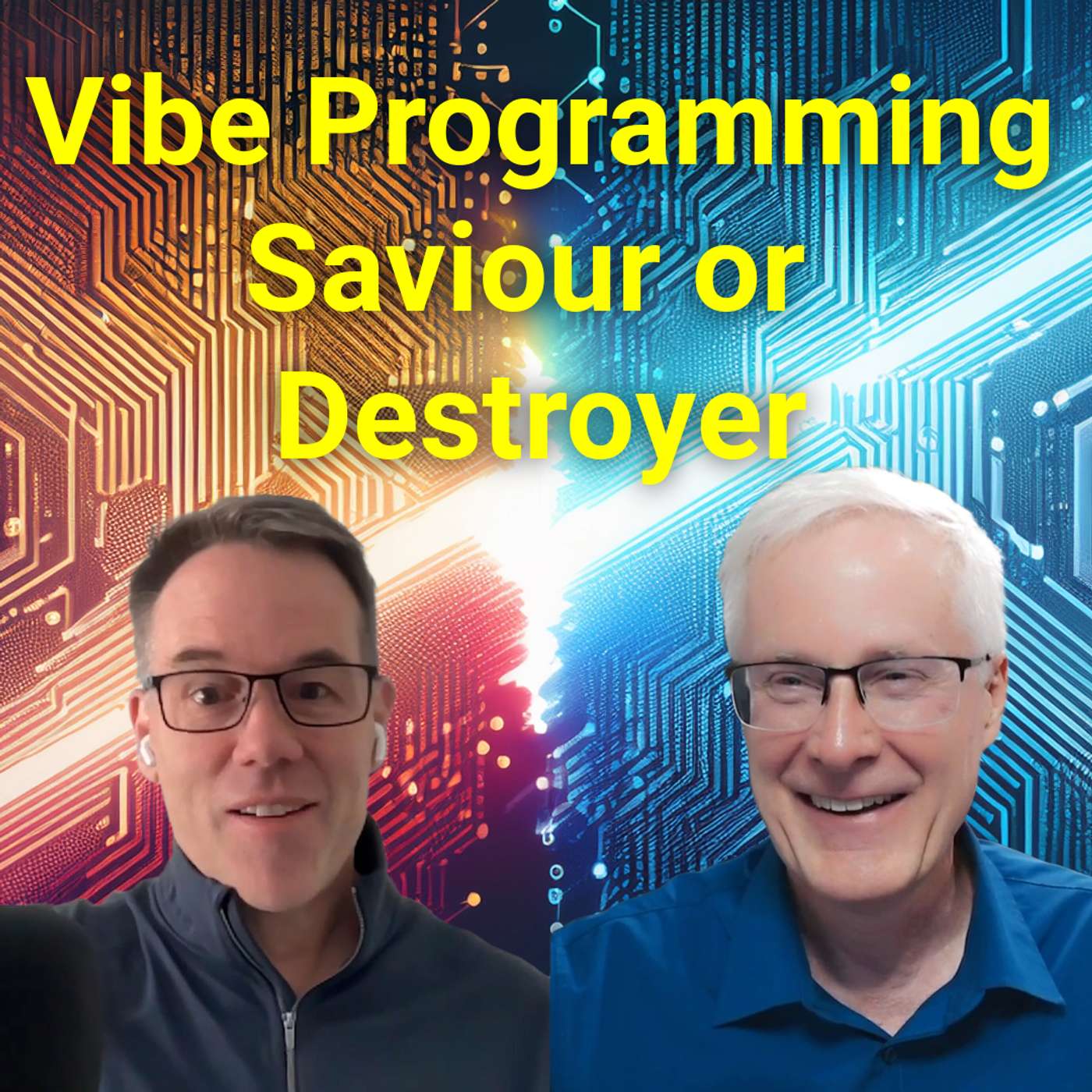
#292 Bridging the Gap: Vibe Programming and Product Management episode artwork

EPISODE · Sep 23, 2025 · 33 MIN

#292 Bridging the Gap: Vibe Programming and Product Management

from Embracing Digital Transformation · host Dr. Darren Pulsipher

Check out my new book AI Augmented Teams on Amazon or on my website paidar.ai/books.In this engaging episode of *Embracing Digital Transformation*, host Dr. Darren sits down with vibe programming expert Drew Foresman to explore the evolving landscape of software development and product management. With technology rapidly changing, the duo discusses how vibe programming serves as both a potential savior and disruptor for software developers. Key highlights include insights on the future roles of developers and product managers, the friction points in communication between technical and non-technical teams, and the promise of AI and vibe programming to enhance collaboration and prototyping. The episode offers a thought-provoking look at how these changes can accelerate development cycles and redefine how teams work together, ensuring that essential human elements remain in the mix. ## Takeaways - Vibe programming can bridge communication gaps between developers and product managers, enhancing collaboration and understanding. - AI tools are shifting roles within tech teams, making it crucial to adapt and learn continuously to stay relevant. - Rapid prototyping allows teams to visualize ideas quickly, minimizing misunderstandings and improving alignment on project visions. - The role of developers is evolving, but they will remain essential in the innovation process and complex coding tasks. - Future interfaces with technology may not rely on traditional click-and-point methods, indicating a shift towards more intuitive interactions driven by user needs. ## Chapters - 00:00 - Introduction to the Episode - 02:45 - Understanding Vibe Programming - 05:20 - Communication Friction Between Developers and Product Managers - 12:15 - The Evolution of Developer Roles - 20:10 - The Promise of AI in Software Development - 27:00 - Future of User Interfaces and Interaction - 35:50 - Conclusion and Call to Action The landscape of software development is evolving at an unprecedented pace. As artificial intelligence and new coding techniques, like vibe programming, gain popularity, it raises important questions about the future roles of developers, product managers, and designers. This blog delves into these transformations, exploring how they are shaping the industry and what this means for professionals in tech as they adapt to these changing dynamics. The Shifting Role of DevelopersOver the next five years, the role of developers is undoubtedly set to evolve. While some might fear that advancements in technology will replace developers entirely, it is essential to understand that their role will likely transition rather than disappear. Developers will remain an integral part of the tech ecosystem, but their focus will shift toward higher-value tasks as tools like vibe programming enable more efficient coding practices.Vibe programming empowers product managers and designers by allowing them to rapidly prototype and test ideas without relying solely on developers. This means that developers will spend less time on straightforward coding tasks and more on solving complex problems, ensuring that systems remain robust and scalable. The technology is not about replacing developers but rather augmenting their capabilities, enabling them to innovate and contribute meaningfully to the development process.Moreover, as teams become more integrated and collaborative through the use of AI-driven tools, developers will need to engage more deeply in the ideation stage. They will work closely with product managers who articulate user needs and design expectations, resulting in a more cohesive product development process that drives user satisfaction. The Emergence of Product ManagementAlongside shifts in developer roles, product management is becoming increasingly vital in the tech world. As products grow more complex and user expectations rise, the demand for skilled product managers who can effectively navigate these turbulent waters surges. Product managers will continue to be the bridge between technical teams and stakeholders, striving to distill the "voice of the user" into tangible product strategies.In practice, the role of the product manager is evolving to be more dynamic and hands-on, requiring a blend of technical understanding and excellent communication skills. Vibe programming accelerates this evolution as it allows product managers to generate prototypes directly, thus fostering a collaborative environment where developers can work off clear visuals and concepts rather than vague requirements.Furthermore, as AI tools gather insights from user interactions, product managers will increasingly rely on data analytics to inform their decision-making processes. They will adapt rapidly to changing market conditions and user feedback, solidifying their place as indispensable strategic partners in tech companies. Embracing Innovation through CollaborationAs vibe programming and similar tools reshape the landscape, collaboration among developers, designers, and product managers will be more crucial than ever. The traditional boundaries that once separated these roles are starting to blur, paving the way for a more integrated approach to product development. This newfound collaboration allows teams to tackle tasks collectively, dramatically reducing friction and improving communication.With the right tools, teams can collaboratively design, prototype, and iterate in real-time. Instead of the typical back-and-forth between designers and developers, this collaboration can lead to quicker decision-making and reduced time to market. Rapid prototyping enables immediate feedback from users, helping teams refine their ideas and create solutions that are genuinely responsive to user needs.As this cooperative environment nurtures creativity and innovation, professionals in tech must continue to refine their skill sets and embrace lifelong learning. Those who adapt to the changing dynamics of software development will not only thrive in the marketplace but will be pivotal in shaping the future of technology. The Road AheadThe future of software development is marked by change, collaboration, and creativity. While developers will maintain their significance within the tech landscape, their roles will adapt to focus on problem-solving and innovation. Concurrently, product managers will emerge as strategic facilitators, forging connections between technical capabilities and user needs. As professionals navigate these shifts, embracing new tools, methodologies, and collaborative practices will be key. By fostering a culture of learning and adaptability, tech teams will be better equipped to excel in an ever-evolving landscape, ultimately leading to products that are more aligned with user demands and market trends.For those eager to explore and expand their skills further, consider joining a community of learners to stay at the forefront of digital transformation. Engage with fellow innovators, participate in discussions, and deepen your understanding through hands-on experiences that embrace the spirit of change in technology.```

Check out my new book AI Augmented Teams on Amazon or on my website paidar.ai/books.In this engaging episode of *Embracing Digital Transformation*, host Dr. Darren sits down with vibe programming expert Drew Foresman to explore the evolving landscape of software development and product management. With technology rapidly changing, the duo discusses how vibe programming serves as both a potential savior and disruptor for software developers. Key highlights include insights on the future roles of developers and product managers, the friction points in communication between technical and non-technical teams, and the promise of AI and vibe programming to enhance collaboration and prototyping. The episode offers a thought-provoking look at how these changes can accelerate development cycles and redefine how teams work together, ensuring that essential human elements remain in the mix. ## Takeaways - Vibe programming can bridge communication gaps between developers and product managers, enhancing collaboration and understanding. - AI tools are shifting roles within tech teams, making it crucial to adapt and learn continuously to stay relevant. - Rapid prototyping allows teams to visualize ideas quickly, minimizing misunderstandings and improving alignment on project visions. - The role of developers is evolving, but they will remain essential in the innovation process and complex coding tasks. - Future interfaces with technology may not rely on traditional click-and-point methods, indicating a shift towards more intuitive interactions driven by user needs. ## Chapters - 00:00 - Introduction to the Episode - 02:45 - Understanding Vibe Programming - 05:20 - Communication Friction Between Developers and Product Managers - 12:15 - The Evolution of Developer Roles - 20:10 - The Promise of AI in Software Development - 27:00 - Future of User Interfaces and Interaction - 35:50 - Conclusion and Call to Action The landscape of software development is evolving at an unprecedented pace. As artificial intelligence and new coding techniques, like vibe programming, gain popularity, it raises important questions about the future roles of developers, product managers, and designers. This blog delves into these transformations, exploring how they are shaping the industry and what this means for professionals in tech as they adapt to these changing dynamics. The Shifting Role of DevelopersOver the next five years, the role of developers is undoubtedly set to evolve. While some might fear that advancements in technology will replace developers entirely, it is essential to understand that their role will likely transition rather than disappear. Developers will remain an integral part of the tech ecosystem, but their focus will shift toward higher-value tasks as tools like vibe programming enable more efficient coding practices.Vibe programming empowers product managers and designers by allowing them to rapidly prototype and test ideas without relying solely on developers. This means that developers will spend less time on straightforward coding tasks and more on solving complex problems, ensuring that systems remain robust and scalable. The technology is not about replacing developers but rather augmenting their capabilities, enabling them to innovate and contribute meaningfully to the development process.Moreover, as teams become more integrated and collaborative through the use of AI-driven tools, developers will need to engage more deeply in the ideation stage. They will work closely with product managers who articulate user needs and design expectations, resulting in a more cohesive product development process that drives user satisfaction. The Emergence of Product ManagementAlongside shifts in developer roles, product management is becoming increasingly vital in the tech world. As products grow more complex and user expectations rise, the demand for skilled product managers who can effectively navigate these turbulent waters surges. Product managers will continue to be the bridge between technical teams and stakeholders, striving to distill the "voice of the user" into tangible product strategies.In practice, the role of the product manager is evolving to be more dynamic and hands-on, requiring a blend of technical understanding and excellent communication skills. Vibe programming accelerates this evolution as it allows product managers to generate prototypes directly, thus fostering a collaborative environment where developers can work off clear visuals and concepts rather than vague requirements.Furthermore, as AI tools gather insights from user interactions, product managers will increasingly rely on data analytics to inform their decision-making processes. They will adapt rapidly to changing market conditions and user feedback, solidifying their place as indispensable strategic partners in tech companies. Embracing Innovation through CollaborationAs vibe programming and similar tools reshape the landscape, collaboration among developers, designers, and product managers will be more crucial than ever. The traditional boundaries that once separated these roles are starting to blur, paving the way for a more integrated approach to product development. This newfound collaboration allows teams to tackle tasks collectively, dramatically reducing friction and improving communication.With the right tools, teams can collaboratively design, prototype, and iterate in real-time. Instead of the typical back-and-forth between designers and developers, this collaboration can lead to quicker decision-making and reduced time to market. Rapid prototyping enables immediate feedback from users, helping teams refine their ideas and create solutions that are genuinely responsive to user needs.As this cooperative environment nurtures creativity and innovation, professionals in tech must continue to refine their skill sets and embrace lifelong learning. Those who adapt to the changing dynamics of software development will not only thrive in the marketplace but will be pivotal in shaping the future of technology. The Road AheadThe future of software development is marked by change, collaboration, and creativity. While developers will maintain their significance within the tech landscape, their roles will adapt to focus on problem-solving and innovation. Concurrently, product managers will emerge as strategic facilitators, forging connections between technical capabilities and user needs. As professionals navigate these shifts, embracing new tools, methodologies, and collaborative practices will be key. By fostering a culture of learning and adaptability, tech teams will be better equipped to excel in an ever-evolving landscape, ultimately leading to products that are more aligned with user demands and market trends.For those eager to explore and expand their skills further, consider joining a community of learners to stay at the forefront of digital transformation. Engage with fellow innovators, participate in discussions, and deepen your understanding through hands-on experiences that embrace the spirit of change in technology.```

NOW PLAYING

#292 Bridging the Gap: Vibe Programming and Product Management

0:00 33:29

No transcript for this episode yet

We transcribe on demand. Request one and we'll notify you when it's ready — usually under 10 minutes.

Solving for Change MOBIA Technology Innovations Solving for Change welcomes business and technology leaders to share stories of bold business transformation within complex organizations. In an era when technology and markets are changing around businesses, the key to staying competitive is to evolve in response to those changes.  MOBIA’s Mike Reeves and Marc LeBlanc investigate business transformation, deconstructing the challenges, ambitions, and market disruptions that drive companies to embark on transformation journeys, and exploring their unique approaches to achieving meaningful outcomes.  What sparks leaders to pursue business transformation? How do they overcome the challenges along the way? What are the keys to creating enduring change?  Through in-depth conversations with business and technology leaders, Mike and Marc answer these questions and explore how businesses evolve by pulling four key transformation levers: people, process, technology, and culture. Darknet Discussions Darknet Discussions Welcome to "Darknet Discussions," the podcast that gets into the shadows of the internet to bring you the most intriguing, enlightening, and sometimes unsettling stories from the dark web. Hosted by seasoned darknet aficionados, each episode of "Darknet Discussions" explores the intricate dynamics of darknet markets, cybersecurity threats, and the digital underworld. Join us as we interview experts, discuss the latest trends in cybercrime, and shed light on the technologies that operate beneath the surface of everyday internet use. Also, we occasionally go off on a tangent about something completely unrelated. The Digital Experience Show by Enonic Enonic All you need to know about digital strategy, digital experiences, and CMS are covered in this podcast. Powered by NotebookLM. Tips, News and Stories for Older Adults Esther C Kane CAPS, C.D.S. "Tips, News, and Stories for Older Adults" delivers weekly insights tailored for seniors. We bring you summaries of curated news, practical advice, and inspiring stories that matter to the 55+ community. From health and finance to technology and lifestyle, our content keeps you informed and engaged. Sourced from trusted outlets, each episode offers valuable information for navigating your golden years. Join us as we explore aging with positivity, wisdom, and engaging stories. Your perfect companion for staying active, learning, and embracing life's later chapters.

Frequently Asked Questions

How long is this episode of Embracing Digital Transformation?

This episode is 33 minutes long.

When was this Embracing Digital Transformation episode published?

This episode was published on September 23, 2025.

What is this episode about?

Check out my new book AI Augmented Teams on Amazon or on my website paidar.ai/books.In this engaging episode of *Embracing Digital Transformation*, host Dr. Darren sits down with vibe programming expert Drew Foresman to explore the evolving...

Can I download this Embracing Digital Transformation episode?

Yes, you can download this episode by clicking the download button on the episode player, or subscribe to the podcast in your preferred podcast app for automatic downloads.
URL copied to clipboard!