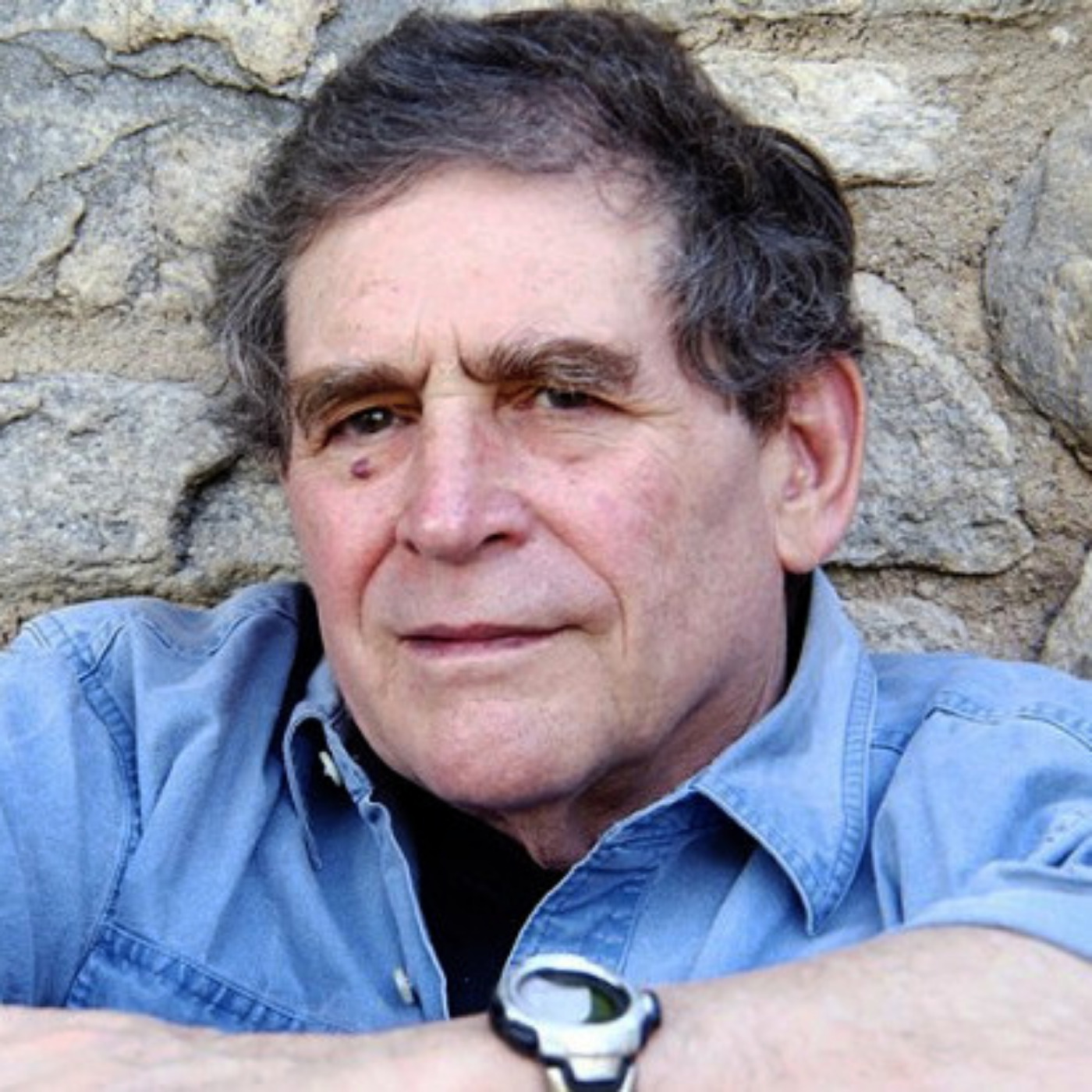
293: Alan Weisman: My Greatest Source of Environmental Hope episode artwork

EPISODE · Feb 20, 2020 · 1H 10M

293: Alan Weisman: My Greatest Source of Environmental Hope

from This Sustainable Life

Alan Weisman's book Countdown changed my strategy to the environment. It ranks among the top most influential works I've read, watched, or come across, up there with Limits to Growth.Why? Because when you look at environmental issues enough, and it shouldn't take too long these days, population always rises to the top as one of the top issues. Many people today hear about projections that the population will level off around 10 billion. Actually, the ones I see project that the population will keep growing exponentially then, just slower than now.If you only look at one issue---only climate, only deforestation, or only extinctions---they seem possibly solvable, but they're all linked. Solving several at once---say meeting power needs while the economy falls apart and food becomes scarce---looks impossible.Also, since nothing deliberate limits population growth, we're lucky if it levels off. We aren't choosing where to level it off and 10 billion looks three to five times what the Earth can sustain. Cultural changes could promote more growth. Many populations are promoting maximum growth today---very powerful religions and autocratic rulers for example.I don't want to rely on luck for our species' survival. Besides, my research into what Earth can sustain says that we're over the limit. If we're heading toward a cliff, simply maintaining our speed and not accelerating doesn't stop us. We have to decelerate.Despite the convergence of all these issues, for years I held back from talking about population. People don't like others meddling in their personal lives. I don't want the government in my bedroom. People overwhelmingly associate population talk with China's one child policy, eugenics, and Nazis. I did too. I didn't see how I could improve a situation by suggesting to avoid misery later through misery now.Still, I knew some cultures---island nations that lived centuries or longer, for example, or the bushmen in southern Africa whose archeological record went back hundreds of thousands of years---kept their populations level, so they must have developed some mechanism.In some past episode of this podcast, with Jared Angaza, for example, I pondered aloud how to find out how they did it, though it may have come up when I was a guest on his podcast. I could only wonder what worked but couldn't promote what I didn't know.Countdown changed all that. Alan found and reported on numerous examples in today's world of cultures lowering their birth rates without coercion, without top-down government authority, voluntarily, desired by all participants, leading to abundance, prosperity, peace, and stability, the opposite of where overpopulation takes us.Countdown tells stories of 21 places, some promoting growth and results aren't pretty and some where they've lowered birth rates and they're remarkably pleasant, even prosperous and stable. He talks about the top ones in this episode.We have tough times ahead of us. One change simplifies everything---a smaller population achieved voluntarily, peacefully, joyfully. Alan has researched firsthand more than almost anyone. He has more than enough reason to despair if he wanted to. If he's not, I conclude that everything he's found nets out to say we can do this.Family planning, education, and contraception seem technologies and practices that can work more than carbon sequestration, solar planes, and everything else. They're cheap, they're available, they make sex more fun, they've overcome cultural resistance outside the gates of the Vatican!Read his books and Limits to Growth.I'll do my best to bring him back.Past episodes I based on Alan's books258: The World Without Us, by Alan Weisman251: Let's make overpopulation only a finance issue250: Why talk about birthrate and population so much?248: Countdown, a book I recommend by Alan Weisman Hosted on Acast. See acast.com/privacy for more information.

Alan Weisman's book Countdown changed my strategy to the environment. It ranks among the top most influential works I've read, watched, or come across, up there with Limits to Growth.Why? Because when you look at environmental issues enough, and it shouldn't take too long these days, population always rises to the top as one of the top issues. Many people today hear about projections that the population will level off around 10 billion. Actually, the ones I see project that the population will keep growing exponentially then, just slower than now.If you only look at one issue---only climate, only deforestation, or only extinctions---they seem possibly solvable, but they're all linked. Solving several at once---say meeting power needs while the economy falls apart and food becomes scarce---looks impossible.Also, since nothing deliberate limits population growth, we're lucky if it levels off. We aren't choosing where to level it off and 10 billion looks three to five times what the Earth can sustain. Cultural changes could promote more growth. Many populations are promoting maximum growth today---very powerful religions and autocratic rulers for example.I don't want to rely on luck for our species' survival. Besides, my research into what Earth can sustain says that we're over the limit. If we're heading toward a cliff, simply maintaining our speed and not accelerating doesn't stop us. We have to decelerate.Despite the convergence of all these issues, for years I held back from talking about population. People don't like others meddling in their personal lives. I don't want the government in my bedroom. People overwhelmingly associate population talk with China's one child policy, eugenics, and Nazis. I did too. I didn't see how I could improve a situation by suggesting to avoid misery later through misery now.Still, I knew some cultures---island nations that lived centuries or longer, for example, or the bushmen in southern Africa whose archeological record went back hundreds of thousands of years---kept their populations level, so they must have developed some mechanism.In some past episode of this podcast, with Jared Angaza, for example, I pondered aloud how to find out how they did it, though it may have come up when I was a guest on his podcast. I could only wonder what worked but couldn't promote what I didn't know.Countdown changed all that. Alan found and reported on numerous examples in today's world of cultures lowering their birth rates without coercion, without top-down government authority, voluntarily, desired by all participants, leading to abundance, prosperity, peace, and stability, the opposite of where overpopulation takes us.Countdown tells stories of 21 places, some promoting growth and results aren't pretty and some where they've lowered birth rates and they're remarkably pleasant, even prosperous and stable. He talks about the top ones in this episode.We have tough times ahead of us. One change simplifies everything---a smaller population achieved voluntarily, peacefully, joyfully. Alan has researched firsthand more than almost anyone. He has more than enough reason to despair if he wanted to. If he's not, I conclude that everything he's found nets out to say we can do this.Family planning, education, and contraception seem technologies and practices that can work more than carbon sequestration, solar planes, and everything else. They're cheap, they're available, they make sex more fun, they've overcome cultural resistance outside the gates of the Vatican!Read his books and Limits to Growth.I'll do my best to bring him back.Past episodes I based on Alan's books258: The World Without Us, by Alan Weisman251: Let's make overpopulation only a finance issue250: Why talk about birthrate and population so much?248: Countdown, a book I recommend by Alan Weisman Hosted on Acast. See acast.com/privacy for more information.

NOW PLAYING

293: Alan Weisman: My Greatest Source of Environmental Hope

0:00 1:10:09

No transcript for this episode yet

We transcribe on demand. Request one and we'll notify you when it's ready — usually under 10 minutes.

Big Old Life: Heather Blackbird interviews people on planet earth. Heather Blackbird loves asking questions. This podcast is a learning experience. Join me, Heather Blackbird, as I talk to people about their lives. Frequency of new episodes is a little all over the place and I'm learning as I go. Big Old Life is a small way of talking about the vastness of life, one person at a time. If you are reading this or found this podcast it's probably because someone you know gave you a link to it. :) Explicit Tales Of A Superstar DJ The Insomniac Spun seemingly out of nowhere from her complacent life in the corporate world, turned seemingly overnight from 16-Hour shift work and into the life of a literally starving artist and working musician, The Protagonist navigates her supposed rise to fame and superstardom on a journey through spiritual awakening, coming-of-age, and intimate self-realization--guided by an omnipresent force and equipped with the power of love, magic, and music. {Enter The Multiverse.} [The Festival Project] The Festival Project, Inc.™ is a multidimensional multimedia platform which encompasses exploratory and artistic social personifications and expressions on cosmic theory, spirituality, growth, health & wellness, philosophy and theoretic dynamics in entertainment such as music, design, film, television, radio, dance and festival culture, art, fashion, literature, and science. The Festival Project™ and its subsidiary Non-Profit, The Collective Complex © aims to challenge modern artistic and philosop Explicit The Sacred +Profane Podcast nephtaragrace The Sacred + Profane Podcast is a provocative conversation dedicated to cementing a better future for all. We specialize in unpacking the nuances of what is considered sacred and profane, particularly focusing on sex, death, and all that pertains to the circle of life. Our aim in focusing on such ”taboo” subject matter is to demystify what is unconscious, bring to light what has been known for centuries as ”the occult,” and empower the rapid transformation that is occurring on the Planet. Explicit Northern Sass and Southern Class Tay and Ani Come sit in on girl talk with Tay and Ani as we discuss life in Texas, girl math, food, wine and roasting each other. Explicit

Frequently Asked Questions

How long is this episode of This Sustainable Life?

This episode is 1 hour and 10 minutes long.

When was this This Sustainable Life episode published?

This episode was published on February 20, 2020.

What is this episode about?

Alan Weisman's book Countdown changed my strategy to the environment. It ranks among the top most influential works I've read, watched, or come across, up there with Limits to Growth.Why? Because when you look at environmental issues enough, and it...

Can I download this This Sustainable Life episode?

Yes, you can download this episode by clicking the download button on the episode player, or subscribe to the podcast in your preferred podcast app for automatic downloads.
URL copied to clipboard!