#294 Mastering the Short Putt: A Modern Blueprint for Golf Confidence episode artwork

EPISODE · Jul 24, 2025 · 14 MIN

#294 Mastering the Short Putt: A Modern Blueprint for Golf Confidence

from Golf 247.eu: The Global Platform for Innovative Technologies and Teaching Concepts. · host Golf247.eu

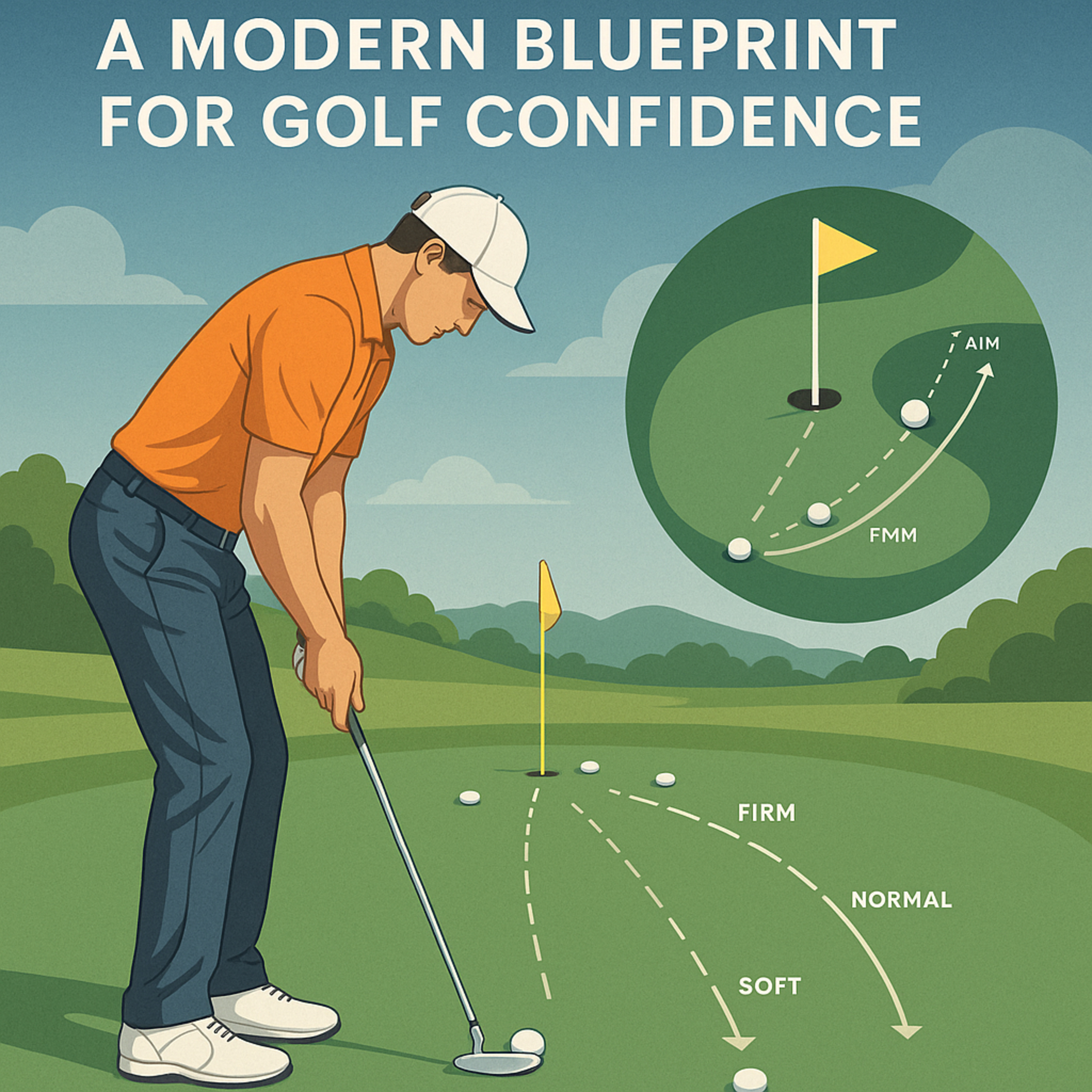
Short putts—those nerve-wracking three to five footers—carry disproportionate weight in scoring. They expose both technical flaws and mental tension. Yet when understood and trained properly, they can become your biggest competitive edge. This modern blueprint offers a structured, science-based approach that blends mechanics, fitting, physics, and emotional resilience.1. Setup & Technique: Repeatability Under PressureMastery begins with setup. Elite putters don’t improvise; they align their bodies with consistency, creating a repeatable motion under stress. Precision in your setup eliminates guesswork.For right-handed players, key markers include:Stacked lower body: Hips, knees, and ankles vertically aligned.Shoulder tilt: Right shoulder slightly lower, around 8°–12°.Ball position: Just ahead of the lead heel for a slight upward stroke.Eye position: Directly over or just inside the ball.Forearm hang: A fist and thumb’s width from the thighs.Shaft alignment: Forearms parallel to the shaft and target line.This technical foundation minimizes compensations and builds stroke confidence.2. Putter Fitting: Trust in Your ToolUsing the wrong putter is like swinging a heavy hammer at delicate glass. Putter fitting must prioritize face control and natural movement. Tools such as the Puttalyze app and Quintic Ball Roll System help visualize rotation, loft, and launch.Vital fitting parameters:Face Rotation: Aim for less than 15°/second.Face Angle: Within 1° of square at impact.Loft & Lie: Optimal loft (1°–3°) promotes clean roll.Weight Balance: Tailored to your stroke tempo and rhythm.A well-fit putter turns hesitation into trust.3. Roll Physics & Green Reading: The Science of PrecisionA ball achieves true roll at 5.25 inches per full rotation. Reaching this state requires:Launch Angle: Between 0.75°–2.5°.Shaft Stability: Consistent angle through impact.Proper Loft: Avoids bouncing or excessive friction.Green reading is where science meets art. Gravity affects break based on time spent on the green. More time = more break. That means:Softer strokes, faster greens, downhill lines, longer putts—all increase break.Technology like Puttalyze factors in green speed, slope, and ball speed (rps) to calculate ideal aim and rollout.Think of green reading like topography: map it accurately and you'll guide the ball with surgical precision.4. Drills & Game-Based Practice: Build Confidence, Not Just TechniqueThe Compass Drill is a tour-proven classic:Place four balls around the hole (12, 3, 6, 9 o’clock).From each spot, hit three putts: soft, firm, and normal pace.Target: 10 of 12 makes.This drill refines speed control, stroke commitment, and adaptability under pressure. Add scoring, games, and variety to your practice—simulate the pressure, then train through it.Conclusion: Turning Fear into StrengthShort putting is no longer a guessing game. With proper setup, personalized equipment, a deep understanding of ball roll, and effective training methods, confidence becomes inevitable. You’re not just learning to putt—you’re building a system that holds up in tournament moments. It’s no longer about surviving short putts. It’s about owning them.www.Golf247.eu

Short putts—those nerve-wracking three to five footers—carry disproportionate weight in scoring. They expose both technical flaws and mental tension. Yet when understood and trained properly, they can become your biggest competitive edge. This modern blueprint offers a structured, science-based approach that blends mechanics, fitting, physics, and emotional resilience.1. Setup & Technique: Repeatability Under PressureMastery begins with setup. Elite putters don’t improvise; they align their bodies with consistency, creating a repeatable motion under stress. Precision in your setup eliminates guesswork.For right-handed players, key markers include:Stacked lower body: Hips, knees, and ankles vertically aligned.Shoulder tilt: Right shoulder slightly lower, around 8°–12°.Ball position: Just ahead of the lead heel for a slight upward stroke.Eye position: Directly over or just inside the ball.Forearm hang: A fist and thumb’s width from the thighs.Shaft alignment: Forearms parallel to the shaft and target line.This technical foundation minimizes compensations and builds stroke confidence.2. Putter Fitting: Trust in Your ToolUsing the wrong putter is like swinging a heavy hammer at delicate glass. Putter fitting must prioritize face control and natural movement. Tools such as the Puttalyze app and Quintic Ball Roll System help visualize rotation, loft, and launch.Vital fitting parameters:Face Rotation: Aim for less than 15°/second.Face Angle: Within 1° of square at impact.Loft & Lie: Optimal loft (1°–3°) promotes clean roll.Weight Balance: Tailored to your stroke tempo and rhythm.A well-fit putter turns hesitation into trust.3. Roll Physics & Green Reading: The Science of PrecisionA ball achieves true roll at 5.25 inches per full rotation. Reaching this state requires:Launch Angle: Between 0.75°–2.5°.Shaft Stability: Consistent angle through impact.Proper Loft: Avoids bouncing or excessive friction.Green reading is where science meets art. Gravity affects break based on time spent on the green. More time = more break. That means:Softer strokes, faster greens, downhill lines, longer putts—all increase break.Technology like Puttalyze factors in green speed, slope, and ball speed (rps) to calculate ideal aim and rollout.Think of green reading like topography: map it accurately and you'll guide the ball with surgical precision.4. Drills & Game-Based Practice: Build Confidence, Not Just TechniqueThe Compass Drill is a tour-proven classic:Place four balls around the hole (12, 3, 6, 9 o’clock).From each spot, hit three putts: soft, firm, and normal pace.Target: 10 of 12 makes.This drill refines speed control, stroke commitment, and adaptability under pressure. Add scoring, games, and variety to your practice—simulate the pressure, then train through it.Conclusion: Turning Fear into StrengthShort putting is no longer a guessing game. With proper setup, personalized equipment, a deep understanding of ball roll, and effective training methods, confidence becomes inevitable. You’re not just learning to putt—you’re building a system that holds up in tournament moments. It’s no longer about surviving short putts. It’s about owning them.www.Golf247.eu

NOW PLAYING

#294 Mastering the Short Putt: A Modern Blueprint for Golf Confidence

0:00 14:50

No transcript for this episode yet

We transcribe on demand. Request one and we'll notify you when it's ready — usually under 10 minutes.

Frequently Asked Questions

How long is this episode of Golf 247.eu: The Global Platform for Innovative Technologies and Teaching Concepts.?

This episode is 14 minutes long.

When was this Golf 247.eu: The Global Platform for Innovative Technologies and Teaching Concepts. episode published?

This episode was published on July 24, 2025.

What is this episode about?

Short putts—those nerve-wracking three to five footers—carry disproportionate weight in scoring. They expose both technical flaws and mental tension. Yet when understood and trained properly, they can become your biggest competitive edge. This...

Can I download this Golf 247.eu: The Global Platform for Innovative Technologies and Teaching Concepts. episode?

Yes, you can download this episode by clicking the download button on the episode player, or subscribe to the podcast in your preferred podcast app for automatic downloads.
URL copied to clipboard!