Hey everyone, before we get into the episode, I wanted to let you know that Evergreen Classical School in the Woodlands, Texas is currently seeking their next head of school. Evergreen is a hybrid model Christian school focused on developing well-ordered hearts and minds who will recognize, desire, and proclaim the triune God of the Bible. If you or someone you know would like to speak further about the opportunity to lead this growing school community, please visit evergreenclassical.org or you can email evergreenboard at evergreenclassical.org. I'm a big fan of Evergreen.
I do hope that if you or someone you know is interested and would be a good fit for the opportunity that you will reach out. Again, that's evergreenclassical.org. Email address evergreenboard at evergreenclassical.org. All right, with that, let's go ahead and get started with the episode.
Hey everybody, and welcome to the Classical Stuff Show. We're a podcast about the classical world, about books and philosophy, and sometimes other stuff that we want to talk about. Mostly books and philosophy. Sometimes education, mostly that.
My name's Adrian Hanenberg, I'm joined by Thomas Magby. Hello, and Graham Donaldson. Hi. And we're coming at you from sunny Austin, Texas, where it's been cold out though.
It's been freezing at night. Not right now, it's probably 64 degrees out. No, no, it's just almost freezing. It's going to be cold this weekend.
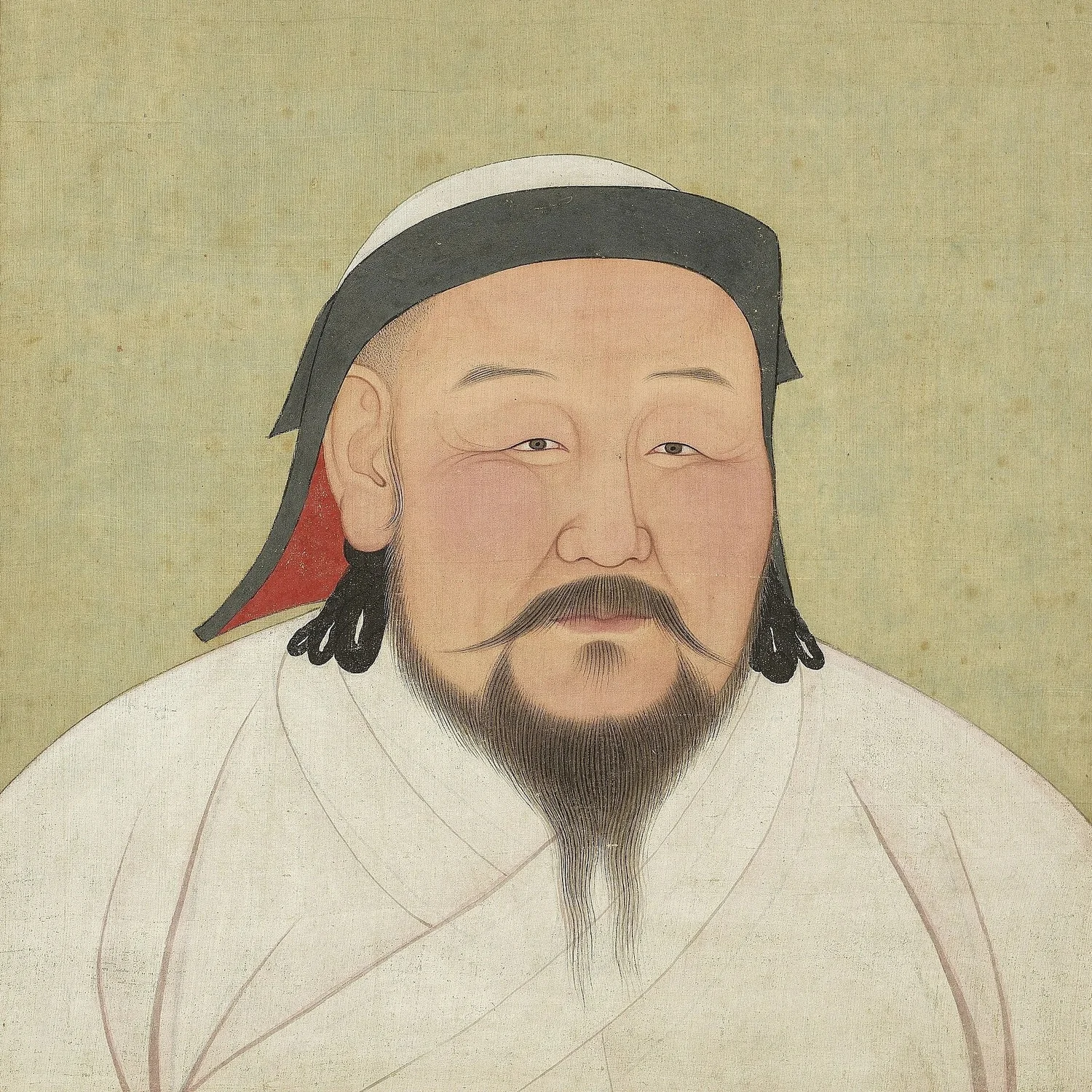
All right. Well, I have done a podcast about Genghis Khan, and I think really it's my paternal aura that Graham is drawing from because he's about to give us the story of Genghis Khan's son. So he's riding my wave, really. I established the kingdom, and Graham is just going to try to manage that kingdom.
That's right. Yeah, you carved out through bloodshed and misery, and I turned it into a functioning society. That sounds about right. No, we're going to be looking at, we're not really looking at Kubla Khan.
I mean, we're looking at a poem called Kubla Khan. Oh, we're not actually looking at the historical character? No, we're not. I expected a completely different episode.
My disappointment cannot be mentioned. No, we're going to be talking about poetry, your favorite. Uh, hey, I converted, remember? I'm not like poetry.
Oh, then I was going to do an episode on T.S. Eliot, but I will. Well, that's the last episode, boys. No, we're going to do an episode on Coleridge, but it's also a little bit of, um, yeah, using this poem to talk about what romanticism and poets in the romantic era were trying to counteract in their world around them.
My conviction is, is that we live in a very, very romantic age right now. Romantic, the romantics won. And, um, and we may have overcorrected into romanticism, and there, maybe we'll talk about that at the end or maybe in between. Are there any other Coleridge poems we may be familiar with?
Oh, we did Rhyme of the Ancient Mariner, which AJ did. Um, which has the wonderful phrase, like, um, hold off, unhand me, graybeard loon, is what all I remember from Rhyme of the Ancient Mariner. That's the one where you had, like, a sailor voice? Yeah, it was a really bad idea.
You said you did a sailor voice, but you had to commit to it for, like, 80 lines. Oh, it was rough. Yeah, so. Told the whole story.
Um, so we're looking at a poem called Kubla Khan, which is a poem that was inspired by a drugged out dream that the poet had. Are you serious? Oh, yeah. So he, so Samuel Taylor Coleridge is a romantic poet.
He is writing at the end of the 18th century, beginning of the 19th century. Um, so era of revolutions, the French Revolution has happened. This poem is published in, I think, 1797, 1798. So he is, and in a weird way, Coleridge and the Romantics, they're kind of like the punk rock of their time.
Now, if you Google pictures of them, they don't seem like the punk rock of their time, but they were kind of the punk rock of their time because they were coming after a society that was very much, um, sort of at the tail end of the Enlightenment. Highly, so that the 18th century, uh, highly scientific, moving towards logic, moving towards systems, deism, um, a society where even the arts and poetry were becoming a lot more formulaic. Um, you had like Alexander Pope who wrote poems that were these perfectly rhyming little couplets that gave these little perfect moral sayings. Um, this is the era of watches and the era of machines and the era of deists and the era of thinking that, uh, think of, think of Kant.
If you go back and listen to our episodes of Kant, where Kant is trying to understand human ethics based on pure reason alone, right? This is the 1700s. It's an era of where we can, where man is, where we sort of turn man into a machine, or we tend to think of the world in mechanistic terms. And then you get the rise of these romantic poets and they come in and they're trying to wrest that image from the cultural zeitgeist and bring it back to a place of wildness, a place of mystery, a place of, um, maybe something more earthy and more humane filled with passions and filled with emotions.
And instead of man being a machine, a man is also a creature and a heart and all these kinds of things. Uh, Jane Austen, who I love, does a great job, um, sort of lampooning and making fun of romantics in her literature. Um, uh, Marianne in Sense and Sensibility. And there's also some characters who love reading romantic poetry in Persuasion, whose names I can't remember right now.
Um, but Samuel Taylor Coleridge comes in and he is very much a person that, um, his poetic vision is he wants to shock and scandalize people. And he kind of wants to use his artistic voice as something that is going to move people past their sort of like buttoned up lives of, of sort of having figured everything out. And he wants to sort of blow things up and have people kind of like shake them up and, and, you know, that kind of thing. So he's very much kind of like that, that punk rock ethos.
Um, he's not smashing guitars on stage. He's not dying his hair green or whatever, but he's, he really wants that kind of, that ethos. Anyway. Does that still come across today?
Or does it seem like, does it feel punk? I think so. I think, I think Kubla Khan does. Poeticize Against the Machine.
Yeah. Uh, uh, Rhyme Against the Machine. I missed that one. Um, so, um, um, uh, so anyway, Coleridge was, uh, sick.
Uh, he has some sort of malady and he goes to Somerset, uh, to try to get better. And he gets given some sort of sedative and valium or something. And, um, and he is absolutely stoned out of his brain in a chair. And he's reading a history of, of the Khans.
And he comes across a passage, uh, where the passage was, it was in, um, in a book called, um, Perkis's Pilgrimage. He reads, here the Kubla Khan commanded a palace to be built and a stately garden thereunto. And thus 10 miles of fertile ground were enclosed within a wall. Coleridge reads that and then passes out from his drugs and has like a three hour fever dream about Kubla Khan's garden.
Wakes up, writes out some of these lines, has an idea that he has like 400 line poem he wants to write, writes out sort of 25, 50 of these lines, has to go into town on business, comes back and can't remember the 250 other lines of his poem. Um, and so all we have is just his poem. Did he give that, like, how do you know all that? He wrote it in a letter.
He wrote it in a letter. That's delightful. And he's like, it was so good. So you know when you wake up from a dream and you're like, that was profound.
And then you like go and make toast and you come back and you're like, what did I dream about? Um, I love having the realization later like, oh, it wasn't profound. That was a really basic dream. I just felt it about it.
But for Coleridge, now Coleridge, at the end of his life, has felt like he sort of wasted his talents and wasted his lights. And like a punk rock person before him, he, like a Johnny Rotten of the 19th century, he also wastes his life on drugs. And by the end of his life, he actually, on his tombstone, or on his little epitaph, he says that, um, that he's wasted his voice and that you should whisper a prayer. Hopefully, hope that he finds life and death because all he found in life and, um, or hopefully, yeah, hopefully he finds life and death because all he found was death and life.
And like, oh, buddy, Coleridge did. Coleridge has sort of a sad ending. But anyway, he writes this poem of Kubla Khan. And we're going to read it.
It's kind of bizarre. And, but you can sort of see it, his, like, rip the system, blow things up kind of ethos. Okay, so here it is. So, um, you're allowed to read a longer time.
Oh, you definitely read it. Yeah, yeah, yeah. I'm just going to read it here. It's only 50 lines or so.
In Zandu did Kubla Khan a stately pleasure dome decree, where Alf, the sacred river, ran through caverns, measureless to man, down to a sunless sea. So twice five miles of fertile ground with walls and towers were girdled round, and there were gardens bright with sinuous rills where blossomed many an incense-bearing tree. And here were forests, ancient as the hills, enfolding sunny spots of greenery. So beautiful, beautiful scenery, where Kubla Khan is going to make his little happy, uh, his little happy pleasure dome.
That sounds awesome, right? Little place, little country place, you know, have an outdoor grill. You've got some, uh, some smelly trees, um, some light incense-bearing trees. Sounds great.
Sacred river. But oh, that deep romantic chasm which slanted down the green hill a thwart, a cedar cover, a savage place. As holy and enchanted as air beneath a waning moon was haunted by woman wailing for her demon lover. And from this chasm, with ceaseless turmoil seething, as if this earth in fast thick pants were breathing, a mighty fountain momently was forced.
Amid whose swift, half-intermitted burst, huge fragments vaulted like rebounding hail or chaffy grain beneath the thresher's flail. Amid these dancing rocks at once and ever, it flung up momently the sacred river. Five miles meandering with a mazy motion through wood and dale, the sacred river ran, then reached the caverns measureless to man, and sank in tumult to a lifeless ocean. Amidst this tumult, Kubla heard from far ancestral voices prophesying war.
All right, so a big, like, geyser underneath the pleasure dome erupts and explodes, and the sacred river, like, erupts and destroys his beautiful garden, and then creates this big hole in the ground and runs back into the hole in the ground, and Kubla hears, like, the chants of war in the background. The shadow of the dome of pleasure floated midway on the waves, where was heard the mingled measure from the fountain and the caves. It was a miracle of rare device, a sunny pleasure domes with caves of ice. A damsel with a dulcimer and a vision once I saw.
It was an Abyssinian maid, and on her dulcimer she played singing of Mount Aborah. Could I revive within me her symphony and song? To such a deep delight it would win me, that with music loud and long I would build that dome and air, that sunny dome, those caves of ice, and all who hear should see them there, and all should cry, beware, beware, his flashing eyes, his floating hair. Weave a circle round him thrice, and close your eyes with holy dread, for he on honeydew hath fed and drunk the milk of paradise.
All right, so there we go. Freaking weird. Weird. I love it.
So, someone summarizing what happens in our poem. So, he builds this, uh, this thing. I can't, amid those half-to-to-to-to-to-first huge fragments from this chasm. Okay, the deep romantic chasm, is that inside the pleasure dome?
It sounds like it's, okay, so he's got the dome, it sounds like it's down the green hill on the ceiling cover, that's the savage place. In that savage place, there's a fountain comes up, I don't know if it blows up the dome. Later it says, you've got the shadows of the dome, and he says, I would build that pleasure dome, the caves of ice, that whole, like, dome of pleasure with the wild place and the fountain and the rocks, and the war, I would sing that. That's right.
Rebuild all of it in the air, the people who see me will be like, whoa, he, that guy's hardcore, he knows the, like, he's drunk the pith of life. Yes, so, yeah, exactly, what's exactly happening with the dome, whether it's exploded or whether he just has a vision of it, could be exploding, he has these, sort of, two contrasting visions, right? He's got the king who's building a garden, a walled garden of, like, perfect symmetry and pleasure, walled off from nature. And then the geyser of the earth.
And then you've got this passionate geyser of the earth that explodes and maybe blows up the pleasure dome, or at least, like, explodes, and from that hole that the geyser comes from, he hears a song of this, like, Abyssinian maid singing some weird, he hears this song coming from the pits of the earth. I thought you were saying it was a savage place, as holy and enchanted as ever beneath the waning moon, was haunted by women wailing for her demon lover. So it's as holy and enchanted as any place that has the wailing of women. That's right.
So he finds this place that is, like, hellish or wild or, you know, not buttoned up. It's this place of, like, where the real poetry comes from, right? And it's, like, a woman wailing for her demon lover, this Abyssinian maid who's singing songs of Mount Dabora. Mount Dabora is, um, um, a king in, um, oh, sorry, a mountain, is it a mountain in hell?
Let's see. Milton talks about Mount Dabora, where Abyssinian kings, their issue guard, Mount Amura, um, uh, through this by some supposed true paradise under the Ethiopian line. So it's this, like, song of, you know, something that isn't of normal British English society. It's this sort of, like, oriental, you know, mountain, and this woman who's, you know, sort of this passionate lady singing songs.
And he's like, this is what I want to do. He says, I want to build those, he says, I want to build that dome in air, the sunny dome, those caves of ice, and all who heard should see them there, and all should cry, but where, where, where, his flashing eyes, his floating hair. Coleridge says, my artistic vision is I want to sing those wild, passionate songs of the geyser and of the cavern, the sunless cavern, the sunless sea. I don't want to sing, like, your, your, like, normie songs of, like, you know, of, you know, of whatever you guys care about.
Logic and business. And Greece and Rome, and, you know, like, he wants to sing these, these passionate songs. Okay, so this is, and he is very much sort of aligning himself with that great romantic idea that William Blake, uh, launched kind of 100 years before him. William Blake, we are no fans of William Blake on the Classical Stuff You Know podcast.
We are, are we? I don't really like him either. But William Blake was very much the person that said, his vision was, um, God is the God of, like, justice and logic and rules, and Satan is the God of, like, passion and inspiration and freedom. And so this is William Blake's sort of in a nutshell, and here we have Coleridge saying, like, yes, I agree.
I want to sing those songs of passion and freedom. And if they are songs of hell, so be it. And if when I come into town, if all the people are like, oh, look out, look at his flashing eyes and his floating hair, I always imagine, like, like, Goku powering up to 9000, right? Like, um, it's Coleridge when he sings his poetry, he's like, uh, haven't reached my final form.
He's like, his flashing eyes and floating hair and stuff. And I was like, well, we're gonna have to weave a circle around him. That's right. All the little milkmaids and all the little people in town are like, oh, man, here comes this witch man again.
And they have to weave a circle around him. Now that is, you know what the weaving of a circle is? That's just good knitting. Yep.
No, you would, um, if you would protect somebody from, it would be like a thing that you would use to either protect yourself from a witch or isn't like an old wives tale? Like if you have a witch, you can draw a circle around her. She can't get out of it. With salt.
With salt, yeah. So I think there's, so I think he's sort of saying like, these people, when they see me coming, they're gonna be like, oh no, here comes the person singing these radical songs. We need to be aware. We need to protect ourselves.
We need to weave a circle around him thrice to protect him from the like hellish music that he wants to, that he wants to sing or whatever. This is kind of like Coleridge's vision of, um, of the poem that he has. Um, all right. Any reflections therein?
I think I want to get more because you're gonna, yeah, what does it mean? And what do you read into it? AJ, you kind of think about salt circles? I'm looking so far.
All it's coming up is the poem. I'm not weaving a circle around him thrice. I mean, the, uh, this, uh, a northern theology of English literature gives us a footnote that says, those three circles, a magic ritual to protect the inspired poet from intrusion. So it's kind of this idea of like, we can protect the poet, we can protect the poet maybe from his own, like, um, um, we can protect him from his, like the demons that are trying to haunt him or whatever.
And Coleridge is like, no, give me over to the powers of inspiration. So, okay. This is very romantic because, um, romanticism aligns itself with this kind of sentiment, um, with a vision of wanting to, um, question the status quo of its time, the logic button down, um, um, uh, maybe even like the classical status quo of the time. And he wants to come in.
He's like, I don't want to sing the old songs of, you know, um, whatever the poems we teach our little kids, they're like, good little boys, they do their work, you know, or whatever the poems are, um, he in the street for you. And yeah, he wants to come in and he's, he's wanting to sing these sort of radical songs of, of giving oneself over to passion and demon lovers and all this kind of thing. It's very much, um, and this idea of the freedom of hell, right? Now, not the hell as in the christian doctrine of hell but how romantics kind of interpreted the hell of milton is that hell is a place of like absolute freedom away from the stony law of god where are you in the hell from is it the woman for a demon the abyssinian maid and um i looked that up it said from ethiopia but it's also milton has it as like uh milton talks about the abyssinian as being like the place that satan's kind of drawn to and oh it's like abyss yeah um or maybe it's just it is the song of the uh the well uh pollrich is often kind of associated with the call which was known as orientalism which is kind of this some people would maybe even say the sort of fetishization fetishization of other cultures as having more meaning than the culture that you come from yeah um and so he loves this idea of like ethiopia or he loves this idea of like these far-off places that have their own customs that aren't like our normally boring crappy customs that's where like the real magic comes from that's where the real yeah that's what so he kind of has this i'm here to tell us that we're all lame or tell you that you're all lame and really like the songs of passion and uh and um exploding feelings are the true are like the true way of life and you see why i sort of call him a punk rock right um punk comes in um and um and you know is um like think of the sex pistols in england right singing god save the queen by doing in that punk way that's poke that's like really sort of tearing down that vision of of the you know the the normative society so he wants to come in and he wants to um and he's he's he's yeah i'm saying that this is these are songs i'm going to try to sing um and this is like the uh what romanticism was doing at this time um and i sort of posit that like romanticism has has kind of won the day of um uh in terms of artistic expression no longer is art a an artist who is trying to portray beauty and reality of the world so think of like someone who is is trying to mimic the masters to try to be as realistic as possible on a canvas it's all about sort of the artist the artist is the subject of the art and it's sort of his expression of his own understanding of the world projected out into the world this is this was sort of the newness of romanticism this is what they were doing is that they were trying to um express their own feelings of the world through the medium of whatever art they had for coleridge's poetry um and that was supposed to be the thing that we cared about as less about the the um the message of the of the content of the art but maybe the medium of the art or the the deeply held feelings of the artist and having someone's deeply held feelings be the um the driver of the creative act is a very romantic thing um and i would and i think a lot of our sort of the way we tell stories the way we sort of portray heroes the way that we have um the kinds of things we lionize are people who feel things very deeply i feel something more deeply than the normie milkmaids of my village and so my deeply held conviction about uh about the wildness and passions of life is a more true or is a more value valuable expression of human life than somebody who has conventional beliefs uh the conventional beliefs are to be are to be blown up uh gardens are to be exploded uh walls are to be floating away on the passions of the of the sacred rivers and so this is kind of coleridge's um his poetry of this and if you listen to any other poems that we've had or any other talking of romanticism or maybe our william blake episode you can kind of see that this is the ethos of romanticism um worth worth less so but even he is in that kind of that kind of zeitgeist um any thoughts or reflections by jang see wheels turning yeah i don't know if they've gotten anywhere yet uh i think perhaps i don't know i have some thoughts there still did you um a lot of this gets um portrayed in so a lot of the um the legacy of romanticism is the beginning of contextualizing and sympathizing the other and the outsider now um good things um did actually any of you guys see the new frankstein movie i haven't seen it have you seen it no have you seen it i've heard good things i saw the first five okay i haven't watched it either so i don't know if it's here and all right yes yeah a man who loves his monsters um i haven't watched it anyway frankstein is another great example of this kind of romantic idea of um if you really wanted to push it far you would say the romantic uh movement questioned the idea of whether evil was a thing was actually evil or whether it was just an understood other thing a misunderstood thing um this was the reading that the romantics had of paradise lost they thought that satan in paradise lost was a misunderstood true hero um and they loved paradise lost for william blake this was his reading of paradise lost so paradise lost coming out in like the 1600s or late yeah uh post shakespeare um um but william blake reads it interprets satan as this hero coleridge reads it interprets satan as this sort of sympathetic hero and then there's this sort of undercurrent that i think i was even thinking about this in your episode of robinson crusoe the last one of when europeans left europe and they started going off into the world they began to encounter other cultural expressions that called into their moral beliefs like robinson crusoe encountering the cannibals right and you all of a sudden have this crisis of like is cannibalism bad because it is it is like objectively bad or is it just bad because we think we think it's bad but they just sort of see it as an acceptable practice and this sort of enters into the um the sort of the social current of belief a little bit of a doubt about the objectivity of right and wrong because you're encountering all of these cultures that are doing cultural practices that the europeans at first blush are like immoral but then upon further reflection are like or they don't realize it's moral because it's cultural practices wait a minute maybe we have maybe um what we call an objective morality is like just your opinion man right like you get into um so this this is definitely the romantics kind of take that idea of a of a moral no i don't know if you would go so far as to say moral relativism but they definitely take that idea of that um there is a value in in singing the songs of the outsider in hopes of shaking up the normative society and that is the role of the artist and that is the role of the poet and i think any undergrad at art school gets given that message on day one because you go to art school it's like your role in society is to make people uncomfortable um because that is a valuable thing in and of itself that is the triumph of the romantic artist under the self-understanding um that is not the only self-understanding that artists can have although i think most people who go to art school who are artists that is the line that they are fed is that your role in society is to poke holes at undermine make uncomfortable deconstruct or even rip apart the conventions and the normative beliefs of the society around you there is a value to that but we probably i think my conviction is we're living in a time where that has gone and become sort of swung to the to the to the far stream maybe we talk about that in between whole regions of course he's he's writing at a time of like this is what 10 years before austin is writing her books so like think of the world they're inhabiting austin is going to be writing in sort of this regency england of manners and um clearly delineated lines between the sexes and how you interact with one another and how high society sort of works and this idea of noblesse oblige that the nobles have an obligation to use their privilege in order to to construct a a better society for everybody that's under their care and yeah it's paternalistic and it is um but it also has its own way that it works so if you have read any of our jaynaustin books or a fan of jaynaustin think of somebody with this attitude of samuel taylor coleridge like stomping around the somerset countryside with this kind of vision it is very much this kind of like um i'm going to take you by the collar and try to shake you out of your out of your i'm trying to make you upset not upset but like i'm trying to shake you out of your conventions and that is that is my role of the artist um so um yeah so you get these stories of the sympathetic monster well he's killed kids people hate him he's done these terrible things but it's just because he's misunderstood um and if we really got kids for a week yeah if you really got to know and when people see him they immediately are scared of him because he's ugly and they carry that prejudice of his ugliness within him uh within their their beliefs of him and in fact their lack of welcoming him welcoming him into conventional society makes him into a monster and makes him into the violent makes him into the force that he is um and the romantics are coming in they're saying we need to retell the story wherein the real villains of the frankenstein story are the people who rejected him and the world would be a better off place if the monster was just allowed to partake in normative society isn't that mary jellie's view though oh yeah that's definitely mary jellie's view that's in the they're not reading that into the text no that's mary jellie's view like she is retelling paradise lost but she's saying satan is not an evil force that we need to reject satan is a misunderstood hero that if we actually if we just like if we just like weren't so geeked up about justice and we had a little more mercy we would actually see the benefits of having satan in our lives right is uh is if you really want to push this romantic view if we just love the monster and accepted the monster on his terms we would have a more sort of inclusive and happier society that the monster would would benefit us with frankenstein's sort of written in this lens coleridge sees himself as like the vanguard of this movement i'm going to come and i'm going to sing the songs that people are going to make people uncomfortable but it's but they need to hear the message of the passions and the explosions and um and what gives my message its grounding as invalidity is the fact that i strongly feel it more so than you strongly feel your conventions um this is what gives taylor and samuel taylor coleridge his conviction um there is a i haven't really maybe you may have seen her uh someone who likes children's literature there is someone who's done a bunch of video essays i think her name is hillary lane does this name sound familiar not immediately um she has done a number of sort of video essays sort of asking the question of like why why don't we have good here why do we sort of seem to lack really great heroes and really great villains in modern storytelling these days when i google her name is modern writing degenerate well i think i think that is a um that's a reaction video against her um but she sort of has this view that our stories especially children's stories aren't very good because we as modern people have a hard time saying frankenstein's monster is bad because of the bad things that he's done or we have a hard time saying there are um that evil is a thing that can exist in this world and needs to be fought against whereas our modern storytelling is evil is just a misunderstood other point of view and the only villains that really exist in the world are either anti-heroes of people that we should actually be listening to but they're just like the normies don't understand them or they are personifications of things that we as modern people want to reject as as um uh as as we sort of turn them into cartoon versions of things we in society don't like um you know so whatever that is um but her conviction is that we we sort of lack really great heroes and really great villains because we don't have we don't really believe in objectively right and wrong positions anymore she's just she's worth a listen she's very interesting very interesting lady um but that is the triumph of the romantics the triumph of the romantics is is that um um these saw these outside songs of hell are worth listening to and are worth championing because they need to come and they need to undercut sort of normative society if you want to think about it as a spectrum human beings operate on a mercy justice spectrum right um that we can tend we tend to think of the world in terms of rules and justice and we make um decisions based on a right and wrong framework um or we can think of uh we can make decisions uh on people based on sort of mercy and context and story let me give you a great example of this in emma so jane austen's emma knightley and emma are debating whether or not frank churchill is a good person for something let me ask people so who are these people so emma so knightley is sort of like the great uh the great um character of emma he's very knightly and good um emma is the the fun-loving uh but can kind of get herself into trouble uh lady of the small town she's popular she's popular she's she's great she's you can imagine her like blonde and bubbly and and like she tries to read books but they're just so boring and she uh you know tries to play piano but like it's just like not cool it doesn't talk back to me yeah so she kind of but anyway she wants to be a reader and wants to be a piano player this is how we love her um frank churchill is a young a young roguish dude um whose dad just got married to somebody sort of lower in society and he has yet to come and meet his new stepmother and has yet to come pay his respects to his dad and they sort of have heard rumors that he's off gallivanting at like in weymouth which is like a place where you go and drink and sort of party and so they're debating about what they think about the character of frank churchill and i think emma and uh knightley sort of um are good examples of this mercy justice framework and how you think about people um mr knightley uh knightley says essentially if he wanted to he would and he hasn't like it is his duty there's nothing that he should there's nothing that a man should do or she care about more than just his duty his duty was and he knows it is to come and pay respects to his father um even if somebody uh has said oh but frank we need you here oh frank we need you to x y and z oh frank frank frank should be able to look in the eyes of man and say i'm sorry i need to go and pay respects to my father and um knightley has said because he doesn't do it he didn't want to do it and i judge him for that he didn't he's not done the right thing and that reflects badly on him and emma says oh knightley how can you even know what things are in our what sort of demands are on frank's life we know he has an overbearing aunt who controls him and so maybe he's thought that it's like it's not an easy time for him to get away and he's trying to manage all these other people's emotions and feelings and he is just waiting for an opportunity where he's gonna offend the least amount of people to come and pay respects to his father we can't pass judgment on him until we know more about his story and situation and now he says that's ridiculous we don't need to know anything else he has a duty and he's not following his duty uh if he wanted to he would and emma says um but he you know you say that but maybe he would be wrecking the relationship with his aunt we shouldn't pass judgment until we know more about frank so that little interaction between emma and knightley is like the perfect interaction between do you make decisions about people based on like an idea of justice rules and regulations and some sort of internal some concept of duty responsibility you need to do this you're not doing this that reflects badly on you not saying that you're 100% evil i'm just saying that like you're dropping the ball man like man up and do what you're supposed to do it's a very sort of masculine knightley position emma comes in and don't get me wrong i'm not saying emma's wrong and i'm not saying that he's right i'm saying that they are exemplifying what may be considered like a more of a masculine position more of a feminine position on on prudence emma comes in and she says we need to contextualize this thing we shouldn't just harshly without knowing the whole story doesn't i think emma has a point on this it turns out knightley's right um frank is kind of a ninny and he's not paying respects to his father because he didn't want to and the only reason he comes to hybrid is that the girl he's got a crush on also comes to hybrid he's like hey i can talk to my dad while in there and frank's like i told you so um but the very fact that but emma also has this point where she's like we uh we need to contextualize and know the whole story before we can sort of pass judgment on this kind of thing i would say that this point of view that emma has this sort of like more mercy point of view is very much in line with this romanticism wanting to sympathize with the outsider sympathize with the other sympathize with the the foreign positions um and there's a little bit of this um i think i hate the word fetishization because i think that's too strong but there is a little bit of this like love of the foreign and love of the different and then something foreign different has more of a moral hold on us because it is different and now here's an opportunity for us to shake up our lot you know shake up can you know shake up our lot of other things like that's true that's true that's true that we're using this kind of the other kind of thing which is sort of much of a good thing whether we go to the Thank you.
conventional ways um so if emma was like you know um a romantic version of emma would be that emma would be trying would be trying to shake knightley out of his like his convictions about the rightness and wrongness of people by trying to be like you see knightley frank was misunderstood and you had prejudice in your heart against him and i would be like oh man you're right i'm sorry frank churchill i thought you were so bad but it turns out you're actually way better than i realized and i just didn't realize because i was so full of my own prejudices emma doesn't go that way in fact emma's very much in line with um more classical thought on morality than the romantics are but the romantic story is the villain is the person that doesn't understand the outsider the villain is the person that that is those those people who shout beware beware his flashing eyes his floating here they want to weave a circle around the poet they want to keep him at arm's length because he's saying uncomfortable things um the real villains are the ones that don't understand punk rock um uh they're the they're the lameys who um who uh you know what don't want to be shaken out of their comfortable existence um and i think the romantic is one we tell more romantic stories than we tell conventional moral stories we sympathize like hannibal lecter is a misunderstood bad guy in fact we need to go and tell the like hannibal lecter origin story where at the end of that we're like dang i should go eat somebody right like um like i'm just i'm just i'm just i'm just assuming making the fastest show or the movie well the movie this is the this is the culture moment that we have is that we have this we've got like old movies that have bad guys and then we've got modern reboots of that are trying to recontextualize those bad guys to make them sort of misunderstood anti-heroes oh that show is not doing that at all he is so thoroughly evil in that show is he the he is the main character you're watching though yeah i mean yeah it's like his exploits through a thing there's a cop that's trying to catch him and he's trying to do it i don't know man the jeffrey tommer uh netflix series came out and people were like being like you know what i kind of sympathize with jeffrey tommer okay i get that one i'm just saying hannibal is not the example you you you watch that movie that show and in no way i've never watched it in no way he is incredibly evil in the show it's deeply disturbing and like how do you follow him as the main character huh yeah how do you follow him as the main character and hate him the whole time it shows it shows really it's like a cat mouse between him and a um but from what i remember it's been a long time i don't recommend watching it's really dark uh it's it's a cat mouse and the fbi guy is trying to catch him and kind of comes under his sway and gets sort of the method by him a little bit and eventually killed by him like and then he moves and as far as i understand the second season i gotta watch the first episode it's him in another place sort of starting over with new people that he's going to do this but he is thoroughly evil in that show he's not it is not a sympathetic like oh we should we should not feel for him he's terrible um there are though i think you are right i think that show in itself is an exception i was just thinking of a bad guy i thought i think the grand majority of modern stuff is like let's sympathize with the bad guy what i'm wondering like your take on is do you think this is like i get your romanticism versus normie thing i think perhaps they did win i'm wondering if our perspective of evil is really a one a mistaken definition of what evil is and two a case of sort of like a moral bulverism where if you show how something came to be you sort of excuse it or negate it right so bulverism being the logical fallacy where if i can show how you came to believe something it therefore negates what you're believing like oh you're only republican because your parents were republican sure doesn't mean republicanism is wrong or you only believe in math because you're taught math yeah that's math is still correct um if i can show how someone came to be a villain it excuses their villainy i think is maybe the intellectual mistake we're making and then maybe misunderstanding what evil is it's not an opposite force it's like a twist a twisting of something that is good and so we can see something that has been twisted and say yep that's evil uh is that fair is robinson crusoe doing that when he's commenting on how the cannibals came to believe in cannibalism maybe i was thinking more frankenstein and how the monster yes i understand how he became to be monstrous but that monster still has a choice he says if you don't do this for me i will do evil things and then he does those evil things right he that monster had the choice to see what people were to know that he was ugly and forgive them for it and he didn't he railed yeah but the thing is like he feels super bad about it he decides to go and kill himself like he is definitely treated as the sympathetic misunderstood character in that book i fully agree i'm just saying that i don't i think i think even the writer frankenstein modern people would sort of excuse the villainy of the monster i don't think i can't yeah like he had the choice not to do that he did things he knew were evil he it seems like even so the monster was in full possession of his cognitive faculties he knew what he was he knew why he was the way he was even he had history and he still chose evil because he felt persecuted and that's not something you should do sure mary shelley is writing a book to try to say like people that we call evil are they come by it honestly and we would be better if we understood how they came by it and and she has you know this is some um not so much like abolition of jails but this she has this belief that the justice system isn't inherently uh is going to always get things wrong because they're just going to look at the acts of people and not understand the motivations of people so that book has like justine who gets killed um for a crime she doesn't commit um because of the prejudice that people have towards her um the monster uh is uh is bad because of the prejudice people have towards him it is the role of the romantic artist to get rid of people's prejudice for others and to have mercy be the the ruling faculty of the day um and a society that swings too far in the direction of justice can be a harsh society and a society that swings too far in the direction of mercy can be a can be a harsh society you know mercy to the guilty is is um mercy to the guilty is murdering the innocent right like it's um uh and so the romanticism was came on the scene to try to be the counterbalance weight to maybe a more justice-oriented society maybe not even justice-oriented but more of like mechanized society a society that believes that with the right inputs you get the right outputs and human beings and society in and of itself is just a machine and we need to figure out the machine using reason and if we do that we can perfect humanity so this myth of human perfectibility and the romantics come in and say like no you can't do this you can't just put your cold your cold mathematical logic to the human experience you're gonna you're going to trample on on human beings um or enslave them or or misunderstand them or call people bad that are in fact just misunderstood we need to come in and be this counterbalancing force and that was probably a good thing um but if we can also envision a society that if it swings too far into the realm of mercy that all monsters are misunderstood uh are misunderstood heroes um and the real monsters are the ones that are trying to keep some kind of semblance of order together like y'all there or uh or like uh um you know um the people that are sort of dismissing the artists right then you know then you've then uh then just maybe it's that you're going to start having art and literature that comes in that is going to again um uh sort of lionize justice and truth and um um you know getting getting rid of the bad guy an example i can think of this is a super example do you guys ever remember what was that it was the old movies in 1970s i think it was called death wish do you remember death wish the movies no no no death wish from 1970s so death wish so this is a movie about uh he's always like this too um so like he's living in 1970s new york and criminals are sort of like getting off uh from having to go to jail because of like overly merciful sentencing and they're like new york i don't know and they are um they're like melting the system and doing sob stories and like the new york city counselors are like all these poor misunderstood criminals and they're like laughing and going back on the street like dealing drugs and killing kids and stuff and this cop who sees this is like i can't believe the authorities are letting these bad guys get away with it i'm gonna go on a like vigilante spree and go and kill these bad guys and the whole movie is just him going and killing gang members and death wish and it's born out of like you know uh it's born out of this sentiment that new york city has gotten too permissive in allowing crime and so what is the movie that ends up becoming the hit of the summer is a guy that goes and kills a bunch of criminals like wait when did you say this came out in the 70s it's a 2018 reboot oh i was like robin what is this no uh death wish is it called death wish bruce bruce yeah it might be not death wish is it 1974 that's right so then you've got this uh you know this movie's coming out of this moment where it's like new york city has maybe become too permissive with crime so the movie that becomes the hit is lionizing this like vigilante justice guy who's coming in killing the bad guy right like um um that's that's the the thing that emanates in the culture that has gone too much on the romantic side of of like we are going to contextualize and understand uh um the outsider and if we and not be harsh to them and then you get you get death wish you'll be interested in watching death wish 5 with me uh he's also bronson there are four movies on this anyway um just to sort of put a note on this uh ending on this at the end of his lesson coleridge lives this life and he's very much dedicating himself to this cause of being a romantic poet who shakes things up he's got a poem um of like one's called christabel i think he did um where it is like a a good pure like virginal girl who gets corrupted by like a lesbian witch in the woods what's what's called christabel yeah so she is this sort of like good pure um um girl and she gets corrupted by like the dark forces of witchdom geraldine no is that the name of the witch um i think it's christabel the virtuous young woman christabel yes mysterious and seemingly distressed woman geraldine back to her father that's right so she brings this one back to the house and turns out the woman's a witch and corrupts christabel to this sort of like this dark side of earthly passion it's kind of got lesbian over to undertones to it but it's more this ouch i just bought myself with the uh with the microphone it's more this idea of like people who in normal society need to sort of embrace the wild passions of the natural world as and that is where like true authentic life comes from and it's kind of this again this this love of the misunderstood outsider that christabel um goes through so this is coleridge's ethos and this is a romantic ethos and i posit that this is very much our modern storytelling ethos um towards the end of his life when as i alluded to when coleridge died um this was his epitaph i'm gonna read what he wrote as his final words for people to listen to stop christian passerby stop child of god and read with gentle breast beneath this sod poet lies or that which once seemed he oh lift one thought in prayer for stc that he who many a year with toil of breath found death in life may here find life in death mercy for praise to be forgiven for fame he asked and hoped through christ do thou the same so it's a little bit of a brag uh epitaph but it also sort of seems to show some kind of like at the end of his life he has some kind of like self-reflection that his that he there's a regret it has a regretful tone to it um this is not the epitaph of like um some of the uh like the epitaphs that were written on the tombs of some of the kings and knights of our plantagenet series where it was like i did my duty i did the best i love my kids i fought in wars i'm dead um like that one tomb we saw yeah that was awesome here's what my kids do i'm proud of them i fought in i fought in the crusades uh i own land i served my king and now i'm dead and this was his tomb and it was in a church and it had like it looked like it had like eggs for all his children or something like that there were these little like um vignettes of all his kids and they were little pictures of what they did like this guy was like a weaver and this girl like was turning butter and this guy was doing all this kind of stuff there's this night from the crusades i love my seven kids yeah it was really great so cool so you have that and then you've got like coleridge that is like you know forgive me forgive and think sad thoughts about me because i've wasted my life i've only found that um with toil of breath found death in life and um yeah so um there may be something to say about that that a life that is completely i don't know if he is going to be singing these songs of wanting to tear down the conventions of his society and at the end he feels like he's he's done but he sort of has this remorse there's two ways you take that the other didn't like tear down hard enough um or he uh a life of of tearing down uh things that were built before you is not a satisfying one i mean there's also just in romantism i find a small little bit of emptiness unless they're talking about nature which i get but even still there's always this little twinge of sadness and emptiness well if it's like i want to express my feelings and their poetry is about expressing their feelings at some point what exactly are you expressing how does he want to express something good job buddy you did it right i had a buddy uh who in college walked away from faith he's walked back since um but he wrote this poem ladies and gentlemen we got him he used to write these songs about losing his faith and after something he's like i just kind of stopped because like at some point i'm just saying i don't believe that and it's kind of empty i wonder if uh at a point it feels the same like i want to express my feelings it's like okay do it and you're like yeah i want if i want to express it okay yeah exactly it just ends up kind of empty this is always my criticism of romanticism it's like oh all you people are like just sort of cool with what people told you to be cool about and i'm not and i'm going to express my disdain for all these kinds of things and it's like awesome okay go for it express it what do you got and then what do you got and what i got is um like trying to shake you out of what you got and into yes so again it's sort of the emptiness of that punk rock ethos it's like there's dissatisfaction with the status quo and i want to come i want to and i want to rage against i want to display my dissatisfaction and rage against that status quo but i don't only i don't have a cohesive vision of what you come after that and nor do i have a constructive vision of what we should have um and it is i would say it is the dark side of human mercy just like how there is a dark side of human justice that we need to find that balance between emma and knightley um because if we're if we just have to if we are just telling people no it's not wrong it's just misunderstood you are never going to have mercy you're never going to have justice for the wrong but if everything but in the opposite is true if everything is a black and white issue then you are going to have victims and so it's this balance between like um we don't want to manufacture victimhood as a mode of expression for society which we do in our modern world but we also don't want to um um turn a blind eye saying there's no such thing as victimhood there is only rightly applied justice and you know and that's that is also not a it's yeah um anyway so that's that's sort of the uh maybe some incoherent thoughts on coleridge's poem but um that ethos of romanticism is it's not just people who are just like saying how much they love the forest uh it really is this entire worldview that uh has a pretty moral relativistic underpinning to it that has won the day in our modern society i would say okay we've got more about that in between all right well this has been classical stuff you should know uh you can check us out on our patreon at patreon.com slash classical stuff you can look at our website at classicalstuff.net uh you can find us on uh where you know some of you i'm sure are listening right now spotify you can find us on the twits at clsscalstuff and then is there anything else i don't think we mentioned it but we are on youtube also oh yeah youtube i always forget that one um i think that's it i think that's all of them so you can find us all those places you can patronize us if you're patreon we can chat with you oh our email theguysclassicalstuff.net you can email us and we will try to respond although we don't always get all of them we do read them so anyway this is the voice