
EPISODE · Aug 12, 2020 · 34 MIN
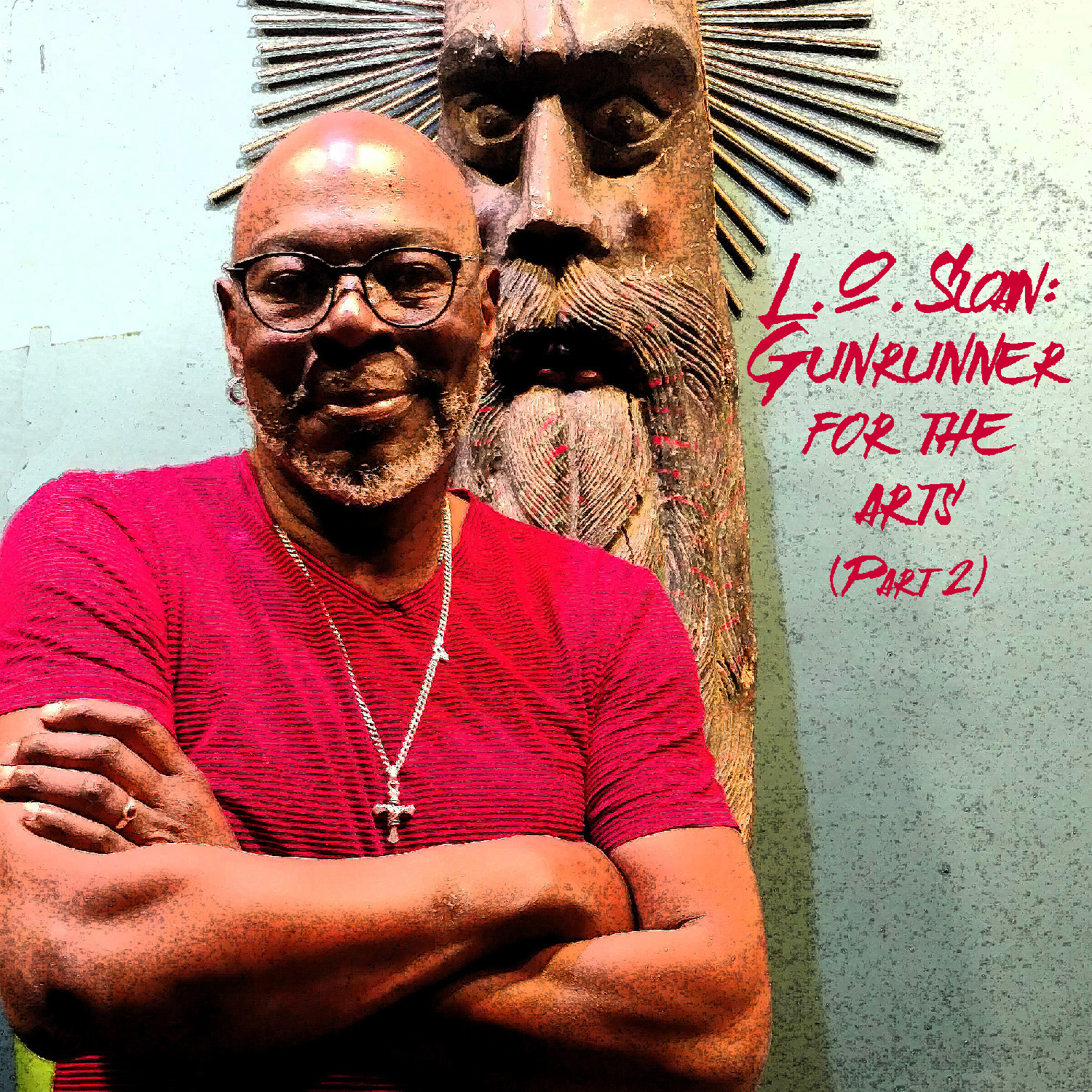
3: The Gunrunner for the Arts: L.O. Sloan’s Half-Century of Thriving as an Artist for Change (Part 2)
from ART IS CHANGE: Strategies & Skills for Activist Artists & Cultural Organizers
THRESHOLD QUESTIONS AND DELICIOUS QUOTES?Many older monuments are being challenged these days for for their distorted representation of history. What challenges confronted this effort to create a new monument to an an important but forgotten story? Well, the Department of General Services told us to do that you are going to have to get the vote of the House, the vote of the Senate, the endorsement of the governor, and you're going to have to raise the money yourself. The only word in the dictionary that I really love is no, because when you say no to me, that's like a green light. So, you know, I said, “cool beans” you know. I know how to do that, you know. So, we got a unanimous decision from the House, a vote of acclamation by the Senate, the governor's endorsement, and we raised the money to place this monument sometime this summer.?How can monument building become a community organizing strategy?I will be sad to see the monument go in the ground, because what it has caused is a coming together a purpose, and an advocacy, and a civic dialogue, about the value of the vote and the engagement of individuals, not the leaders. The leaders all step back, said it's on you people to do this. So, this is a way that people project and the process has been monumental. It's the process that I'm hoping will continue engagement, and that many coalition efforts will come out of bringing these people together.?What is the relevance of a monument building initiative like this in the time of COVID? And so now I'm, I'm saying, well, perhaps the dedication of a monument will be an equation and a prescription for gathering again, you know, the name of the monument was with a gathering at the at the crossroads takes on new meaning, when we look at how long will it take for people to feel comfortable about gathering, again.?How does does this story inform this current moment in history?The story of the of the demise of the old Eighth Ward is the story of redlining today, I mean, you know, the practices of changing your polling place, redrawing neighborhoods, the suppression of black women candidates. I mean, all of the history, which we thought of in a sepia tone way that we were going to recall, we are actually reliving you know, right down to the pandemic that they suffered.?What lessons can cultural organizers starting out take from a project like this?So, listening, humility, knowing that things come through you not from you. And you try to contain your ego that insists it was your idea. My chosen culture is New Orleans. You know, the notion of gumbo is you got two crabs, I got okra, somebody else has the roux, you know, we go make up something really good here. So be humble enough to know that you are but an equation, in any idea. LinksThe Crossroads Project official website. https://digitalharrisburg.com/commonwealth/ Digital Harrisburg: Exploring the history, society, and culture of Pennsylvania’s capital city: //digitalharrisburg.com A short documentary on the Crossroads project https://youtu.be/5bzRWI6PKYI TRANSCRIPTChange the Story, Change the World Episode 3—LS: Gunrunner for the Arts (Pt. 2)Leni Sloan My current project, which is about African Americans, suffragists, 1918 to 1920, who were trying to not only support the vote for women, but to find a place for themselves and that. They were doing that against the landscape of the 1918 flu. They were doing it in a pandemic year too. They were doing it with their man coming back from World War One having fought segregation in their communities. They were doing it on the eve of a national election of 1920, and they were doing it on the eve of the 1920 Census. And I felt that we needed to do something, Bill that was not about ribbon cutting or confetti, but that we needed to do something bold and audacious.Bill Cleveland From the Center for the Study of art and community, this is Change the Story Change the World, a chronicle of art and transformation. I'm BC. In our last episode, we began our conversation with activist performer impresario and historian Linwood O Sloan, who among other things, refers to himself as a gun runner for the arts. In it he described how his love of dance, theater and history merged into a life path of creative change making across the globe that has been filled with opportunities, obstacles and a lot of learning. As a case in point he introduced us to A Gathering at the Crossroads, a work in progress currently taking place in his hometown of Harrisburg, Pennsylvania. This initiative explores the history of Pennsylvania's black suffragists, the struggles bringing the franchise to African Americans and women through the US constitutions 15th The 19th amendments, Harrisburg role in the Underground Railroad and much, much more. Now we rejoin our conversation with Leni, which took place in the spring of 2020 in the midst of the COVID pandemic.So, Leni… As you began to understand the profound importance of the history you were exploring in Harrisburg, you came to the conclusion that telling the story properly would require something bold and audacious. So, tell me, how will bold and audacious make its presence felt in Harrisburg, Pennsylvania in 2020?LS So, I discovered that of the close to 300 iconic objects on the Pennsylvania State Capitol, 77 of which are statues, there was not a single statue or a monument to an African American, or a woman on the state capital of Pennsylvania, you know… So, I said, okay, you know, we got to fix that first, you know, and the power of public art to create public dialogue, public engagement, the power of placemaking, and cultural and heritage tourism. I was like let's find a place on this campus, which as in 2016, in 2020 will be a deciding factor in the national election, and let us make our moment that's make our place. We discovered that a number of orators between 1866 and 1870, when the 15th amendment was passed, came to the Capitol from all over the Mid-Atlantic states to speak on behalf of the franchise, and through a public process we collected the names of 100 important people who had been influential between 1870 (when the 15th amendment was passed) and 1920 (when the 19th amendment was passed) in the progression of Equity and parity in the value of the vote. We selected four of them, three men and one woman, to create as full life-sized bronze statues standing on a corner in Harrisburg, Pa with the 15th amendment in their hand. Yeah, in deepened dialogue bronze monument made up of the four statues standing around an orders pedestal. We also place the names of the other 96 on the body of the pedestal. Our goal was to take K. Leroy Irvis, who is passed now, Speaker of the House of Pennsylvania, who was the first black Speaker of the House since reconstruction. The Pennsylvania House of Representatives building is named after him, but the lawn on the Irvice building is the only unmanicured, un-landscaped [lawn]. It's a no place. Okay, let's use his lawn. This is an act of reparation. Let's place this monument to the vote on the K. Leroy Irvice lawn, and let's rename it to K. Leroy Irvice equality circle.BC So, the proposal was to turn this neglected corner of the state capitol grounds into what constitutes a new state park. I'm assuming there are a few hoops and hurdles involved in an endeavor like that.LS Well, the Department of General Services told us to do that you are going to have to get the vote of the House, the vote of the Senate, the endorsement of the governor, and you're going to have to raise the money yourself. The only word in the dictionary that I really love is no, because when you say no to me, that's like a green light. So, you know, I said, “cool beans” you know. I know how to do that, you know. So, we got a unanimous decision from the House, a vote of acclamation by the Senate, the governor's endorsement, and we raised the money to place this monument sometime this summer. We were going to do a week of celebrations from Monday, June 15th, to Friday, June 19th, using the 15th and the 19th as our emblematic dates, and also June...
Embed this episode
What this episode covers
In our last episode, we began our conversation with Lenwood O. Sloan, who among other things, refers to himself as a gun runner for the arts. He introduced us to A Gathering at the Crossroads, that explores the history of Pennsylvania's black suffragists, the struggles bringing the franchise to African Americans and women through the US constitutions 15th The 19th amendments and Harrisburg role in the Underground Railroad.
NOW PLAYING
3: The Gunrunner for the Arts: L.O. Sloan’s Half-Century of Thriving as an Artist for Change (Part 2)
No transcript for this episode yet
Similar Episodes
No similar episodes found.
Similar Podcasts
No similar podcasts found.