
EPISODE · Aug 9, 2021 · 38 MIN
30: From Judy Chicago to Juvenile Halls: How One Activist Artist Facilitated Radical Change Through Creativity
from ART IS CHANGE: Strategies & Skills for Activist Artists & Cultural Organizers
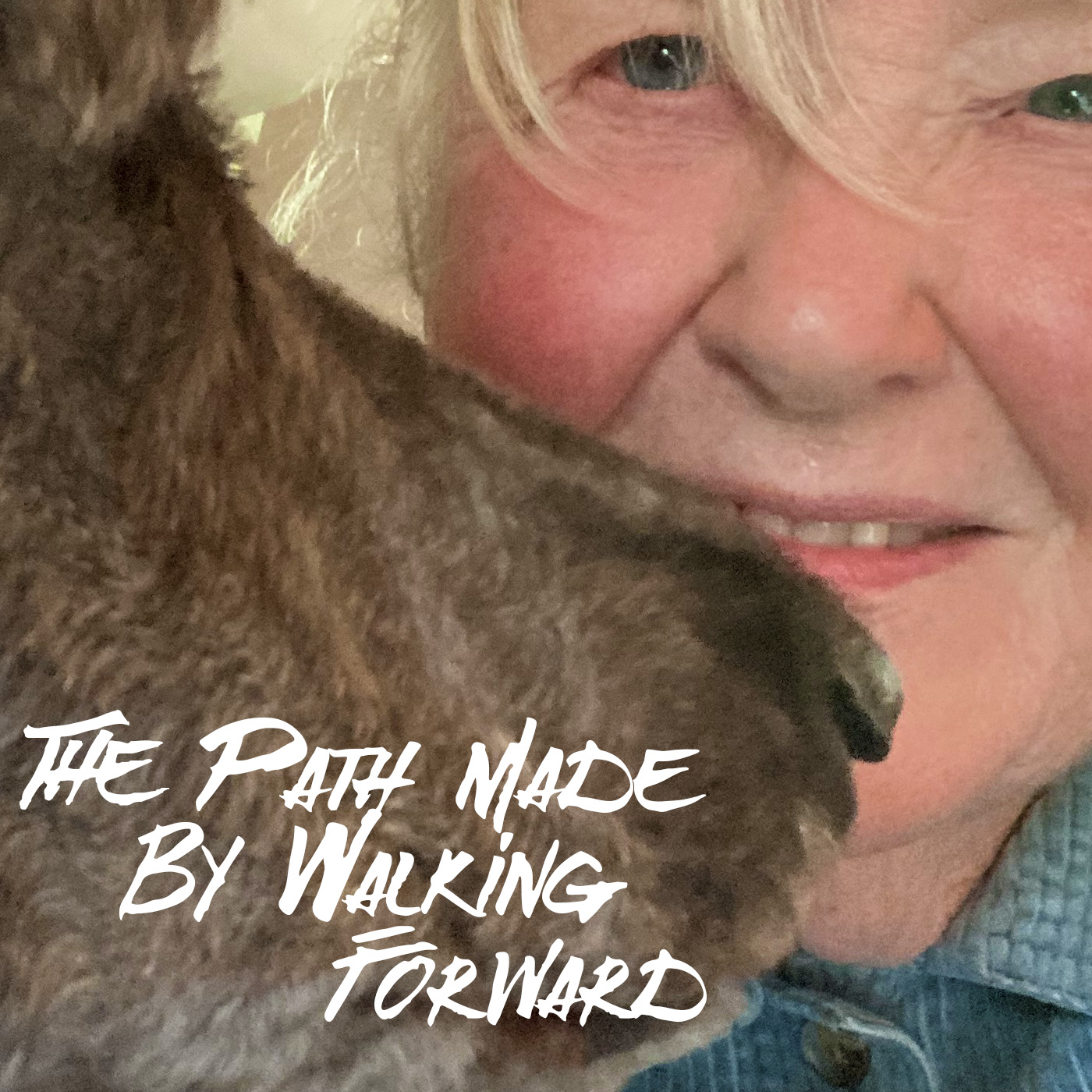
Susan Hill: The Path Made by Walking ForwardSusan Hill has, one of the best minds, and hearts I know for translating human creativity to the needs of the human community. In our conversation, we talk about how that complex alchemy works, and doesn’t, getting the respect of people who really distrust you, and what happens when the lights go off in a high-security prison classroom. Here is her bio followed by our full transcript. Susan Hill: I’m an eccentric combination of very small towns in New England, and very very large, diverse, multi-lingual cities: living by the ocean is the constant. My relatives include a clipper ship navigator, a detective, excellent carpenters, a race horse trainer, a car salesman, a dressmaker, an artist who changed / Americanized her name, nurses and teachers and wonderful cooks. I love the risks, the service, and the high craft implicit in their lives.I went to college (1961-1965) , not to art school … but fell in love with photography in college, learned to develop film and to print images by apprenticing, began photographing people and neighborhoods in New York and Los Angeles .. walking everywhere, photographing. This is how I began … an immersion in seeing a city, in fact, documenting what I saw … but as witness, documentarian, not an agent. I was looking for a different way of working, and went to a lecture by (then, young) Judy Chicago (1975) , who spoke about a new project she was beginning, a project she needed people to work with her. The Project was The Dinner Party. I was one of the first people who entered her studio to work; our early conversations, and the skills I’d learned from my grandmother, led to our deciding to add embroidered panels to each place setting, my being responsible for the embroidery, for the teams of stitchers, we trained.The studio environment, the collaborations, the engagement with direct social action, changed everything.After The Dinner Party was complete, I worked with Judy Baca, founder of SPARC (Social and Public Art Resource Center) during the design and painting of the last segment of The Great Wall mural … a brilliant and generous mentor, deepening my love of collaboration and community engagement. (NOTE: Judy is now embarking on one more segment of the Wall.) At the same time, Susan Loewenberg, founder of L.A. Theatre Works, was Director of Artists in Prison and Other Places; she hired me as an artist in residence for California Institution for Women, responsible for creating a fiber arts project with the inmates that would be given public exhibitions. It became a two-year residency called When Prison is Home, creating quilted triptych banners documenting life with family, life within prison, circled by aspirations, worked by inmates, and free women who came to project sessions in the prison as team members. Most of the inmates we worked with had long sentences or life sentences; were considered respected elders of the prison community, had power, were good mentors, generous collaborators. The CIW project experience led to Artsreach, which expanded our community constituencies and the range of arts disciplines. Our worksites included youth and adult prisons, service agencies for seriously developmentally challenged adults, community centers in marginalized areas of South Central, Watts and East Los Angeles. We began a multi-lingual, multi-ethnic theatre company that wrote its own material, there was modern dance, African drumming, spoken word poetry, ceramics, book arts, drawing and painting, collage, video, music. Some programs were skills-based, with traditional development of individual skills; some were initiated with the intention of engaging the public. My continual engagement has always been the expansive possibilities and the risk of collaboration, the engagement in Story, rendered in high skill for personal and public education, the continuing essential of social change. I love being In the Room. TranscriptBill Cleveland: [00:00:00] This Episode’s conversation is with Susan Hill. Susan is a good friend with whom I spent many years traversing the, often difficult, confounding, even hilarious, landscape of the of the California Department of Corrections. We spent over a decade bringing artists into institutions up and down the state. Susan's particular beat was Southern California, her creative launching pad an organization called UCLA Artsreach, which she directed. In that position, she functioned as an impresario, an inspiration, a creative thinker, and as a master navigator of difficult and challenging environments bring a band of great artists with her all the way. In other chapters, Susan also worked with Judy Chicago as a midwife for the iconic feminist art installation The Dinner Party was a principal driver of the historic Art in other Places Conference and is an accomplished textile artist. She has, I think. One of the best minds, and hearts I know for translating human creativity to needs of the human community. In our conversation we talk about how that complex alchemy works, and doesn’t, getting the respect of people who really distrust you, and what happens when the lights go off in a high-security prison classroom.This is Change the Story / Change the World, A Chronicle of Art and Community Transformation, my nave is Bill Cleveland. BC: You got it to work. Susan Hill: [00:01:17] Oh, yeah. Yes. got it to work, got the dogs fed, but really, there should be a rule that you don't call up people in Maine in late February, because we look awful. We have vegetables stored in the basement and we look fairly similar. BC: [00:01:32] Well, at least you have something to eat. SH: [00:01:34] Yes, exactly. Exactly.BC: [00:01:37] So how you be? SH: [00:01:39] Okay. Maine is one of the states that, has a really low rate of incidence we live in a very small community and on the whole it's been really cooperative. and although there is a very strong contingent here of deniers. BC: So, my reason for doing this is to give you an opportunity to go into your Rolodex of available stories. But before I start one thing, I would ask is how do you describe that as a way of working in the world? SH: First of all, I'm going to say, thank you, bill Cleveland. And I really want to acknowledge that you have been a fellow traveler in so many ways. And I'm so grateful for all of that. But the question of “How do I describe the work?” is really lovely. And when I thought about it, I thought, my first real jobs in the world was --- one, I was a summer waitress all night from when I graduated from high school and all through college. And after college, when I moved to New York, my first jobs were: I was the receptionist because I couldn't type, to the president of the Ford Foundation, and in the holidays, in my spare time, I sold toys at FAO Schwartz. So, the linchpin of me working in the world is good service and fun and interesting people. BC: [00:03:09] Okay. SH: [00:03:10] And there were interesting people coming to the Ford Foundation for money, with good ideas. And there were wonderful people coming into FAO Schwartz to buy toys. I consider myself an artist, but I'm self-taught, didn't go to art school--- didn't have those goals. So, I see myself more as a facilitator for good service. I want to work collaboratively, and for the purpose of social change, whether it's small or large, and I really am committed to collaboration. I'm committed to working in council circles so that everyone has an equitable voice, and I'm committed to nonviolence. BC: [00:03:46] That's a wonderful package. SH: [00:03:48] it's a Rolodex. BC: [00:03:50] Yes, it is. So, one of the things that features prominently in my experience with you, is that you have facilitated many things. But the way in which you go about doing that is very much as an artist. And every place I have visited that you have lived has, I would say, is more of a studio than it is a living room or kitchen. And so, I think if you, as a working maker in the world with the thing you love.SH: [00:04:23] Yes. Well, first of all, I hate housework. But I, I believe implicitly that everybody is creative. And I believe that creativity is not from our brain, it's not part of the logic that we have, that as Jung says, it's actually from the heart, that the soul is located in the heart. And that creativity is a deep intelligence that we all have that manifests differently. Creativity is very much like cooking. there are certain ways that it demands, that given the ingredients, it has to be done. You can't rush it. You can't overcook it. Yes, I really love walking into places and, creating the environment. I think it's equally important, even if you're borrowing a classroom from the history teacher in the California youth authority prison system, the way that you, what we used to call, create the rules of the room, is as important and has to work in the service of creativity. And then you go about the business of being creative. BC: [00:05:28]
Embed this episode
What this episode covers
Susan Hill has, one of the best minds, and hearts I know for translating human creativity to the needs of the human community. In our conversation, we talk about how that complex alchemy works, and doesn’t, getting the respect of people who really distrust you, and what happens when the lights go off in a high-security prison classroom.
NOW PLAYING
30: From Judy Chicago to Juvenile Halls: How One Activist Artist Facilitated Radical Change Through Creativity
No transcript for this episode yet
Similar Episodes
No similar episodes found.
Similar Podcasts
No similar podcasts found.