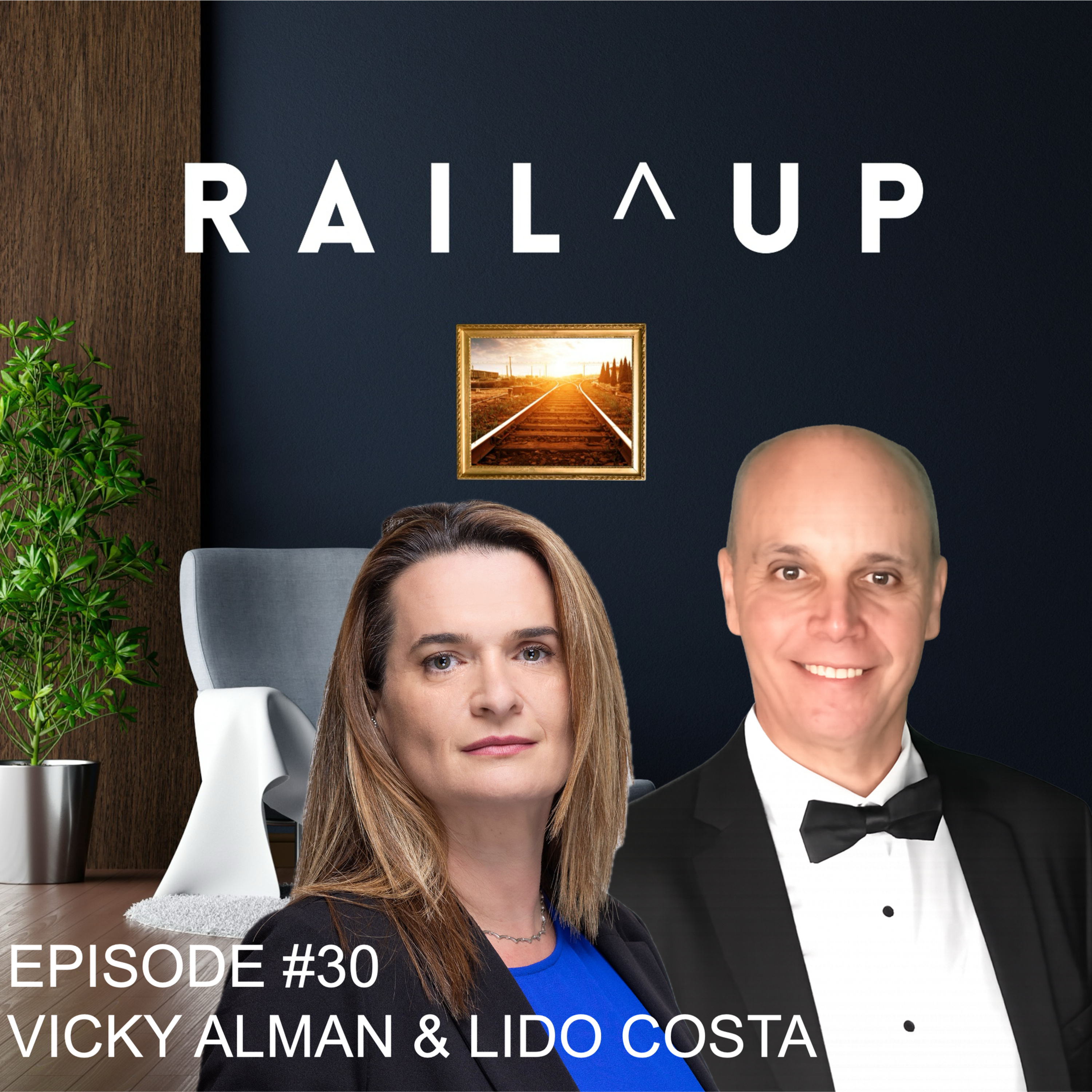
#30 How Trains Learn to See: The Next Step in Rail Automation episode artwork

EPISODE · Mar 1, 2026 · 58 MIN

#30 How Trains Learn to See: The Next Step in Rail Automation

from RAIL^UPThe podcast with innovators and leaders of the ecosystem of rail. · host Sebastian Sperker

About Vicky AlmanVicky, CEO of NIART Systems, a distinguished engineer who holds two advanced degrees, bringing a background from the highly regulated aerospace sector to the rail industry. At NIART, she leads the application of advanced AI and sensor technology to create predictive rail infrastructure. As a recognized industry leader, she specializes in the digital transformation of rail, focusing on how these innovations mitigate supply chain risk and eliminate the massive, hidden financial costs associated with incidents and infrastructure failures. She offers a crucial, data-driven perspective for global rail professionals.About NIART Systems The company offers a unique radar-powered railway obstacle detection solution. Uncovering hidden obstacles and providing real-time insights in any condition, NIART aims to transform the rail industry by offering a solution that prevents accidents, reduces delays, and accelerates the shift towards safer, smarter and more reliable railways.https://niart-systems.com/About Lido Costa Lido was the Lead Technical Engineer for the AutoHaul® Driverless Trains system for Rio Tinto, Australia, responsible for system integration, hardware and software architecture approval, and safety assurance strategy.Over the past five years, he has served as an Expert Consultant to DB Cargo (German Railways) on the ATO/RTO Betuwe Project — Europe’s first freight ATO and Remote Train Operation initiative — and is also an Expert Consultant with NIART Perception Systems.With over 35 years’ experience in railway signalling, communications, and control systems, Lido has held senior roles on major projects across Europe (including the Madrid–Seville High Speed Line), Asia, Africa, and Australia.He is a Chartered Professional Engineer (Australia), a Fellow of the Institution of Railway Signal Engineers (FIRSE, UK), and winner of the 2021 Australasian Rail Industry Awards – Signalling and Systems Engineering Award.My Key Takeaways Perception is the “eyes and ears” of autonomous trains — without it, autonomy is blind.Rail automation is reaching its limits with rule-based systems; higher capacity and safety demands push the next step.Sensor fusion (radar + cameras) is essential — no single sensor is reliable enough on its own.NIART (train spelled backwards) brings aerospace-grade, mission-critical engineering into rail.AutoHaul is called the “largest robot in the world.”The trains are massive: 2.5 km long, up to ~40,000 tons, fully automated in mainline operation.Biggest business driver: avoiding driver-change stops — restarting a 40,000-ton train costs serious time and fuel.Unexpected benefit: highly consistent driving reduces wear variability and improves maintenance planning.Fun fact: Western Australia reportedly has more camels than Saudi Arabia — and trains regularly encounter them.Next evolution: adding onboard perception systems to further reduce residual risks and increase flexibility and safety.Sebastian [email protected]://www.railup.club/

About Vicky AlmanVicky, CEO of NIART Systems, a distinguished engineer who holds two advanced degrees, bringing a background from the highly regulated aerospace sector to the rail industry. At NIART, she leads the application of advanced AI and sensor technology to create predictive rail infrastructure. As a recognized industry leader, she specializes in the digital transformation of rail, focusing on how these innovations mitigate supply chain risk and eliminate the massive, hidden financial costs associated with incidents and infrastructure failures. She offers a crucial, data-driven perspective for global rail professionals.About NIART Systems The company offers a unique radar-powered railway obstacle detection solution. Uncovering hidden obstacles and providing real-time insights in any condition, NIART aims to transform the rail industry by offering a solution that prevents accidents, reduces delays, and accelerates the shift towards safer, smarter and more reliable railways.https://niart-systems.com/About Lido Costa Lido was the Lead Technical Engineer for the AutoHaul® Driverless Trains system for Rio Tinto, Australia, responsible for system integration, hardware and software architecture approval, and safety assurance strategy.Over the past five years, he has served as an Expert Consultant to DB Cargo (German Railways) on the ATO/RTO Betuwe Project — Europe’s first freight ATO and Remote Train Operation initiative — and is also an Expert Consultant with NIART Perception Systems.With over 35 years’ experience in railway signalling, communications, and control systems, Lido has held senior roles on major projects across Europe (including the Madrid–Seville High Speed Line), Asia, Africa, and Australia.He is a Chartered Professional Engineer (Australia), a Fellow of the Institution of Railway Signal Engineers (FIRSE, UK), and winner of the 2021 Australasian Rail Industry Awards – Signalling and Systems Engineering Award.My Key Takeaways Perception is the “eyes and ears” of autonomous trains — without it, autonomy is blind.Rail automation is reaching its limits with rule-based systems; higher capacity and safety demands push the next step.Sensor fusion (radar + cameras) is essential — no single sensor is reliable enough on its own.NIART (train spelled backwards) brings aerospace-grade, mission-critical engineering into rail.AutoHaul is called the “largest robot in the world.”The trains are massive: 2.5 km long, up to ~40,000 tons, fully automated in mainline operation.Biggest business driver: avoiding driver-change stops — restarting a 40,000-ton train costs serious time and fuel.Unexpected benefit: highly consistent driving reduces wear variability and improves maintenance planning.Fun fact: Western Australia reportedly has more camels than Saudi Arabia — and trains regularly encounter them.Next evolution: adding onboard perception systems to further reduce residual risks and increase flexibility and safety.Sebastian [email protected]://www.railup.club/

NOW PLAYING

#30 How Trains Learn to See: The Next Step in Rail Automation

0:00 58:55

No transcript for this episode yet

We transcribe on demand. Request one and we'll notify you when it's ready — usually under 10 minutes.

Frequently Asked Questions

How long is this episode of RAIL^UPThe podcast with innovators and leaders of the ecosystem of rail.?

This episode is 58 minutes long.

When was this RAIL^UPThe podcast with innovators and leaders of the ecosystem of rail. episode published?

This episode was published on March 1, 2026.

What is this episode about?

About Vicky AlmanVicky, CEO of NIART Systems, a distinguished engineer who holds two advanced degrees, bringing a background from the highly regulated aerospace sector to the rail industry. At NIART, she leads the application of advanced AI and...

Can I download this RAIL^UPThe podcast with innovators and leaders of the ecosystem of rail. episode?

Yes, you can download this episode by clicking the download button on the episode player, or subscribe to the podcast in your preferred podcast app for automatic downloads.
URL copied to clipboard!