
EPISODE · Apr 7, 2026 · 8 MIN
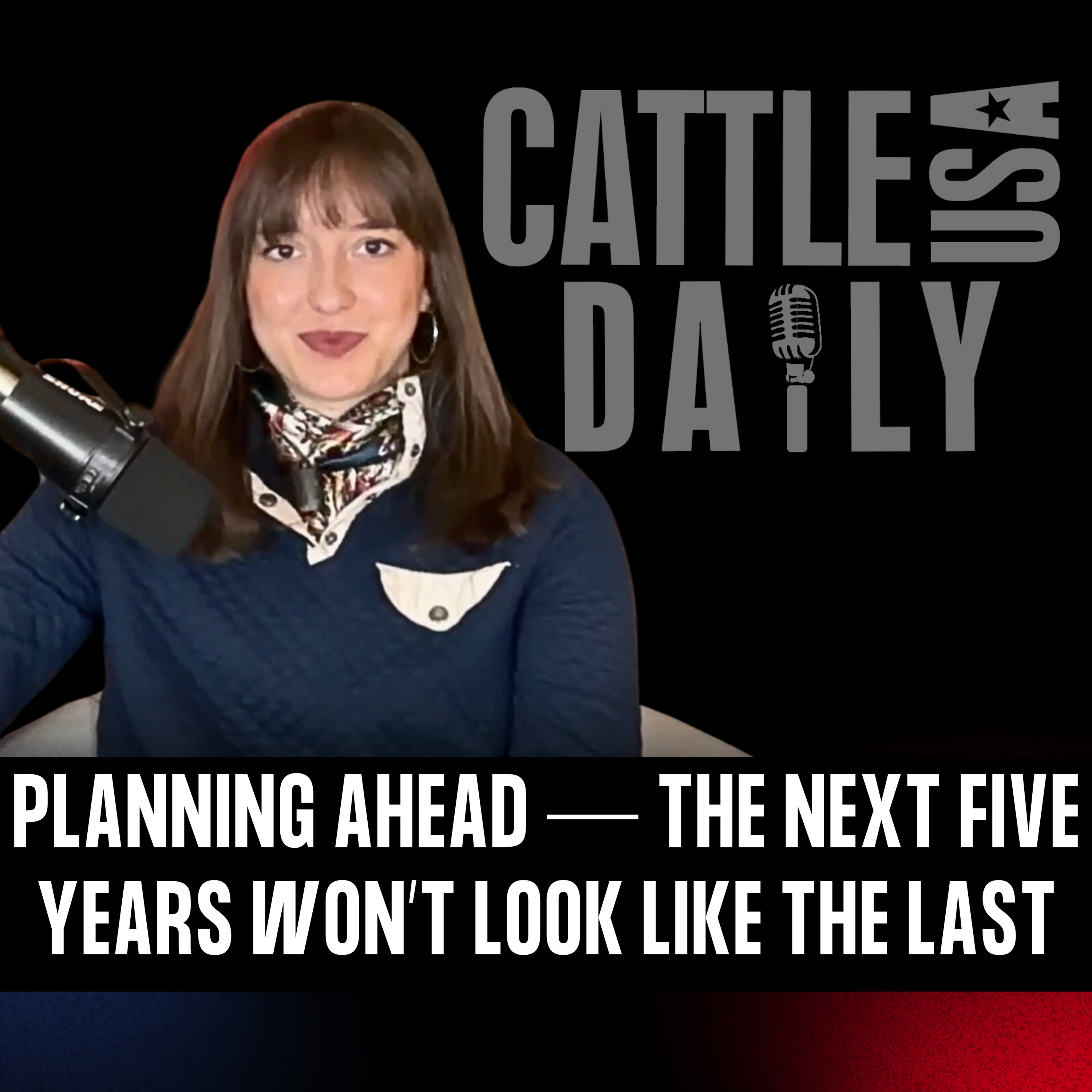
301: Planning Ahead — the Next Five Years Won’t Look Like the Last
from CattleUSA Daily · host Lauren Moylan | Cattle USA
Most ranches plan for the future based on what’s already happened, but agriculture doesn’t work that way. In today's episode, Lauren breaks down why planning forward using backward assumptions creates risk and how to think more intentionally about the next five years. From market cycles to labor, land, and liquidity, this episode challenges producers to build flexibility, reduce risk, and position their operations for what’s ahead, not what’s already happened.LinksNominate or request to be a guest - forms.gle/fRkvzRenh7mqkDXV7 CattleUSA Insurance - https://info.cattleusainsurance.com/l/1102253/2025-06-04/288f5mCattleUSA Website - https://www.cattleusa.com/Facebook - https://www.facebook.com/cattleusamediaInstagram - https://www.instagram.com/cattleusa.media/Subscribe to our newsletter - https://www.cattleusadrive.com/premiumCattleUSA Media - https://www.cattleusamedia.com/Lauren’s Instagram - https://www.instagram.com/_laurenmoylan/Lauren’s Youtube - https://www.youtube.com/@ShowboatmediacoThe Next Generation Podcast Website - https://www.thenextgenag.com/Key TakeawaysPlanning off the past can create hidden riskAgriculture is cyclical—conditions will changeStrong operations focus on positioning, not predictionLiquidity and flexibility are critical for long-term successHerd design, labor, and capital decisions compound over timeFive-year planning reduces reactive decision-makingChapters00:00 – The planning trap02:00 – Why the next five years will look different05:00 – Market cycles and risk08:00 – Herd, labor, and land decisions11:00 – Financial planning and liquidity14:00 – Final thoughtscattle ranch planning, ranch management, farm strategy, cattle industry, ag planning, ranch profitability, cattle producers, agriculture podcast, farm management, cattle operations, long term planning ranch, ag decision making, ranch economics, cattle business strategy
Embed this episode
NOW PLAYING
301: Planning Ahead — the Next Five Years Won’t Look Like the Last
No transcript for this episode yet
Similar Episodes
No similar episodes found.
Similar Podcasts
No similar podcasts found.