
EPISODE · Mar 11, 2026 · 56 MIN
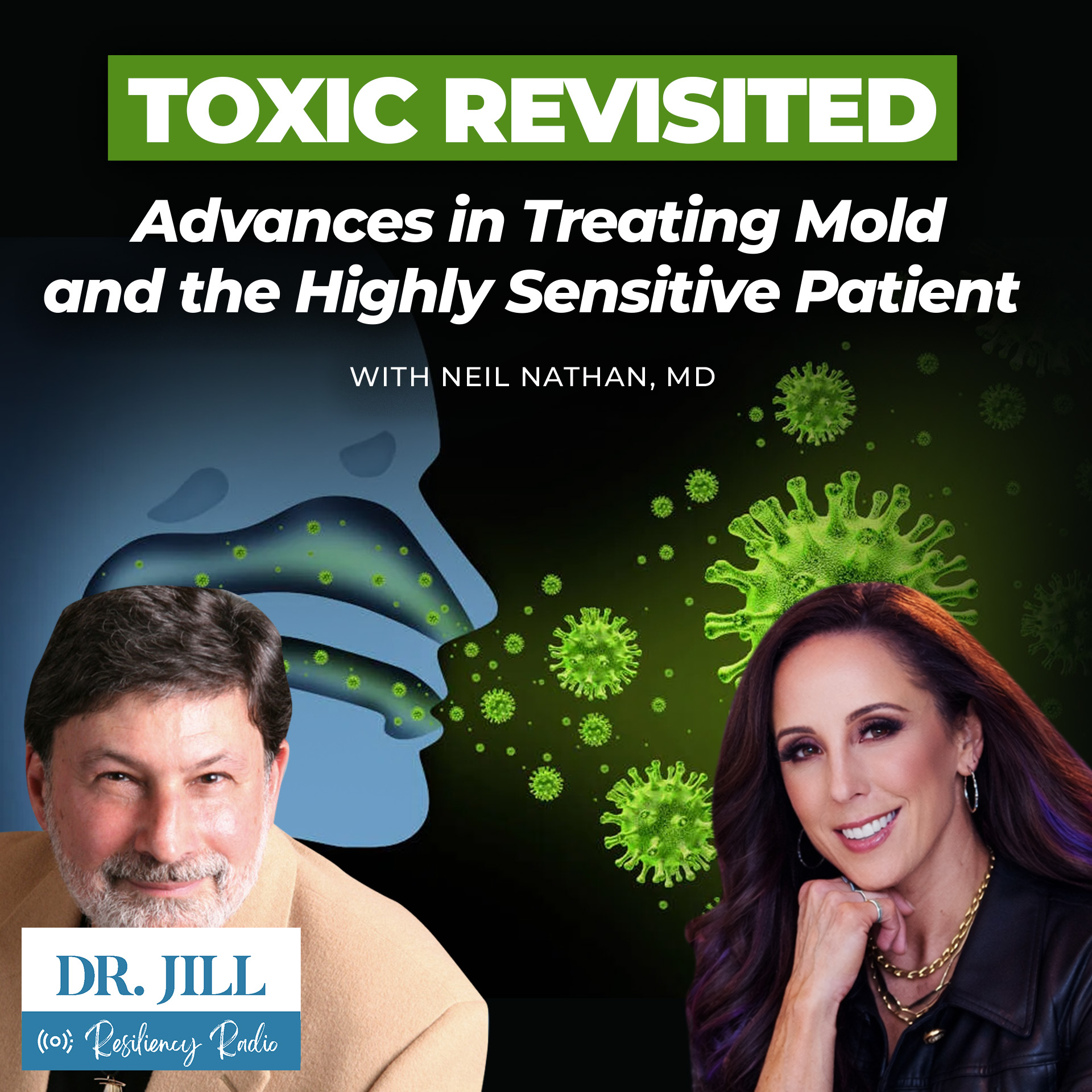
305: Resiliency Radio with Dr. Jill – Toxic Mold Revisited: Mold & the Highly Sensitive Patient with Dr. Neil Nathan
from Resiliency Radio with Dr. Jill Carnahan, MD · host Dr. Jill Carnahan, MD
Welcome to Resiliency Radio with Dr. Jill Carnahan, where today's episode revisits one of the most complex and misunderstood areas in integrative medicine: toxic mold illness and the highly sensitive patient. Dr. Jill is joined by renowned functional medicine pioneer Dr. Neil Nathan, author of Toxic: Heal Your Body and The Sensitive Patient's Healing Guide, for a powerful and deeply insightful conversation on environmental toxins, limbic dysfunction, mast cell activation, and healing chronic inflammatory illness. In this episode, Dr. Jill Carnahan and Dr. Nathan explore why many highly sensitive individuals struggle with conventional detox protocols—and how healing requires safety, precision, and a stepwise approach. This discussion offers both clinicians and patients a roadmap for navigating mold illness, nervous system overload, and sensitivity syndromes with greater clarity and compassion. ✨ Like, subscribe, and share to help more sensitive patients find safe and effective pathways to recovery. 🔑 Key Discussions – What You'll Learn ① The Highly Sensitive Patient (HSP) ⇨ Why sensitivity is both a gift and a liability—and how to manage emotional and environmental overwhelm. ② Limbic, Vagal & Mast Cell Interconnection ⇨ How these three systems drive chronic inflammation, anxiety, POTS, gut dysfunction, and chemical sensitivity. ③ Why Mold Treatment Must Be Stepwise ⇨ The importance of stabilizing the nervous system before binders or antifungals—especially in sensitive patients. ④ Environmental Toxic Load & Modern Stressors ⇨ How chemicals, mold, EMFs, and post-pandemic stress overload detox pathways. ⑤ Healing Beyond Protocols ⇨ The role of clinician presence, precise language, love, spirituality, and nature in long-term recovery. ⭐ Key Takeaways ⇨ Highly sensitive patients require gentler, staged detox strategies ⇨ Limbic and vagal retraining are foundational before aggressive mold treatment ⇨ Mast cell activation often overlaps with mold and Lyme illness ⇨ Starting low and slow with binders prevents setbacks ⇨ Love, connection, and safety are essential biological regulators 👨⚕️ Guest Biography Dr. Neil Nathan, MD, has practiced medicine for over 50 years and is considered a pioneer in functional medicine. He specializes in mold toxicity, Lyme disease, mast cell activation, and complex chronic inflammatory illness. Dr. Nathan is the author of Toxic: Heal Your Body, The Sensitive Patient's Healing Guide, and Energetic Diagnosis. His work focuses on helping highly sensitive individuals recover safely through stepwise detoxification, nervous system stabilization, and holistic healing strategies. 🔗 Website: http://www.neilnathanmd.com/
Embed this episode
NOW PLAYING
305: Resiliency Radio with Dr. Jill – Toxic Mold Revisited: Mold & the Highly Sensitive Patient with Dr. Neil Nathan
No transcript for this episode yet
Similar Episodes
No similar episodes found.
Similar Podcasts
No similar podcasts found.