
EPISODE · Sep 1, 2021 · 49 MIN
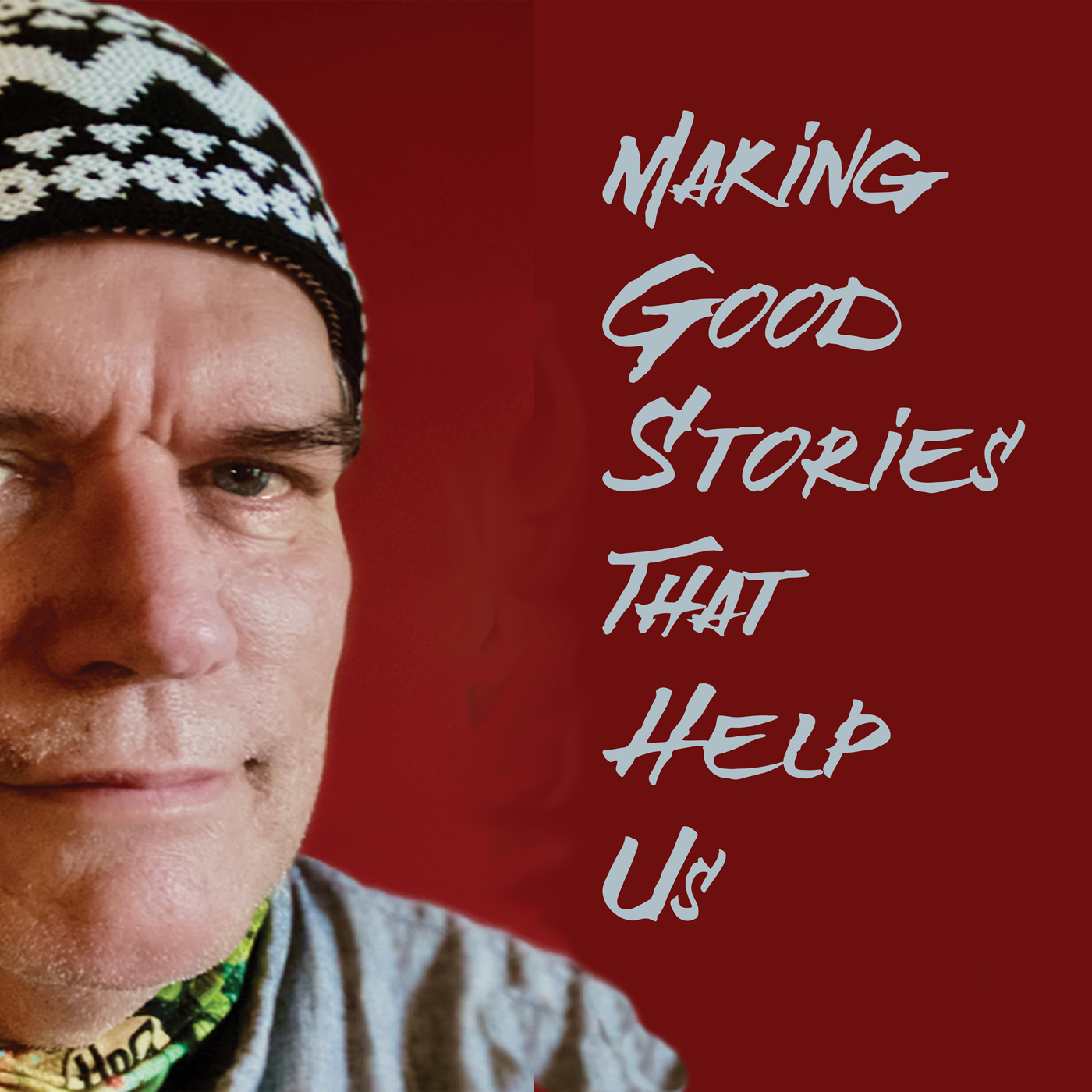
31: Joe Lambert - Making Good Stories that Help Us
from ART IS CHANGE: Strategies & Skills for Activist Artists & Cultural Organizers
Show NotesThe Story of My Story A Digital Story by KMUSIC PLAYINGK: In a funny way, books raised me. I didn't have the things a child needs to be a child; security, safety, comfort, love. But I always found happiness in learning new things. When I turned eight, my mother passed away from her battle with AIDS.I remember how even at her funeral, I was thinking about how I could get my homework done. .Right after that I was brought to this country. And the only thing I could bring with me where my love of books, learning and knowledgein high school, I used to dream up. I would explore outer space when I was suddenly drowned by their words, criminal illegal. And I thought, how could a human be prohibited by law? I was so confused. My first reaction was laughter. The laughter turned to tears and rage. I made up my mind, I was going to fight to go to college and continue my education.I shared my story and quickly found that there were many like me. I began to speak out. At first, it felt good. I felt like I could bring about change. But one day I heard a voice on the radio, and I realized it was me, but it wasn't me. It wasn't my story. It was a story of a perfect poster child. They twisted my devotion to education into a sick plea to my oppressors.It was slowly killing me, having a face of the people that were denying me, the basic things, a human needs to be a human. To beg them for scraps from their fruitful plate. The very same plate they had filled by raping, enslaving, and killing my ancestors and my brothers and sisters around the world. I came to see that this was not just about me, not just about going to college, but about fighting the injustice experienced by all immigrants and all people sufferingEven today, as I am denied the things a human needs to be a human. I lie in bed with a new book. I glance over at the shelf and see the books I read as a child and think of what I will write in my own.Bill Cleveland: This short story (The Story of My Story) is the audio from a video created by a young woman who identifies herself using the letter “K”. She made this piece at a digital storytelling workshop at the Story Center in the fall of 2012. Although it has an office and a classroom in Berkeley, California, the Story Center is not merely a place. It's actually a conviction that we all have stories to share that can inspire teach, bring joy, bear, witness, and heal. It's also a process that introduces people to the stories at their center that they've carried with them all their lives. The center's impact over nearly three decades has been both intensely personal and global.This conversation with Center director, Joe Lambert, explores the story of the Story Center, its history, its practice and its influence. Joe describes himself as a “small businessman, that has kept a little business going for a long time.” He's also unabashed and adding, “and we want to be revolutionaries” with the impetus once again, in Joe's words, “making good stories that help us.”JOE LAMBERTJoe and colleagues founded the StoryCenter/Center for Digital Storytelling in 1994, where they developed a unique computer training and arts program known as The Digital Storytelling Workshop. Joe has traveled the world to spread the practice of digital storytelling and has authored and produced curricula in many contexts, including the Digital Storytelling Cookbook, the principle manual for the workshop process, and Digital Storytelling: Story Work for Urgent Times (6th Edition). Born and raised in Texas, Joe has been active in the Bay Area arts community for the last 40 years as an arts activist, producer, administrator, teacher, writer, and director, and recently relocated to Santa Fe, New Mexico.DELICIOUS QUOTESI understood the information revolution was a kind of iron horse coming through the communities of the world. In America in particular, but it was, it was like an iron horse. And I used to say, you can stand outside of it and shoot arrows and go, “I hate you.” Or I can jump on the goddamn thing and try to redirect it, do something with the technology as it came along. And I was always like, “Let's jump on it. Let's make the best of it.But I remembered it stayed with me that, Story circles, they're about protectiveness and readiness to tell stories. And usually, you're sorta discouraging people from fully going there because the re-traumatization that goes on when a series of intense stories are told one after another. But the flip side of that is that these moments of listening when they're conceived well, and there's a sense of protectiveness they can be Circles of, of absolute bravery of a heroism in which you unpack the, the impossible in order to hold it and to, to make something sensible about the insensible…you know, some people don't want people liberated. They want them stuck exactly in their oppression for the rest of time. And those people are out there and we're still resistingI feel like the work I'm doing is to create the conditions in which the dignity and agency of an individual is seen as having enough value to go out in the world and change it. Because I think an un-signifiable life is a life that can be destroyed, either by the person themselves, or by other people.Let's say that story matters to get people to move toward decency and away from thuggishness. Story matters, and it's a battle. It's a battle of ideas. So, I want to say the pandemic is the pandemic because in the battle of ideas, the stories of compassionate wearing of mass got muddled…we who are on the outside, well-trained in some professional capacity, can't really know what it's like to be that person. So, they need to talk to each other, and we need to get out of the way. And we need to develop peer mechanisms of support and solidarity, so that increasing numbers of people that run those programs aren't some person from some completely different life experience, but are people that came through similar life experience.I think stories of braveness, and the ordinariness of heroic behavior, we need those stories in front of us in order that we can also be on the front line.A big part of Story Center's work is we want to be revolutionaries. We know we don't want to just make it comfortable for everybody to tell a story. We want uncomfortable stories to force themselves into our mind so that we have to deal with it. So, there's gotta be a bit of that willingness to learn from this period as opposed to, “Gosh, I'm glad I didn't have to be there.” Yeah.MEMORABLE MENTIONSStory Center: “We create spaces for listening to and sharing stories, to help build a just and healthy world. Our public and custom workshops provide individuals and organizations with skills and tools that support self-expression, creative practice, and community building.” San Francisco Tenants Action Group (TAG) Now called the San Francisco Tenants Union. “For more than 40 years, the city’s renters have turned to the San Francisco Tenants Union, a mostly volunteer-run organization, for advice on how to secure and maintain habitable and affordable housing.”Thomas Melancon & Lindi Yeni : “When Kuumba House was founded in 1982 (by South Africa’s Lindi Yeni and Houston’s Thomas Meloncon), the company’s main focus was producing plays by noteworthy playwrights.”Life on the Water: A vital San Francisco theater space that featured the work of three of the Bay Area's most...
Embed this episode
What this episode covers
The Story Center is not merely a place. It's actually a conviction that we all have stories to share that can inspire teach, bring joy, bear, witness, and heal. It's also a process that introduces people to the stories at their center that they've carried with them all their lives.
Ready to play
31: Joe Lambert - Making Good Stories that Help Us
No transcript for this episode yet
Similar Episodes
No similar episodes found.
Similar Podcasts
No similar podcasts found.