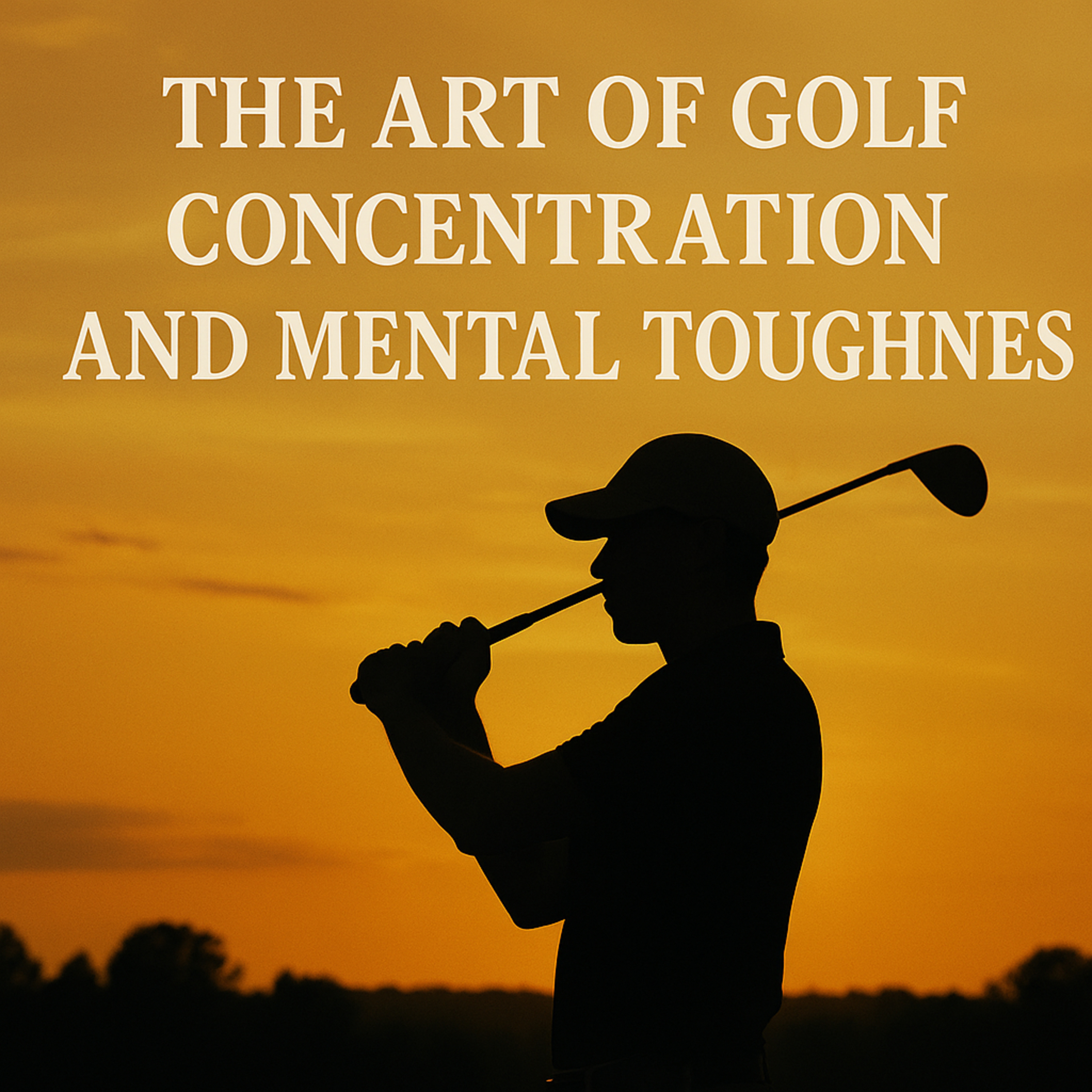
#323 The Art of Golf Concentration and Mental Toughness  episode artwork

EPISODE · Aug 22, 2025 · 24 MIN

#323 The Art of Golf Concentration and Mental Toughness

from Golf 247.eu: The Global Platform for Innovative Technologies and Teaching Concepts. · host Golf247.eu

Concentration in golf is not a gift of nature but a skill forged through discipline and practice. Elite players understand that the mind cannot remain on full alert for 18 holes without breaking down. Instead, they master a rhythm of peaks and valleys: sharpening focus before and during each shot, then deliberately relaxing afterwards. This dynamic cycle, perfected by champions such as Jack Nicklaus, prevents fatigue and preserves clarity.At its heart lies the philosophy of one shot at a time. Greats from Fred Couples to Patty Sheehan have stressed the importance of focusing only on the present stroke—neither mourning past mistakes nor fantasizing about trophies ahead. Sam Snead once admitted to losing a lead because he was already planning dinner. Gary Player put it more bluntly: “Absolute attention on what’s happening, that very moment.”Patience is the silent partner of concentration. Defined as the ability to hold focus while letting stray thoughts pass, patience shields golfers from the “decay” of anger and frustration. Snead urged players never to abandon a hole, warning that quitting becomes habit. Stadler and Nicklaus both credited victories to patience, with Nicklaus training his through sheer self-control.Another safeguard is expectation. While amateurs often chase perfection, masters accept its rarity. Hogan and Nicklaus admitted that only a few shots per round matched their vision; Hagen even allowed himself seven bad swings a day. By embracing imperfection, they avoided the spiral of over-analysis and anxiety that ruins rhythm.Distraction is the enemy. Hogan approached each round as a contest against the course, not the field, and prepared by walking holes backwards to map his plan. Many professionals improved by ignoring scoreboards, even forgetting their own totals during peak play. Lopez confessed that glancing at a leaderboard often led to bogeys. Another trap, the “distance disease,” tempts golfers to match the longest hitters. Yet players like Crenshaw and Pavin built their careers on precision, short game, and putting—the real currency of scoring.Behind these habits lies neuroscience. Concentration depends on the brainstem’s “waking brain” system, a filter that screens sensory input and allows focused thought. When arousal—whether excitement or stress—overloads this filter, the senses sharpen, neurons fire like a storm, and thoughts flood in, scattering attention. The art of concentration is thus the art of managing this filter: staying calm enough to keep noise out, yet alert enough to act.Practical exercises reinforce the skill. Mindfulness in routine tasks, broad-to-narrow focus drills, and practicing dispassionate observation all sharpen the ability to direct attention. Setting goals without obsessing over deadlines further trains the mind to anchor in the present.Ultimately, the best golfers combine mental toughness, realistic expectations, and disciplined routines to create a paradoxical state: total relaxation with complete control. In this zone—sometimes called flow—they play each shot with clarity, patience, and conviction. Golf, as these masters remind us, is won not by chasing opponents or perfection, but by winning the quiet battle for the mind, one shot at a time.www.Golf247.eu

Concentration in golf is not a gift of nature but a skill forged through discipline and practice. Elite players understand that the mind cannot remain on full alert for 18 holes without breaking down. Instead, they master a rhythm of peaks and valleys: sharpening focus before and during each shot, then deliberately relaxing afterwards. This dynamic cycle, perfected by champions such as Jack Nicklaus, prevents fatigue and preserves clarity.At its heart lies the philosophy of one shot at a time. Greats from Fred Couples to Patty Sheehan have stressed the importance of focusing only on the present stroke—neither mourning past mistakes nor fantasizing about trophies ahead. Sam Snead once admitted to losing a lead because he was already planning dinner. Gary Player put it more bluntly: “Absolute attention on what’s happening, that very moment.”Patience is the silent partner of concentration. Defined as the ability to hold focus while letting stray thoughts pass, patience shields golfers from the “decay” of anger and frustration. Snead urged players never to abandon a hole, warning that quitting becomes habit. Stadler and Nicklaus both credited victories to patience, with Nicklaus training his through sheer self-control.Another safeguard is expectation. While amateurs often chase perfection, masters accept its rarity. Hogan and Nicklaus admitted that only a few shots per round matched their vision; Hagen even allowed himself seven bad swings a day. By embracing imperfection, they avoided the spiral of over-analysis and anxiety that ruins rhythm.Distraction is the enemy. Hogan approached each round as a contest against the course, not the field, and prepared by walking holes backwards to map his plan. Many professionals improved by ignoring scoreboards, even forgetting their own totals during peak play. Lopez confessed that glancing at a leaderboard often led to bogeys. Another trap, the “distance disease,” tempts golfers to match the longest hitters. Yet players like Crenshaw and Pavin built their careers on precision, short game, and putting—the real currency of scoring.Behind these habits lies neuroscience. Concentration depends on the brainstem’s “waking brain” system, a filter that screens sensory input and allows focused thought. When arousal—whether excitement or stress—overloads this filter, the senses sharpen, neurons fire like a storm, and thoughts flood in, scattering attention. The art of concentration is thus the art of managing this filter: staying calm enough to keep noise out, yet alert enough to act.Practical exercises reinforce the skill. Mindfulness in routine tasks, broad-to-narrow focus drills, and practicing dispassionate observation all sharpen the ability to direct attention. Setting goals without obsessing over deadlines further trains the mind to anchor in the present.Ultimately, the best golfers combine mental toughness, realistic expectations, and disciplined routines to create a paradoxical state: total relaxation with complete control. In this zone—sometimes called flow—they play each shot with clarity, patience, and conviction. Golf, as these masters remind us, is won not by chasing opponents or perfection, but by winning the quiet battle for the mind, one shot at a time.www.Golf247.eu

NOW PLAYING

#323 The Art of Golf Concentration and Mental Toughness

0:00 24:32

No transcript for this episode yet

We transcribe on demand. Request one and we'll notify you when it's ready — usually under 10 minutes.

Frequently Asked Questions

How long is this episode of Golf 247.eu: The Global Platform for Innovative Technologies and Teaching Concepts.?

This episode is 24 minutes long.

When was this Golf 247.eu: The Global Platform for Innovative Technologies and Teaching Concepts. episode published?

This episode was published on August 22, 2025.

What is this episode about?

Concentration in golf is not a gift of nature but a skill forged through discipline and practice. Elite players understand that the mind cannot remain on full alert for 18 holes without breaking down. Instead, they master a rhythm of peaks and...

Can I download this Golf 247.eu: The Global Platform for Innovative Technologies and Teaching Concepts. episode?

Yes, you can download this episode by clicking the download button on the episode player, or subscribe to the podcast in your preferred podcast app for automatic downloads.
URL copied to clipboard!