
EPISODE · Jun 4, 2026 · 42 MIN
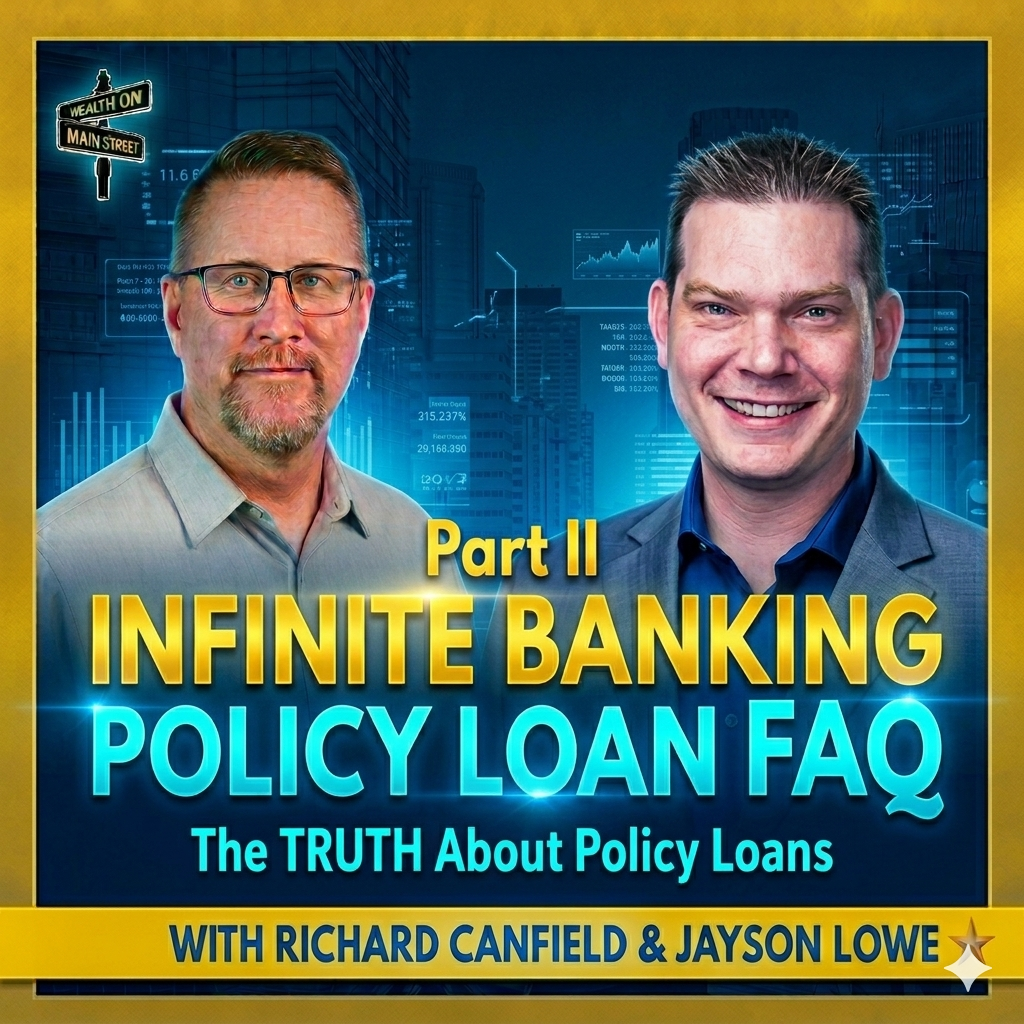
325: How Infinite Banking Really Works | Your Top Questions Answered
from Wealth On Main Street · host Richard Canfield & Jayson Lowe
Q1: What Interest Rate Is Charged on Policy Loans?Q2: What Happens If You Don't Repay a Policy Loan?Q3: What Is the Difference Between Whole Life and Universal Life?Q4: Is the Death Benefit Tax-Free?Q5: Are Dividends Taxable? Is a Dividend Considered Income?Q6: Why Isn't Everyone Doing This?The Core Idea If you’ve ever gone down the rabbit hole of the Infinite Banking Concept (IBC) online, you know the experience well: half the comments say it’s the most brilliant financial strategy they’ve ever encountered, and the other half insist it’s an elaborate scam usually from someone named “Crypto Wolf 1978” with a cartoon profile picture who has suddenly become a leading actuarial expert. In this episode, Jayson and Richard tackle the questions they hear most often plainly, honestly, and without the noise. Here’s a breakdown of everything covered in Part 2 of their Infinite Banking FAQ series. Q1: What Interest Rate Is Charged on Policy Loans? This is one of the first questions people ask, and while it’s a valid one, it’s also one of the last things you should be evaluating when choosing a carrier. Policy loan interest rates vary by carrier and typically range from 5% to 9%, depending on the company and the current rate environment. Some carriers tie their loan rate to the prime rate; others base it on long-term internal assumptions about their participating account performance. At the time of recording (May 2026), rates in the range of 5.5%–7% are common depending on the policy vintage. But here’s the more important framing: one Nelson Nash made brilliantly in Becoming Your Own Banker: IBC is not a function of interest rates. The real question is not “what rate am I paying?” it’s “where is the money flowing, and who is it working for?” When you borrow from a conventional bank, your principal and your interest permanently leave your ecosystem. The bank’s shareholders benefit. When you borrow from your life insurance company, one you co-own as a participating policyholder and you repay that loan on your own schedule, both the principal and interest flow back to an entity that works for you. That’s a fundamentally different relationship with money. Rate shopping before understanding that distinction is like staring at the cost of fertilizer while ignoring the growth of the entire orchard. What should you be evaluating in a carrier? Dividend history, participating account management, loan process transparency, and ease of doing business. Loan rate is somewhere near the bottom of that list. Q2: What Happens If You Don’t Repay a...
Embed this episode
NOW PLAYING
325: How Infinite Banking Really Works | Your Top Questions Answered
No transcript for this episode yet
Similar Episodes
Feb 4, 2026 ·18m
May 12, 2022 ·1m
Apr 27, 2022 ·16m
Similar Podcasts
No similar podcasts found.