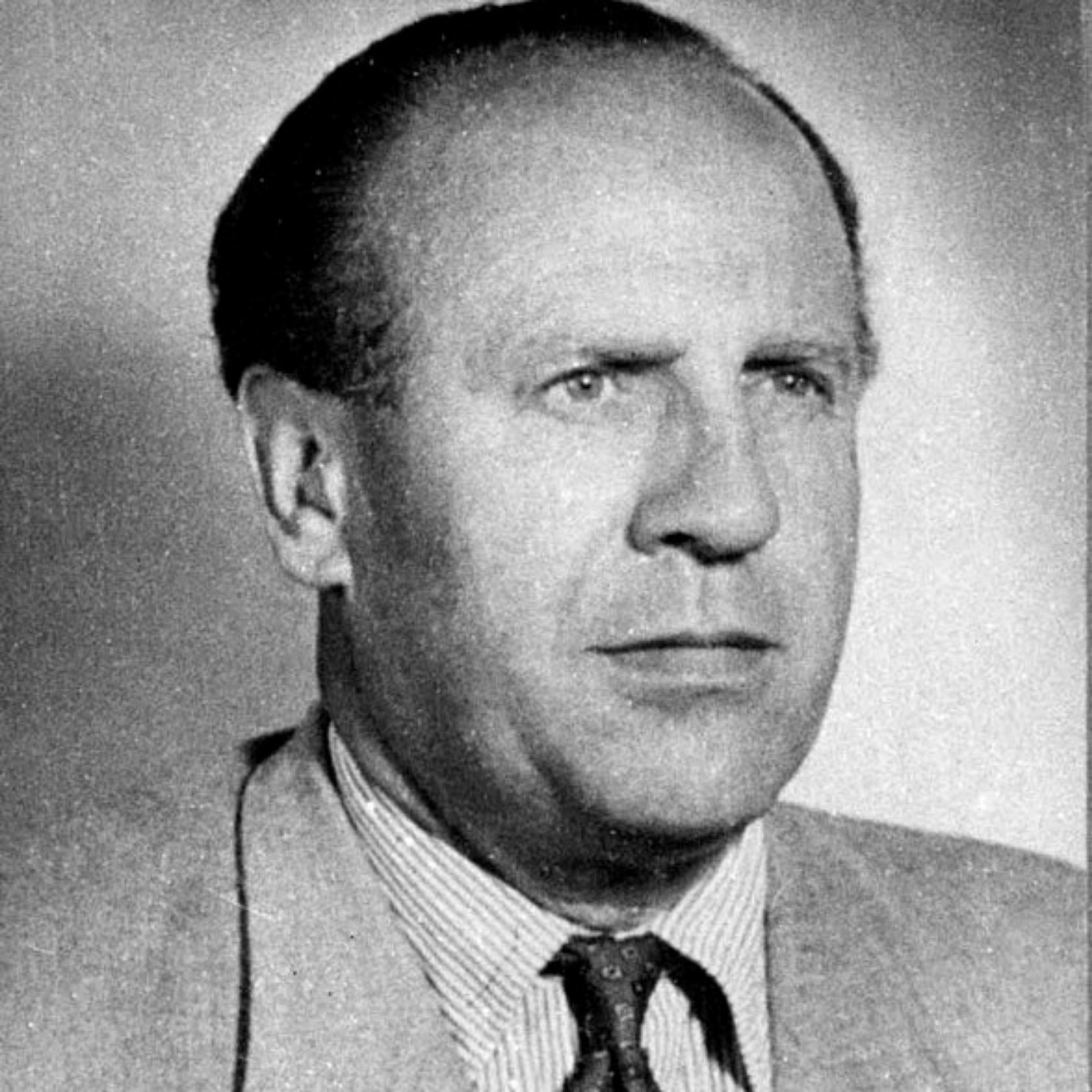
326: Why Should I Care About Oskar Schindler? episode artwork

EPISODE · Apr 16, 2020 · 8 MIN

326: Why Should I Care About Oskar Schindler?

from This Sustainable Life

I used Oskar Schindler in my third TEDx talk along with a few others as examples of people who took risks to do what they considered right—and that I think nearly all of us do. People like Rosa Parks and those who operated the Underground Railroad before the Civil War. I'm going to share about Oskar Schindler in a bit so you learn more than the movie showed.The video of the talk is being edited and should go up soon. I researched more about Dunkirk, as you'll see in the video, but I looked up a bit about Oskar Schindler.Why do we make movies about people like him and not the millions of others who saw what was happening but didn't act, hoping someone else would? Why not, if not to emulate him when the chips are down? There were many like him, but still few. Do you think if you lived then that you would have acted as he did? Don't you like to think you would?In my fifth year of not flying, I estimate I've talked to about 1,000 people about not flying. About 998 of them said they couldn't avoid flying. Suddenly with the pandemic, with their own health at stake, people find they can.I've had dozens of conversations lately and read more articles about people saying how much they enjoy the simplicity they're finding not traveling. I can't tell if I feel more gratified or frustrated at how many say with joy and gratitude—serenity, I remember one guy saying—almost exactly what I told them would happen.When will people get the pattern: acting by your values looks hard. Most people never do, but those that do wish they had earlier and want to share their joy with others.For us to act to stop degrading Earth's ability to sustain life and human society is easy compared to Oskar Schindler. We don't have to risk our lives—only change our diet, our travel plans, walk a bit, have one child.From Wikipedia:Oskar Schindler (28 April 1908 – 9 October 1974) was a German industrialist and a member of the Nazi Party who is credited with saving the lives of 1,200 Jews during the Holocaust by employing them in his factories in Poland, Bohemia and Moravia. He is the subject of the 1982 novel Schindler's Ark and its 1993 film adaptation, Schindler's List, which reflected his life as an opportunist initially motivated by profit, who came to show extraordinary initiative, tenacity, courage, and dedication to save the lives of his Jewish employees.In 1939, Schindler acquired a factory in Kraków, Poland, which employed at its peak in 1944 about 1,750 workers, of whom 1,000 were Jews. His Nazi connections helped him protect them from deportation and death in concentration camps. He had to give Nazi officials ever larger bribes and gifts of luxury items obtainable only on the black market to keep his workers safe.By July 1944, Germany was losing the war; the SS began closing camps and deporting the prisoners. Many were murdered in Auschwitz and the Gross-Rosen concentration camp. Schindler convinced SS-Hauptsturmführer Amon Göth, commandant of the nearby Kraków-Płaszów concentration camp, to allow him to move his factory, thus sparing his workers from almost certain death in the gas chambers. Schindler continued to bribe SS officials to prevent the execution of his workers until the end of the war. By then he had spent his entire fortune on bribes and black market purchases of supplies for his workers.Schindler moved to West Germany after the war, where he was supported by assistance payments from Jewish relief organisations. He moved with his wife to Argentina, where they took up farming. When he went bankrupt in 1958, Schindler left his wife and returned to Germany, where he failed at several business ventures and relied on financial support from the Schindler Jews he had saved during the war.Initially Göth's plan was that all the factories, including Schindler's, should be moved inside the camp gates. Schindler, with diplomacy, flattery, and bribery, prevented his factory from being moved and led Göth to allow him to build (at Schindler's own expense) a subcamp to house his workers plus 450 Jews from other nearby factories, safe from the threat of random execution. They were well fed and housed, and were permitted to practice religion.Schindler was arrested twice on suspicion of black market activities and once for breaking the Nuremberg Laws by kissing a Jewish girl, an illegal act. The first arrest, in late 1941, led to him being kept overnight. His secretary arranged for his release through his influential Nazi contacts.What we can do is nothing compared to what he did. Nothing. Eating lentils instead of steak. Having at most one child for a few generations. Going camping or visiting a place nearby instead of flying around the world. Yet the danger to human life is much larger. Billions of lives are at stake now. This pandemic is nothing compared to what will happen if we don't act.Wouldn't you rather follow Oskar Schindler's lead than his neighbors who did nothing?He came to show extraordinary initiative, tenacity, courage, and dedication to save the lives of his Jewish employees. Be Oskar Schindler. Hosted on Acast. See acast.com/privacy for more information.

I used Oskar Schindler in my third TEDx talk along with a few others as examples of people who took risks to do what they considered right—and that I think nearly all of us do. People like Rosa Parks and those who operated the Underground Railroad before the Civil War. I'm going to share about Oskar Schindler in a bit so you learn more than the movie showed.The video of the talk is being edited and should go up soon. I researched more about Dunkirk, as you'll see in the video, but I looked up a bit about Oskar Schindler.Why do we make movies about people like him and not the millions of others who saw what was happening but didn't act, hoping someone else would? Why not, if not to emulate him when the chips are down? There were many like him, but still few. Do you think if you lived then that you would have acted as he did? Don't you like to think you would?In my fifth year of not flying, I estimate I've talked to about 1,000 people about not flying. About 998 of them said they couldn't avoid flying. Suddenly with the pandemic, with their own health at stake, people find they can.I've had dozens of conversations lately and read more articles about people saying how much they enjoy the simplicity they're finding not traveling. I can't tell if I feel more gratified or frustrated at how many say with joy and gratitude—serenity, I remember one guy saying—almost exactly what I told them would happen.When will people get the pattern: acting by your values looks hard. Most people never do, but those that do wish they had earlier and want to share their joy with others.For us to act to stop degrading Earth's ability to sustain life and human society is easy compared to Oskar Schindler. We don't have to risk our lives—only change our diet, our travel plans, walk a bit, have one child.From Wikipedia:Oskar Schindler (28 April 1908 – 9 October 1974) was a German industrialist and a member of the Nazi Party who is credited with saving the lives of 1,200 Jews during the Holocaust by employing them in his factories in Poland, Bohemia and Moravia. He is the subject of the 1982 novel Schindler's Ark and its 1993 film adaptation, Schindler's List, which reflected his life as an opportunist initially motivated by profit, who came to show extraordinary initiative, tenacity, courage, and dedication to save the lives of his Jewish employees.In 1939, Schindler acquired a factory in Kraków, Poland, which employed at its peak in 1944 about 1,750 workers, of whom 1,000 were Jews. His Nazi connections helped him protect them from deportation and death in concentration camps. He had to give Nazi officials ever larger bribes and gifts of luxury items obtainable only on the black market to keep his workers safe.By July 1944, Germany was losing the war; the SS began closing camps and deporting the prisoners. Many were murdered in Auschwitz and the Gross-Rosen concentration camp. Schindler convinced SS-Hauptsturmführer Amon Göth, commandant of the nearby Kraków-Płaszów concentration camp, to allow him to move his factory, thus sparing his workers from almost certain death in the gas chambers. Schindler continued to bribe SS officials to prevent the execution of his workers until the end of the war. By then he had spent his entire fortune on bribes and black market purchases of supplies for his workers.Schindler moved to West Germany after the war, where he was supported by assistance payments from Jewish relief organisations. He moved with his wife to Argentina, where they took up farming. When he went bankrupt in 1958, Schindler left his wife and returned to Germany, where he failed at several business ventures and relied on financial support from the Schindler Jews he had saved during the war.Initially Göth's plan was that all the factories, including Schindler's, should be moved inside the camp gates. Schindler, with diplomacy, flattery, and bribery, prevented his factory from being moved and led Göth to allow him to build (at Schindler's own expense) a subcamp to house his workers plus 450 Jews from other nearby factories, safe from the threat of random execution. They were well fed and housed, and were permitted to practice religion.Schindler was arrested twice on suspicion of black market activities and once for breaking the Nuremberg Laws by kissing a Jewish girl, an illegal act. The first arrest, in late 1941, led to him being kept overnight. His secretary arranged for his release through his influential Nazi contacts.What we can do is nothing compared to what he did. Nothing. Eating lentils instead of steak. Having at most one child for a few generations. Going camping or visiting a place nearby instead of flying around the world. Yet the danger to human life is much larger. Billions of lives are at stake now. This pandemic is nothing compared to what will happen if we don't act.Wouldn't you rather follow Oskar Schindler's lead than his neighbors who did nothing?He came to show extraordinary initiative, tenacity, courage, and dedication to save the lives of his Jewish employees. Be Oskar Schindler. Hosted on Acast. See acast.com/privacy for more information.

NOW PLAYING

326: Why Should I Care About Oskar Schindler?

0:00 8:48

No transcript for this episode yet

We transcribe on demand. Request one and we'll notify you when it's ready — usually under 10 minutes.

Big Old Life: Heather Blackbird interviews people on planet earth. Heather Blackbird loves asking questions. This podcast is a learning experience. Join me, Heather Blackbird, as I talk to people about their lives. Frequency of new episodes is a little all over the place and I'm learning as I go. Big Old Life is a small way of talking about the vastness of life, one person at a time. If you are reading this or found this podcast it's probably because someone you know gave you a link to it. :) Explicit Tales Of A Superstar DJ The Insomniac Spun seemingly out of nowhere from her complacent life in the corporate world, turned seemingly overnight from 16-Hour shift work and into the life of a literally starving artist and working musician, The Protagonist navigates her supposed rise to fame and superstardom on a journey through spiritual awakening, coming-of-age, and intimate self-realization--guided by an omnipresent force and equipped with the power of love, magic, and music. {Enter The Multiverse.} [The Festival Project] The Festival Project, Inc.™ is a multidimensional multimedia platform which encompasses exploratory and artistic social personifications and expressions on cosmic theory, spirituality, growth, health & wellness, philosophy and theoretic dynamics in entertainment such as music, design, film, television, radio, dance and festival culture, art, fashion, literature, and science. The Festival Project™ and its subsidiary Non-Profit, The Collective Complex © aims to challenge modern artistic and philosop Explicit The Sacred +Profane Podcast nephtaragrace The Sacred + Profane Podcast is a provocative conversation dedicated to cementing a better future for all. We specialize in unpacking the nuances of what is considered sacred and profane, particularly focusing on sex, death, and all that pertains to the circle of life. Our aim in focusing on such ”taboo” subject matter is to demystify what is unconscious, bring to light what has been known for centuries as ”the occult,” and empower the rapid transformation that is occurring on the Planet. Explicit Northern Sass and Southern Class Tay and Ani Come sit in on girl talk with Tay and Ani as we discuss life in Texas, girl math, food, wine and roasting each other. Explicit

Frequently Asked Questions

How long is this episode of This Sustainable Life?

This episode is 8 minutes long.

When was this This Sustainable Life episode published?

This episode was published on April 16, 2020.

What is this episode about?

I used Oskar Schindler in my third TEDx talk along with a few others as examples of people who took risks to do what they considered right—and that I think nearly all of us do. People like Rosa Parks and those who operated the Underground Railroad...

Can I download this This Sustainable Life episode?

Yes, you can download this episode by clicking the download button on the episode player, or subscribe to the podcast in your preferred podcast app for automatic downloads.
URL copied to clipboard!