What would your trading look like if capital wasn't the constraint? That's the reality for most traders. It's not skill-holding them back, it's size. Trade the pool changes that. Step into the US equity markets with up to $200,000 in buying power without committing your own capital.
Full access to stocks and ETFs, long or short, executed with a precision and freedom-serious traders expect. Your performance is measured by one standard, disciplined risk management and consistent execution. Meet that standard and you operate at scale. No subscriptions, no ongoing obligations, just a clear path forward. For those ready to trade beyond limitations, this is the next level.
Trading in the financial markets involves a risk of loss. Podcast episodes and other content produced by chat with traders are for informational or educational purposes only and do not constitute trading or investment recommendations or advice. So your decaf o-milk extra but not piping hot, four pumps of caramel, no sugar, small not tain, a large cup. That will be 10 minutes. No worries, I'm having fun on Play-Ojo.
And I keep up with all the latest slot and live casino games. Plus I get instant payouts with no minimum withdrawals. Here's your decaf o-milk extra but not piping hot. Thanks, play time's over. Lovely.
Feel the fun, play-o-jo. That's the clock. He was that for. He said this is for Manfred upstairs. Manfred was the owner of the company.
So clicks in on the phone. I said, Manfred, you bought your $1000. We'll give you an average price at which point Manfred picked the phone up and said, Harry, I didn't say effing tonnes. I said effing lots. I said effing lots.
Get your F&R back in there and do what I've told you to do. So he drops the phone, goes running back into the ring. Just basically just buying everything that he possibly could. Bell goes at five o'clock. It's closed above this price.
He cannot work out for the life of him. Why Manfred's asking to do it. This was before eight o'clock. So the market opened at eight. It was kind of like tumbleweed before then.
It was a real big calm before the storm. A little minute, eight o'clock. Boom. The phone boards just lit up and it must have been the same for every single company that was on the floor at the time. So that was crazy.
I'd never seen and still to this day there was never been another day in the copper market like that. So if you can imagine that we started out copper trading at around about $2,800 a ton. By the time we'd finished it, it dropped 50% in a day. It was just bonkers. You could literally, I mean, it was a clock.
You could not keep up with what your trader was doing. Because it was just, yeah, yeah, yeah, yeah. I mean, it was just a clock. It was just a clock. It was just a clock.
And again, you've had to rely upon it being my word is my bond. This is what we did. Even if it cost your company money, your word was your bond. And I remember going back to the office that evening. Obviously everybody went back to the office that evening.
But we got outside. There's the BBC, Reuters. You've got all of these reporters outside of the building. And we were told in no one's in terms of any of you speak to any of the media. You're sacked on the spot.
First question to you. That is, do you think traders can find success purely depending on technicals? I'm going to be biased and say no. Oh, what would the pit traders have said if somebody was walking through there with oscillators and RSID indicators and what would they say? They'd laugh them out the building.
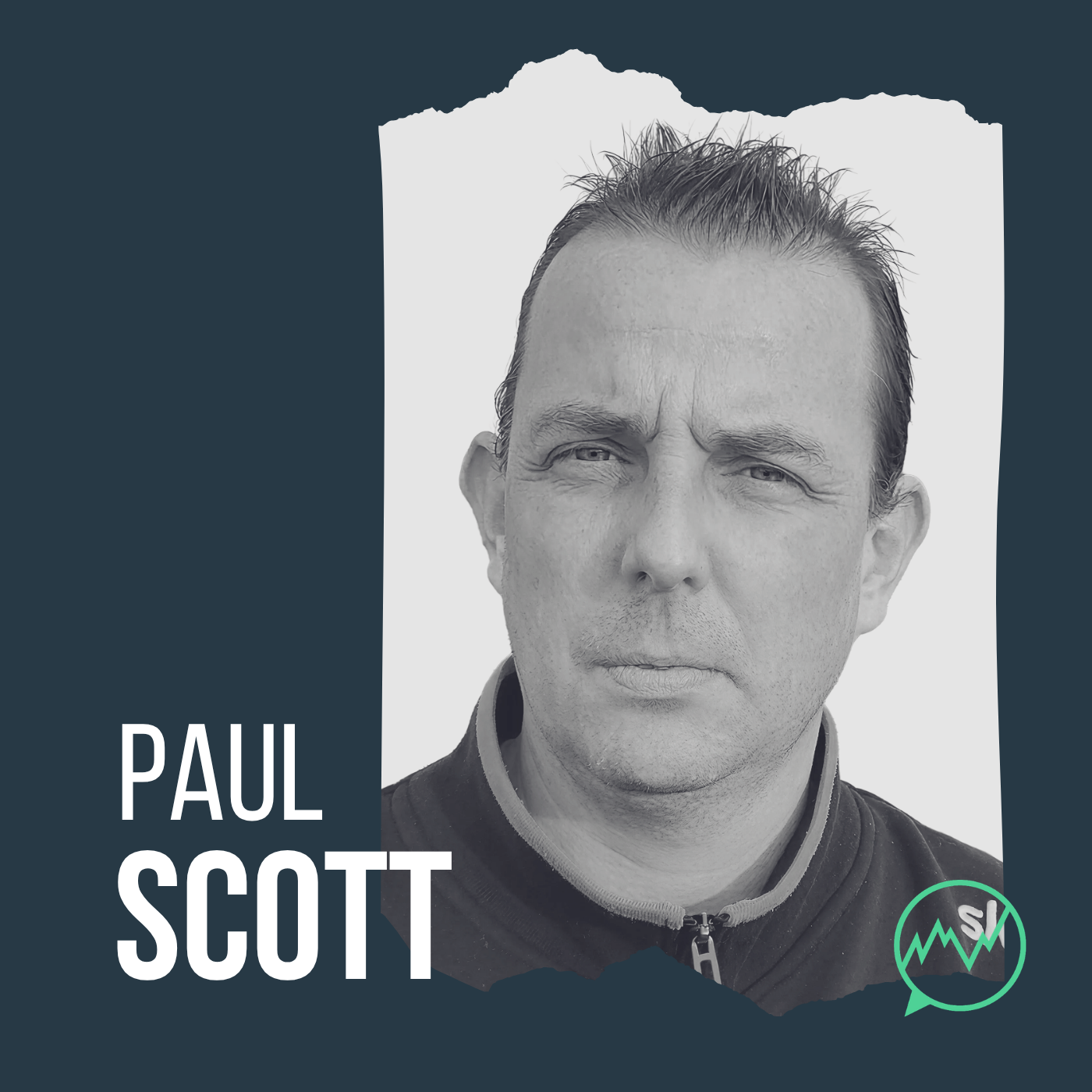
Markets, speculation and risk. This is the Chat with Traders Podcast. Our traders welcome to another episode of Chat with Traders. Very excited for this one. Today's guest, Paul Scott.
He's a second generation trader whose education didn't begin with screens, but indicators, social media, it began through nearly 65 years of family market wisdom. Paul's father traded copper beginning in the 1970s, operating in a world where traders stood face to face and prices were discovered through human behavior rather than algorithm. This is something his father, Harry Scott, talked about where we should trade intent, less algorithms, less indicators, but more human intent. So Paul himself entered the business at just 16 years old, eventually building a career across commodities and forex markets spanning more than three decades. What makes Paul's story real interesting is his philosophy often runs directly against a lot of what modern retail traders think.
And he's focused more on capital preservation, more so than chasing home runs. He says if you can't explain your trade in one sentence, you shouldn't be in it. He focuses on price and value rather than prediction. He also teaches traders to become directionally agnostic. Something I'm excited to dive into today.
And perhaps the most controversial thing of all, he argues that technical analysis is largely noise because in the trading pits, traders were not staring at charts. They were actually watching price and human behavior. So today we'll explore old school market wisdom with the trading pits can still teach us today in whether modern traders have made markets unnecessarily complicated. So traders, here's my conversation with Paul Scott. Let's dive into it.
Mr. Scott, how are you? Thank you very much for having me on. Excited to go through. Whatever you want to go through, my friend.
Well, let's start with your early journey. So a lot of traders discover the markets, but Paul, you really grew up around the markets with your dad. What was that experience like growing up around? Well, as a young guy, when you're a kid, not really aware of what your dad does is a job, but then you get a bit older and I said, what does your dad do for a living? And I said, he's a trader in the city, buys and sells copper.
And some people would say, you know, like a scrapyard dealer and he wears a suit and he goes through a trading floor. And so I'd met a few of the guys that I would eventually work with through family gatherings and barbecues and days out and stuff like that. And then at the age of 16, when I'd finished my exam, so I had about a month off to go out with friends and go party and stuff like that. And then one day he could grab me by to the pills and said, right, my son, what are you going to do for the rest of his life? And I said, Dad, I've got no idea.
And so he said, right, I'm going to buy some suits and some shirts and some tires and some shoes and you're coming to work with me. By the way, you're not getting paid for just getting some experience. So yeah, I turned up the very first day at Triland Metals, not having really that much of a clue because he hadn't really introduced me to it that much. Trippy dance of the trading floor for the very first time, walked in, absolute pandemonium, had no idea what was going on. The acoustic's of the building were very strange.
People were talking in the language that I didn't understand, you know, backwardations, cantangos, spreads, deck, deck, gen, you know, May, June and got to the end of the very first day and was quite a tradition. We went to the pub opposite the market, Puckled the wine lodge and he said, right, my son, what do you think? I said, I would never get the hang of that in a million years. And he said that he's exactly what I said on the very first day that I came down here. And yeah, it was a baptism of fire, I would suppose you would call it.
But over the next few months, I sort of got some experience and he was asking me on various brokers and banks, you know, are there any positions going? He finally found one with a company called Credit Lea Rios, which was the trading arm with the French Bank Credit Lea Lea. They had a floor presence and the guy that worked there who got me the job, got called Peter Tuesday, it was actually there that I was born. Mum still has a picture of that in the family photo album. And so got there and I kind of sort of started to get to know sort of some of the guys that credit Lea and I obviously working around the floor.
I got there within the first 10 or 15 minutes, Peter calls me into the coffee room. And he said, right, I don't care who son you are, you've got three months. If you don't get it after three months, you go lots of money moving around. It's very serious job. And so that was my baptismal into the Valley.
So you've got the pleasure early on and look, your family has been in this industry for 65 years. So a lot of wisdom instilled from your dad from an early age. What was your dad's reputation like? And did you feel the pressure as well to hold that? Well, I put it this way.
If you ask anybody of a certain generation, sort of my generation or above, do you know Harry Scott? Around the world, it's definite. Yes. He was a very, very big character on the markets, helped out a lot the younger guys. So now and again, I might put a post up, given a toast to the old man who's passed away now.
But then you'll get a lot of the guys that are sort of my generation a little bit older and a bit older than that. It will come out and say, I've got so many fond memories of your dad. He was, they called him an LME legend. But yeah, so he's known all across the world, New York, definitely. He would often frequent the Comex coffee dinner.
He would go over there for business that will be out at the tavern on the green. Lots of them. So the boys from the floor would, or the Comex floor would come to the tavern on the green. And many beers were had put it that way. Yeah.
What were some of the great lessons that he taught you? He taught me a heck of a lot. I mean, obviously in the beginning, you're very fresh at what you're doing. So I had, you know, obviously a barrel of questions that I'd be asking him. But he taught me essentially that trading has never changed, basically since that exchange opened.
It hasn't changed today. It's always been about price discovery. It's always been about value of, you know, sort of particular prices. So it's kind of like, how would you expand your knowledge from one generation to the next? So obviously, if you think, you know, going back in the days, precomputers, you know, it can't be based around technical analysis because it just didn't.
It's fundamentally changing. So how would you keep up with those if you actually had a way of sort of looking at the market, reading a tape, you would say, right, if all of these markets are kind of split up into ranges, how do you discover those? You discover those down on the floor because when you get to certain prices, the volume goes up, not just in trading volume, but, you know, all the volume. And you would kind of recognize, hey, that's going to be the top of the range at the moment. Why? Because there's a heck of a lot more sellers than there are buyers and vice versa.
And he taught me to look at it that way because of what happened to him back in the 70s when the charts were all paper. So graph paper, sell or take together. And he told me a story, which I have set up a couple of times in a couple of podcasts, but there was a transitional period on the metal exchange where you were trading tons. So you could trade in, you know, odd tons. You could buy in some nine tons, eleven tons, twelve tons, whatever.
But the market started to get bigger and more business started to be done. And they then said to themselves, well, we need to kind of standardize this. So everybody these days knows what's right. So they standardized it in the copper market. The one block, which would now the smallest contract you can trade is the equivalent of 25 tons.
So he's sitting in the ring on a Friday afternoon and it's what's known as the curb. So this is where we would trade all the metals all at the same time instead of individually. And his Clark whispers into his here, Harry, buy a thousand lots of market, make as much noise as possible, and make sure you make it close above this price. So he said, I sat there for a couple of seconds and I thought, yeah, the kid must mean tons. He can't mean lots because if he does mean lots, that's going to be the biggest order this market's ever seen.
So he said, so, you know, shouting out, you know, three months copper, ninety five, I said, no, you can have fifty, ninety five a give, ninety five a give, fifty five a give, oh, oh, oh, oh, oh, oh. Now it's a thousand tons jumps out of the ring, which is the pit, but we call it the ring on the metal exchange. Says to the Clark, he was that for. He said this is for Manfred upstairs. Manfred was the owner of the company. So clicks in on the phone, ninety five a jibok,
a thousand tons will give you an average price at which point Manfred picked the phone up and said, Harry, I didn't say effing tons. I said effing lots. I get your F in ass back in there and do what I've told you to do. So he drops the phone, goes running back into the ring, just basically just buying everything that you possibly could. Bell goes at five o'clock, it's close above this price. He cannot work out for the life of him.
Why Manfred's asking to do it? So he said, oh, he didn't buy all of it, but I did manage to get it to close above this price. He said, well, who was that older for Manfred? He said, it was for me. He said, why on earth have you done that?
He's come back to the office, my son, and I'll show you. So he shuttles back to the office. And Manfred's there and he gets out this old graph paper chart, which had prices going, you know, probably back to the full piece of the 50s. And he said, look, Harry, this is the particular price I wanted you to go and get it to close above. What happened when we got here in, let's say, 1952? We got there and it dropped.
Okay, so the global perception, the value of that particular price at that particular time was that expensive. So if it's expensive and it's overvalued, then there's a trade you want to sell. He said, then let's have a look. So we got back here in 1959 and what happened? The same thing. We got back here in 1966 and what happened?
Well, it closed above that price. What happened to the price of copper now? He said, oh, it went up. He said, yeah, because the global perception of a ton of copper, the price of it has changed. So instead of people thinking it's expensive, it's actually now cheap. So the price goes up.
He said, so then it comes back out. This is where I've got you to today. I wanted you to make it go and close above this price because why? Because I wanted to change the global perception of the value of a ton of copper. And I'll tell you what, Harry, I guarantee you, next week, the price will go up.
We can boot out what we bought today and we'll make a nice tidy profit. So from that day onwards, that's like looking at particular prices and saying, right, when we reach these, these are going to be a key area of decision making. So it's a range. So anyway, yeah. That's what your dad was saying from, I mean, look, the London Metal Exchange was founded in 1877, right?
And from when your dad started, even till then moving onward, what your dad would say is, there's no magic formula at all outside of human intent. Is that what it means? Yeah. And it's just based around price and it's just based around the value of that price. When you get there, it's kind of like what's going on globally.
Does that price reflect that it's cheap or it's expensive? I mean, it's a very simple concept, but you know, things are cheap. You buy them, things are expensive in the futures markets. You sell them. Right.
I want to get back to going into the pit a little bit, because I find that really fascinating. And especially with how the modern era is and technology driven, of course, we're behind the computers less in the pits. But what was it like? You were mentioning the lots and tons. Like, I know it was, there was a lot of, it was noise driven.
For example, I was reading a post you were making up regarding, you could kind of tell what side like where the momentum was going based on auditory. Yeah. Nobody's. Can you share with us some of those experiences and what that was like? And particularly, like, for example, one of the emotions that runs the market wild these days is fomo, right?
The fear of missing out. Could you identify that in the pit and what did that sound like? You could do. I wouldn't necessarily say the fear of missing out because you're at the cold face. So if you kind of missed out on an opportunity, then you kind of missed out on an opportunity. But you know, I remember the craziest day I've ever seen on the London
Netflix change. It was in 1996. There was a copper scandal. So this is a road trade. Sumitomo? Yes. Sumitomo. That's it. Right. So this road trade, yes, we can.
I'm an actor that basically been cornering the world's copper market. And we got a phone call and my dad's Japanese office. So try landed Tokyo. Must have been about three o'clock in the morning. And in typical fashion, the phone rang with very bleary eyes. He comes downstairs.
This is the day to remember the days when people would actually leave an answer phone message. Yeah. Right. An answer phone message. So they literally left the message and he said, how many of us been sacked might be busy in the morning? Typically understated.
But then they just put the phone down. So this is about three o'clock in the morning. I'm due to go and do my exams in the morning, which would be the equivalent of you guys doing and I said, do you think I should go into the office or go and do the exam? And he said, I think you might want to go into the office because it might be slightly busy tomorrow. And so we got there and it was before eight o'clock. So the market opened eight.
It was kind of like tumbleweed before then. It was a real big calm before the storm. And then a minute, eight o'clock boom. It's like the phone boards just lit up and it must have been the same for every single company that was on the floor at the time. So that was crazy.
I'd never seen and still to this day, there was never been another day in the copper market like that. If you can imagine that we started out, cooperating at around about 2,800 bucks a ton. By the time we'd finished, it'd drop 50% in a day. The volume was absolutely crazy. And I remember at the time, so it would have only been 17.
And what I was doing at that particular time as well as clarking, I was giving what's known as a run to the office. So I've got the office on the phone and I'm telling them what's going on and that's coming out of a school box upstairs. And I remember going down to the very first copper ring and I said, hold onto your hats, ladies and gentlemen, this might get a little bit busy. It was ding, ding, ding, ding, ding, copper ring because we used to trade things individually, but ding, ding, ding, ding, ding, copper ring. One of the guys stood up and said, right, we're going to get all of our top next day out of the way.
Once we've done that and everybody's square, then we'll go for it because we've got to make sure that we don't screw up this top next because if you screwed that up, then you end up with a physical delivery and you don't want a physical delivery because you don't want to have to pay for the material. Everything's done in the future. So most of those contracts have never come to fruition. So you spent like the first 90 seconds, everybody's doing their top next and then it was like, right off we go, three months copper, I don't know, $2,500 gift and the guys like $10,000. No, I've only got 500 to buy.
You know, Sammy's just like $2,500, $2,450, $2,400. So normally the market might have a bid off a spread of maybe $3, $4, $5. On this day, bid off a spread was $50. Oh, yeah, which was crazy and the tonnage, the volume that went through. So if you had a fear of missing out that day, I mean, it must have been for the guys trading it at the time and then it was $1,000.
So the mental exchange, you have to be 21 to trade. So not 18, it would have been on every other market. But you just see guys getting out and they just soaked in sweat, adrenaline, serpents. Yeah, I read that that was $2.6 billion. Yeah.
No, one of the largest scandals in the history, right, on the mental exchange. So what was it like on the floor? Was everyone just as far as the just selling? I know the hand signals, the noises. I mean, what were you hearing? Can you remember?
Well, I just remember the tonnage, you know, the size of the old is crazy. I mean, it's like $1,000 at a time. So if you think 10,000 times 25, that gives you the tonnage. And then you times that by the price. So you've got a crazy, crazy, crazy amount of money being thrown around.
And it was just bonkers. You could literally, I mean, as a clerk, you could not keep up with what your trade was doing. Because it was just, yeah, yeah, yeah, yeah, yeah, yeah. And, you know, again, you have to rely upon it being my word is my bond. This is what we did.
You know, even if it cost your company money, you know, your word was your bond. I mean, I remember we had in the pre market, which is before we, you know, we'd be in the office before we then physically went down to the trading floor. We had a five lot screw up. So it's 125 tons of car price, nothing. It's tiny, but a five lot screw up cost us $50,000.
It was crazy because we'd said, you know, this was a trade down over the telephone with a company called SUGTON. And it was like, right, well, we thought we sold you five lots and SUGTON said, well, no, you didn't sell us five lots. And so we had to basically take that back on board and it cost a heck of a lot of money. But I mean, the adrenaline that it was it was bonkers. But boy, did you feel alive?
It felt alive. You know, there was a recent in 2022, perhaps you'll recall the London Melz Exchange nickel crisis where there was a lot of controversy here. I mean, look, if you go back to the event, the summatomo event, why couldn't they just cancel all the orders like they did in 2022? I mean, that was unprecedented. It was.
It was so deep then it had been going on for so long. That's the thing. It was like 10 years, right? Yeah, it was a heck of a long time. I mean, I was working at credit Lea and A. We would clear summatomo's business.
So we were quite involved in what was going on. And I remember going back to the office that evening. Obviously everybody went back to the office that evening, but we got outside. You know, there's the BBC Reuters. You've got all of these reporters outside of the building.
And we were told in no uncertain terms, if any of you speak to any of the media, you're sacked on the spot. You're sacked on the spot. So, you know, to go back inside. You know, the next day, it was really weird because it was just like nothing kind of really happened. It was the column after the storm.
Yeah, it was like, yeah, it was a very, very strange time, but fun. Was it just e-refeeling the day there after? Yeah, it was because it was because you'd come out of that. I mean, I suppose if you're looking back and it was like an out-of-body experience because it's just so crazy. And then you come in the next day and it's just like, did yesterday really happen?
You know, it was crazy. But then, yeah, I mean, then over the years we had somebody try to put the scoreies on the tin market. That went horribly wrong for them because that's the thing. You know, being on a trading floor, if you find out that somebody is trying to put the squeeze on a market, then you put the squeeze on the squeezer. And inevitably, it ends up costing them money because their position is so big and the other dominant position holder.
When people find out, it's like sharks with blood. Right. Well, there was a very large squeeze that did happen that the few years ago from a large holder who was hedging a position. That was nickel. That was nickel, yeah.
That was nickel, yeah. Yeah. What are your thoughts on that? Now, that received a lot of legal backlash, a lot of regulatory scrutiny over that. What were your thoughts?
The London Metals Exchange canceling all those orders? I think it was kind of a fair thing to do. I mean, exchanges do change their rules every now and again. I remember my dad telling me about the bunker and brother was trying to put squeeze on the silver market back in the early 70s and early 80s until the day when COMEX had basically had enough and said, right, we're changing the rules. Called it silver Thursday. We're changing the rules.
You cannot buy silver on margin in the top month. There was something that they didn't say. They didn't say you couldn't sell it. So, you know, again, that was another crazy day back in 1980, you know, back in 1980. But these things do happen and, you know, markets have to adapt, exchanges have to adapt.
And I think the fair thing was to cancel the contracts because otherwise it could just be an exponential rise and you can't get your hands on the material. It's going to cripple people. So you can't have, you know, let's talk about the pit logic that you've discussed in your writing. So you explain that. Ever watch a stock rip and think I could have nailed that if I had real capital.
The truth is many capable traders never reach their potential, not due to lack of skill, but lack of scale. Trade the pool was built to solve exactly that. A firm designed for serious individuals who will access to the US equity markets with meaningful buying power up to $200,000 without committing their own capital. Get access to virtually every stock in ETF. Go longer short freely with the flexibility professional traders expect.
You're evaluated on one thing, your ability to manage risk and execute with consistency. Meet the standard and you trade at scale. No subscriptions, no ongoing commitments. Whether you're still refining your strategy, a trader with experience who hasn't yet broken through or a seasoned professional simply looking for more capital, trade the pool is built to meet you where you are and take you that next step further. The markets have evolved, access has evolved, now so has the way traders operate within them.
Trade the pool. So your decaf o milk extra but not piping hot, four pumps of caramel and no sugar, small not a large cup. That will be 10 minutes. Don't worry, I'm having fun on play Ojo. And I keep it fun with all the latest slot and live casino games.
Plus I get instant payouts with no minimum withdrawals. Here's your decaf o milk extra but not piping hot. Thanks play time's over. Lovely. Thank you for watching.
Thank you for watching. Thank you for watching. Thank you for watching. Thank you for watching. Welcome aboard VARail.
Please sit and enjoy. Please sit and stretch. Steep. Flip. You can see that the decision's been made.
So then you know when you get back there again, the decision has to be made again. Do we keep the previous valuation or do we change it? That's kind of like a language that you can read on a chart. But if you're standing in a pit, you've got to say to yourself, right, what do I need to know? What's the number at the top of the range and what's the number at the bottom of the range?
When we get to either one of them, and again, that could be any particular point in the day, point in the week, point in the month, when I get there, I'll then all bind orders. Then more people share it on their one-by, which means the general perception is okay. So this is actually undervalued when we get here. So then the top of the range then becomes the bottom of the range as we break above there, we close above there and then the momentum takes it higher or vice versa if it's in the opposite direction. That is a language you can read on a chart if somebody shows you.
I've been teaching people over the last 10 years and in the last 10 years, there's only been one student of mine, very clever guy, one student of mine. When I showed him, he said, yeah, I've noticed that. Everyone else has been like, what on earth are you showing me? This is crazy. It's just a naked chart with price and a horizontal line on it.
Where are the chart patterns? Where are the indicators? Are you essentially saying this is where liquidity lies? I've heard you mention it's this whole level and then retail level. We're supply and demand, right?
It's simply put. It's how we're saying. It is. Well, if you said support and resistance, supply demand, overvalued and devalued, cheap or expensive, it's kind of like, whichever one of those makes the most sense in your mind, think of it in those terms. But then think of the intentions.
So why would I get support? Well, because I think the market's undervalued. So people want to buy. Why do I get resistance? Well, because we think it's expensive.
We think it's once the sale and so the liquidity there would be to the sell side. So that's a price and that's a value. So it goes back to human intent. Our perception of what the value should be, which you believe can be altered, right? Yeah, and it will change over time depending on what's going on externally.
But it's a very primeval thing because I would say to you and anybody that's listening, remember going to the store when you were a kid, and you said, well, I'm going to have this. No, too expensive. Okay, I'm going to have this. Yes. You didn't ask if it was cheap enough.
You knew it was cheap enough because she said, yes. So then what you've got to think is, right? Well, all the people that are trading this around the world working at investment banks and hedge funds and wherever, their perception of value is exactly the same as yours. It's derived in the same way. So if you then have a collective group of people that essentially are the key decision makers inside of that market, if they want to change the perception of value.
Yeah, do you have an example of seeing that? So this perceived value. What is, do you think it's most important then to, rather than indicators like this, you've mentioned, knowing what are 90% of people? What do they perceive this value as? Yeah, so I mean, perceived value.
The thing is, it's very different when you're at the cold face, when you're on a trading floor, to describe to somebody else looking at a digital chart, what that actually really looks like. Because I think one of the things that people actually forget in the digital age is that there are people doing this. It's a real job, but they're creating what you see. Does that make sense? So if you're looking at a candlestick chart, well, how are the actions that we take are creating that candlestick?
And that's what you see, whereas that's not what we see. So what we could do is, is we can say, as an example, let's say, I was trading at $7,000 a ton. The last couple of times we got there, that was perceived to be expensive. We get there today, and something external's happened. Something external's happened, and it's changed the global perception.
So we're going to change the global perception through the actions that we take. So then what could happen is, you could get to the price of $7,000, and then all of a sudden you go straight through it. On a digital chart, you might completely and utterly miss that, well, most people would retail traders would miss it because they've not been sort of out of, look essentially for pit logic, trading logic. And they'll just go, well, let's just go through that price. We don't actually really understanding that on a global scale, that's going to change people's perception of value of that particular price.
But they might not be looking for those particular prices, because if your trading is all based around technical indicators or fundamentals or trend lines and stuff like that, you're more focusing on what the chart is telling you, rather than what the price is telling you, where we are more focused on what the price is telling us, not what it looks like on a screen. Does that make sense? Yeah, does that. I had a conversation actually even recently just off of what you've said with Stephen Klajian, where he says, price is lead, indicators lag. He's been doing this for 50 years. I think it's very aligned with what you're saying.
So you've said it at no point in time that you were doing some trading for big client, right? Goldman Sachs heard you say, and you said at no point in time where they want you to look at ahead in shoulders on a five minute chart, what would they want you to look at? Well, they would be giving us, because they didn't have a floor presence. So they were a category two member, although it looks big as banks in the world, but they just didn't have a floor presence. And so they would be looking at outright markets. They would be looking at spreads.
They've got their customers that want to do business. So their customers do business through Goldman, and does business through us. So we execute it on the floor. So they've got a variety of things. I couldn't differentiate between what Goldman were doing for themselves because they once stepped back.
So what they're telling me to do might not necessarily be for them. It might be for one of their clients. But you might be borrowing Fed March because you're expecting a tightness in the market in February, but probably ease by March. So you might sort of borrow something in a back-ordation thinking it's going to go to a higher back-ordation, which means you would make money. Or you might say the market's running in a Contango, but there's going to be a shortage of metal here.
So that spread might turn into a back-ordation, but the rest of it might be in a Contango market. So the way in which the metal exchange was priced is things is totally unique in the trading world, because if I was to look at US markets, you have one specific day in any month. That's your contract day. On the metal exchange, you can trade every single day between cash, which is two days forward, out to three months, excluding holidays and weekends. So every single one of those days can have a different value.
It's a very complex way of doing things. In the retail market, you wouldn't need to worry about all this kind of stuff because you wouldn't be trading those things. But from the institutional side, then you definitely would be interested in that. So they might be interested in borrowing particular days or particular months, particular weeks or lending particular months, particular days, particular weeks. And all of that business is going through all day, every day.
But then don't just take rubbish, not just Goldman Sachs, they're doing it. So we've got big copper producers, Cadolco down in Chile. You've got producers, consumers, you've got speculators, you've got a whole myriad of people that are trading in that market and then you are there as a floor presence to execute all of that business. And then when you get to a particular place, that's when you step up and you say, right, now we're going to trade with the company's money. And so you say, these institutional orders are really what's moving the market.
You want to kind of follow the trend with the large money, with the big money. One of the market wizards on who was discussing that, he said he had an edge for several years where he would just see these block shares coming through, in which case he would join the wave with them. Just ride that wave. Is that something you would see kind of in the pit or? Yeah. You would see that.
And for some of the older guys maybe that are especially listening to this, maybe they've had some experience with the pits and stuff like that. You might get an order that comes in by 2000 at market and then you'd have this head pop up by 10 for me. Right? By 10 for me. So it's just like the traders like, okay, the first 10 that comes back, right?
You bought those. The next 50 that comes in, that's for the client. And then the trader might turn around and say, well, I've only got 50 left to buy. And then this head would pop out and say, sell 10 for me. Right. So you've moved the market up and it's a quick in and out.
Or I remember one day with a big, big customer of ours when I was a credit the NA. It was like borrow 10,000 lots of, let's say, March, April. And the guy sits down the phone, don't book it because there's more coming. So whatever you do, don't book it because it's going to cost you money. Right?
So sometimes you even get these little things that would come down the line and you'd whisper in your seat, don't book it. And then the guy like, come in and then you're saying, right, this is the last 10,000. If you want to book some of that, be my guest. So you're going to get to the country, whisper it into me, or any more book that you know, the last thousand or something like that. So, yeah, there are a few shenanigans. I think that would go on and things like that.
And things like that. With that anymore. Not these days. No. Probably not so much these days. No, but you know, I mean, back then again, it was all face to face.
So I suppose you had plausible deniability really, didn't you? Yeah. So if we were to drop in modern, let's take a modern retail trader today, Paul. Let's drop him in that pit with you know, when you were 16, do you think they survive? Depends. Yeah. Depends is a different environment.
Because again, what you've got to then think about is instead of being by yourself as a retail trader, you're surrounded by professionals. Yeah. So it's, you know, it's on the job training. I think if I was to take a modern retail trader and say something in their twenties, somebody in their thirties or something like that. And then just say, right. So instead of looking at this screen here and you're trying to read price action there, right, you come and stay there and then you try and decipher what's going on.
And then use that to trade with it. That would be a huge culture shock for them. Huge culture shock. Do them some good. I mean, really do them some good because they might then sort of stop thinking in terms of, you know, cup of sauces and trend lines and, you know, what are they called?
Doji candles and kind of jazz. I think that kind of maybe lead away from that. Go. Go. Go. Actually, that doesn't mean a thing down here.
Maybe this is a good segue into the technical analysis. So, you know, do you do? Here's the first of all, first question to you. That is, do you think traders can find success purely depending on technicals? I'm going to be biased and say, no.
Because technical analysis for me is a way to describe something that's already happened. So technical analysis for me is like, if I want our research department to put together a report, yeah, I could say to them, right? Well, this is what happened. And I want you to go and find a piece of technical analysis that actually fits the narrative. Right. So their job is to do what their job is to go and write a load of blurb, have something to justify it and put it together nicely document and then send that out to the client and the client.
And then send that out to the client and the client reads it and goes, Oh, this looks fantastic. But that's all based on the past. Right. So then they might put in the blurb. Right. Well, we think if the market gets to here, this is what you should be doing because we think the momentum might take it higher or it might take it lower or whatever.
So again, they're planting seeds in people's minds that reading this kind of stuff. But for me, it's just there to make a report look good. I remember teaching one analyst that worked for HSBC on the retail side and he picked the phone up when we had an initial phone call and he said, I am an analyst. I work at HSBC. Please don't hate me.
Okay, fair enough. He said, I said, so come on then. I said, so what are your reports judged on? He said, it's more what it looks like rather than the content. You know, what the writing is, it needs to look all jazz. It needs to fit together.
I'm trying to go to analysis is one of those things where you could say, right? Okay. Well, we've marked this out this Fibonacci level here. And according to technical analysis, pre-supposed, the market's going to bounce from here. Well, it'd necessarily be according to me. I can maybe try to push back a little bit and say, I mean, what you mentioned before is that some stock straight in a range, right?
So the range is essentially a form of technical analysis, right? Where you have their supply here demand there and if the stock falls down to this level, maybe there'll be some supply at that level and then or demand. Is that not a form of technical analysis? I suppose you could, if you want to call that technical analysis, I would call that more sort of market logic, really. When I sort of slight technical analysis, I'm talking things like chart patterns and, you know, transients and these kind of indicators and things like that.
Because what you've got to think about is, you go, oh, well, the market went straight through the 200-day moving average. Why is it 200-day moving averages just an average price over the last 200 days? What does that actually really mean to the guy that when it gets to that particular price, his customers, to him, go and sell me 50,000 contracts? He's not looking at the average price over the last two years. You're focused on the big money. Where's the big money yet? And I suppose we should define as well what timeframe we're looking at because some traders do scalp intraday, like certain patterns, but you're more so positioned straight and correct.
Like, you're looking at months. I'm looking at days, weeks, months, it's a bit of a stretch. I mean, how many people have got the patience to wait a couple of months, especially in today's social media world? The attention span of the world's population, I think, has steadily decreased. But I'd look for markets that are not ridiculously volatile because volatility can be your friend, but you don't want it to be your worst enemy.
I look for something that is volatile enough to give me a couple of trades a week. But the timeframe aspect of it is, and I suppose this is where this really differs from what most people think about, is that if I say I'm going to trade from a copper at $7,000, if I look at a monthly chart, well, the price is still $7,000, if I look at a weekly chart, the price is still $7,000 and a daily chart, the price is still $7,000 and so on and so forth. So because I'm trading from a price, doesn't actually really matter what timeframe I'm looking because I'm actually looking at the price rather than using time as a guide. Does that make sense?
Yeah, so where's time play a part or doesn't? It doesn't. It's all about numbers. So, I mean, this is a big thing. Everybody is taught, hey, look at the 5-minute chart, 15-minute chart, look at this breakout on a 30-minute chart. What does that mean?
Nothing really in the grand scheme, but it's like, did you trade from the right price? If you did, well done, if you didn't, you're just trading in noise because of another thing, again, I don't think many people think about is the differentiation between what you would call commercial business, so that's trading for your clients and then your proprietary trading, which would be trading for the company. So within that range, top on the bottom, that's where you want to trade from, in between, you're just executing business for clients. So then my thing would be, if you think you can tell me what my clients going to do before he even rings me, go ahead, be my guest.
So you think between that range is essentially noise, like the institutional orders, the big money, they're at the top and bottom of the range. It's just noise. And it's not necessarily retail noise, yes, retail volume has gone up in the last, you know, definitely in the last decade. But again, that retail understanding of the dynamics of a market, what makes it move, that's sort of not really thought about too much. It is based around what they see on a chart. And for me, it's not all about charts.
It's not all about charts. It is about numbers and it is about the real world. You know, something I learned from recently interviewed Jack Swager and he, a lot of his market wizards say they found success from many different paths. Like one theme I've learned is there's no really singular approach. I mean, some utilized technicals have at least some utilized fundamentals, have at least some just, but one thing I will grant you here is like a lot of traders do, they will, their charts almost look like air traffic control.
They try to put so many different indicators on them, right? Try to essentially find the holy grail. Do you think traders need to take a more simplistic approach entirely? Let's say they're even using indicators or fundamentals or do you think traders need to simplify their process? I think as a race of beings, most of the time we're idiots because we overcomplicate things.
I've often said to people I could write my trading strategy on the back of a napkin and explain it to a 10 year old. If you can't do that, it's way too over complicated. I think the more that you strip things back, the more that you focus on price and value. Again, I'm going to say I bought this because this is the world that I come from, but I do kind of come from a world that is likely different from the retail approach. But if you focused on that, rather than all of these flashy indicators and chop up, what's the pitch rate?
What would the pitch rateers have said if somebody was walking through there with like oscillators and RSI indicators and what would they say? They'd laughed about the building. They'd laughed about the building. Or they'd say, well, typical bunch, what would we do if they walked in with the laptop and all this stuff on and said, right, I'm going to start trading electronically using all of this. What would we have done? We'd have grabbed the laptop. We'd have thrown it out the window and gone.
Off you go. You haven't got those anymore. Now what you're going to do? So you say that we've got to explain our trade in one sentence. That's the simplistic approach. The KISS.
Keep it simple, stupid. What does that one sentence give us some examples of what it looks like? This is a head and shoulder on the five minutes. I'm on the camera. I mean, that's just the same thing.
Again, if people are listening to this, just think, really, is there a customer on the phone to a trader at Goldman Sachs, right? And he says, I want a market for, I don't know, a thousand lots of copper. And the guy's sitting there and he's like, you know, just the client, the agent's on guys asking the trader for a market, right? And he's like, just stall him. Stalling. Why? Just want to see if this head and shoulders plays out of this five minute chart. Stalling.
We've got 60 seconds left. Talk about the football. Talk about the weather. Talk about anything. I just need to. That's not going to happen.
That's never going to happen. So what would my one sentence be? Right. I got to this particular level. I know it's a key level of decision making.
The decision has to be made. It's going to be probably a long sentence. This one. But the decision has to be made. Am I the one that's in control of that decision about what the current value is? No, I am not. What do I want the market to do? Show me your hand.
You make the decision. Then what I'll do is, is I've got that range defined there. I'll let you move a certain percentage, either up or down, within that range. Now you've shown me your hand. Now you've shown me what the current value is. Now we'll trade. Very long sentence. Sorry guys.
That's great though. Now, how does that coincide with being directionally agnostic? So you have your one sentence, but then you also got to follow that principle that Pascal lives by. Agnostic about it. Agnostic to direction. Right. Always understand. As a retail trader, you are a tiny cog. You are a grain of sand on the beach. You will never, ever have any.
Just wait for you know what the current value is. That's not your decision to make and it never will be. You know, so you've got to take yourself out the game and stop thinking of yourself as important and stop trading with Yuri. Go and stop saying to yourself, I think. And as the minute you say, I think you've screwed yourself because you're trading with Yuri. Go because the market doesn't know who you are. Doesn't know what you think quite frankly, wouldn't care anyway.
I've heard this way. It's very expensive to try to prove to the market that you're right. Yes. Hugely expensive for people. When I have heard some horror stories over the years, but getting back to this direction, the agnostic.
So if I have a particular price level that I know is a key decision making price level, what do I want to do when it gets there? First understand that when it gets there value has to be established. There's a cheap market goes up. There's an expensive market goes down. That has to be established by the people that make that decision. So then what I would do is I would say, right? So I want to use a certain percentage of that range to say, as an example, it goes up 25% into that into the range.
All right. And I go, OK, so the value here is basically the market showing me is that they thought at this particular point in time that the price again, that's used to use 7,000 on the clock because we've been using them. So the value of 7,000 on the couple market, the minute is cheap. Now the market then goes up. It goes through 25%. I'm going to open. I want to open a stop. So I want to buy stop there.
But similarly, it might get to 7,000 and the value might be expensive. So the market comes down. So then I have a sell stop at the 25% price. Whatever that might be. However big that range is 25% of that. So being directly agnostic means that instead of trying to guess or predict the direction of where the market's going to go, I'm actually saying to the market,
well, you make your determination and then I'll follow up behind you. So I don't care if you go up or if you go down quite frankly, it makes no bloody difference to me whatsoever. I'm not attached to a particular direction. I'm not emotionally attached to predicting where a market's going to go. I don't care. I just want it to move Kevin. That's the thing.
You know, how do I make money by predicting where things are going to go and hopefully getting it right or just saying, well, move because when you move, that's going to make money. So is that much of your approach is trend following, you would say, and then just following that towards the big money liquidity? Yeah, again, that's the thing. What you've got to think of in terms of what our institutions doing, well, we are always going after liquidity. It's an liquidity hunt all the time. So if we think that the market is currently overvalued, so we sell it, we want that market to come down until we then find another place where people are willing to buy it because that's where the liquidity is going to be.
So in particularly volatile times, what you might find is that you're at the top of a range, you get to the bottom, nobody wants to buy there. So it just goes straight through again, right? And then you get to the bottom of the next range. Still nobody wants to buy it. So you're still holding this short position. What does that look like on the pit because maybe you have this since we acknowledge that the institutions are looking for liquidity.
Let's say you do have a whale coming in with a large order. I mean, you can't, you're fairly exposed and vulnerable out there. Is there a way to kind of secretly get your order filled? I mean, how did whales go about them? This is Kevin. We hope you're enjoying this episode so far. If you are, take a second to leave a comment. We read them all and truly care about what you think.
And if you haven't yet subscribed to our email list, visit chatwithtraders.com and click subscribe so we can keep you posted on information that matters. Now, back to the chat with our guest. Well, one of the things that they would do is that they wouldn't give one specific broker or bank. That's the whole thing with it. They break it up. I got it. Yeah. So they break it up. Right. So what you could then do is if let's say you had, I don't know, 10,000 or older.
Right. And you split that across four separate companies. What that allows those companies to then do is to then phone their clients and say, hey, look, I've got a seller that wants to sell here. You're interested in buying. So some of that business might not even hit the ring or hit the pen. So that will be done. You can cross that business externally. Right. Then whatever's left, you might come and then you trade that on the open out.
I see. I see. Interesting. Yeah. Because I mean, these days in the modern digital age, you know, everyone's always, I guess, they're, they think the market's out for them, right?
To grab the liquidity. They're coming for the stop orders. I was interested in how that. Well, that's the thing. Yeah. That's good. Well, that's it. So that's, that's how it backs up what we said earlier.
If you're trading in that noise, right, and you put a trade on and you've got a stop wherever it is, you're going to get beat up a heck of a lot because you're trading through noise. That's a totally random act. I mean, I've said this 10 years ago, I bring you up. You're sitting at your desk. You see my lines flashing. Right. You click into the line. Hello. Right. After that, now what I'm going to say to you? No idea.
No idea. No, I know. We were coming. Not a click. Right. So if you're trading with everyone with that noise, this is what I mean. It's like, you're trying to guess what my clients going to tell me to do before he's even rung me up. It's crazy. That's a really, really random act.
Does that make sense? Yeah. You just go to state of confusion. Now it's my paralysis. Well, there's that. And it's like, well, how can you use technical analysis to essentially work out where commercial business is going to be? What commercial business might need to be done?
I mean, there's this crazy theory out there that the whole financial markets are all governed by one big giant algorithm. Yeah. It's just absolute gibberish again. And you've got all the types of market on open, market on close. You've got good for the day, good to cancel. You've got at market orders. You've got limit orders. You've got buy on stop orders, sell on stop orders. You all of these different older types.
And obviously, it almost feels like we're in the way of the big institutions. I mean, that's what it would sometimes feels like that high frequency trading is after the high frequency traders that the alga is almost after the alga is that the institutions are after the institutions and the retailers are just in the way in the way the big boys. I wouldn't necessarily say in the way, but you're trading in the way in the noise. Yeah. You're trading in the door. So high frequency trading and algorithmic trading. Why is that there? Well, because the computer connects acute and all the quicker than a human being.
So it saves us a job of having to do it. Right. But then again, trainers also need to know that these algorithms, they get turned off. Right. So if I give you another example of the copper market. So back in July of last year, so 2025, Mr. Trump announced that they're going to be tariffs on copper coming into the US. Right. So he didn't actually say which type of copper he just said copper. Right. So the first thing that happens is price of copper starts to come down very, very quickly because it's going to be tariffs and it's all of that who hard that's going to go on.
Rather, in law works, JP Morgan. He runs what's known as the averaging book. They won't go into that because it's too complex. But anyway, the first thing that we're told in the morning by the bosses at JPM was turn those bloody hell goes off. Turn up off because they're only programs to do what they've been programmed to do and they could cause an absolute catastrophic move in a market, which didn't need to happen.
So that's when you go back to the human beings, you go back to the people that can think and change their mind and jump on the phone and go, Hey, look, let's not all go. You know, that's you here. We don't need to. Let's find out what did he mean? Like that turns out he meant concentrates. So not LME grade copper or not COMEX copper, you know, not that grade. Didn't mean that. So then the price stabilized and then he went back up again.
So these are like execution things. These were like, you know, they can hedge for companies without, you know, because they can do it electronically. Whereas before you would have to do it manually. Now they can just do it electronically. So if the market moves outside of a certain parameter, the computer says, well, we've got a bit of exposure here. We need to go and cover that exposure.
So again, it can work out very, very quickly. Yeah, but interested in the last few years, especially, I mean, a lot of the traders I know they, for example, keep truth social. Some other social media up to see what Trump is saying because, I mean, it almost sounds like every single day is nearly turned the algo off. Not knowing, you know, what's going to be posted out there, right? No, not knowing. It's it's and again, you know, today's market, you've got everybody's got access to the same information.
No, because the technology has really, really changed. But I mean, I don't remember being down on the Metlik's own chain floor and you'd get, you know, phone call to come in. Well, there's been a rumor of an earthquake in Chile. It's just a rumor. It hasn't come out on Reuters yet. It's just a rumor, you know, so you'd be wringing around your clients and I might bring into Devon Morgan at Goldman and I'd be like, Dylan, Dylan, Dylan, Dylan, Dylan over the score box.
Come what? It's been a rumor of an earthquake in Chile. It's going, I know, I started it and put the phone down. That's not it. That's not it. That's not it.
So, goodness. Right. So, you know, today's world, everybody can find out everything exactly the same time. I know. It really goes back to the perceived value that you were discussing earlier.
And now it's more prevalent than ever. What are the masses? What are they getting fed? How are they perceiving the value of commodities, stocks, anything out there? So, let's get into capital preservation. Because I know that's one of your big points is you're less looking for home runs, right? You're more focused on look.
I got it. We got to survive. We got to preserve the capital. There's even Dr. Brestinebarger, who was on chat with traders. He mentioned that we have to survive our learning curve.
I had a conversation as well with David Koppa, who was echoing that. It's so important. Do you think how important do you think that is? We got to survive that learning curve enough to withstand the storm and to come out, try and fit. You should learn your craft before you engage. I think you should not spread yourself too thin. So don't go looking at 100 different markets because you're not going to get to understand the characteristics of them.
So really hone that in. Maybe pick one, two, three, four, five, but then get to know them inside out. Yes, you can have real skin in the game. You can have money in the game. But keep it small. You could always scale. There's no point in rushing in, although again, people look at trading as a very quick way to make money and social media, which I don't do at all.
So I can't give you an opinion on that. I can only go what I've heard and stuff like that. But if it's your perception that a 20 year old kid is riding around in a Ferrari or a Lamborghini and he's got a mansion and he's got a yacht and he's always at the beach and all stuff like that. If that's your perception, then you're looking at it totally wrong because that's not what it is. If you look at that and think, well, how am I going to achieve that?
You're going to achieve that by taking ridiculous risks. You're not going to be focused on learning your craft. You just focused on the money. The thing is, once you learn your craft and you get good at your craft, once you understand the dynamics of the market, how it works, knowing it, understanding it's a process to go from one level to the next because we are looking for liquidity, the money will come later. Right. Well, certainly that was the introduction of your story, right? Because you were told, if you don't manage this risk and three months, you're out of here, Paul, and you must have done it.
I must have done it because I'm still here. I must have done it. But it was one of those things where you understand from day one, there is pressure. Because there's a lot of money flowing around. A heck of a lot of money. You've got to be able to pay attention to what you're doing. You need to really, really understand what you're doing and the effects that your screw ups can have.
This is again, this is talking back to the 1980s where the London Netflix change was in the lead market. This is about paying attention to detail. So that's outside having a cigarette. And he said, all of a sudden I say this huge truck pull up with tons of copper wire on the back of it. And he said, I'm looking at it thinking, what's he doing here? You know, around the outlet exchange, the guy pulls up the truckload of copper.
And so the guy got out the cab and he starts walking to the Netflix change. He's jumping from Germany. And so that's what I'm saying, I'm having a cigarette. And he said, can I help you? He says, yes, he's looking for hair, paddy crab. And he said, right.
Now, paddy was out on the trading floor. He said, I'm looking for Mr. Hairs crab. He said, one moment, I'll go and get him for you. So he said, I ran in. I found paddy. Paddy comes out. Stads, they're looking at the truck. He says, hair crab. He said, yes, I have your copper for you.
He said, can I see the, you know, the docket sheet? So he says, yes, it gives him the sheet. And he goes, shit. I forgot to put, I forgot to put Liverpool warehouse. So this guy's covered actually dropped it off at the London Metal Exchange itself thinking that that was where he had to go.
He was actually supposed to go to a warehouse in Liverpool. Right. So now the guy's got to drive from London to Liverpool to come and drop the cover off and stuff like that. But it's about a pay attention to detail. Pay attention to detail. So speaking of detail, I mean, you went from trading to now you teach a lot, you're with your students.
You know, what are some of those details in the students that you recognize early on? It's like, hey, this is this person's got good traits that can lead them to success. This person's got maybe not those traits. What are some things you can identify? But I often ask them, you know, trade duration and charts.
What are you looking at? If somebody says to me, oh, you know, I trade off the five minute chart. Yeah, I hold a trade for about 20 minutes. And then after that, it's, you know, it's a real squeaky bum time. Then you're like, OK, well, by philosophy, you would have to make you change yourself a heck of a lot.
Would you be able to make that change? Some people will just openly admit to me. They just go really impulsive. I hold on to my losses. As soon as I'm in profit, I just want to take that profit because I'm too used to lose it.
Now, I do say that you have to be the best loser because you have to learn how to differentiate and, you know, extrapolate the monetary value and say, this trade went wrong. This trade went wrong. There's nothing wrong with your execution. There's nothing wrong with what you thought. It's just maybe that particular time, again, let's mention Mr. Trump, right?
So the market, we're in a short position. Market's going down. Something comes out on X and all of a sudden, boom. Market terms are going the other way. There's nothing you can do about it.
So it's like, you've got to learn how to lose and get over it and be just as agnostic with losing as with winning. So if you can treat, and there's a great power in bio-redyard, Kipling, right? So if you can meet Triumph and Disaster and treat those two imposters just the same. If you can do that, then that detachment of money is a very, very good thing. So that's a great trade to have.
Dettison from money. Yeah. Yeah. Yeah. Yeah. You know, I've read a lot of Mark Douglas and that's what he teaches and preaches, you know, detach from the outcome entirely.
Money becomes a byproduct of just good trading, right? Just good trading focus on that. But like you're saying, I've heard of a book, the best loser wins. So, yeah, this is important to lose well, isn't it? Yeah, it is. It's because it's what it's, so it's mentally that when you get a lot of money there and your brain says, hey, that's okay.
Hey, look, we've been here before. We're back with harden to this. Yeah, we've got a few skulls, but we're back with harden to it. So it's actually, so what it doesn't do, it doesn't put you off taking your next trade. Does that make sense?
Right. So I'll give you a great example of this. It's still on the metal exchange blessing. First copper trader I worked under, apart from my dad. I was a guy called Gary Casey. Now, he's still down there, Neil.
This was a credit in a, I remember Gary had just got back off a holiday. He had a beautiful tan. He walked into the second copper ring and in the last six or seven seconds of that sort of trading time, he managed to lose a million dollars in the last six or seven seconds. And when he walked out of that ring, he was white as a sheet. He had to get on the phone to Jim Boland. It was his boss.
So Jim, I've just lost a million dollars. As you can imagine, Jim said, well, how would I have to do that? And he said, well, Bugsy from Barclays was selling copper, let's say, I don't know, 85. And I said a thousand thinking that there was no way that Bugsy would say yes. So he said, what happened? He said, I said, 1000 bucks. He said, yes. And then Bugsy said, I'll sell at 80. I'll sell at 75. Ding ding ding ding ding.
Bel goes. So imagine being him going to the office, telling Jim and the other big bosses there, what's happened, gets told to go home for the rest of the day, comes back in the next morning. Now, obviously everybody on our desk knows what's happened. I was in charge of manually doing the profits and losses. So I 100% know what's happened and how much the exact trade costs cost us.
But then having to go down to the trading floor. And every other bugger on the floor knows exactly what happened yesterday, exactly how much money it's costing him. Yet he had to still get back in that ring and trade again and do his job. That must have been immense pressure. But he had to do his job. And so if you look at trading as a job and as a business, then you have to say that sometimes you'll screw up losing money is part of the game that you play.
And sometimes it's just a cost. But you can learn from it as well. Because you might say, well, where was I emotionally at that particular point in time? Was I overly excited? Was I down in the dumps? Was I being distracted by something else?
Everything ties in. Everything ties in that you said it'd be directionally agnostic. Don't have an ego trying to avoid saying, I think this is going here. So, yeah, I mean, the risk management, the capital preservation, it all ties in together, everything you've been saying. Looking back, do you have an example of any trades that maybe your dad took that stand out to you?
Well, I remember one trade that the old man tried to do after he'd been out for lunch. And let me just tell you guys, when I say been out for lunch, the market closed from 130 until 20 past three. So that's not just going to quickly run down, grab a sandwich, throw it down, my neck and get back to work. This was right. We're going out too lunch.
We're going to go and have some beer and we're going to go and sit down and have a proper meal. So let's just say that maybe dad's watch wasn't working on this particular day. And he didn't actually get back down to the trading floor till about half past four in the afternoon, having been out for about three hours. Quite well oiled, let's say. Right. Quite well oiled.
And within the ring, you would have the traders, but you should also have people that worked for the metal exchange itself that would be sitting in there with a microphone on relaying. Prices back to other people upstairs that could then try to pull these out and you would get basically the supplement prices for the day. Yeah, at five o'clock. So anyway, that's in there in the ring for trial and there's this kid is about five seats down. The guy next to him is a trader, but the kid sitting five seats down, he works for the metal exchange.
So that can hear this other guy sitting next to him trading copper, he's not 17 or so. And that's like, yeah, 10, 10, or he's not talking to the trader. He's talking to the kid that's relaying the prices back. Right. So the bell goes at five o'clock.
That's absolutely fuming because he thinks this kid's ignoring him. Right. And so he walks over to me and he said, I was trying to trade with you. He was selling at 70 and I said, 10 and you just ignored me and you ignored me three or four times. And he said, Harry said, I've worked for the exchange. He said, I wasn't trading. He said, go next to me was trading.
Oh, shit. Okay. Sorry. Sorry for the mass equity. I agree with you.
But yeah, I mean, at least some silly things do crop up. I mean, I don't open up quite strange. Everybody has their tail, it's like a poker game. Everybody has their tail. Right.
So I remember his tell was when he had a fairly sizable order, right, because he would do the same thing at home when he would be getting ready to give you a rollicking because you've done something wrong, right? When you were a kid, what you would do is he would lean forward in his chair. He would put his elbows on his knees and he would clear his throat. And I knew, yeah, he's just known, right? But the other thing is he'd look around at all these other guys.
I remember one guy who would when he would get a big order, he would sit there with both feet on the floor, but then he had a big order. One foot would go back and then the leg would go out and he'd be like, he's got a big order to do or he's got a big order to do and all that. So that was fun. You're just reading people as well as reading the market. So all the gestures. I mean, yeah, because when I was thinking about, I thought, okay, maybe the hand gesture or some of those are maybe universal,
but then there's also the tails, right? There is the tails. Yeah. So you're using the, you know, your hands within which to speak for you, because then sometimes you just can't hear what somebody's actually doing. So you have to use your hand signals. Yeah. So some of those would be unique to one particular market or universal across most so many
fingers up is being fingers down is offered. For us, if you were shaking your hand, shaking your fingers, you know, that's trading at a particular price. You know, but then you would have yours mine. So you're not selling or buying. So all of this kind of stuff.
The cell in your hand goes out buying comes in. Yeah. Right. And then, of course, everybody's favorite was double O trading, which is so you could. So you could go. You didn't like a particular guy. You could say he was a double O trader.
All right, Paul, you have so much experience over the years. I mean, give us a funny story. You have. Oh, right. So one of the guys I used to work with, everybody on the trading floor has a nickname. His nickname was George because he looked like the George Neil Bond films.
And this is just proof that you don't have to be a genius within which to treat. Right. You don't have to have a degree and all that kind of jazz. So for those of you that are all going to have to remember the film Titanic when the film Titanic came out 1999. I think it was.
So sitting in the office in the pre market is not too much going on. One of the other guys got called Lee Davis, Nick, he was fully sitting there and he's got his feet up on the desk and he said, oh, he said, I had to take my wife Tracy to go and see the film Titanic last night. At which point, George Barry, George jumps out of his seat, stands up and he's about six foot four, six foot five is a big guy. And he looks down at Lee, who's only about five foot six, I was like little and large, it was hilarious. And so he's like, you know, shut the F up, Lee, shut the F up, Lee. And he's like, why, what's the problem?
He said, well, I've got to take my girlfriend to see that film tonight. And I don't want to know what happens at the end. Oh, we looked at me were like, what do you mean? What do you mean? We were crying with laughter. What do you mean? It's like, it's the Titanic, George.
Yeah, Titanic, he goes, yeah, it's a film. Yeah, but yes, a film, but it's about the Titanic. He said, never heard of it. They were like, come on, there's not a rock big enough on this planet that you could have lived under all of your life that you've never heard of the Titanic. Never heard of it. He says, so I mean, but that we, you know, we're killing ourselves laughing at that.
10, 15 minutes later, the price of copper starts going down really rapidly. I cannot remember for the life of me. You've shouted at it. But somebody shouts out, look at copper, it's going down like the Titanic. At which point he jumps back out of his seat again and goes, you absolute assholes. I bet it sinks, doesn't it? Right? At which point people that were literally on the floor crying with laughter hanging up phones to the clients because we just can't talk.
And I swear to God, he was just kept there for comedy value sometimes because he was amazing. The things he'd come in. Absolutely amazing. So, hey, look, let's, if you could, Paul, look, let's revisit the Paul that 16 day one, stepping into this world. So I mean, consider it like the newer trader these days, if you're giving them a piece of advice or you're giving your young self, 16 year old.
What would you say to 16 year old Paul, see, stepping into this world? What advice would you go? Buy nickel and hold on to it. Now, apply that to today's world. No, what would I say to myself? Learn your craft. Understand what you're doing before you do it because that's really, really vital.
Understand that you are just a cog in the machine. Whether you're a big cog or a tiny cog, you're just inside the machine. Will you ever have an influence over it from talking to a retail trader? No, you won't. And just understand it's okay not to be in control of the market, being controlled of yourself, because that's the one thing that you can control.
You can't control what the market does and you never will do, but you can control what you do. So if you notice that the market was in a particularly volatile state or the world was in a particularly volatile state, and the market's moving up and down and backwards and forwards and whatever, say to yourself, okay, so is the market in situation at the moment where there's lots of uncertainty? If the market's uncertain, I can't be certain. That must induce uncertainty in me, which means, well, what do I do? Well, this goes back to capital preservation.
Stay on the sidelines, let things ride out, let things play out. The market will eventually get back to normality. Then I'll start playing again. Trading is not about trading just because the market's open, just because it's there. Again, if you understood that this commercial business, in any market, has to be done every single day.
It does not mean that you have to trade just because it's open and moving. So if we are, where are we, geocolitically right now? I'm sure as hell wouldn't want to be an oil trader at the moment. One day way up, one day way down, you just don't know what's going to happen. So there's so much uncertainty there that if you were at a wheel trader, the most sensible thing that you could do would be like, well, I'm taking some time off because the market has gotten over on what reason to it at the moment.
Yeah, brilliant. I mean, lots of great lessons learned here today and really just eliminating the ego, letting the stocks or commodities, whatever you're trading, let them kind of find themself. Don't try to force what you want on the market is what I'm hearing from you, Paul. Just pay attention to what the market's doing. Don't try to force what you want because that ultimately will end up costing us a lot of money.
So traders, Paul, story is a reminder really the markets change a lot less than we think. Of course, there's all the fear, the greed, everything that's still there. The human behavior never really changes. It's that intent that your dad spoke on so much and you're echoing that as well. A lot of these lessons continue to survive. So because they're very, very true.
Paul, thank you so much for coming on chat with traders. I appreciate you stepping on and adding some value to the traders. Where can the traders find you if they want to reach out or find your work? Just the website. It's www.poolscopfx.com.
That's about it. Really, I don't do social media. Just, you know, that generation. I appreciate it. Well, you're such a great conversationalist and it was a great speaking with you.
And traders, I hope you find value. Let us know what you think in the comments below. We appreciate you, Paul. Take care. Thank you very much, sir. Take care.
You've reached the end of this episode of Chat with Traders. But rest assured, there are more episodes loaded with real market insight and zero hype on the way soon. So to stay updated with each great new release, subscribe to the podcast and we'd love it if you leave a rating and review. We'll catch you next time on Chat with Traders.
So your decaf oat milk extra but not piping hot, war pumps a caramel and no sugar, small nutty and a large cup. That will be 10 minutes. No worries. I'm having fun on Play-O-Joe. And I keep a fun with all the latest slot and live casino games. Plus I get instant payouts with no minimum withdrawals.
Here's your decaf oat milk extra but not piping hot. Ah, thanks. Play time's over. Mmm, lovely. Feel the fun. Play-O-Joe.
Thank you, play-O-Joe. Play-O-Joe. Play-O-Joe. Play-O-Joe.