
EPISODE · Oct 6, 2021 · 52 MIN
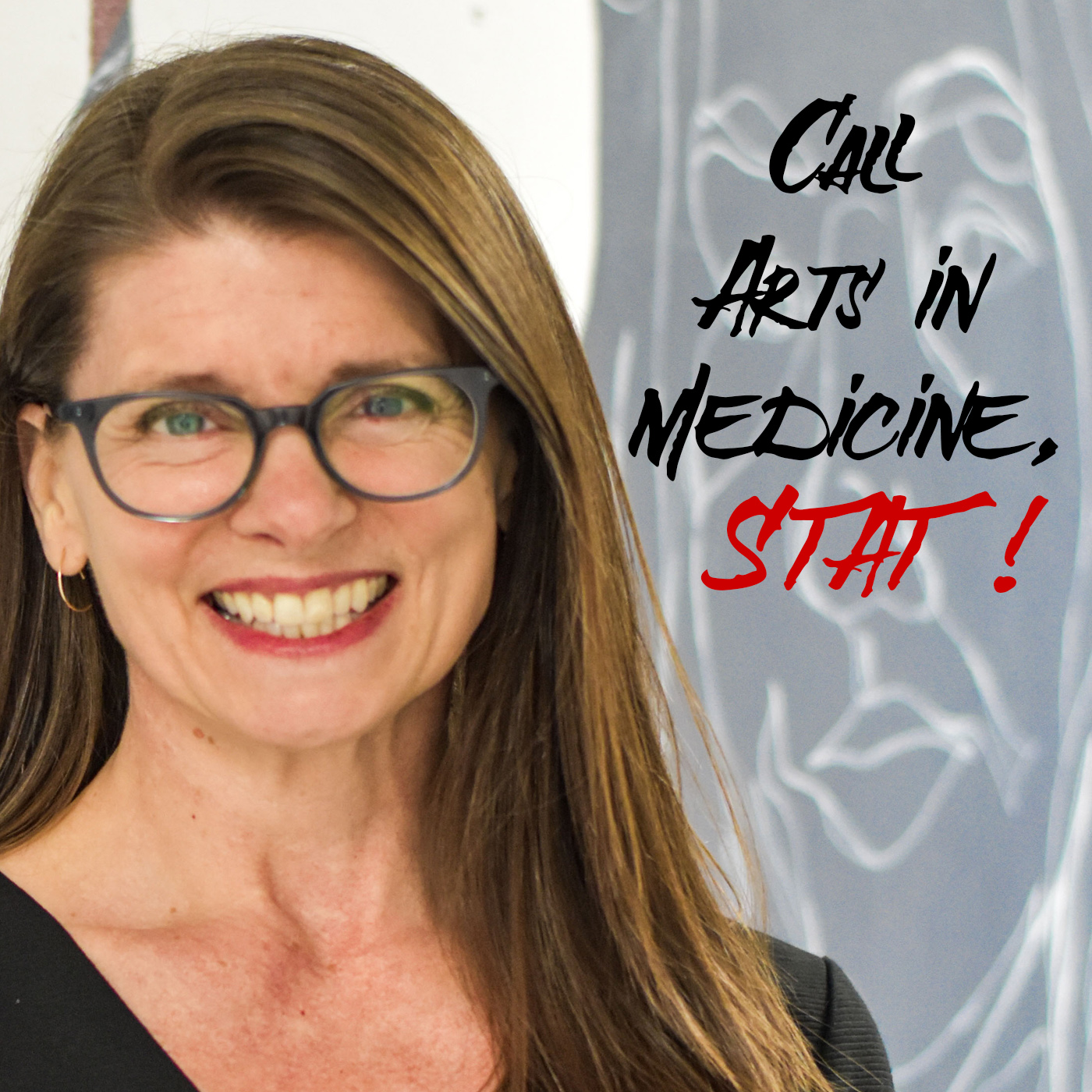
33: Why Artist and Cultural Organizers in Hospitals Are Changing How We Heal
from ART IS CHANGE: Strategies & Skills for Activist Artists & Cultural Organizers
Jill Sonke is a creative healer in service to a community of doctors, nurses, artists, educators, and most of all, patients on a journey that reunites the arts and medicine in their age-old roles as healing partners. BIOJill is director of the Center for Arts in Medicine at the University of Florida (UF), and is currently serving as Senior Advisor to the CDC Vaccine Confidence and Demand Team on the COVID-19 Vaccine Confidence Task Force. She is also an affiliated faculty member in the UF School of Theatre & Dance, Norman Fixel Institute for Neurological Diseases, the Center for African Studies, the STEM Translational Communication Center, and the One Health Center. Jill serves on the editorial board for Arts & Health journal and as a consulting editor for Health Promotion Practice journal. She is also director of the EpiArts Lab, a National Endowment for the Arts Research Lab at UF, and the national initiative, Creating Health Communities: Arts + Public Health in America. Dr. Sonke studied dance at Interlochen Arts Academy, the Florida State University, in London, Paris, and Athens with teachers of the Horton and Duncan techniques including Bella Lewitsky, Lynda Davis, Milton Meyers, Joy Kellman, Lori Belilove, Julia Levine, and Hortense Koluris. She has been a principle dancer and soloist with Lori Belilove & the Isadora Duncan Dance Company in New York and a guest performer and choreographer with Dance Alive! and Stuart Pimsler Dance and Theatre.With 27+ years of experience and leadership in arts in health, Dr. Sonke is active in research, teaching, and international cultural exchange. Her current research focuses on the arts and health communication, the arts in public health, and the effects of music on cost and quality of care in emergency medicine. She is the recipient of a New Forms Florida Fellowship Award, a State of Florida Individual Artist Fellowship Award, an Excellence in Teaching Award from the National Institute for Staff and Organizational Development, a UF Internationalizing the Curriculum Award, a UF Most Outstanding Service Learning Faculty Award, a UF Public Health Champions award, a UF Cross-Campus Faculty Entrepreneur of the Year Award, and over 300 grants for her programs and research at the University of Florida.Delicious QuotesWe were very fortunate to be in an institution with leaders who understood that the arts fit and we're important in a healthcare setting. That people should have the ability to engage creatively to make that experience of healthcare better, not just patients, but staff, and visitors and others.I remember going into rooms and introducing myself, you know, " dancer in residence," and people would furrow their brow and say, “I'm in the hospital, that doesn't belong here.” … Then the view of our program kind of evolved into “It's really nice. … it's really lovely.” And then after a bit more time, the overarching recognition was that this is really important …because our, our care providers we're recognizing that artists are really crucial members of the interprofessional care team.We interviewed all 31 members of the nursing staff on a medical surgical unit over a period of about 18 months to learn about how they perceived the effects of the work of artists in residence on their unit. …So, we learned that nurses recognized the benefits of engagement in the arts for their patients. They were asking the artists to come in when their patients needed distraction and relaxation, those sorts of things. … from a clinical perspective, they noticed that blood oxygen saturation. It would go up. That wasn't the focus of our study. I want to be clear, but observationally, they were noting the clinical things like that.(Dr. Daisy Fancourt) has been able to, to articulate very significant associations between arts and cultural participation in health. For example, people over the age of 50 who go to museums or galleries, … just once a month or more are almost half as likely to have the onset of depression or age-related disability. Similarly, kids who engage significantly in creativity are 48% less likely to be maladjusted, which is a very significant determinator of lifelong health. and she has as well repeated some Scandinavian studies … that determined that yes, people who participate in arts and cultural activities do live longer or are less likely to die early. In fact, 14%, less likely to die early.(In) Uganda …I learned how the Ministry of Health and the government in Uganda has used the arts as a very central primary means of health communication and of public health since the 1950s. …One of my first interviews was with a very high-ranking member of the Ministry of Health. And I said, “Why do you use the arts in public health?” And he furrowed his brow at me, looked at me like I was an idiot, and said, “You can't do public health without the arts. You can't just tell people health information; you have to engage them.”One day, I had a photographer with me, and she said, (to the patient) “What happens to your pain when you dance?” And she said, “It's still there. I don't care because I feel so good” And that particular day, I'm thinking of when we were dancing for about an hour and a half, her physician quietly came into the room and just sat and watched, and our eyes were closed, and we didn't really notice.And he left the room and put a big note at the front of her chart that said, “Dancing works better than meds, call Arts and Medicine.”Notable MentionsUniversity of Florida Center for Arts and Medicine: “Transform health and wellness through the arts. Use your creativity to advance health, wellness, and equity as a trained arts in health professional. Promote health one creative moment at a time.”The University of Florida, Center for Arts in Medicine, EpiArts Lab: A National Endowment for the Arts Research Lab exploring the impact of the arts and cultural engagement on population health outcomes in the US through epidemiological analyses of US cohort studies. Shands Hospital’s artists in residence: Starting with two volunteer visual artists working on the Bone Marrow Transplant Unit, Arts in Medicine now has 16 paid artists in all art disciplines working in six separate buildings throughout the UF Health system, covering the Gainesville and Jacksonville communities.University of Florida Health Shands Arts in Medicine Program: Artists in Residence work annually with over 100 volunteers from the Gainesville community and the University of Florida. These artists and volunteers engage patients, families, and staff in the creative disciplines of dance, writing, music, visual arts, and contemplative arts.Centers for Disease Control, Vaccine Competence, and Demand Team: The Centers for Disease Control and Prevention appointed Jill Sonke, director of the UF Center for Arts in Medicine, as senior adviser to the Vaccine Confidence and Demand Team on the COVID-19 Vaccine Task Force this summer. Interlochen Arts Academy: “Our umbrella organization, Interlochen Center for the Arts, encompasses six distinct program areas, each founded to propel arts education and engagement: Interlochen Arts Camp, Interlochen Arts Academy, Interlochen Online, Interlochen Public Radio, Interlochen Presents, and Interlochen College of Creative Arts.” Dr. John Grand Pole: Dr. Pole co-founded Arts in Medicine (AIM) at the University of Florida, arguably the nation’s leading university hospital arts program. As well as over 120 scientific publications, he has published more than 60 poems and essays on the healing arts, and performs as an improvisational actor and clown.Dr. Mary Rockwood Lane: is a professor, nurse, healing artist, painter and works as a professional Caritas coach with individuals and healthcare settings, both nationally and internationally. Dance in Medicine Program,...
Embed this episode
What this episode covers
Jill Sonke is a creative healer in service to a community of doctors, nurses, artists, educators, and most of all, patients on a journey that reunites the arts and medicine in their age-old roles as healing partners.
Ready to play
33: Why Artist and Cultural Organizers in Hospitals Are Changing How We Heal
No transcript for this episode yet
Similar Episodes
No similar episodes found.
Similar Podcasts
No similar podcasts found.