
EPISODE · Aug 31, 2025 · 17 MIN
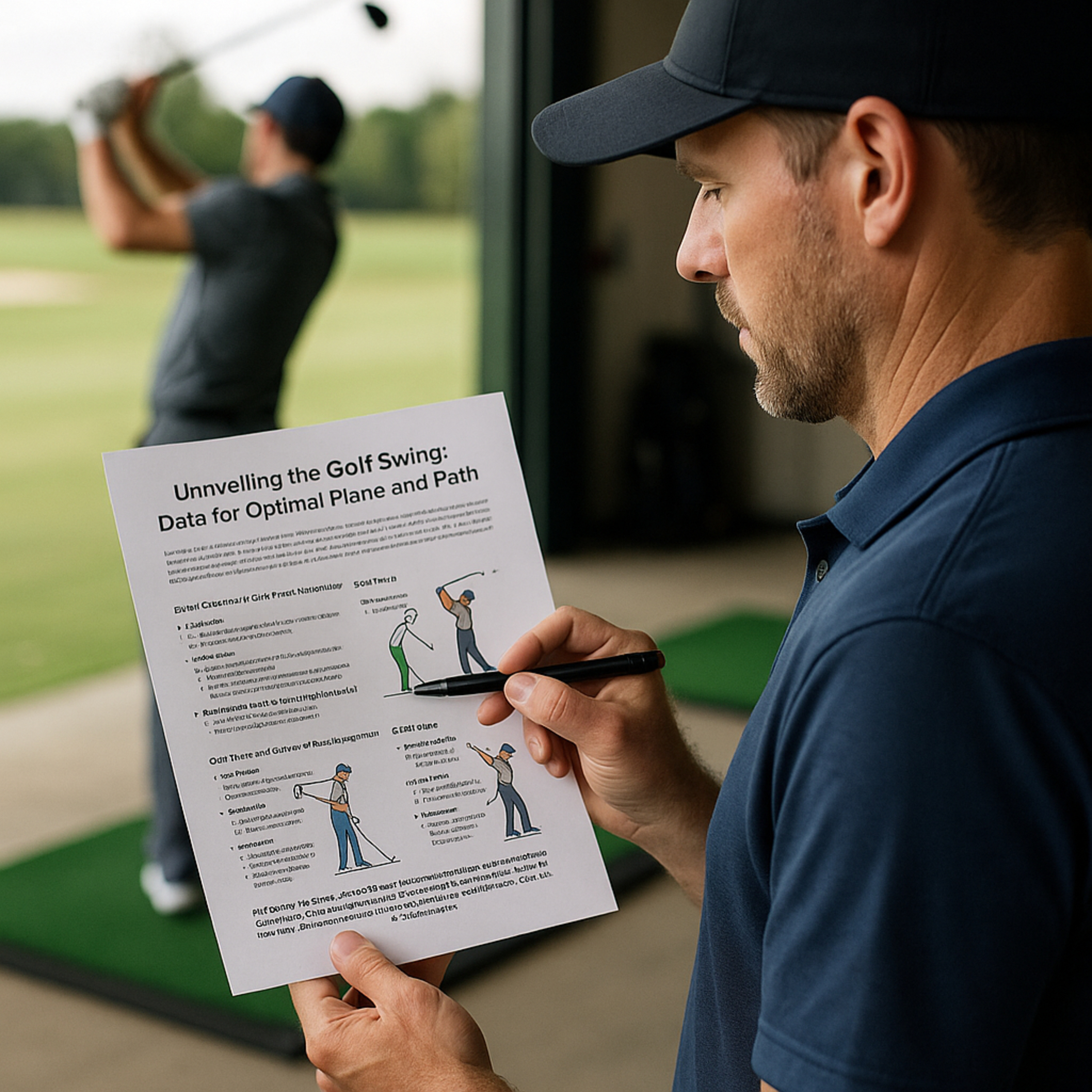
#332 Unveiling the Golf Swing: Data for Optimal Plane and Path
from Golf 247.eu: The Global Platform for Innovative Technologies and Teaching Concepts. · host Golf247.eu
Modern 3D analysis highlights why elite players consistently outperform amateurs: they manage measurable swing metrics that govern plane, path, and power. Among the most critical are hand path, club thrust, and the club–hand gap. Together, these values reveal whether a golfer is setting up for efficiency—or for compensation.Early Takeaway & Club–Hand RelationshipElite Players: Keep the club slightly outside or in line with the hands in the takeaway. This alignment promotes a vertical shaft, full body rotation, and speed potential. During transition, they allow the club’s center of mass to trail the hands, widening the club–hand gap. The result is shallowing, stability, and dynamic rotation.Amateurs: Frequently roll the club inside early. Rotation stalls, forcing wrist and arm compensations. A positive club–hand gap appears—club too far inside—which produces steep downswings and leftward paths.Hand Depth and Hand ThrustElite Players: Build depth by moving the hands inward—often a foot or more—by the top of the backswing. This depth creates outward thrust in transition, which shallows the club and maximizes rotational power.Amateurs: Show little hand thrust and insufficient depth. Without it, they cannot generate outward force, leaving them vulnerable to steep angles and weak strikes.Club Thrust & Center of Mass ManagementElite Players: Manage the club’s center of mass naturally. In transition, the club shallows behind the hands, not by conscious manipulation, but through sound backswing structure and force application. This incentivizes body rotation and multiplies speed.Amateurs: Display excessive club thrust with little hand thrust. Overactive wrists and forearms push the club’s center of mass behind the hands too early, shutting down rotation. Forced arm “rescues” follow—leading to pulls, slices, and loss of distance. Many then attempt to shallow manually, usually overcompensating.The Critical Role of the Club–Hand GapThis measurement—whether the club head is ahead or behind the hands—acts as a diagnostic anchor:Positive gap early: Signals the club moving too far inside, often producing steep, leftward paths.Negative gap in transition: Hallmark of elite swings. The club’s center of mass trails the hands, promoting rotation, clubhead speed, and stability at impact.Why It MattersEvery golfer, regardless of style, must organize hand thrust, club thrust, and the club–hand gap. For elite players, these numbers align to produce a shallower club, efficient body rotation, and consistent ball striking. For amateurs, mismanagement creates the opposite: being “stuck,” steep, and forced into compensations.The takeaway: the golf swing is not guesswork. By tracking measurable metrics, coaches and players can transform vague concepts like “over the top” into data-driven solutions. The difference between elite precision and amateur struggle lies in how these three metrics are understood, managed, and repeated.www.Golf247.eu
Embed this episode
NOW PLAYING
#332 Unveiling the Golf Swing: Data for Optimal Plane and Path
No transcript for this episode yet
Similar Episodes
No similar episodes found.
Similar Podcasts
No similar podcasts found.