
EPISODE · Apr 2, 2026 · 22 MIN
332: When Chromatin Filters Force: Age, AP-1, and Fibroblast Mechanotransduction
from Base by Base · host Gustavo Barra
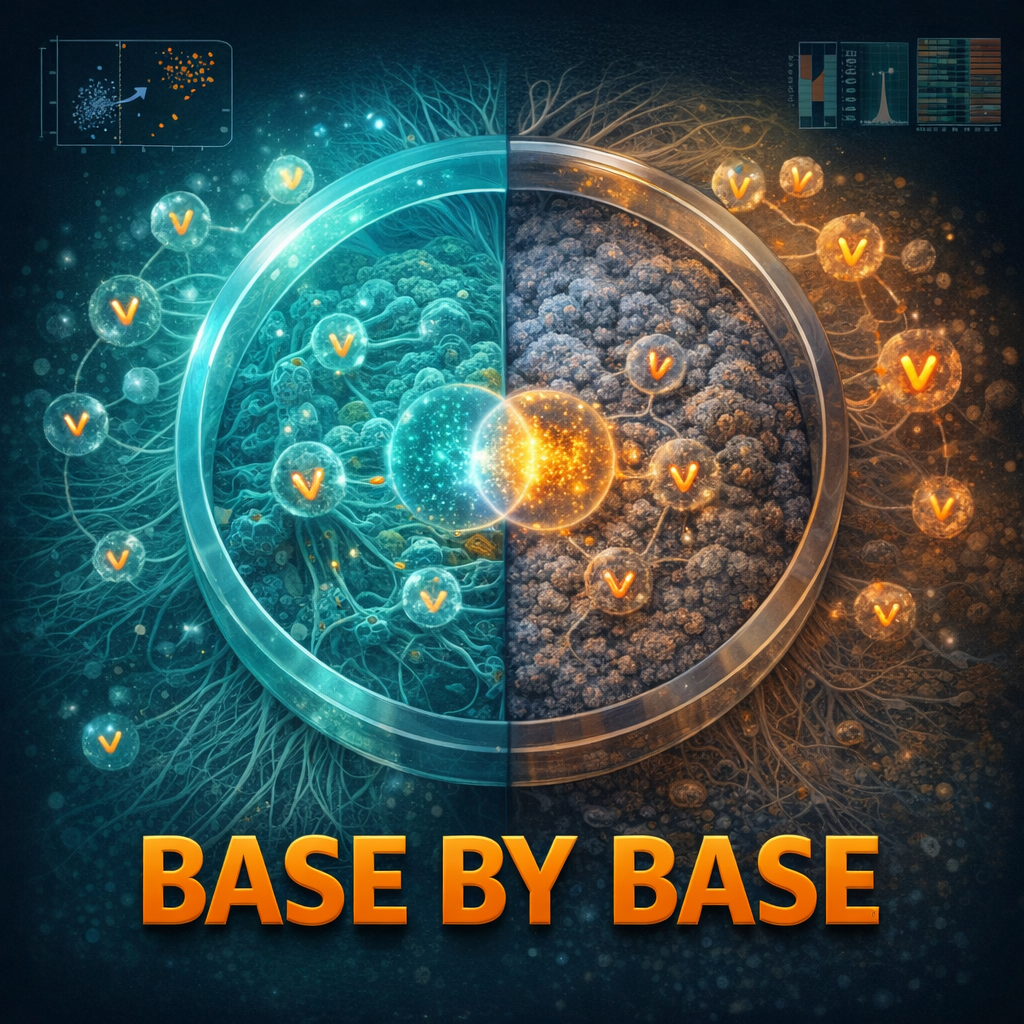
Liao Y et al., PNAS - Human dermal fibroblasts from young and old donors were embedded in 3D collagen and exposed to mechanical tension and TGF-β. Combining bulk RNA‑seq, ATAC‑seq, imaging, and perturbations, the study shows that matrix tension amplifies TGF‑β responses in young but not aged cells and identifies AP‑1 as a central chromatin-associated regulator required for fibroblast activation. Key terms: chromatin accessibility, mechanotransduction, aging, TGF-β signaling, AP-1. Study Highlights:Young fibroblasts under matrix tension mount a strong, synergistic transcriptional response to TGF‑β while aged fibroblasts exhibit blunted or divergent responses. Age-dependent differences in chromatin accessibility, notably at distal regulatory elements, correlate with these transcriptional outcomes. AP‑1 family motifs are highly enriched in TGF‑β- and age-responsive accessible regions and cooperate with age-specific TFs. Inhibiting AP‑1 activity prevents JUNB recruitment to RNA polymerase II and suppresses myofibroblast activation. Conclusion:3D chromatin accessibility acts as a dynamic filter of mechanical and biochemical signals during aging; AP‑1 and its regulatory network drive the age-specific chromatin remodeling that permits synergistic tension + TGF‑β responses in young fibroblasts, and AP‑1 inhibition blocks this activation, suggesting a potential therapeutic axis. Music:Enjoy the music based on this article at the end of the episode. Article title:Chromatin accessibility regulates age- dependent nuclear mechanotransduction First author:Liao Y Journal:PNAS DOI:10.1073/pnas.2522217123 Reference:Liao Y, Land M, Gupta R, Yu L, Sornapudi TR, Shivashankar GV. Chromatin accessibility regulates age-dependent nuclear mechanotransduction. PNAS. 2026;123(13):e2522217123. doi:10.1073/pnas.2522217123. Published March 26, 2026. License:This episode is based on an open-access article published under the Creative Commons Attribution 4.0 International License (CC BY 4.0) – https://creativecommons.org/licenses/by/4.0/ Support:Base by Base – Stripe donations: https://donate.stripe.com/7sY4gz71B2sN3RWac5gEg00 Official website https://basebybase.com On PaperCast Base by Base you’ll discover the latest in genomics, functional genomics, structural genomics, and proteomics. Episode link: https://basebybase.com/episodes/base-by-base-332-chromatin-age-mechanotransduction QC:This episode was checked against the original article PDF and publication metadata for the episode release published on 2026-04-02. QC Scope:- article metadata and core scientific claims from the narration- excludes analogies, intro/outro, and music- transcript coverage: Substantive auditing covered the study’s central mechanistic story: aging as a chromatin-filter for mechanochemical signaling; AP-1 as master regulator; age-specific TF partnerships; the 3D collagen tension model; ATAC-seq/RNA-seq integration; and AP-1 perturbation experiments.- transcript topics: Aging as chromatin-based signaling filter; 3D collagen gel tension model with glass ring; TGF-β signaling and mechanical tension synergy; AP-1 as master regulator; age-specific partners (JUNB vs HOXB13); ATAC-seq and RNA-seq integration; Perturbation experiments (siJUNB, T-5224, kinase inhibitors) QC Summary:- factual score: 10/10- metadata score: 10/10- supported core claims: 6- claims flagged for review: 0- metadata checks passed: 4- metadata issues found: 0 Metadata Audited:- article_doi- article_title- article_journal- license Factual Items Audited:- Young fibroblasts exhibit synergistic gene expression enhancement to combined mechanical tension and TGF-β; aging cells show a blunted/divergent response- Quantified...
Embed this episode
NOW PLAYING
332: When Chromatin Filters Force: Age, AP-1, and Fibroblast Mechanotransduction
No transcript for this episode yet
Similar Episodes
No similar episodes found.
Similar Podcasts
No similar podcasts found.