333: A racist with a heart of gold is still a racist episode artwork

EPISODE · Apr 30, 2020 · 9 MIN

333: A racist with a heart of gold is still a racist

from This Sustainable Life

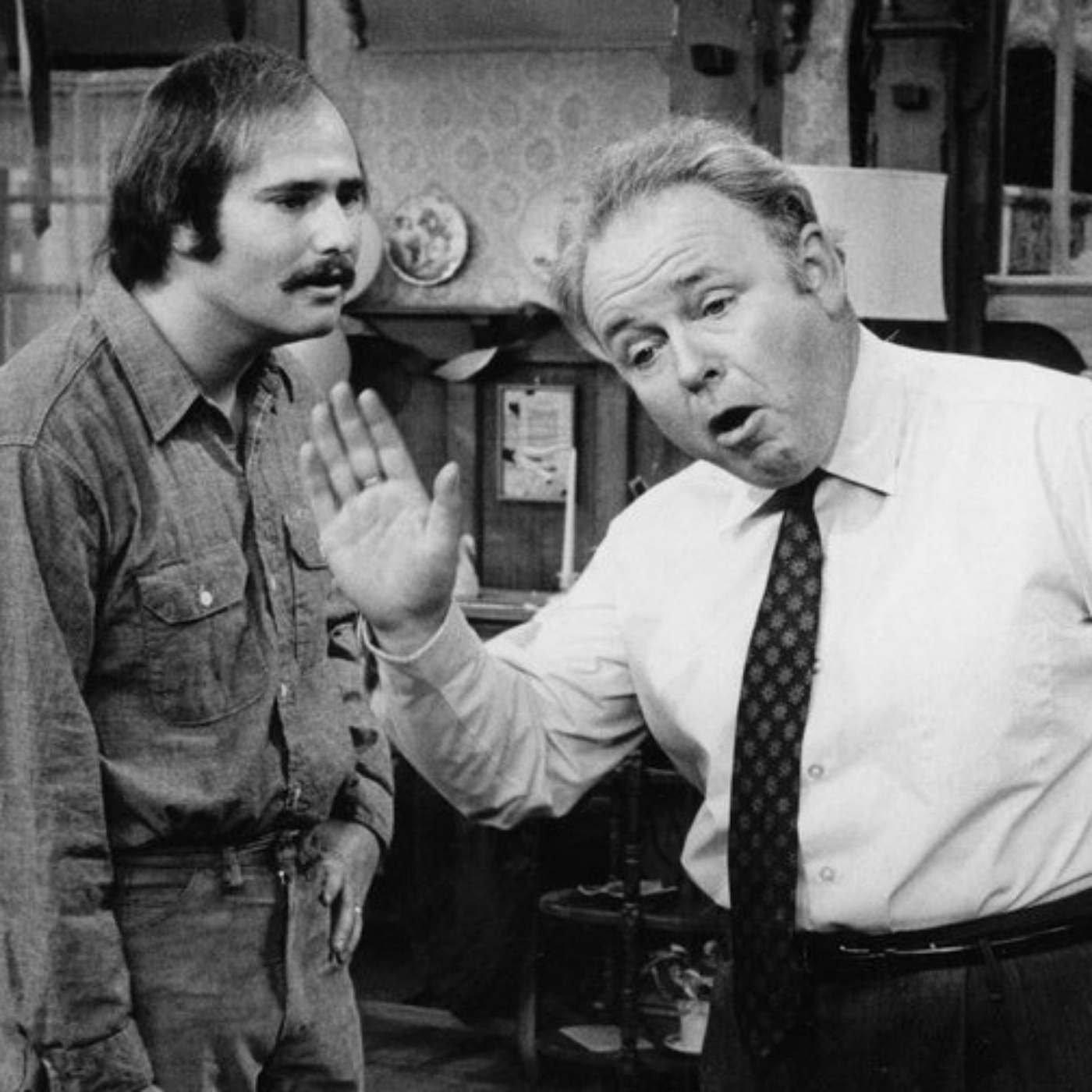
This pandemic continues to reveal new aspects of relationships—or rather spending time with people does. I think we used to spend more time with people, not mediated by the internet or distracted by screens and other powered things.I shared a new analogy in my conversation with my mom that several people liked. I found that my stewardship contrasting with my mom and step-father's wanting to live like they always have reminded me of the 70s television show All in the Family.For those who don't remember it, the show garnered huge audiences and stellar reviews. From Wikipedia's page on itAll in the Family is an American television series that ran for nine seasons, from 1971, to 1979.The show revolves around the life of a working-class father and his family. It broke ground on issues previously considered unsuitable for a U.S. network television comedy, such as racism, antisemitism, infidelity, homosexuality, women's liberation, rape, religion, miscarriages, abortion, breast cancer, the Vietnam War, menopause, and impotence [note not the environment]. Through these controversial issues, the series became one of television's most influential comedy shows, bringing dramatic moments and realistic, topical conflicts.All in the Family is often regarded in the United States as one of the greatest television series in history. Following a lackluster first season, the show soon became the most watched show in the US during summer reruns and afterwards ranked number one in the yearly Nielsen ratings from 1971 to 1976. It became the first television series to reach the milestone of having topped the Nielsen ratings for five consecutive years. The episode "Sammy's Visit" was ranked number 13 on TV Guide's 100 Greatest Episodes of All Time. TV Guide ranked it as the number four comedy. Bravo named Archie Bunker, TV's greatest character of all time. In 2013, the Writers Guild of America ranked it the fourth-best written TV series ever.Characters:Archie Bunker: Frequently called a "lovable bigot", Archie was an assertively prejudiced blue-collar worker. A World War II veteran, Archie longs for better times when people sharing his viewpoint were in charge, as evidenced by the nostalgic theme song "Those Were the Days". Despite his bigotry, he is portrayed as loving and decent, as well as a man who is simply struggling to adapt to the constantly changing world, rather than someone motivated by hateful racism or prejudice. His ignorance and stubbornness seem to cause his malapropism-filled arguments to self-destructHis foil wasMichael "Meathead" Stivic: Gloria's Polish-American hippie husband is part of the counterculture of the 1960s. While good-hearted and well-meaning, he constantly spars with Archie, and is equally stubborn, although his moral views are generally presented as being more ethical and his logic somewhat sounder. He is the most-educated person in the household, a fact which gives him a self-assured arrogance. He has intellectual belief in progressive social values.So a major part of America saw the clash between a racist, sexist, bigot and an intellectual, more considered egalitarian. It worked in part because the two lived in a house together, leading America to see the values of two generations clash.Looking back and even in that time, I think people recognized that Archie's views were unfair. He was racist and sexist, but you couldn't blame him. He was living values that made sense to him his whole life. A wife lived at home. He grew up in a white neighborhood. He fought to defend these ways and live in peace. Now these young people were undermining that peace. Why couldn't everyone just live how they used to when life worked? Those were the days.My episode with my mom Hosted on Acast. See acast.com/privacy for more information.

This pandemic continues to reveal new aspects of relationships—or rather spending time with people does. I think we used to spend more time with people, not mediated by the internet or distracted by screens and other powered things.I shared a new analogy in my conversation with my mom that several people liked. I found that my stewardship contrasting with my mom and step-father's wanting to live like they always have reminded me of the 70s television show All in the Family.For those who don't remember it, the show garnered huge audiences and stellar reviews. From Wikipedia's page on itAll in the Family is an American television series that ran for nine seasons, from 1971, to 1979.The show revolves around the life of a working-class father and his family. It broke ground on issues previously considered unsuitable for a U.S. network television comedy, such as racism, antisemitism, infidelity, homosexuality, women's liberation, rape, religion, miscarriages, abortion, breast cancer, the Vietnam War, menopause, and impotence [note not the environment]. Through these controversial issues, the series became one of television's most influential comedy shows, bringing dramatic moments and realistic, topical conflicts.All in the Family is often regarded in the United States as one of the greatest television series in history. Following a lackluster first season, the show soon became the most watched show in the US during summer reruns and afterwards ranked number one in the yearly Nielsen ratings from 1971 to 1976. It became the first television series to reach the milestone of having topped the Nielsen ratings for five consecutive years. The episode "Sammy's Visit" was ranked number 13 on TV Guide's 100 Greatest Episodes of All Time. TV Guide ranked it as the number four comedy. Bravo named Archie Bunker, TV's greatest character of all time. In 2013, the Writers Guild of America ranked it the fourth-best written TV series ever.Characters:Archie Bunker: Frequently called a "lovable bigot", Archie was an assertively prejudiced blue-collar worker. A World War II veteran, Archie longs for better times when people sharing his viewpoint were in charge, as evidenced by the nostalgic theme song "Those Were the Days". Despite his bigotry, he is portrayed as loving and decent, as well as a man who is simply struggling to adapt to the constantly changing world, rather than someone motivated by hateful racism or prejudice. His ignorance and stubbornness seem to cause his malapropism-filled arguments to self-destructHis foil wasMichael "Meathead" Stivic: Gloria's Polish-American hippie husband is part of the counterculture of the 1960s. While good-hearted and well-meaning, he constantly spars with Archie, and is equally stubborn, although his moral views are generally presented as being more ethical and his logic somewhat sounder. He is the most-educated person in the household, a fact which gives him a self-assured arrogance. He has intellectual belief in progressive social values.So a major part of America saw the clash between a racist, sexist, bigot and an intellectual, more considered egalitarian. It worked in part because the two lived in a house together, leading America to see the values of two generations clash.Looking back and even in that time, I think people recognized that Archie's views were unfair. He was racist and sexist, but you couldn't blame him. He was living values that made sense to him his whole life. A wife lived at home. He grew up in a white neighborhood. He fought to defend these ways and live in peace. Now these young people were undermining that peace. Why couldn't everyone just live how they used to when life worked? Those were the days.My episode with my mom Hosted on Acast. See acast.com/privacy for more information.

NOW PLAYING

333: A racist with a heart of gold is still a racist

0:00 9:59

No transcript for this episode yet

We transcribe on demand. Request one and we'll notify you when it's ready — usually under 10 minutes.

Big Old Life: Heather Blackbird interviews people on planet earth. Heather Blackbird loves asking questions. This podcast is a learning experience. Join me, Heather Blackbird, as I talk to people about their lives. Frequency of new episodes is a little all over the place and I'm learning as I go. Big Old Life is a small way of talking about the vastness of life, one person at a time. If you are reading this or found this podcast it's probably because someone you know gave you a link to it. :) Explicit Tales Of A Superstar DJ The Insomniac Spun seemingly out of nowhere from her complacent life in the corporate world, turned seemingly overnight from 16-Hour shift work and into the life of a literally starving artist and working musician, The Protagonist navigates her supposed rise to fame and superstardom on a journey through spiritual awakening, coming-of-age, and intimate self-realization--guided by an omnipresent force and equipped with the power of love, magic, and music. {Enter The Multiverse.} [The Festival Project] The Festival Project, Inc.™ is a multidimensional multimedia platform which encompasses exploratory and artistic social personifications and expressions on cosmic theory, spirituality, growth, health & wellness, philosophy and theoretic dynamics in entertainment such as music, design, film, television, radio, dance and festival culture, art, fashion, literature, and science. The Festival Project™ and its subsidiary Non-Profit, The Collective Complex © aims to challenge modern artistic and philosop Explicit The Sacred +Profane Podcast nephtaragrace The Sacred + Profane Podcast is a provocative conversation dedicated to cementing a better future for all. We specialize in unpacking the nuances of what is considered sacred and profane, particularly focusing on sex, death, and all that pertains to the circle of life. Our aim in focusing on such ”taboo” subject matter is to demystify what is unconscious, bring to light what has been known for centuries as ”the occult,” and empower the rapid transformation that is occurring on the Planet. Explicit Northern Sass and Southern Class Tay and Ani Come sit in on girl talk with Tay and Ani as we discuss life in Texas, girl math, food, wine and roasting each other. Explicit

Frequently Asked Questions

How long is this episode of This Sustainable Life?

This episode is 9 minutes long.

When was this This Sustainable Life episode published?

This episode was published on April 30, 2020.

What is this episode about?

This pandemic continues to reveal new aspects of relationships—or rather spending time with people does. I think we used to spend more time with people, not mediated by the internet or distracted by screens and other powered things.I shared a new...

Can I download this This Sustainable Life episode?

Yes, you can download this episode by clicking the download button on the episode player, or subscribe to the podcast in your preferred podcast app for automatic downloads.
URL copied to clipboard!