#343 Right Arm Dynamics: Pro vs. Amateur Golf Swing Analysis episode artwork

EPISODE · Sep 11, 2025 · 15 MIN

#343 Right Arm Dynamics: Pro vs. Amateur Golf Swing Analysis

from Golf 247.eu: The Global Platform for Innovative Technologies and Teaching Concepts. · host Golf247.eu

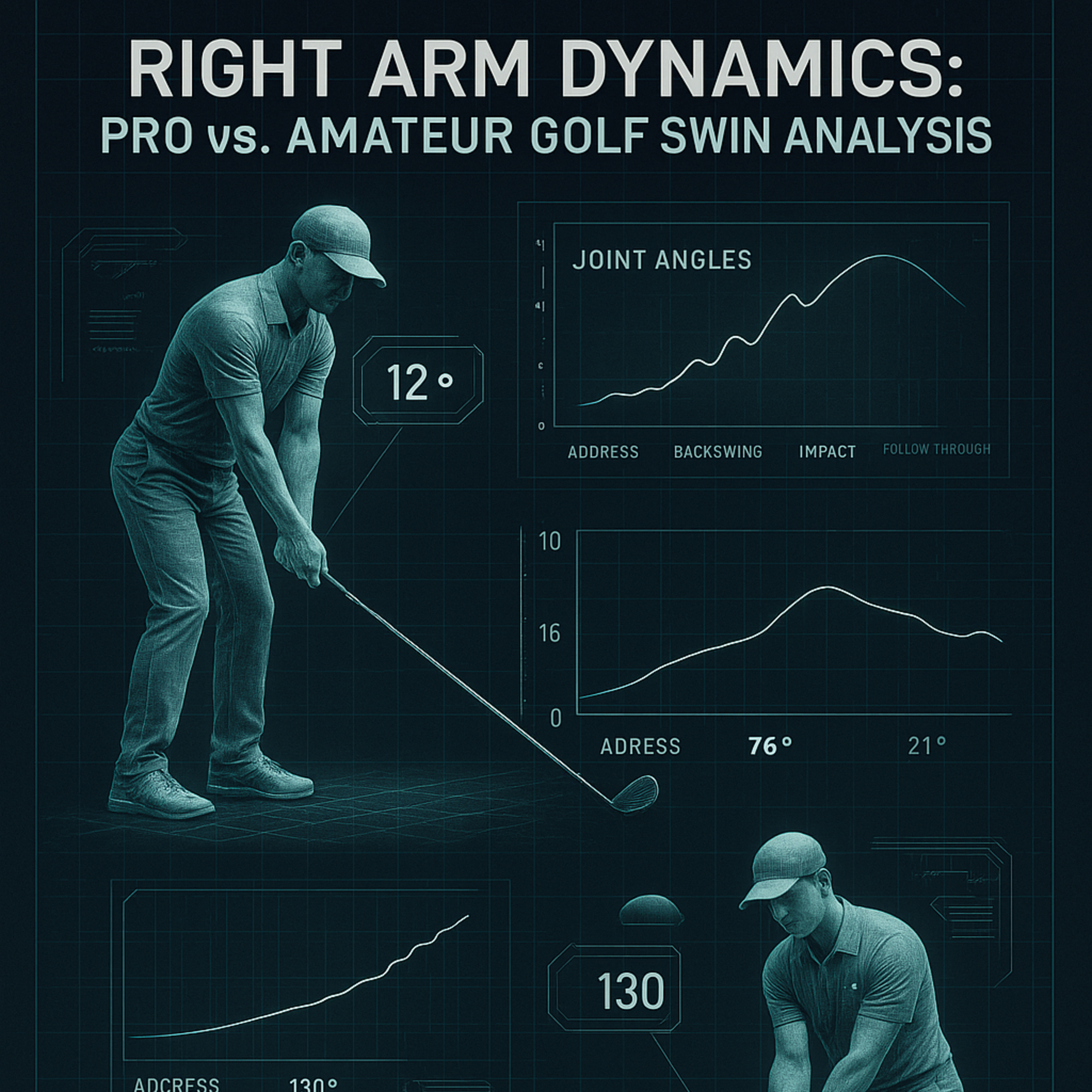
The right arm plays a pivotal role in the mechanics and efficiency of a golf swing. One of the clearest distinctions between professionals and amateurs is how they use their trail arm—from setup to follow-through. This analysis highlights the most significant differences, focusing on elbow flexion and its impact on swing path, power, and consistency.At AddressProfessionals: Begin with a slightly bent right arm—around 11.4°—signaling a relaxed and athletic posture.Amateurs: Often start with a nearly straight or locked-out right arm—about 1°—which limits freedom of motion from the outset.BackswingProfessionals: The elbow bend increases gradually, maxing out at around 75–76° at the top. At the “left arm parallel” checkpoint, the angle is a compact 38°, helping maintain a tighter and more controlled structure.Amateurs: Show excessive bending, peaking at about 130° at the top. At left arm parallel, their elbow already surpasses twice the pro’s angle. This leads to a collapsed arm structure and narrower arc, setting up an inefficient downswing.Transition to DownswingProfessionals: Begin widening the right arm immediately, creating a broad, powerful hand path. This helps maintain a shallow club position and enables effective energy transfer into the ball.Amateurs: With the arm overly bent at the top, the transition becomes steep and abrupt. The elbow struggles to widen efficiently, resulting in a constrained and narrow swing path.ImpactProfessionals: Reach approximately 21–22° of right arm bend at impact—close to their address position. This supports better rotation, control, and energy delivery through the ball.Amateurs: Reach only about 12° at impact, often accompanied by early release and a “scooping” motion. This compromises compression, trajectory, and distance.Post-Impact and Follow-ThroughProfessionals: Achieve full extension shortly after impact, with the arm parallel to the ground during follow-through—signifying efficient release and continuation.Amateurs: Also reach full extension, but only later in the follow-through. The lag in sequencing is a byproduct of earlier inefficiencies.Key TakeawaysSetup: Pros start with a relaxed right arm; amateurs with a stiff, extended one.Backswing: Pros maintain compact structure; amateurs over-fold the elbow.Transition: Pros widen early and efficiently; amateurs steepen and collapse.Impact: Pros preserve control and rotation; amateurs lose structure and power.Follow-through: Both extend, but the timing reveals critical differences in swing dynamics.ConclusionRight arm dynamics separate the efficient from the erratic. Professionals leverage gradual flexion, a wide arc, and timely extension to maximize control and speed. Amateurs, by contrast, often lose structure through excessive elbow bend and inefficient transition. For those looking to elevate their swing, understanding and training proper right arm movement could be the single most impactful adjustment.www.Golf247.eu

The right arm plays a pivotal role in the mechanics and efficiency of a golf swing. One of the clearest distinctions between professionals and amateurs is how they use their trail arm—from setup to follow-through. This analysis highlights the most significant differences, focusing on elbow flexion and its impact on swing path, power, and consistency.At AddressProfessionals: Begin with a slightly bent right arm—around 11.4°—signaling a relaxed and athletic posture.Amateurs: Often start with a nearly straight or locked-out right arm—about 1°—which limits freedom of motion from the outset.BackswingProfessionals: The elbow bend increases gradually, maxing out at around 75–76° at the top. At the “left arm parallel” checkpoint, the angle is a compact 38°, helping maintain a tighter and more controlled structure.Amateurs: Show excessive bending, peaking at about 130° at the top. At left arm parallel, their elbow already surpasses twice the pro’s angle. This leads to a collapsed arm structure and narrower arc, setting up an inefficient downswing.Transition to DownswingProfessionals: Begin widening the right arm immediately, creating a broad, powerful hand path. This helps maintain a shallow club position and enables effective energy transfer into the ball.Amateurs: With the arm overly bent at the top, the transition becomes steep and abrupt. The elbow struggles to widen efficiently, resulting in a constrained and narrow swing path.ImpactProfessionals: Reach approximately 21–22° of right arm bend at impact—close to their address position. This supports better rotation, control, and energy delivery through the ball.Amateurs: Reach only about 12° at impact, often accompanied by early release and a “scooping” motion. This compromises compression, trajectory, and distance.Post-Impact and Follow-ThroughProfessionals: Achieve full extension shortly after impact, with the arm parallel to the ground during follow-through—signifying efficient release and continuation.Amateurs: Also reach full extension, but only later in the follow-through. The lag in sequencing is a byproduct of earlier inefficiencies.Key TakeawaysSetup: Pros start with a relaxed right arm; amateurs with a stiff, extended one.Backswing: Pros maintain compact structure; amateurs over-fold the elbow.Transition: Pros widen early and efficiently; amateurs steepen and collapse.Impact: Pros preserve control and rotation; amateurs lose structure and power.Follow-through: Both extend, but the timing reveals critical differences in swing dynamics.ConclusionRight arm dynamics separate the efficient from the erratic. Professionals leverage gradual flexion, a wide arc, and timely extension to maximize control and speed. Amateurs, by contrast, often lose structure through excessive elbow bend and inefficient transition. For those looking to elevate their swing, understanding and training proper right arm movement could be the single most impactful adjustment.www.Golf247.eu

NOW PLAYING

#343 Right Arm Dynamics: Pro vs. Amateur Golf Swing Analysis

0:00 15:29

No transcript for this episode yet

We transcribe on demand. Request one and we'll notify you when it's ready — usually under 10 minutes.

Frequently Asked Questions

How long is this episode of Golf 247.eu: The Global Platform for Innovative Technologies and Teaching Concepts.?

This episode is 15 minutes long.

When was this Golf 247.eu: The Global Platform for Innovative Technologies and Teaching Concepts. episode published?

This episode was published on September 11, 2025.

What is this episode about?

The right arm plays a pivotal role in the mechanics and efficiency of a golf swing. One of the clearest distinctions between professionals and amateurs is how they use their trail arm—from setup to follow-through. This analysis highlights the most...

Can I download this Golf 247.eu: The Global Platform for Innovative Technologies and Teaching Concepts. episode?

Yes, you can download this episode by clicking the download button on the episode player, or subscribe to the podcast in your preferred podcast app for automatic downloads.
URL copied to clipboard!