#363 Mastering Green Reading with the Puttalyze Concept episode artwork

EPISODE · Oct 1, 2025 · 17 MIN

#363 Mastering Green Reading with the Puttalyze Concept

from Golf 247.eu: The Global Platform for Innovative Technologies and Teaching Concepts. · host Golf247.eu

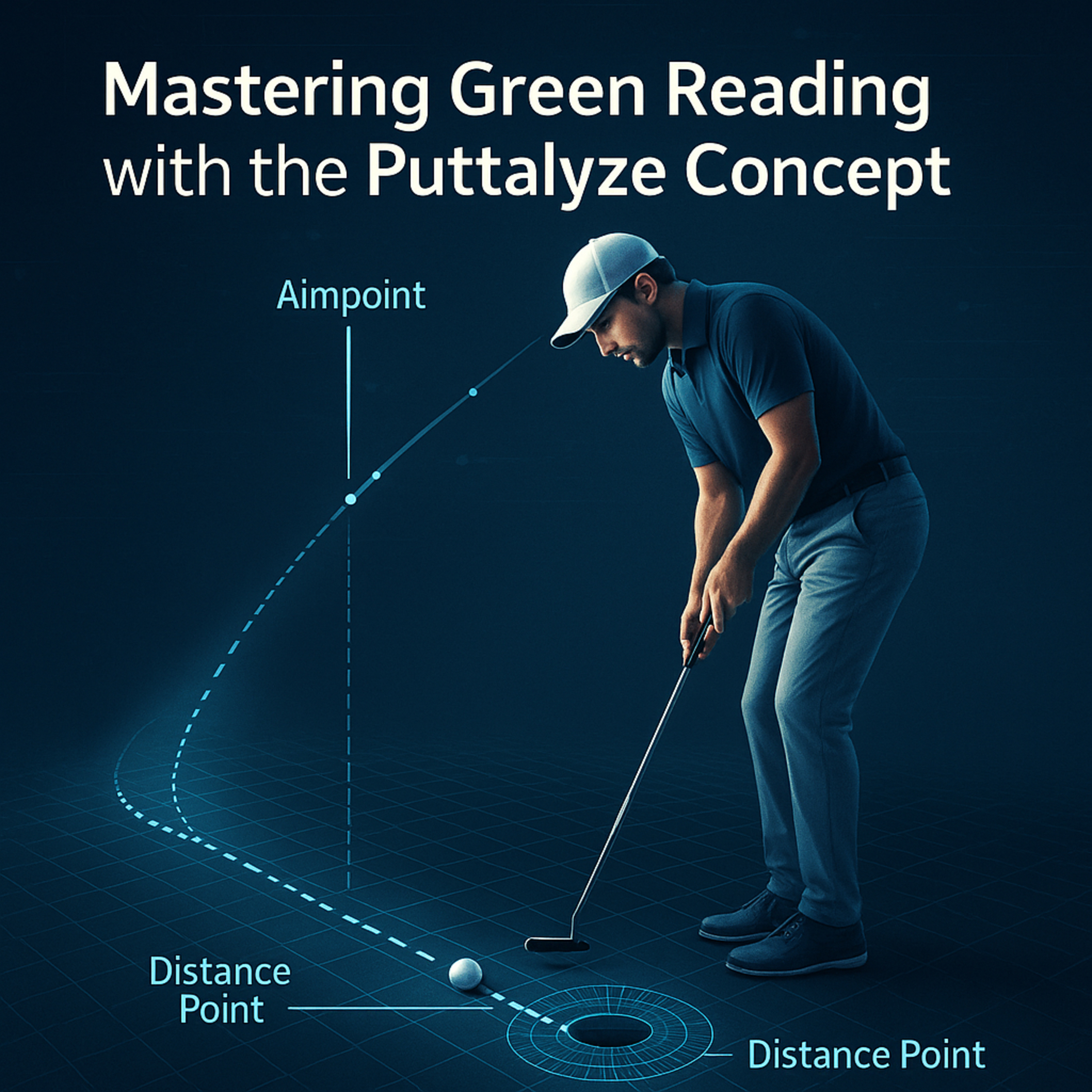
By a PGA Pro Henrik Jentsch and putting specialistGreat putting isn’t mysticism—it’s physics you can learn, test, and repeat. The Puttalyze Concept replaces hunches with measurable inputs and precise targets so your ball arrives at the hole with the right pace and on the correct line.Reference scenario (used throughout): 5-meter putt, 1.5% slope, 45° right of the fall line, Stimp 11, ball speed at the hole = 4 rotations per second (rps). Result: Aimpoint 41 cm above the hole; Distance Point 74 cm beyond the Aimpoint; total roll 6.04 m; if the hole were covered with glass, the ball would finish 26 cm past the cup.1) The compass and the engineFall line = compass. It’s the straight downhill path from the hole. Right of the fall line the ball breaks left; left of it, the ball breaks right.Slope = engine. Quantify it: stand on the fall line below the hole, walk three long steps (≈100 in) downhill, estimate how much higher the hole sits—1.5 in equals 1.5%. Our entire example uses that fixed 1.5% value.2) From inputs to targetsPuttalyze turns inputs (distance, slope, Stimp, entry speed) into two targets:Aimpoint (direction): the mathematical answer to gravity’s pull. In our scenario the correct Aimpoint is 41 cm above the hole on the fall line, so the start line points through that spot.Distance Point (pace): where the ball would stop if it doesn’t fall. Here it is 74 cm beyond the Aimpoint, yielding a 6.04 m total roll for a 5 m putt. On a flat “glass-plate” cover, this equals 26 cm past the hole.These numbers teach your eyes what “enough break” and “enough energy” actually look like.3) Speed at the hole (why 4 rps)Advising “roll it 30–40 cm past” ignores green speed. The constant is speed at the hole: 4 rps (≈1 mph) maximizes capture while protecting line. Too slow (<3 rps) and surface imperfections push the ball offline; too fast (>4 rps) and the effective hole shrinks. Our example is calibrated so the ball reaches the cup at 4 rps, which in practice corresponds to the 26 cm glass-plate roll-out cited above.4) What sets the AimpointThree variables raise or lower the Aimpoint: slope steepness, green speed (Stimp 11 here), and time on the surface (longer roll = more break). With 5 m at 1.5% on Stimp 11, those factors combine to 41 cm. Aim straight at the hole and gravity wins low; aim at 41 cm and gravity bends the putt back on line.5) Train it with the Puttalyze AppFind and confirm the fall line and measure slope (clinometer): use 1.5%.Measure Stimp and enter 11.Set distance/angle: 5 m, 45° right.Choose speed: 4 rps. The app returns Aimpoint 41 cm, Distance Point +74 cm, total 6.04 m, glass-plate +26 cm.Putt, record, reflect. Missed high/low? Pace short/long? Adjust until your feel matches these numbers.6) Smart misses and adjustmentsSlight over-reads are safer—the ball continues to work toward the cup. Uphill versions of this putt require more energy (Distance Point moves farther back); downhill need less (it moves closer), but our 41 cm Aimpoint and 4 rps principle still anchor your decisions.Bottom line: With Puttalyze you know where to aim (41 cm) and how to deliver the ball (4 rps, 6.04 m total, 26 cm glass-plate roll-out). Practice this single, consistent scenario until the numbers become instinct—and you’ll turn green reading from guesswork into a repeatable edge.www.Golf247.eu

By a PGA Pro Henrik Jentsch and putting specialistGreat putting isn’t mysticism—it’s physics you can learn, test, and repeat. The Puttalyze Concept replaces hunches with measurable inputs and precise targets so your ball arrives at the hole with the right pace and on the correct line.Reference scenario (used throughout): 5-meter putt, 1.5% slope, 45° right of the fall line, Stimp 11, ball speed at the hole = 4 rotations per second (rps). Result: Aimpoint 41 cm above the hole; Distance Point 74 cm beyond the Aimpoint; total roll 6.04 m; if the hole were covered with glass, the ball would finish 26 cm past the cup.1) The compass and the engineFall line = compass. It’s the straight downhill path from the hole. Right of the fall line the ball breaks left; left of it, the ball breaks right.Slope = engine. Quantify it: stand on the fall line below the hole, walk three long steps (≈100 in) downhill, estimate how much higher the hole sits—1.5 in equals 1.5%. Our entire example uses that fixed 1.5% value.2) From inputs to targetsPuttalyze turns inputs (distance, slope, Stimp, entry speed) into two targets:Aimpoint (direction): the mathematical answer to gravity’s pull. In our scenario the correct Aimpoint is 41 cm above the hole on the fall line, so the start line points through that spot.Distance Point (pace): where the ball would stop if it doesn’t fall. Here it is 74 cm beyond the Aimpoint, yielding a 6.04 m total roll for a 5 m putt. On a flat “glass-plate” cover, this equals 26 cm past the hole.These numbers teach your eyes what “enough break” and “enough energy” actually look like.3) Speed at the hole (why 4 rps)Advising “roll it 30–40 cm past” ignores green speed. The constant is speed at the hole: 4 rps (≈1 mph) maximizes capture while protecting line. Too slow (<3 rps) and surface imperfections push the ball offline; too fast (>4 rps) and the effective hole shrinks. Our example is calibrated so the ball reaches the cup at 4 rps, which in practice corresponds to the 26 cm glass-plate roll-out cited above.4) What sets the AimpointThree variables raise or lower the Aimpoint: slope steepness, green speed (Stimp 11 here), and time on the surface (longer roll = more break). With 5 m at 1.5% on Stimp 11, those factors combine to 41 cm. Aim straight at the hole and gravity wins low; aim at 41 cm and gravity bends the putt back on line.5) Train it with the Puttalyze AppFind and confirm the fall line and measure slope (clinometer): use 1.5%.Measure Stimp and enter 11.Set distance/angle: 5 m, 45° right.Choose speed: 4 rps. The app returns Aimpoint 41 cm, Distance Point +74 cm, total 6.04 m, glass-plate +26 cm.Putt, record, reflect. Missed high/low? Pace short/long? Adjust until your feel matches these numbers.6) Smart misses and adjustmentsSlight over-reads are safer—the ball continues to work toward the cup. Uphill versions of this putt require more energy (Distance Point moves farther back); downhill need less (it moves closer), but our 41 cm Aimpoint and 4 rps principle still anchor your decisions.Bottom line: With Puttalyze you know where to aim (41 cm) and how to deliver the ball (4 rps, 6.04 m total, 26 cm glass-plate roll-out). Practice this single, consistent scenario until the numbers become instinct—and you’ll turn green reading from guesswork into a repeatable edge.www.Golf247.eu

NOW PLAYING

#363 Mastering Green Reading with the Puttalyze Concept

0:00 17:29

No transcript for this episode yet

We transcribe on demand. Request one and we'll notify you when it's ready — usually under 10 minutes.

Frequently Asked Questions

How long is this episode of Golf 247.eu: The Global Platform for Innovative Technologies and Teaching Concepts.?

This episode is 17 minutes long.

When was this Golf 247.eu: The Global Platform for Innovative Technologies and Teaching Concepts. episode published?

This episode was published on October 1, 2025.

What is this episode about?

By a PGA Pro Henrik Jentsch and putting specialistGreat putting isn’t mysticism—it’s physics you can learn, test, and repeat. The Puttalyze Concept replaces hunches with measurable inputs and precise targets so your ball arrives at the hole with the...

Can I download this Golf 247.eu: The Global Platform for Innovative Technologies and Teaching Concepts. episode?

Yes, you can download this episode by clicking the download button on the episode player, or subscribe to the podcast in your preferred podcast app for automatic downloads.
URL copied to clipboard!