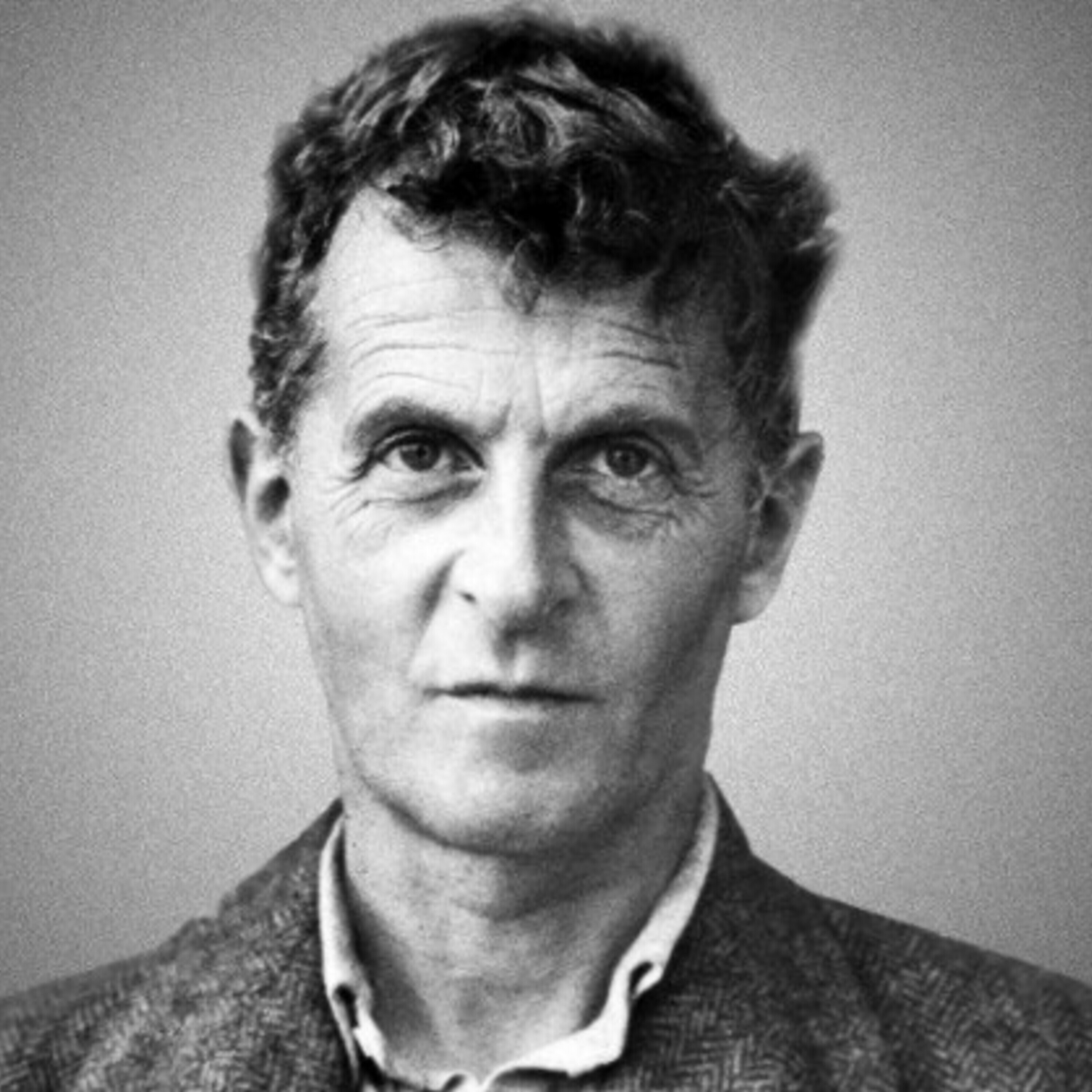
#38 (C&R Series, Ch. 2) - Wittgenstein vs Popper episode artwork

EPISODE · Mar 8, 2022 · 1H 3M

#38 (C&R Series, Ch. 2) - Wittgenstein vs Popper

from Increments · host Ben Chugg and Vaden Masrani

We cover the spicy showdown between the two of the world's most headstrong philosophers: Ludwig Wittgenstein and Karl Popper. In a dingy Cambridge classroom Wittgenstein once threatened Popper with a fireplace poker. What led to the disagreement? In this episode, we continue with the Conjectures and Refutations series by analyzing Chapter 2: The Nature of Philosophical Problems And Their Roots In Science, where Popper outlines his agreements and disagreements with Mr. Ludwig Wittgenstein. We discuss: Are there philosophical problems? Why are scientific disciplines divided as they are? How much of philosophy is meaningless pseudo-babble? (Hint: Not none) Wittgenstein's background and feud between him and Popper Wittgenstein 1 and 2 (pre and post Tractatus) The danger of philosophical inbreeding Two of Popper's examples of philosophical problems: 1. Plato and the Crisis in Early Greek Atomism 2. Immanuel Kant's Problem of Knowledge. Musica universalis The Problem of Change How is knowledge possible? Quotes My first thesis is that every philosophy, and especially every philosophical ‘school’, is liable to degenerate in such a way that its problems become practically indistinguishable from pseudo-problems, and its cant, accordingly, practically indistinguishable from meaningless babble. This, I shall try to show, is a consequence of philosophical inbreeding. The degeneration of philosophical schools in its turn is the consequence of the mistaken belief that one can philosophize without having been compelled to philosophize by problems which arise outside philosophy—in mathematics, for example, or in cosmology, or in politics, or in religion, or in social life. In other words my first thesis is this. Genuine philosophical problems are always rooted in urgent problems outside philosophy, and they die if these roots decay. C&R p.95 His question, we now know, or believe we know, should have been: ‘How are successful conjectures possible?’ And our answer, in the spirit of his Copernican Revolution, might, I suggest, be something like this: Because, as you said, we are not passive receptors of sense data, but active organisms. Because we react to our environment not always merely instinctively, but sometimes consciously and freely. Because we can invent myths, stories, theories; because we have a thirst for explanation, an insatiable curiosity, a wish to know. Because we not only invent stories and theories, but try them out and see whether they work and how they work. Because by a great effort, by trying hard and making many mistakes, we may sometimes, if we are lucky, succeed in hitting upon a story, an explanation, which ‘saves the phenomena’; perhaps by making up a myth about ‘invisibles’, such as atoms or gravitational forces, which explain the visible. Because knowledge is an adventure of ideas. C&R p.128 If you were to threaten us with a common household object, what would it be? Tell us at [email protected], or on twitter: @VadenMasrani, @BennyChugg, @IncrementsPod.

We cover the spicy showdown between the two of the world's most headstrong philosophers: Ludwig Wittgenstein and Karl Popper. In a dingy Cambridge classroom Wittgenstein once threatened Popper with a fireplace poker. What led to the disagreement? In this episode, we continue with the Conjectures and Refutations series by analyzing Chapter 2: The Nature of Philosophical Problems And Their Roots In Science, where Popper outlines his agreements and disagreements with Mr. Ludwig Wittgenstein. We discuss: Are there philosophical problems? Why are scientific disciplines divided as they are? How much of philosophy is meaningless pseudo-babble? (Hint: Not none) Wittgenstein's background and feud between him and Popper Wittgenstein 1 and 2 (pre and post Tractatus) The danger of philosophical inbreeding Two of Popper's examples of philosophical problems: 1. Plato and the Crisis in Early Greek Atomism 2. Immanuel Kant's Problem of Knowledge. Musica universalis The Problem of Change How is knowledge possible? Quotes My first thesis is that every philosophy, and especially every philosophical ‘school’, is liable to degenerate in such a way that its problems become practically indistinguishable from pseudo-problems, and its cant, accordingly, practically indistinguishable from meaningless babble. This, I shall try to show, is a consequence of philosophical inbreeding. The degeneration of philosophical schools in its turn is the consequence of the mistaken belief that one can philosophize without having been compelled to philosophize by problems which arise outside philosophy—in mathematics, for example, or in cosmology, or in politics, or in religion, or in social life. In other words my first thesis is this. Genuine philosophical problems are always rooted in urgent problems outside philosophy, and they die if these roots decay. C&R p.95 His question, we now know, or believe we know, should have been: ‘How are successful conjectures possible?’ And our answer, in the spirit of his Copernican Revolution, might, I suggest, be something like this: Because, as you said, we are not passive receptors of sense data, but active organisms. Because we react to our environment not always merely instinctively, but sometimes consciously and freely. Because we can invent myths, stories, theories; because we have a thirst for explanation, an insatiable curiosity, a wish to know. Because we not only invent stories and theories, but try them out and see whether they work and how they work. Because by a great effort, by trying hard and making many mistakes, we may sometimes, if we are lucky, succeed in hitting upon a story, an explanation, which ‘saves the phenomena’; perhaps by making up a myth about ‘invisibles’, such as atoms or gravitational forces, which explain the visible. Because knowledge is an adventure of ideas. C&R p.128 If you were to threaten us with a common household object, what would it be? Tell us at [email protected], or on twitter: @VadenMasrani, @BennyChugg, @IncrementsPod. Support Increments

NOW PLAYING

#38 (C&R Series, Ch. 2) - Wittgenstein vs Popper

0:00 1:03:45

No transcript for this episode yet

We transcribe on demand. Request one and we'll notify you when it's ready — usually under 10 minutes.

Bible Read Me Charles Van Deursen Most people may have never read the Holy Bible from cover to cover for several good reasons. A couple of hinderances might be that the texts reflect an ancient culture and that much of it is not in chronological order. Here you will enjoy listening to a summary of daily portions of Scripture grouped in one week increments, chosen in the order that they occurred in history. By this time next year you will have gained a better understanding of the big picture of the Bible narrative as well as intriguing details that will help you to connect the events of ancient days with the life that you are now living. Just as wise King Solomon wrote, "There is nothing new under the sun," but many times it can be difficult to find the time to dig out and apply these nuggets of golden truth to your daily life.Charles Van Deursen presents the Scripture summaries in a literal, grammatical-historical context while using the language in the way that Christian Women’s Weight Loss | Faith, Food, Fitness Ondrea Lynn - Certified Personal Trainer and Nutrition Coach for Christian Women Are you tired of fighting the scale 24/7? Are you sick of fad diets that only get you temporary results? Do you wish you had an easy plan to follow so you don’t have to stress out about how to lose weight? Are you looking for a simple foundational weight loss framework that can fit into your busy day so it becomes a lifestyle? Do you wish you could workout in 15-minute increments instead of hours at the gym? Do you wish you have an exercise plan that gets you results while working out at home? Are you looking for ways to naturally speed up your metabolism? Do you want your pizza and spinach too? Are you ready to break free from binge eating, over eating, and sugar addiction? Are you ready to be free from past trauma and hurts that drive you to sabotage? Do you desire a stronger relationship with Jesus, even on your weight loss journey but unsure how that looks? Hey, I’m Ondrea Lynn and I’m so excited that you are here with me on Christian Women Weight Loss! I remember what Increments with Alishah Novin Alishah Novin Increments is a show for technologists about leveraging the in-between moments. Those moments you come up for air, and take a beat.They say music is about the space between the notes, and just like music - growth happens in those moments between projects. Increments won't always give you answers, but will create the space for you to find them Siblinghood of Recovery Angie Reno When I found out my son was deep in the throes of Substance Use Disorder (SUD), chaos became the norm. As each step became more challenging, the information on SUDs, treatment, healing, and basically everything that comes with an SUD Family crisis, became overwhelming. Inundated with so much information, I felt like I had crossed space and time and landed in a new world. I actually had: I had entered the world of Recovery. My goal through this Podcast is to condense what I learned into small increments, and provide anyone willing to listen a message of hope. The world of Recovery is filled with parents, children, and family members who walk together. We share what we learn, listen with heart, and provide a community of support. We are a Siblinghood of Recovery.

Frequently Asked Questions

How long is this episode of Increments?

This episode is 1 hour and 3 minutes long.

When was this Increments episode published?

This episode was published on March 8, 2022.

What is this episode about?

We cover the spicy showdown between the two of the world's most headstrong philosophers: Ludwig Wittgenstein and Karl Popper. In a dingy Cambridge classroom Wittgenstein once threatened Popper with a fireplace poker. What led to the disagreement?...

Can I download this Increments episode?

Yes, you can download this episode by clicking the download button on the episode player, or subscribe to the podcast in your preferred podcast app for automatic downloads.
URL copied to clipboard!