#386 Nine Swing Positions for Upper Core Golfers episode artwork

EPISODE · Oct 24, 2025 · 11 MIN

#386 Nine Swing Positions for Upper Core Golfers

from Golf 247.eu: The Global Platform for Innovative Technologies and Teaching Concepts. · host Golf247.eu

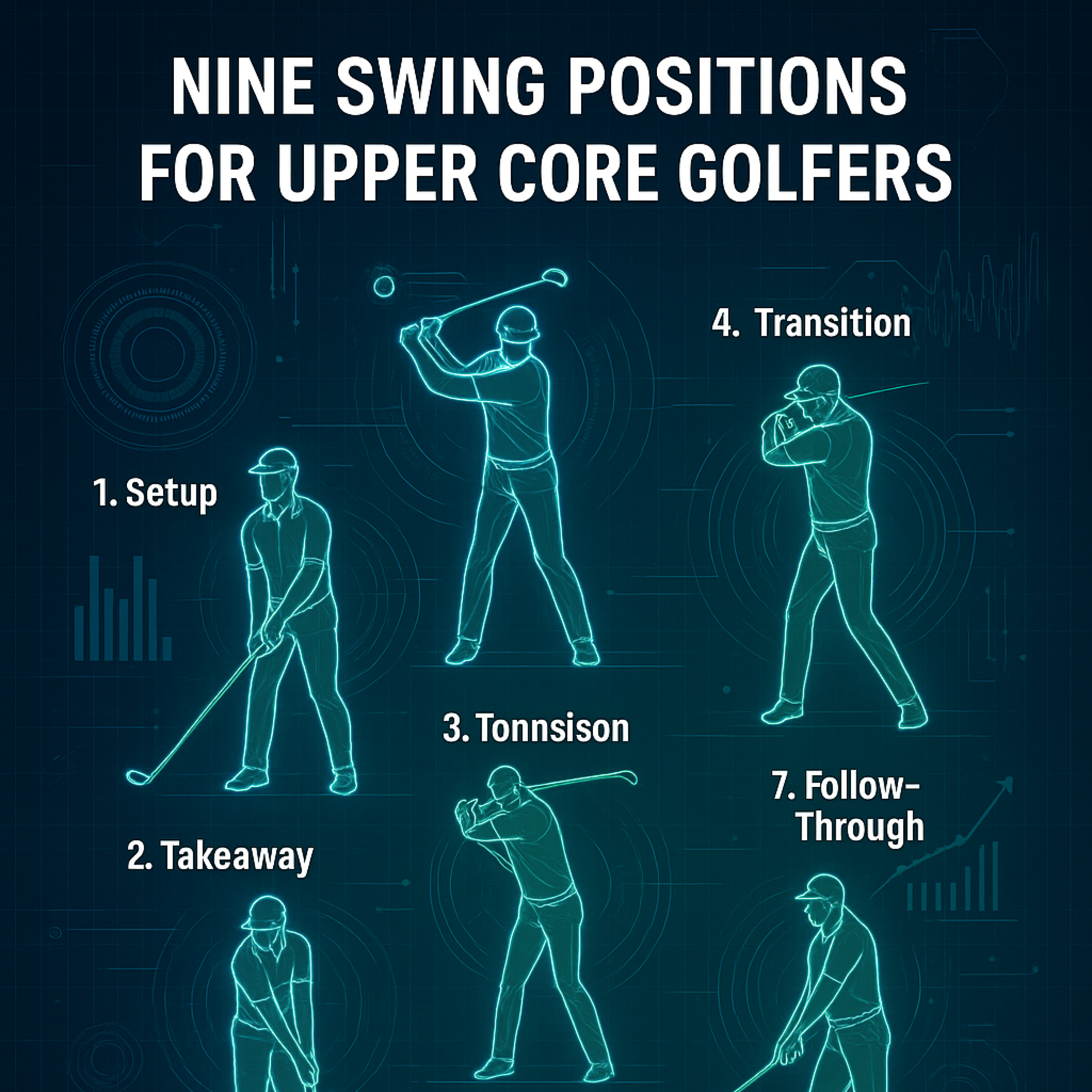
The podcast with Henrik Jentsch analyzes the biomechanics of the Upper Core Golfer, a player type defined by vertical movement patterns and upper-body dominance. Jentsch, Head of Golf Akademie 360° Powered by AI Golf Chat, explains the nine swing checkpoints (P1–P9), detailing how posture, sequencing, and rotation combine to create power and consistency.Core CharacteristicsUpper Core golfers differ from other core types through a tall setup, upright spine, minimal hip hinge, and reliance on a top-down kinetic sequence. Their motion is driven primarily by the shoulders and arms, with the lower body acting as a stabilizer rather than a power initiator.1. Setup (P1)The stance is balanced and narrow with light knee flex. Hands rest high and slightly forward, setting a steep swing plane. The lifted chin allows free shoulder rotation. This upright posture reflects their vertical power preference.2. Takeaway and Sequencing (P2–P3)The swing begins from the upper body—shoulders and arms move first while hips and knees stay quiet. The lower body resists sway, maintaining structure as the upper torso turns. The club tracks slightly outside the hands, keeping the shaft steep and setting up the classic vertical motion of this core type.3. Top of the Swing (P4)Width and leverage define this position. The hands rise high above the trail shoulder as the upper body coils against minimal hip turn, producing a strong X-Factor stretch (≈ 90° shoulder vs. 35° hip rotation). This creates stored energy for a steep, powerful downswing.4. Transition (P5)Unlike rotational or ground-driven players, the downswing is initiated by the torso and shoulders, not the hips. The hands drop vertically while maintaining wrist hinge; the clubshaft stays steep, and the trail elbow moves close to the ribcage. The lower body stays passive, stabilizing and supporting the descending motion. This top-down sequence promotes precision and limits lateral motion.5. Delivery and Impact (P6–P7)As the club approaches the ball, the movement remains compact and vertical. At impact (P7)—the “moment of truth”—Upper Core golfers display forward shaft lean, firm wrists, and a compressed strike. The trail arm extends through impact while the chest continues rotating left of target. The spine stays upright, emphasizing a descending blow and crisp contact that produces high spin and a piercing trajectory.6. Follow-Through and Finish (P8–P9)The finish position reflects the vertical energy that defines the entire motion. The body extends upward through impact into a tall, high finish, arms fully extended, club exiting steeply, and posture upright. The lead leg remains firm and braced, absorbing vertical force.SummaryThe Upper Core swing is a study in vertical leverage, upper-body control, and precision sequencing. Power is created through width, height, and stretch—not through deep rotation or ground push. For coaches and players, mastering these nine checkpoints provides a blueprint for building consistency, protecting the body from stress, and optimizing performance according to the natural biomechanics of the Upper Core golfer.📺 The Explainer: www.Golf247.eu

The podcast with Henrik Jentsch analyzes the biomechanics of the Upper Core Golfer, a player type defined by vertical movement patterns and upper-body dominance. Jentsch, Head of Golf Akademie 360° Powered by AI Golf Chat, explains the nine swing checkpoints (P1–P9), detailing how posture, sequencing, and rotation combine to create power and consistency.Core CharacteristicsUpper Core golfers differ from other core types through a tall setup, upright spine, minimal hip hinge, and reliance on a top-down kinetic sequence. Their motion is driven primarily by the shoulders and arms, with the lower body acting as a stabilizer rather than a power initiator.1. Setup (P1)The stance is balanced and narrow with light knee flex. Hands rest high and slightly forward, setting a steep swing plane. The lifted chin allows free shoulder rotation. This upright posture reflects their vertical power preference.2. Takeaway and Sequencing (P2–P3)The swing begins from the upper body—shoulders and arms move first while hips and knees stay quiet. The lower body resists sway, maintaining structure as the upper torso turns. The club tracks slightly outside the hands, keeping the shaft steep and setting up the classic vertical motion of this core type.3. Top of the Swing (P4)Width and leverage define this position. The hands rise high above the trail shoulder as the upper body coils against minimal hip turn, producing a strong X-Factor stretch (≈ 90° shoulder vs. 35° hip rotation). This creates stored energy for a steep, powerful downswing.4. Transition (P5)Unlike rotational or ground-driven players, the downswing is initiated by the torso and shoulders, not the hips. The hands drop vertically while maintaining wrist hinge; the clubshaft stays steep, and the trail elbow moves close to the ribcage. The lower body stays passive, stabilizing and supporting the descending motion. This top-down sequence promotes precision and limits lateral motion.5. Delivery and Impact (P6–P7)As the club approaches the ball, the movement remains compact and vertical. At impact (P7)—the “moment of truth”—Upper Core golfers display forward shaft lean, firm wrists, and a compressed strike. The trail arm extends through impact while the chest continues rotating left of target. The spine stays upright, emphasizing a descending blow and crisp contact that produces high spin and a piercing trajectory.6. Follow-Through and Finish (P8–P9)The finish position reflects the vertical energy that defines the entire motion. The body extends upward through impact into a tall, high finish, arms fully extended, club exiting steeply, and posture upright. The lead leg remains firm and braced, absorbing vertical force.SummaryThe Upper Core swing is a study in vertical leverage, upper-body control, and precision sequencing. Power is created through width, height, and stretch—not through deep rotation or ground push. For coaches and players, mastering these nine checkpoints provides a blueprint for building consistency, protecting the body from stress, and optimizing performance according to the natural biomechanics of the Upper Core golfer.📺 The Explainer: www.Golf247.eu

NOW PLAYING

#386 Nine Swing Positions for Upper Core Golfers

0:00 11:52

No transcript for this episode yet

We transcribe on demand. Request one and we'll notify you when it's ready — usually under 10 minutes.

Frequently Asked Questions

How long is this episode of Golf 247.eu: The Global Platform for Innovative Technologies and Teaching Concepts.?

This episode is 11 minutes long.

When was this Golf 247.eu: The Global Platform for Innovative Technologies and Teaching Concepts. episode published?

This episode was published on October 24, 2025.

What is this episode about?

The podcast with Henrik Jentsch analyzes the biomechanics of the Upper Core Golfer, a player type defined by vertical movement patterns and upper-body dominance. Jentsch, Head of Golf Akademie 360° Powered by AI Golf Chat, explains the nine swing...

Can I download this Golf 247.eu: The Global Platform for Innovative Technologies and Teaching Concepts. episode?

Yes, you can download this episode by clicking the download button on the episode player, or subscribe to the podcast in your preferred podcast app for automatic downloads.
URL copied to clipboard!