
EPISODE · Dec 30, 2021 · 40 MIN
39: Beth Thielen: LOVE AND FREEDOM: Our Most Imaginative Activist Artists Are Locked in Prison
from ART IS CHANGE: Strategies & Skills for Activist Artists & Cultural Organizers
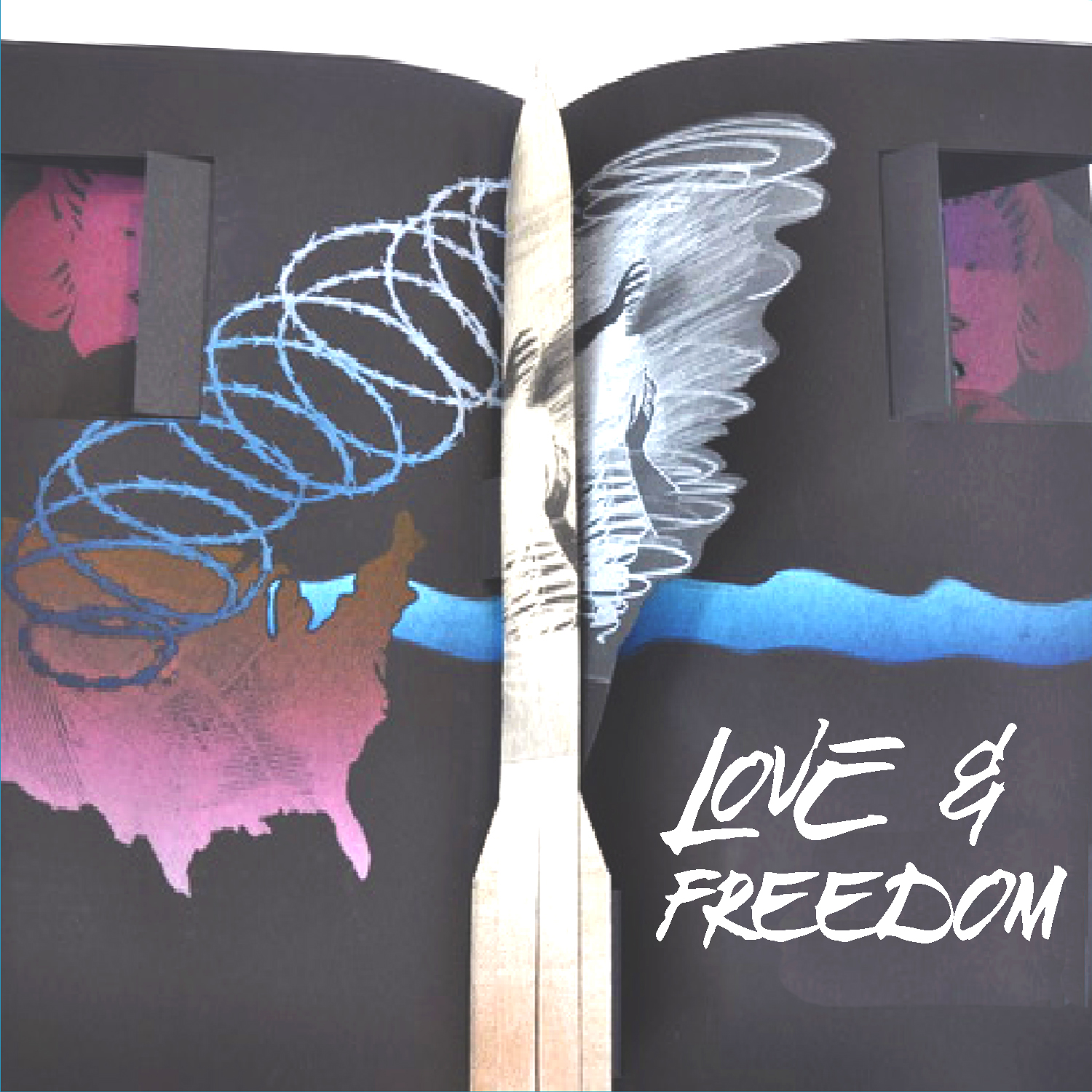
Episode 4: Beth Thielen - Love and Freedom Bookmakers at San Quentin. Not surprising, given "Q's" clientele. But no, we're talking about real books with real pages that are awe-inspiring works of art. Transcript Needless to say, this year has been both odd and extraordinary. Odd? --- Well, Pick your poison. Extraordinary? --- Because we spent the year having amazing conversations with dozens of creative change agents who are kicking ass making a real difference in the upside-down world we live in. These conversations have helped us at the Center for the Study of Art & Community manage the lurking shadows and have sparked some new ideas and even optimism. We're excited to be starting our second season on February 2, but in the meantime we thought it might be nice to revisit some of our most popular past episodes. First up is Beth Thielen, a book maker who works across the by here from us at San Quentin. Actually she's not taking bets, but she and her students at "Q" are making a lot of awesome books. Have a listen.Bill Cleveland: At the time, what came to be known as the classic or a version 1.0 was considered a modern marvel. After a short wait for what was called booting up, and a few clicks, the text seemed to appear magically on a ten by twelve screens set into a plastic computer case. Eventually, the white on black text gave way to a gloriously glowing black on white. Moving through the text was accomplished using a small, palm-sized oblong disk that was endearingly called a mouse. Unfortunately, the computer was quite heavy and wired, so reading was typically a one person, one stationary screen affair. Then, the "two point oh" model with names like Kindle and Nook changed everything. It still had a screen and needed juice, but the wires were gone, and it was small and thin and light enough to take anywhere without a hassle. Going through text with the push of a button or flick of a finger on the screen made reading almost fun. There were a few downsides, though. After you paid for the machine, you still had to fork over for whatever it was you wanted to read. The thing also needed charging, and eventually, they would quit working from being dropped or just wearing out, which meant you lost whatever you were reading, which wasn't that big a deal because you actually never really owned it. But today, with the advent of the extraordinary Codex 3.0, also known as, "a book," all that came before seems quaint. This new text delivery system has so taken the world by storm, seven in ten humans now consider reading their number one favorite personal activity. While retaining the handiness and readability of its predecessors, this new model is both less expensive and far more versatile. This is due, in part, to the fact that after you purchase it, you actually own it, which means these books can be gifted or shared or even sold. There is speculation that eventually books will be collected in repositories that some are already calling libraries and could actually increase in value over time.But the most delightful features of these clever little packages of text are embodied in their design. Now, depending on their size, which is varied, they can fit neatly in your hands or lap for easy reading. They're ingenious cover, and page feature allows you to open, feel, and manipulate the enclosed paper sheets in sequence from front to back, the reverse, or even randomly. This is called browsing. If you want to remember where you left off, you can use what is called a bookmark or even bend the corner of those little pages. It's your choice. Another improvement is its sturdiness. You can drop it, sit on it, even step on it. And it will still function like it was new. And best of all, there are no batteries, no wires, and no moving parts. Finally, each book comes with a multigenerational lifetime guarantee that stipulates that with reasonable care and handling, each book will be fully functional for hundreds, if not thousands of years. Bill Cleveland: Excerpted from the "Modern Marvels of the Post Pandemian Epoch" by William T. William, 2047 A.D., also referred to as 26 P. P. E. Bill Cleveland: From the Center for the Study of Art and Community, this is Change the Story Change the World. I'm Bill Cleveland.Bill Cleveland: Long before the advent of Books, Inc., Amazon, and the Kindle, the making of books was considered a vital and essential art form. Over many millennia, the connections forged between humans and their books were seen as both fundamental to human progress, and as sacred and dynamic relationships. Given this, if I were to add yet one more evolved stage to the oddly imagined Future Books saga I just shared, it would be embodied in both this venerable history and in artists like Beth Thielen. Beth is a contemporary book artist who stands with one foot in the monasteries and studios of her revered bookmaking predecessors and another in the altered universe that is only now being shaped in the spectral shadow of our global pandemic. Beth describes her life pursuit as asking questions and making connections. Her work combines the narrative and tactile and sculptural with a passion for the transforming affirmation intrinsic to the act of creation. This passion has fueled the making of hundreds of extraordinarily beautiful, inspiring, and provocative works of art. These books of every imaginable shape, size, and material have been crafted by Beth and hundreds of bookmakers, who she has mentored over her long career. This community of artists and their stories have been nurtured and fed and celebrated in prisons, group homes, hospitals, senior centers, and schools all across America. I first met Beth in one of those other places during my time running the California Arts in Corrections program. She said she wasn't sure what to expect, but after her first visit to the California Institution for Women in 1985, she knew she had come to the right place. She's been showing up at those right places ever since.Part One: Love and FreedomBill Cleveland So let me begin by saying, first of all, thank you. Thank you for agreeing to do this. I'm looking forward to learning more about your path and your journey. Let's begin by saying if someone were to ask you, "what is it you do, Beth," what was your answer to that question? What is your work in the world? Beth Thielen: I would say that I am an artist who works with incarcerated and troubled communities, and that's where my work comes from. That's the kind of work that comes out of me. It's the kind of questions that form in my work, such as the question I shared with you the other day that I had when I first started with Arts and corrections in California was one day I was at my drawing table after teaching a week in California Institution for Women, and a question formed in my head, which was what relationship does love have to freedom? And I had just seen a mug shot of a woman in prison from back when San Quentin was a private prison at the turn of the century, and she was in for bigamy. It said that her age was 27, but she looked easily 57. She looked so hurt, and haggard and that form the question, what happened here? What's the relationship between love and freedom? Because boy, something happened here.Bill Cleveland: So you have a practice that is social in nature, in that you go into institutions and you engage with a wide variety of people, some of whom have some experience making things, others who don't. You also have a studio practice that you talk about the relationship between the two.Beth Thielen: Yeah, well, you know, landscape painters need to be in a landscape. I'm of an interior landscape. I'm looking at the story of our country in a way through my own vision of the landscape. I had a drawing teacher when I was very young at the Young Artist Studios in the Chicago Art Institute, and she would have you go into a room to draw where the mom was. But you were there only to look, and then she would make you go into another room to actually do the drawing, so you would have to capture it in your head and then move into the other room to do the drawing. So, in a way, I do that I walk into prisons, and of course, you're not allowed to bring a camera, but I know how to catch it in my head. Bill Cleveland: So, one of the things that happens when you enter into institutions and you engage the people who live and work there, is that you inevitably come into contact with the stories they represent. Could you talk about the relationship between the story field you encounter in these extraordinarily complex places and what happens when you make work?Beth Thielen: Well, I'm often moved by what my students say to me. I did a Pop-Up book where each page was a sentence spoken in prison to me, and I just would write down the sentence and then have there's pop-up book image of that particular sentence, and one of them was simply this place change issue was what a woman said to me. It was such a loaded sentence. Her sentence, you know, that it conveyed and made the power of the image happen. So, when I'm there as a visual artist, I'm using seeing and all the ways that one sees pulling what's happening before me and to a translatable image that I can then share in a piece of artwork.Bill Cleveland: Do you think of yourself as a witness?Beth Thielen: Yes., and as a
Embed this episode
What this episode covers
Bookmakers at San Quentin. Not surprising, given "Q's" clientele. But no, we're talking about real books with real pages that are awe-inspiring works of art. In this weeks episode we talk to renowned book artist Beth Thielen, about her work in prisons and other unlikely places.
Ready to play
39: Beth Thielen: LOVE AND FREEDOM: Our Most Imaginative Activist Artists Are Locked in Prison
No transcript for this episode yet
Similar Episodes
No similar episodes found.
Similar Podcasts
No similar podcasts found.