
EPISODE · Nov 5, 2025 · 15 MIN
#398 A Complete Guide to Reading Golf Greens
from Golf 247.eu: The Global Platform for Innovative Technologies and Teaching Concepts. · host Golf247.eu
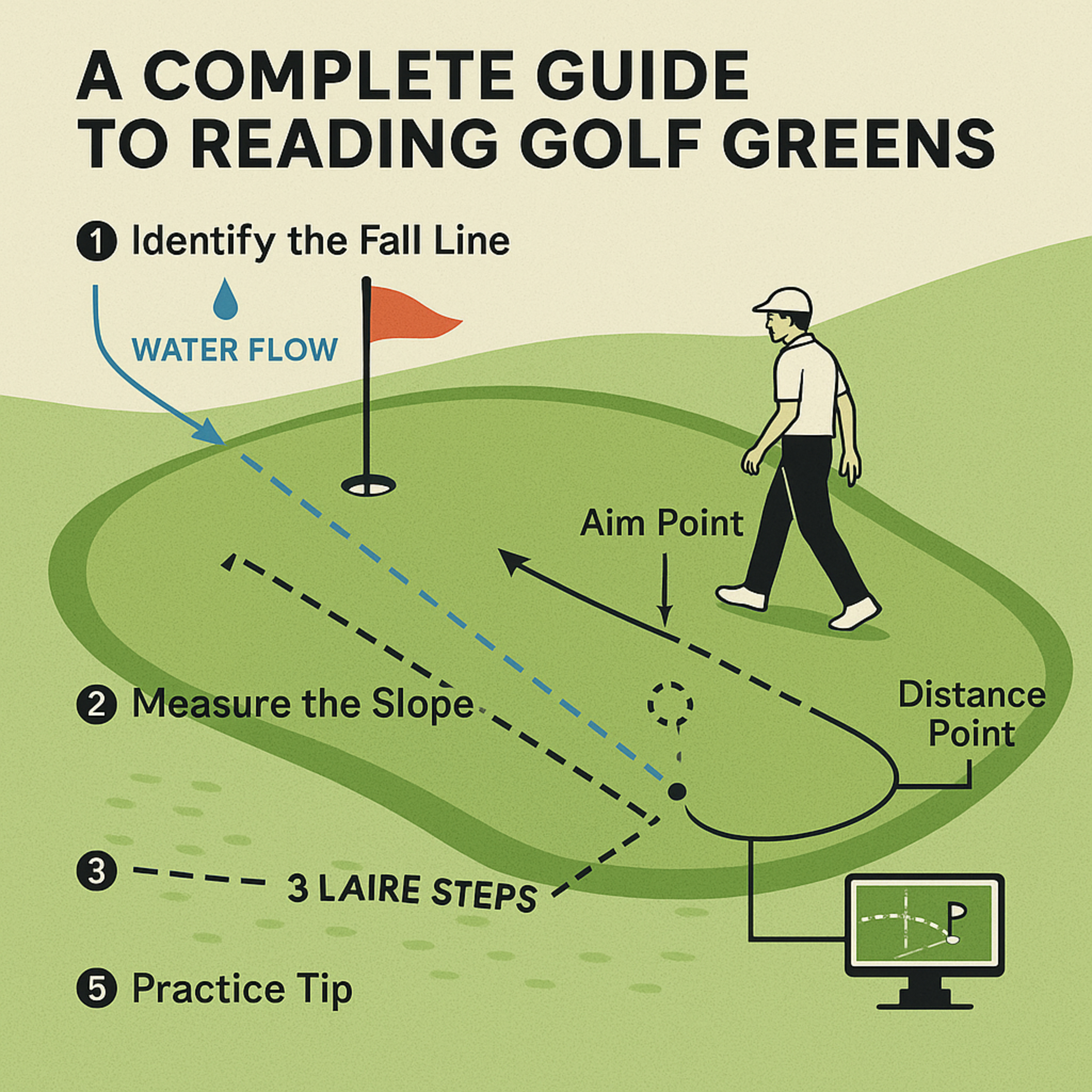
Reading greens is a science of observation, physics, and intuition. The process begins before stepping onto the surface: as you walk toward the green, study the surrounding landscape. Visualize where water would flow in heavy rain—this shows the main slope direction. Golf architects design greens to drain away from high-traffic paths, so the true slope often lies toward less-used edges.1. Identify the Fall LineOnce on the green, locate the fall line—the steepest downhill path from the hole. It defines how every putt will break. Imagine pouring water into the cup; the direction it would trickle away reveals the fall line. Putts from the right of it break left, those from the left break right, and any putt directly along the fall line (uphill or downhill) is straight. Without knowing it, reading the break correctly is almost impossible.2. Measure the Slope (Steepness)After identifying the fall line, estimate how steep it is. Walk three large steps (about 2.54 m / 100 in) downhill from the hole along this line. Visualize how many inches higher the hole is compared with your position. Each inch of height difference equals roughly 1 % slope. For example, a 2.5-inch rise means a 2.5 % slope. The steeper the slope, the more the ball will break.3. Aim Point – Governing the LineThe Aim Point is the exact spot to start your putt so gravity brings the ball back toward the hole. Once you know direction and slope, use a 90-degree visualization to choose this point. It isolates “where to aim” and allows a consistent start line that compensates for the slope’s curvature.4. Distance Point – Governing the PaceThe Distance Point manages speed control. On uphill putts, set it slightly past the hole to maintain energy; on downhill putts, aim for a point short of the hole to slow the roll. This separation of line (Aim Point) and pace (Distance Point) helps achieve precise control.5. Working TogetherAim Point and Distance Point operate like trajectory and thrust: one defines direction, the other ensures the right momentum. Using both provides complete control of break and speed—essential for holing more putts.AnalogyReading a green is like mapping a hillside stream. First, you find the river’s path (the fall line). Then you gauge how steep it drops (the slope percentage). Only by knowing both can you predict the current’s flow—and roll the ball on the perfect line with the perfect pace.Practice TipTrain these steps systematically and use tools such as the Puttalyze App to measure slopes, visualize Aim Points, and refine feedback for every green-reading session.📺 The Explainerwww.Golf247.eu
Embed this episode
NOW PLAYING
#398 A Complete Guide to Reading Golf Greens
No transcript for this episode yet
Similar Episodes
No similar episodes found.
Similar Podcasts
No similar podcasts found.