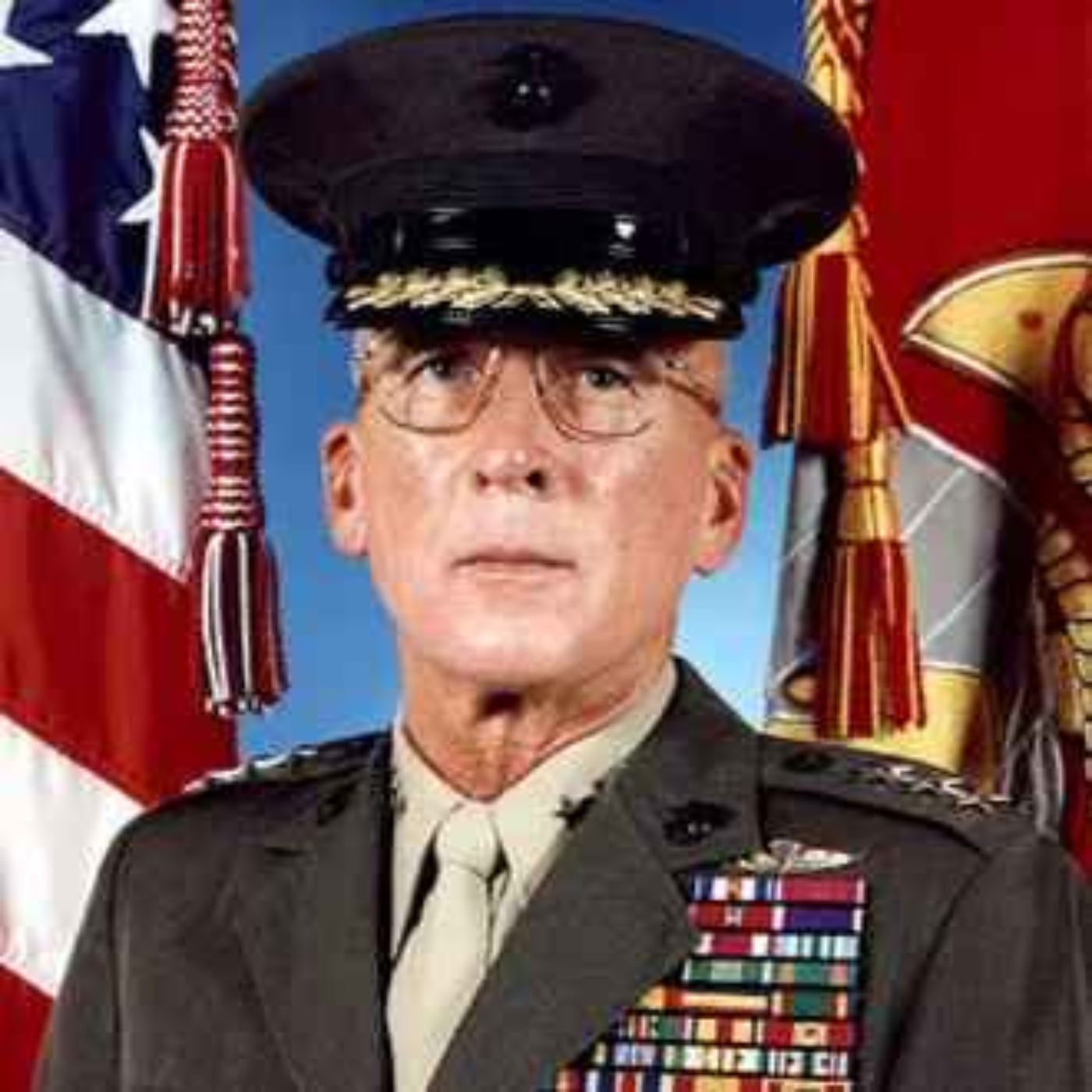
398: Lt. General Paul Van Riper USMC, part 2: A Marine Versus Coffee episode artwork

EPISODE · Oct 22, 2020 · 44 MIN

398: Lt. General Paul Van Riper USMC, part 2: A Marine Versus Coffee

from This Sustainable Life

Rip committed to avoid waste through coffee, which he describes as harder than he thought.Wait a minute. A three-star Marine Corps general is describing not using coffee cartridges as hard? In the Millennium Challenge we talked about in our first conversation he led a team taking on the best of the entire US war machine and won. How hard can coffee be?That's the point of this podcast. Personal change doesn't depend on calories burned, monetary costs, and so on. It depends on our hearts and minds, which depend on our stories, beliefs, images, and so on. It's as easy or hard as we believe.Another main point of this podcast is to empower you to change our beliefs, stories, and images. While a belief may make something as materially simple as changing how you make coffee seem impossibly difficult, recognizing that our belief is the issue puts resolving theproblem under our control. We don't have to accept that belief. We can change it.That's why I value Viktor Frankl and people like him so much. He turned living in Auschwitz into including experiencing love and bliss. What he can do, we can.Rip shares how he saw the situation before starting, how it ended up harder than expected, then he got to work on himself and his views, and you'll hear the results, as I heard more positive than he would have predicted.Systemic change begins with personal transformation. If you think the change will end with a few coffee cartridges, you're missing how systemic change happens. Among other things, now there's a Marine Corps three-star General who concerns himself with household waste and sees it as something to enjoy and look forward to. He presents it as decreasing feelings of guilt, taking responsibility, enjoying results. You'll hear that talking about responsibility and personal growth leads naturally to personal and professional growth at the highest levels of the military, about policy, strategy, campaigns, operations, and tactics.He shared preparing reading Von Clausewitz's On War. I almost can't believe the wisdom and experience I got to hear. This conversation helped prompt me reading the strategy works he described as well as valuing writing about sustainability. Beyond my blog, I'm working on my book and seeing how it reveals the core, as he described. I remember watching a video biography of President John Adams. After he was President a scene showing him fixing shingles on his roof. I thought of how human we all are, whatever our status, whatever importance we give ourselves. As JFK said, in the end we are all mortal. We share the same air, land, and water.We can view changes as obligations, chores, sacrifice, and burden---hardships for us. Focusing inwardly on ourselves characterizes depression. By contrast, we can view stewardship of nature as connecting us to others. Little improves how we feel more than acting in service of others. That's leadership. Even if we want to get ahead and think we have to do for ourselves, acting in service of others responsibly is leadership. If I want to get ahead it works. If I want more happiness itworks. If you prefer seeing stewardship as a burden keeping you from your career, that's your choice.Rip shared otherwise, as I heard it. Hosted on Acast. See acast.com/privacy for more information.

Rip committed to avoid waste through coffee, which he describes as harder than he thought.Wait a minute. A three-star Marine Corps general is describing not using coffee cartridges as hard? In the Millennium Challenge we talked about in our first conversation he led a team taking on the best of the entire US war machine and won. How hard can coffee be?That's the point of this podcast. Personal change doesn't depend on calories burned, monetary costs, and so on. It depends on our hearts and minds, which depend on our stories, beliefs, images, and so on. It's as easy or hard as we believe.Another main point of this podcast is to empower you to change our beliefs, stories, and images. While a belief may make something as materially simple as changing how you make coffee seem impossibly difficult, recognizing that our belief is the issue puts resolving theproblem under our control. We don't have to accept that belief. We can change it.That's why I value Viktor Frankl and people like him so much. He turned living in Auschwitz into including experiencing love and bliss. What he can do, we can.Rip shares how he saw the situation before starting, how it ended up harder than expected, then he got to work on himself and his views, and you'll hear the results, as I heard more positive than he would have predicted.Systemic change begins with personal transformation. If you think the change will end with a few coffee cartridges, you're missing how systemic change happens. Among other things, now there's a Marine Corps three-star General who concerns himself with household waste and sees it as something to enjoy and look forward to. He presents it as decreasing feelings of guilt, taking responsibility, enjoying results. You'll hear that talking about responsibility and personal growth leads naturally to personal and professional growth at the highest levels of the military, about policy, strategy, campaigns, operations, and tactics.He shared preparing reading Von Clausewitz's On War. I almost can't believe the wisdom and experience I got to hear. This conversation helped prompt me reading the strategy works he described as well as valuing writing about sustainability. Beyond my blog, I'm working on my book and seeing how it reveals the core, as he described. I remember watching a video biography of President John Adams. After he was President a scene showing him fixing shingles on his roof. I thought of how human we all are, whatever our status, whatever importance we give ourselves. As JFK said, in the end we are all mortal. We share the same air, land, and water.We can view changes as obligations, chores, sacrifice, and burden---hardships for us. Focusing inwardly on ourselves characterizes depression. By contrast, we can view stewardship of nature as connecting us to others. Little improves how we feel more than acting in service of others. That's leadership. Even if we want to get ahead and think we have to do for ourselves, acting in service of others responsibly is leadership. If I want to get ahead it works. If I want more happiness itworks. If you prefer seeing stewardship as a burden keeping you from your career, that's your choice.Rip shared otherwise, as I heard it. Hosted on Acast. See acast.com/privacy for more information.

NOW PLAYING

398: Lt. General Paul Van Riper USMC, part 2: A Marine Versus Coffee

0:00 44:53

No transcript for this episode yet

We transcribe on demand. Request one and we'll notify you when it's ready — usually under 10 minutes.

Big Old Life: Heather Blackbird interviews people on planet earth. Heather Blackbird loves asking questions. This podcast is a learning experience. Join me, Heather Blackbird, as I talk to people about their lives. Frequency of new episodes is a little all over the place and I'm learning as I go. Big Old Life is a small way of talking about the vastness of life, one person at a time. If you are reading this or found this podcast it's probably because someone you know gave you a link to it. :) Explicit Tales Of A Superstar DJ The Insomniac Spun seemingly out of nowhere from her complacent life in the corporate world, turned seemingly overnight from 16-Hour shift work and into the life of a literally starving artist and working musician, The Protagonist navigates her supposed rise to fame and superstardom on a journey through spiritual awakening, coming-of-age, and intimate self-realization--guided by an omnipresent force and equipped with the power of love, magic, and music. {Enter The Multiverse.} [The Festival Project] The Festival Project, Inc.™ is a multidimensional multimedia platform which encompasses exploratory and artistic social personifications and expressions on cosmic theory, spirituality, growth, health & wellness, philosophy and theoretic dynamics in entertainment such as music, design, film, television, radio, dance and festival culture, art, fashion, literature, and science. The Festival Project™ and its subsidiary Non-Profit, The Collective Complex © aims to challenge modern artistic and philosop Explicit The Sacred +Profane Podcast nephtaragrace The Sacred + Profane Podcast is a provocative conversation dedicated to cementing a better future for all. We specialize in unpacking the nuances of what is considered sacred and profane, particularly focusing on sex, death, and all that pertains to the circle of life. Our aim in focusing on such ”taboo” subject matter is to demystify what is unconscious, bring to light what has been known for centuries as ”the occult,” and empower the rapid transformation that is occurring on the Planet. Explicit Northern Sass and Southern Class Tay and Ani Come sit in on girl talk with Tay and Ani as we discuss life in Texas, girl math, food, wine and roasting each other. Explicit

Frequently Asked Questions

How long is this episode of This Sustainable Life?

This episode is 44 minutes long.

When was this This Sustainable Life episode published?

This episode was published on October 22, 2020.

What is this episode about?

Rip committed to avoid waste through coffee, which he describes as harder than he thought.Wait a minute. A three-star Marine Corps general is describing not using coffee cartridges as hard? In the Millennium Challenge we talked about in our first...

Can I download this This Sustainable Life episode?

Yes, you can download this episode by clicking the download button on the episode player, or subscribe to the podcast in your preferred podcast app for automatic downloads.
URL copied to clipboard!