
EPISODE · Nov 27, 2019 · 31 MIN
40: Around the World on Foot – Part 3 (1894-1899)
from Ultrarunning History · host Davy Crockett
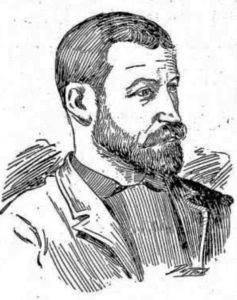
By Davy Crockett During the very late 1800s, people from various countries started to attempt to walk around the world for attention, money, and fame. In Part 2 of this series on walking around the world, I shared many stories of “fakes” who took advantage of the American public by traveling around the Midwest United States claiming to be on treks around the world, but making little or no effort to actually leave the States. However, others at that time made more sincere attempts and successfully did extended walking on multiple continents, accompanied by newspaper stories confirming their presence in different countries. Several walkers were well-educated and certainly not the typical tramps and drunks that were highlighted in Part 2. Some of the individuals covered in this article became famous as explorers and were given credit for conducting valid walks around the world. But did they actually do it? What was their motivation for spending months and years in this activity? What did they do with their lives after their walk? Here are five intriguing stories of individuals who became very famous. They were a Russian, a Frenchman, a Greek. and two Americans. Konstantin Rengarten – Russian walker - 1894 Konstantin Konstantinovich Rengarten (1864-1906) was born in the Baltics in the Minsk province (today in Belarus). His father was a district overseer of a tax department. He became a ship boy and was an athlete in high school. He was fond of traveling and at an early age went to Western Europe, Asia, and Africa. He longed to walk around the world and spent ten years preparing for the journey. Rengarten started a walk around the world west to east from Riga, Russia (capital of present-day Latvia) on August 15, 1894. He was highly educated, rich, well-funded, and represented ten German newspapers and magazines, five that were published in Russia including the St. Petersburg Herold. He would regularly write columns to be published. He would also ship back home "all manner of specimens, rare and interesting, that are duly arranged and classified by his wife, who is an ardent scientific student." He spoke German, French, Russian, and a little English. He expected to walk for three years. Nikolai Greinert volunteered to go with him. Unlike most of the other globetrotters of the time, Rengarten did not travel due to a wager and paid his own way instead of expecting locals to always support him. When they crossed through Ukraine, the rainy season slowed them down terribly. Greinert gave up and returned to Riga. Rengarten continued alone. In his backpack he carried climbing equipment, woolen underwear, a camel-wrap, a gun, a large hunting knife, a cooking pot, a camera, and a small supply of food. More than a year later, on October 9, 1895, he arrived at Tashkent in present-day Ubekistan, about 4,000 miles to the east. His pace was about 10 miles per day average. He had taken a route through South Russia, to the Black Sea, across the Caucasus Mountains (in Georgia), across Persia (Iran). At Armenia, the Kurds believed that he was a great physician. The lame, halt and blind flocked to him for treatment. “Rengarten wears only woolen clothes, and for the most part adopts the foot-wear used in the countries through which he passes. During the whole journey he has not once had to call in the advice of a doctor, but he has lost a good deal of weight." During Rengarten’s walk through Persia (Iran), he observed terrible conditions and he found their customs abominable. He said, “all women and girls from 10 years up are absolute slaves, while the male part are lazy, filthy, vile barbarians. The Persian prisons are veritable hells, where the government takes no responsibility except to incarcerate the victims.” His pace through Persia was faster, where he walked 1,100 miles in 70 days, 110 miles per week. He had to spend several nights sleeping in sheds and stables.
Embed this episode
What this episode covers
During the very late 1800s, people from various countries started to attempt to walk around the world for attention, money, and fame. In Part 2 of this series on walking around the world, I shared several stories of several “fakes” who took advantage of the American public by traveling around the midwest United States claiming to be on treks around the world, but making little or no effort to actually leave the States. However, others at that time made more sincere attempts and successfully did extended walking on multiple continents, accompanied by newspaper stories confirming their presence in different countries. Several walkers were well-educated and certainly not the typical tramps and drunks that were highlighted in Part 2. Some of the individuals covered in this article became famous as explorers and were given credit for conducting valid walks around the world. But did they actually do it? What was their motivation for spending months and years in this activity? What did they do with their lives after their walk? Here are five intriguing stories of individuals who became very famous. They were a Russian, a Frenchman, a Greek. and two Americans.
NOW PLAYING
40: Around the World on Foot – Part 3 (1894-1899)
No transcript for this episode yet
Similar Episodes
No similar episodes found.
Similar Podcasts
No similar podcasts found.