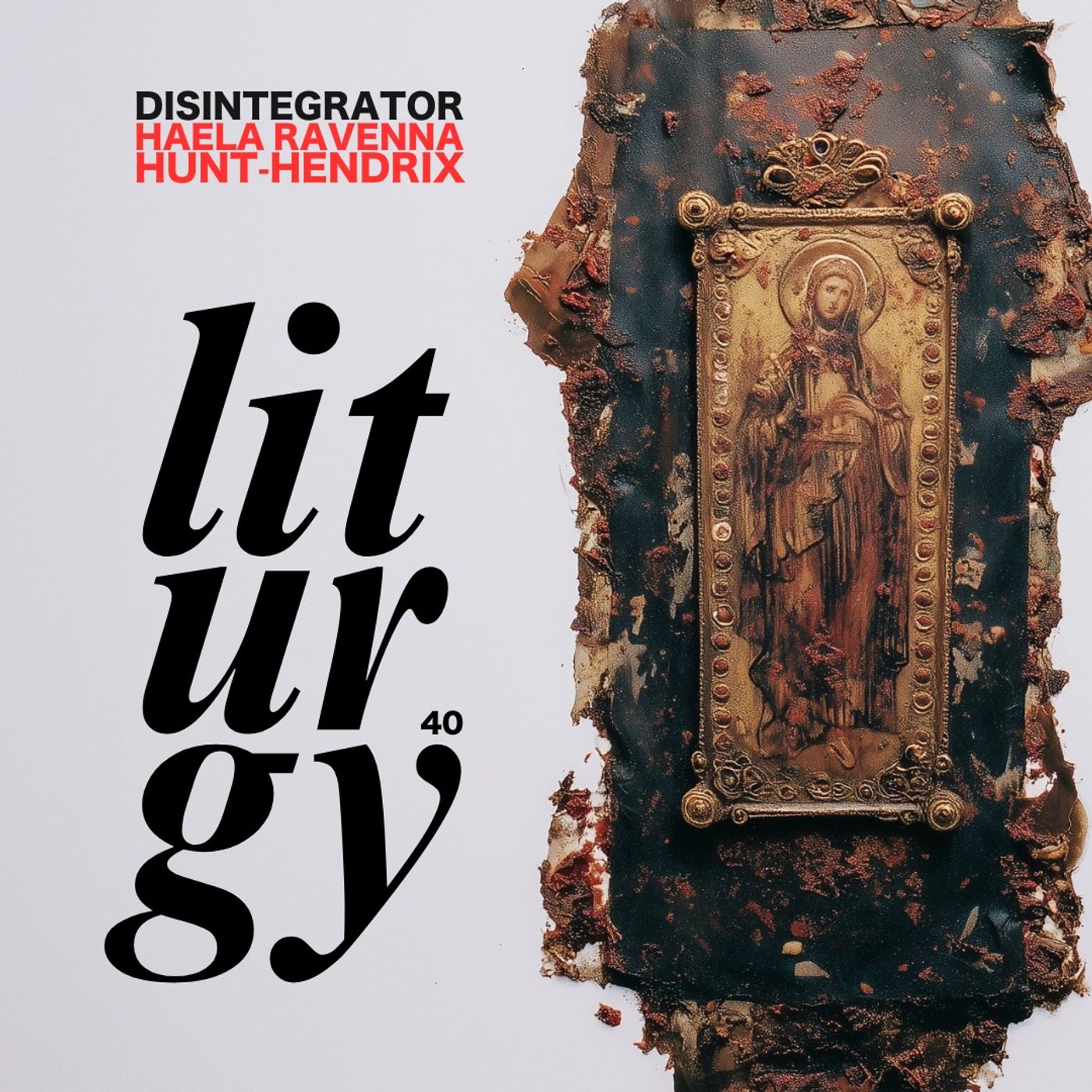
40. Liturgy (w/ Haela Ravenna Hunt-Hendrix) episode artwork

EPISODE · Dec 9, 2025 · 54 MIN

40. Liturgy (w/ Haela Ravenna Hunt-Hendrix)

from Disintegrator · host Roberto Alonso Trillo, Marek Poliks, and Helena McFadzean

We're joined by Hunter Hunt-Hendrix, composer, philosopher, and force behind Liturgy, whose concept of transcendental black metal has redrawn the boundaries between underground music and systematic thought. Her work operates in parallel registers: an experimental music practice that stands on its own terms, and a body of theory moving through theology, psychoanalysis, and philosophy. This episode goes deep into Hunter's provocation that the Byzantine tradition of Christianity (the Eastern lineage that lasted another thousand years after the Latin West began its trajectory toward secularism, science, and industry) might hold resources for navigating the current moment of structural collapse. We discuss the difference between the transcendental (conditions of possibility, historicized horizons, Hegelian self-relating negativity) and the transcendent (a higher realm of intelligibility that is actually, ontically, here), and why critical theory's allergy to the latter might be more ideological than rational. We also get into Hunter's framework for practice: tetraperichoresis, a fourfold structure involving integration (merging ancient and contemporary materials), coalescence (putting philosophy, music, and drama into positive feedback), irrigation (moving between institutional worlds and smashing them against each other), and catalysis (the messianic wager that everything you do could be hastening the Kingdom). References:Hunt-Hendrix, Hunter. "Byzantine Accelerationism: Towards a Universal Orthodox Christianity." Šum Journal #22 (2024).Hunt-Hendrix, Hunter. "Transcendental Black Metal: A Vision of Apocalyptic Humanism." Hideous Gnosis: Black Metal Theory Symposium I (2010).Liturgy, Origin of the Alimonies (2020) — the cosmogonical opera-album.Hunter Hunt-Hendrix's Substack — ongoing philosophical writing and the System of Transcendental Qabala.Katerina Kolozova, Cut of the Real: Subjectivity in Poststructuralist Philosophy (Columbia University Press, 2014).The Seven Ecumenical Councils of Eastern Christianity, particularly the Seventh Council on icon veneration (787 CE) and John of Damascus's theological defense.Maximus the Confessor's Ambigua — discussed in relation to eschatology and the idea that "true humanism has never been tried."Lacan's graph of desire — discussed in relation to masculine/feminine subject positions.The CCRU and chaos magic traditions — referenced in relation to esoteric practice and Nick Land.Sergei Bulgakov's Sophiology and the conception of the divine feminine.

We're joined by Hunter Hunt-Hendrix, composer, philosopher, and force behind Liturgy, whose concept of transcendental black metal has redrawn the boundaries between underground music and systematic thought. Her work operates in parallel registers: an experimental music practice that stands on its own terms, and a body of theory moving through theology, psychoanalysis, and philosophy. This episode goes deep into Hunter's provocation that the Byzantine tradition of Christianity (the Eastern lineage that lasted another thousand years after the Latin West began its trajectory toward secularism, science, and industry) might hold resources for navigating the current moment of structural collapse. We discuss the difference between the transcendental (conditions of possibility, historicized horizons, Hegelian self-relating negativity) and the transcendent (a higher realm of intelligibility that is actually, ontically, here), and why critical theory's allergy to the latter might be more ideological than rational. We also get into Hunter's framework for practice: tetraperichoresis, a fourfold structure involving integration (merging ancient and contemporary materials), coalescence (putting philosophy, music, and drama into positive feedback), irrigation (moving between institutional worlds and smashing them against each other), and catalysis (the messianic wager that everything you do could be hastening the Kingdom). References:Hunt-Hendrix, Hunter. "Byzantine Accelerationism: Towards a Universal Orthodox Christianity." Šum Journal #22 (2024).Hunt-Hendrix, Hunter. "Transcendental Black Metal: A Vision of Apocalyptic Humanism." Hideous Gnosis: Black Metal Theory Symposium I (2010).Liturgy, Origin of the Alimonies (2020) — the cosmogonical opera-album.Hunter Hunt-Hendrix's Substack — ongoing philosophical writing and the System of Transcendental Qabala.Katerina Kolozova, Cut of the Real: Subjectivity in Poststructuralist Philosophy (Columbia University Press, 2014).The Seven Ecumenical Councils of Eastern Christianity, particularly the Seventh Council on icon veneration (787 CE) and John of Damascus's theological defense.Maximus the Confessor's Ambigua — discussed in relation to eschatology and the idea that "true humanism has never been tried."Lacan's graph of desire — discussed in relation to masculine/feminine subject positions.The CCRU and chaos magic traditions — referenced in relation to esoteric practice and Nick Land.Sergei Bulgakov's Sophiology and the conception of the divine feminine.

NOW PLAYING

40. Liturgy (w/ Haela Ravenna Hunt-Hendrix)

0:00 54:31

No transcript for this episode yet

We transcribe on demand. Request one and we'll notify you when it's ready — usually under 10 minutes.

No similar episodes found.

No similar podcasts found.

Frequently Asked Questions

How long is this episode of Disintegrator?

This episode is 54 minutes long.

When was this Disintegrator episode published?

This episode was published on December 9, 2025.

What is this episode about?

We're joined by Hunter Hunt-Hendrix, composer, philosopher, and force behind Liturgy, whose concept of transcendental black metal has redrawn the boundaries between underground music and systematic thought. Her work operates in parallel registers:...

Can I download this Disintegrator episode?

Yes, you can download this episode by clicking the download button on the episode player, or subscribe to the podcast in your preferred podcast app for automatic downloads.
URL copied to clipboard!