
EPISODE · Apr 13, 2023 · 21 MIN
41 – The Evolution of Venture Capital – 1 of 2
from Tech Deciphered
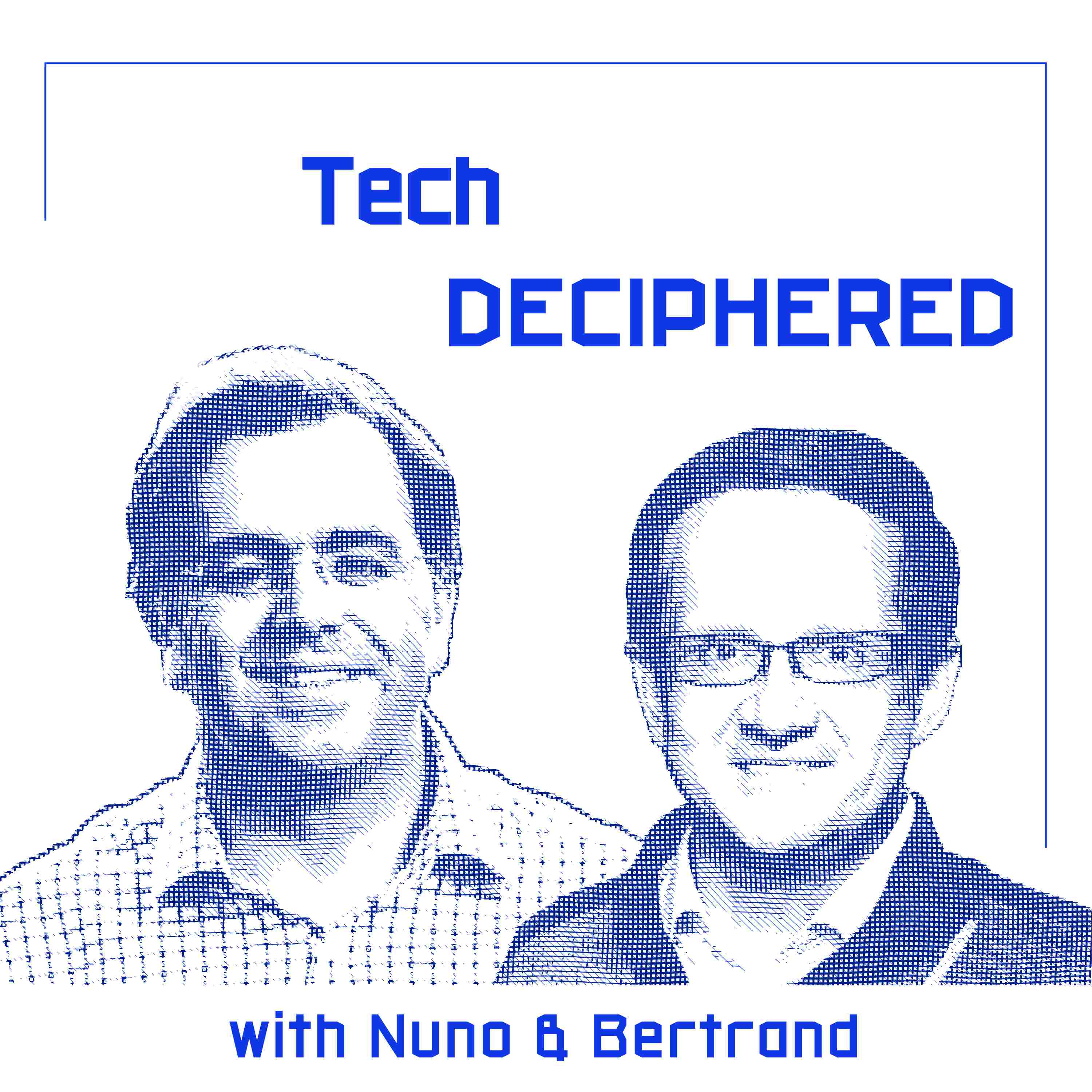
In this episode, we will go in-depth into the evolution of Venture Capital, including its History, the business model, process and operating model, and what its future holds. Navigation: Intro (01:34) Section 1: History of Venture Capital (01:59) Section 2: The Business of VC (15:27) Conclusion (19:54) Our co-hosts: Bertrand Schmitt, Entrepreneur in Residence at Red River West, co-founder of App Annie / Data.ai, business angel, advisor to startups and VC funds, @bschmitt Nuno Goncalves Pedro, Investor, Managing Partner, Founder at Chamaeleon, @ngpedro Our show: Tech DECIPHERED brings you the Entrepreneur and Investor views on Big Tech, VC and Start-up news, opinion pieces and research. We decipher their meaning, and add inside knowledge and context. Being nerds, we also discuss the latest gadgets and pop culture news Subscribe To Our Podcast Intro (01:34) Nuno Goncalves Pedro Welcome to Episode 41 of Tech DECIPHERED. In this episode, we will talk about the evolution of venture capital. We will start it with its history. We will discuss the business of venture capital, what is it all about, and we will go into the process of venture capital. How do venture capital firms and funds actually operate? Finally, we will talk about the future of venture capital, the immediate future and the more long term one. How will it change? Section 1 - History of Venture Capital (01:59) Nuno Goncalves Pedro Maybe starting with history. Venture capital actually goes back a long way. Obviously, we always like to go back to Second World War, the military complex in the US going full throttle, a lot of IP being generated, a lot of really useful things for defense that could be applied to the mainstream markets. In some ways, that's the beginning of the history of Silicon Valley and the beginning of the history of venture capital at scale with public-private partnerships, grants and money from government, technology transfer into areas that were ultimately areas that went fully outside of defence and into normal markets, so to speak. Nuno Goncalves Pedro But actually, venture capital goes back even further. Venture capital and high risk projects go back to, for example, the time of discoveries, the time of trading by boat. Actually, that is where the term carried interest comes from. It is carried interest. What happened was the boat owners were going to take merchandise from one place to the other. Because a lot of these missions and projects had a lot of risk to them, not only they got paid to do it, but they also got paid in kind to do it with carried interest. They would keep some of their carried interest. That's how the term carried interest really comes into these high risk profile projects. Nuno Goncalves Pedro Venture Capital is a very high-risk endeavor, or a higher risk endeavor than normal. Its history starts around World War II with private-public partnerships. Bertrand Schmitt I feel that between the age of discovery and World War II, there might have been the age of whaling in the US, from what I understand. Nuno, you want to say a few words on this? Nuno Goncalves Pedro Yeah. It goes back to whaling. It goes back to all these endeavors and projects and shipping. The military complex really expands it into private markets, so public-private partnerships, getting money into it. We started having, in venture capital, actually, early days, there was a lot of East Coast players in the market, which were more coming from the banking angle to it, just pushing into it. Nuno Goncalves Pedro Then we started having, because of a lot of aerospace defense projects happening around California and in California, there was a migration to players that were more, I would say, businessy, less banking. Some of the early VCs in this market, people like Pitch Johnson, Bill Draper, the granddaddies of us all. Bill was involved in a firm with Pitch. I think that was one of the original firms, if I recall correctly. Nuno Goncalves Pedro Bill went on, I think, to found Sutter Hill, which is still one of the oldest in continuity. Pitch went to found Asset Management, which if I'm not totally incorrect, is the oldest VC firm in Silicon Valley into continuity. A shout-out to the Asset Management guys, very good friends there. Obviously, from Bill, we had Tim's son. Now we have his grandchildren, so that's a bit of a dynasty. Sutter Hill is still around and doing very well, thank you. There's definitely all these roots that go back to it. Nuno Goncalves Pedro Then in the late '80s into the early '90s, when we started having some really innovative companies that came into the market, Fairchild, Intel. There was a little bit of a search for the next wave of venture capitalist. And out of that search of the next wave of venture capitalist, we have people like Mike Moritz, who used to be a journalist, actually. John Doerr used to be a senior executive at Intel, coming into the market and really being some of the most known VCs of all time at Sequoia and Kleiner Perkins, call for them buyers. Nuno Goncalves Pedro Through those times, just to define epochs in venture capital, I think the epoch in venture capital that we move from was the very IP-driven, postwar epoch to an epoch that was all about what I call the country club proprietary networks. Nuno Goncalves Pedro I knew people that had done well. They were about to start their next company, an idea. I was willing to really feed them. Relatively low risk. I know they were successful. They had built stuff before, they had a great track record. It was almost like real risk. I was incubating the idea, giving you money and letting you go with it. Then for a long, long time, to be very honest, until probably the late '90s, until really the Internet 1.0 movement happened, that was about it. That was the playbook in venture capital, country club, networks, etc. Bertrand Schmitt Another legend we might want to talk about, Don Valentine, who started Sequoia. I believe he was a very famous salesperson, head of sales at a big firm before funding Sequoia, if I'm not wrong. He was very successful in that endeavor. A lot of big guesses from these guys who started funds in the '80s. Nuno Goncalves Pedro Yes, he was, I believe, at National Semiconductor? Bertrand Schmitt Yes. Nuno Goncalves Pedro Then it's a little bit unclear how big was Sequoia when they started. I've heard that they started with five million. By a single LP, I'm not sure this is totally accurate and that capital may have been their first LP. I'm not sure again. But it certainly started in the early '70s, I believe, 1972. Bertrand Schmitt Yes, you're right, '70s. Nuno Goncalves Pedro Everyone talks about Sequoia like it's a brand new firm and they've been around for a long while. They've had obviously an amazing track record. They've gone through this. Mike Martz is a continuation of that route. But the playbook was really this playbook. It's people that I knew, people that I knew were talented. I call it the country club thing is I'm not saying it in a nasty way, but it was direct access to people that otherwise it would be difficult to access. There was no Internet, there was nothing at scale. Nuno Goncalves Pedro Then the Internet happened and many things happened around that time. In some ways Sequoia, Kleiner, I believe, were at that time the guys. Benchmark started existing around then in the '90s, but they were probably not as amazing and famous as they are today. Although, to be honest, I would say they're probably the first big riders of the Internet movement. They made a lot of money in those early funds. But the playbook was still more or less the same. We started going from the country club into universities, into young entrepreneurs. That may have moved a little bit, but in effect it was a similar play. Nuno Goncalves Pedro It was proprietary networks. I have access to those people when they're starting their next company. I have access to those professors when they're starting. Vmware was started by Diane and her husband who were professors. There was a lot of this linkage to academia that filled very well with the whole country club, proprietary network, ethos of it and caught a lot of the early Internet plays because Google was at Stanford and Sergey and Larry were there, etc. That's the first real big epoch of the professional VC. The postwar IP thing, that's the first big epoch. Nuno Goncalves Pedro Then no innovation for a long, long time. I would allege that until probably mid-noughties, late noughties, there was almost no innovation in playbook. VCs were mostly inbound-driven proprietary networks in the sense of who do I know, what companies are they at, et cetera. Nuno Goncalves Pedro Then all of a sudden, something happened. The something that happened, I will credit it to two people, but I don't think they're the only two people or the only two firms that really did this. But I always credit Mark's sister and what he did. Up front, it used to be called something else. I forgot the name. Mark will forgive me, I'm pretty sure. But Mark Suster, with both sides of the table and really answering these questions, was a very opaque space. People didn't understand legal documents and he started demystifying and being the friendly VC. Brad Feld for sure was also part of that movement. Certainly, Union Square Ventures with Fred Wilson were part of that early movement. They started blogging about it. I've already said three names. Nuno Goncalves Pedro Then the guys we institutionalized it in some ways and said, "No, we need to have a brand and we need to have media and we need to reach out there," because by and large, a lot of the VC firms were very stealthy or they were very much in their corner on Sand Hill and they did their thing. Benchmark had- Bertrand Schmitt No website. Nuno Goncalves Pedro Still does have a very poor... No website, like a splash page....
Embed this episode
NOW PLAYING
41 – The Evolution of Venture Capital – 1 of 2
No transcript for this episode yet
Similar Episodes
No similar episodes found.
Similar Podcasts
No similar podcasts found.