
EPISODE · Feb 9, 2022 · 22 MIN
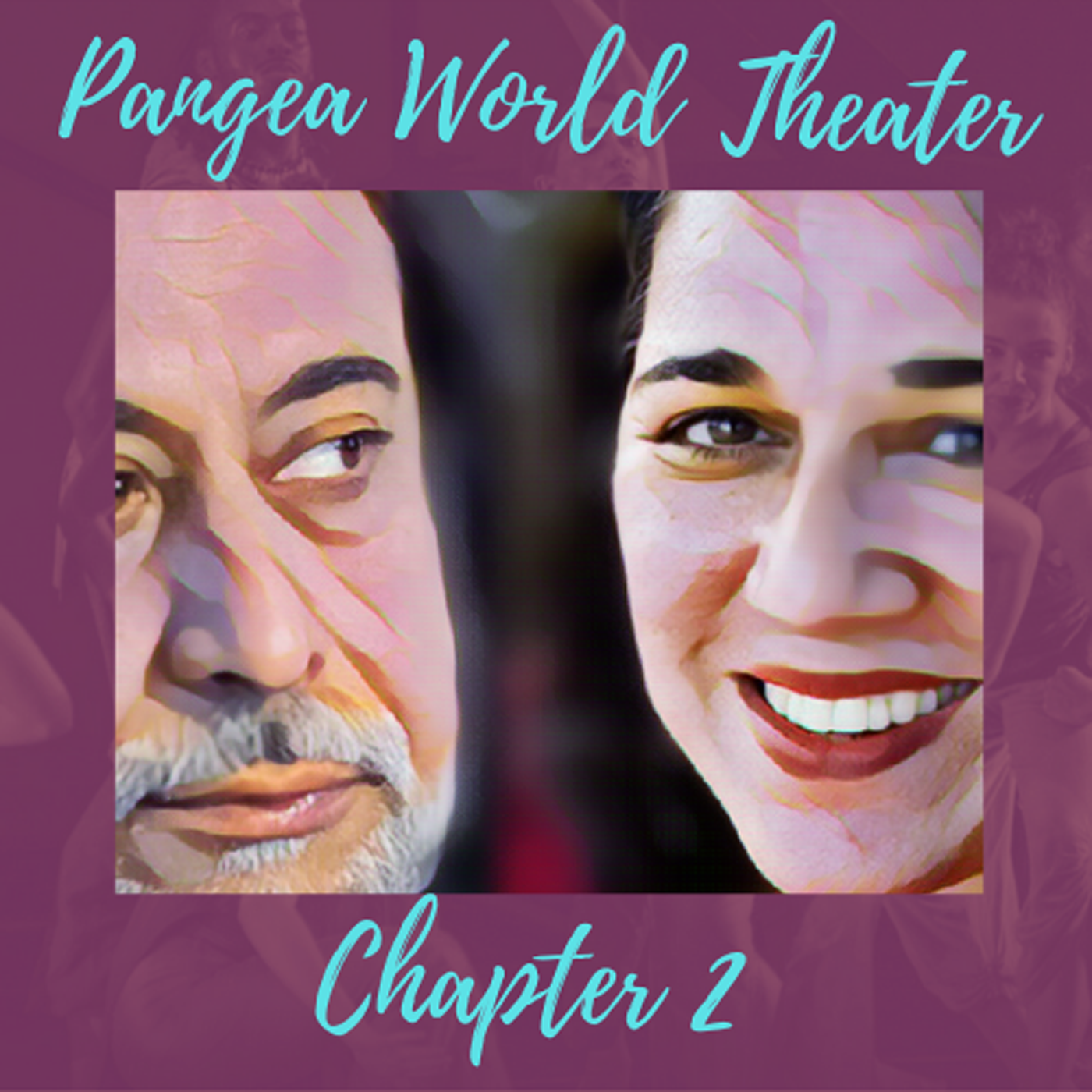
42: How Pangea World Theater Became a Cultural Organizing Force After George Floyd’s Murder – Part 2
from ART IS CHANGE: Strategies & Skills for Activist Artists & Cultural Organizers
In Episode 40 Dipankar Mukherjee, and Meena Natarajan discussed their work around issues of race and justice. In this second half, we asked: How can Pangea, a small community-based cultural institution punching way above its weight, maintain the power and integrity of its community building work amidst the chaos and uncertainty of contemporary life in America?Pangea World Theater spent its 25th anniversary year helping their Minneapolis community heal the wounds and sort through the ashes left in the wake of the murder of George Floyd. But this mending and reckoning dance was nothing new because Pangea's work is intrinsic to the story of this place-- It’s struggles.-- It's beauty-- It's resilience. ANNOUNCING THE CHANGE THE STORY COLLECTIONA LIBRARY OF CHANGE the STORY/CHANGE the World EPISODESArts-based community development comes in many flavors: dancers, and painters working with children and youth; poets and potters collaborating with incarcerated artists: cultural organizers in service to communities addressing racial injustice, all this and much, much more. Many of our listeners have told us they would like to dig deeper into art and change stories that focus on specific issues, constituencies, or disciplines. Others have shared that they are using the podcast as a learning resource and would appreciate categories and cross-references for our stories. In response you we have curated episode collections in six arenas: JUSTICE ARTS * THEATER: PERFORMING CHANGE * CULTURAL ORGANIZING FOR CHANGE CHILDREN, YOUTH & LEARNING * TRAINING COMMUNITY ARTS LEADERS * MUSIC OF TRANSFORMATIONCHECK IT OUTEpisode 41 BIO'sMeena Natarajan is a playwright and director and the Artistic and Executive Director of Pangea World Theater, a progressive, international ensemble space that creates at the intersection of art, equity and social justice. Meena has co-curated and designed many of Pangea World Theater’s professional and community-based programs. She has written at least ten full-length works for Pangea, ranging from adaptations of poetry and mythology to original works dealing with war, spirituality, personal and collective memory. Her play, Etchings in the Sand co-created with dancer Ananya Chattterjea has been published by Routledge in a volume called Contemporary Plays by Women of Color: The Second Edition. Dipankar Mukherjee is the Artistic Director of Pangea World Theater, where he has led the organization since its inception in 1995. As a director, he has worked professionally in India, England, Canada and the United States. His aesthetics have evolved through his commitment to social justice, equity and deep spirituality. Dipankar received a Humphrey Institute Fellowship to Salzburg and has been a Ford Foundation delegate to India and Lebanon. He is a recipient of a Bush Leadership Fellowship to study non-violent and peaceful methodologies in India and South Africa. Dipankar facilitates processes that disrupt colonial, racist and patriarchal modalities of working.EPISODE 41: Notable MentionsPangea World Theater: Pangea World Theater builds bridges across multiple cultures and creates sacred and intersectional spaces. We create authentic spaces for real conversations across race, class and gender. Through a nuanced exploration of privilege, our own and others, we craft ensemble-based processes with a global perspective. Through art, theater and creative organizing we strive for a just world where people treat each other with honor and respect. We believe that artists are seers giving voice and language to the world we envision. A Pluriverse: A Post Development Dictionary: Edited by Ashish Kothari, Ariel Salleh, Arturo Escobar, Federico Demaria, and Alberto Acosta. This book contains over one hundred essays on transformative initiatives and alternatives to the currently dominant processes of globalized development, including its structural roots in modernity, capitalism, state domination, and masculinist values. It offers critical essays on mainstream solutions that ‘greenwash’ development and presents radically different worldviews and practices from around the world that point to an ecologically wise and socially just world. Arturo Escobar : is a Colombian-American anthropologist and the Kenan Distinguished Professor of Anthropology at the University of North Carolina at Chapel Hill, USA. His academic research interests include political ecology, anthropology of development, social movements, anti-globalization movements, and postdevelopment theory.[2] contends in his 1995 book, Encountering Development: The Making and Unmaking of the Third World, that international development became a mechanism of control comparable to colonialism or "cultural imperialism that poor countries had little means of declining politely".[2] J. Krishnamurti is regarded globally as one of the greatest thinkers and religious teachers of all time. From the time of his break with the Theosophical Society in 1929 (dissolution speech) until his death in 1986, Krishnamurti spoke throughout the world to large audiences and to individuals about the need for a radical change in mankind. The core of Krishnamurti's teaching is contained in the statement he made in 1929 when he said, 'Truth is a pathless land'. Man cannot come to it through any organization, through any creed, through any dogma, priest or ritual, not through any philosophical knowledge or psychological technique. He has to find it through the mirror of relationship, through the understanding of the contents of his own mind, through observation and not through intellectual analysis or introspective dissection.' Thich Nhat Hanh, founder of the International Plum Village Community of Engaged Buddhism, passed away on 22nd January 2022. Ordained as a monk aged 16 in Vietnam, Thich Nhat Hanh soon envisioned a kind of engaged Buddhism that could respond directly to the needs of society. He was a prominent teacher and social activist in his home country before finding himself exiled for calling for peace. In the West he played a key role in introducing mindfulness and created mindful communities (sanghas) around the world. His teachings have impacted politicians, business leaders, activists, teachers and countless others. Thich Nhat Hanh has published more than 100 books, including classics like The Miracle of Mindfulness and Peace is Every Step.Tagore...
Embed this episode
What this episode covers
How can a small community-based cultural institution that punches way above its weight, maintain the power and integrity of its community building work, amidst the chaos that has become a hallmark of contemporary life in America.
NOW PLAYING
42: How Pangea World Theater Became a Cultural Organizing Force After George Floyd’s Murder – Part 2
No transcript for this episode yet
Similar Episodes
No similar episodes found.
Similar Podcasts
No similar podcasts found.