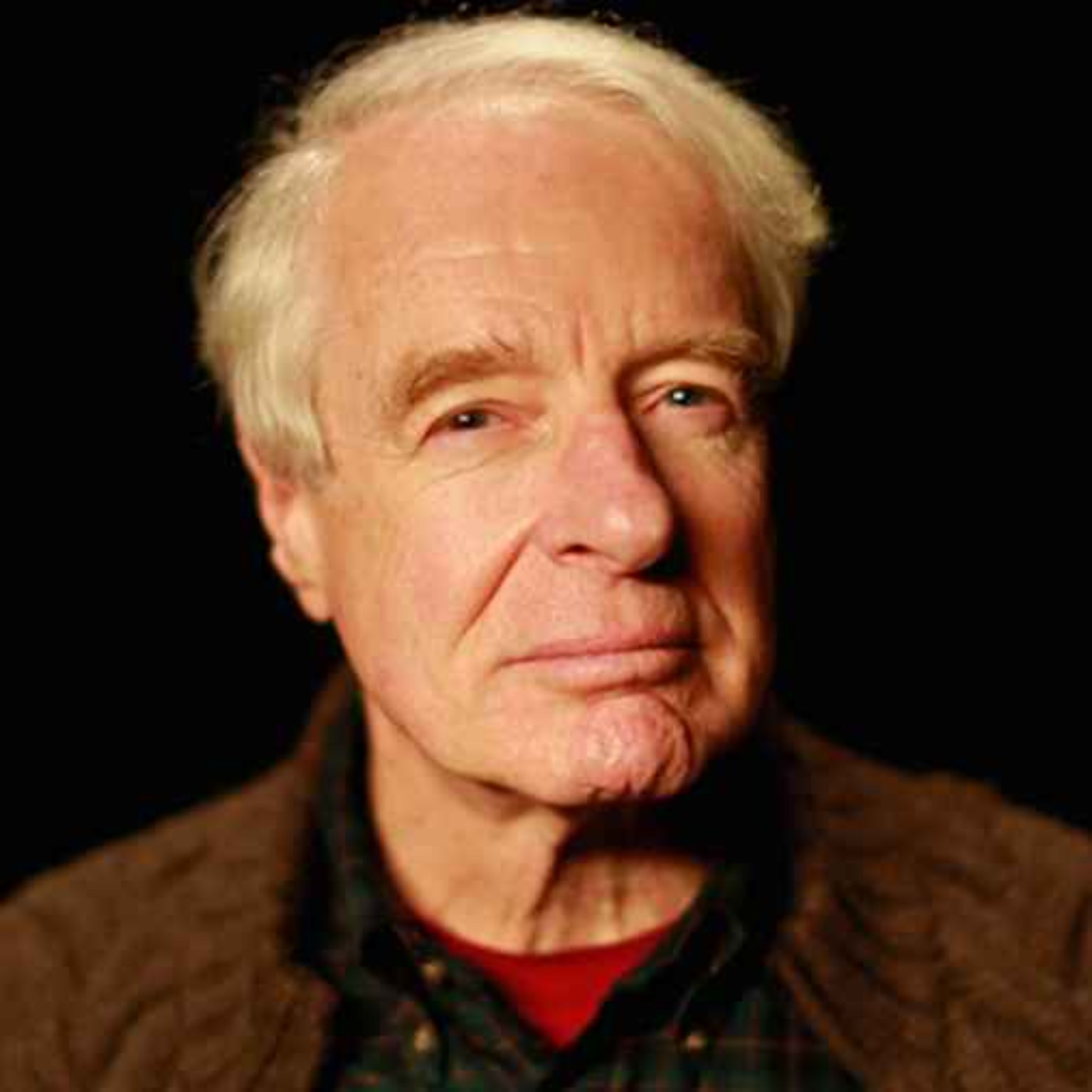
433: Adam Hochschild, part 2: Abolition then and pollution today episode artwork

EPISODE · Jan 25, 2021 · 49 MIN

433: Adam Hochschild, part 2: Abolition then and pollution today

from This Sustainable Life

If you've followed my development on how to view acting on sustainability, you've seen a marked change when I learned about the British abolition movement of the late 1700s and early 1800s. Today's guest, Adam Hochschild, wrote about that period comprehensively in his book Bury the Chains. We talked about it in our first episode and in more depth this time.Until I learned about this movement and this group of people, not unique but important actors, I saw few to no role models of what Adam points out is rare: people devoting themselves to helping other people become free.We present ourselves as potentially suffering from environmental problems, but we are benefiting from ignoring how others suffer for our way of life. You are almost certainly more like the absentee landlords and shareholders in companies profiting from slave labor thousands of miles away than like the people suffering.Adam's book gives us role models of people who said, "I could benefit and even though everyone around me does so, I cannot support or benefit from this system. I will make it my life's mission to end it." In their cases the distant sufferers were in the Caribbean. In ours it's Indonesia, the Philippines, India, southeast Asia, Africa, Central America, and most of the world.This time I picked up on the importance of slave rebellion, telling me we have to connect with people on the receiving end of our disposing of plastic and the exhaust from our cars, jets, and power plants.I also wanted to learn about the personal side of the people Adam portrayed. How did they persevere through discouraging times? We're facing discouraging times. Most of us could in principle pollute a lot less, but our culture creates resistance.The more I learn about abolition, the more I find their movements and results relevant and inspiring. How better can we honor their legacy than to use it to reduce suffering today? To me, learning that people faced resistance like we face and overcame it as we'd like to. We have the benefit of their history. If you'd like to lead yourself and others to reduce suffering by changing culture and systems, I can't recommend enough to learn about people who have succeeded before. Hosted on Acast. See acast.com/privacy for more information.

If you've followed my development on how to view acting on sustainability, you've seen a marked change when I learned about the British abolition movement of the late 1700s and early 1800s. Today's guest, Adam Hochschild, wrote about that period comprehensively in his book Bury the Chains. We talked about it in our first episode and in more depth this time.Until I learned about this movement and this group of people, not unique but important actors, I saw few to no role models of what Adam points out is rare: people devoting themselves to helping other people become free.We present ourselves as potentially suffering from environmental problems, but we are benefiting from ignoring how others suffer for our way of life. You are almost certainly more like the absentee landlords and shareholders in companies profiting from slave labor thousands of miles away than like the people suffering.Adam's book gives us role models of people who said, "I could benefit and even though everyone around me does so, I cannot support or benefit from this system. I will make it my life's mission to end it." In their cases the distant sufferers were in the Caribbean. In ours it's Indonesia, the Philippines, India, southeast Asia, Africa, Central America, and most of the world.This time I picked up on the importance of slave rebellion, telling me we have to connect with people on the receiving end of our disposing of plastic and the exhaust from our cars, jets, and power plants.I also wanted to learn about the personal side of the people Adam portrayed. How did they persevere through discouraging times? We're facing discouraging times. Most of us could in principle pollute a lot less, but our culture creates resistance.The more I learn about abolition, the more I find their movements and results relevant and inspiring. How better can we honor their legacy than to use it to reduce suffering today? To me, learning that people faced resistance like we face and overcame it as we'd like to. We have the benefit of their history. If you'd like to lead yourself and others to reduce suffering by changing culture and systems, I can't recommend enough to learn about people who have succeeded before. Hosted on Acast. See acast.com/privacy for more information.

NOW PLAYING

433: Adam Hochschild, part 2: Abolition then and pollution today

0:00 49:26

No transcript for this episode yet

We transcribe on demand. Request one and we'll notify you when it's ready — usually under 10 minutes.

Big Old Life: Heather Blackbird interviews people on planet earth. Heather Blackbird loves asking questions. This podcast is a learning experience. Join me, Heather Blackbird, as I talk to people about their lives. Frequency of new episodes is a little all over the place and I'm learning as I go. Big Old Life is a small way of talking about the vastness of life, one person at a time. If you are reading this or found this podcast it's probably because someone you know gave you a link to it. :) Explicit Tales Of A Superstar DJ The Insomniac Spun seemingly out of nowhere from her complacent life in the corporate world, turned seemingly overnight from 16-Hour shift work and into the life of a literally starving artist and working musician, The Protagonist navigates her supposed rise to fame and superstardom on a journey through spiritual awakening, coming-of-age, and intimate self-realization--guided by an omnipresent force and equipped with the power of love, magic, and music. {Enter The Multiverse.} [The Festival Project] The Festival Project, Inc.™ is a multidimensional multimedia platform which encompasses exploratory and artistic social personifications and expressions on cosmic theory, spirituality, growth, health & wellness, philosophy and theoretic dynamics in entertainment such as music, design, film, television, radio, dance and festival culture, art, fashion, literature, and science. The Festival Project™ and its subsidiary Non-Profit, The Collective Complex © aims to challenge modern artistic and philosop Explicit The Sacred +Profane Podcast nephtaragrace The Sacred + Profane Podcast is a provocative conversation dedicated to cementing a better future for all. We specialize in unpacking the nuances of what is considered sacred and profane, particularly focusing on sex, death, and all that pertains to the circle of life. Our aim in focusing on such ”taboo” subject matter is to demystify what is unconscious, bring to light what has been known for centuries as ”the occult,” and empower the rapid transformation that is occurring on the Planet. Explicit Northern Sass and Southern Class Tay and Ani Come sit in on girl talk with Tay and Ani as we discuss life in Texas, girl math, food, wine and roasting each other. Explicit

Frequently Asked Questions

How long is this episode of This Sustainable Life?

This episode is 49 minutes long.

When was this This Sustainable Life episode published?

This episode was published on January 25, 2021.

What is this episode about?

If you've followed my development on how to view acting on sustainability, you've seen a marked change when I learned about the British abolition movement of the late 1700s and early 1800s. Today's guest, Adam Hochschild, wrote about that period...

Can I download this This Sustainable Life episode?

Yes, you can download this episode by clicking the download button on the episode player, or subscribe to the podcast in your preferred podcast app for automatic downloads.
URL copied to clipboard!