439: How to Fix Texas episode artwork

EPISODE · Feb 17, 2021 · 7 MIN

439: How to Fix Texas

from This Sustainable Life

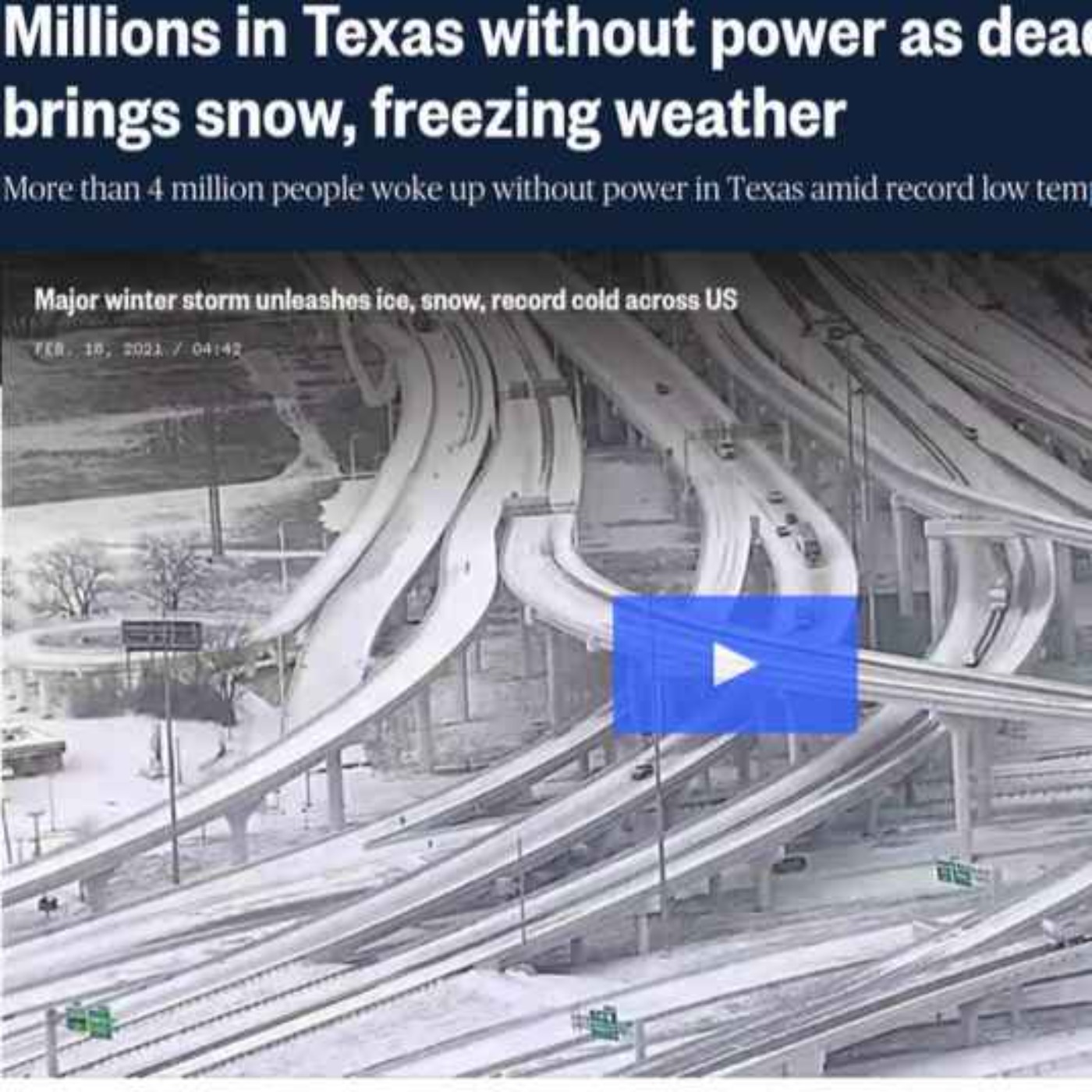
Here are the notes I read from for this episodeHow to fix TexasJust got off conference call a Texas attendee couldn't attend because her power was out.There are helpless people suffering. I empathize with them and feel compassion. I support helping them.If we want to prevent future suffering, we have to look at systems. That's not ignoring present pain or loss. It's preventing future pain and loss.In that call, one person had been in touch with the Texas person. She told us of ice forming inside her house and other problems.The present attendees lamented each mention of a problem as if she were suffering some horrible hardship. For tens of thousands of years, humans have lived without power including in the cold, including sudden, unexpected cold.Is it not obvious that what we call technology and innovation has made us dependent, needy, and the opposite of resilient?I'll repeat that people in hospitals, homeless, elderly, and others have always needed extra help and they do today. Nothing of what I'm saying suggests neglecting them.But she also talked about our Texas friend tweeting. However spotty, she has the internet.Let's talk systems.NYTimes headline: A Glimpse of America’s Future: Climate Change Means Trouble for Power Grids: Systems are designed to handle spikes in demand, but the wild and unpredictable weather linked to global warming will very likely push grids beyond their limits.While the proximal reasons may be technical, the systemic cause is our dual focuses on meeting demand no matter what and growth but not focusing on resilience. The result is that when demand is always met, we grow (population and consumption) until we hit problems like this. Then we build more capacity.It costs a lot to go from 99.99% uptime to 99.999%, but we do it every time.The savings to go from 99.99% uptime to 99.9% is also huge. Most of the world does fine with under 99% and we could too if we built our systems and lives to handle power going down sometimes, even unpredictably. Hospitals, elderly, etc would need special treatment. The rest of us could reduce our needs and learn from how people lived all the time for hundreds of thousands of years.We'd save tons of money, live healthier, and pollute a lot less. We'd learn to treat nature with a bit more humility and respect.Listen to my episode on why I unplugged my fridge. I didn't do it because I expected my power savings would amount to anything divided by 7.8 billion.I did it because other cultures as well as humans for hundreds of thousands of years thrived without power. While some disasters, like Vesuvius erupting, we can't defend ourselves against, we can prepare for cold without polluting.My main results for unplugging my fridge? More delicious food from increasing my skills and experience preparing it. Saving money. Increasing my freedom, decreasing my neediness.Again, repeating my compassion for helpless people in pain now, whose rescue and support I support in the moment, I suggest seeing this weather as impetus to make your life more resilient, less needy, to support a power grid more resilient and less brittle but, and a culture not so entitled, spoiled, dependent and needy that its answer to everything is something polluting more, deepening that entitlement and being spoiled.If you can't live without power dropping for a few days even in terrible weather, and you aren't someone that lions would have eaten in previous eras, you're part of the problem. Fix yourself without drawing more power and polluting everyone else's world.If your society suffers from the only way it handles problems is to use more power, polluting more, leading to suffering from by people who aren't polluting so much, which for Americans means the entire rest of the world outside Saudi Arabia and its oil producing peers and maybe some insanely rich tax havens in the Caribbean, fix your society.Changing culture and systems begins with changing values. In this case from coddling, spoiling, externalizing costs, and ignoring others' suffering to resilience and freedom.Episode 426: Why unplug Hosted on Acast. See acast.com/privacy for more information.

Here are the notes I read from for this episodeHow to fix TexasJust got off conference call a Texas attendee couldn't attend because her power was out.There are helpless people suffering. I empathize with them and feel compassion. I support helping them.If we want to prevent future suffering, we have to look at systems. That's not ignoring present pain or loss. It's preventing future pain and loss.In that call, one person had been in touch with the Texas person. She told us of ice forming inside her house and other problems.The present attendees lamented each mention of a problem as if she were suffering some horrible hardship. For tens of thousands of years, humans have lived without power including in the cold, including sudden, unexpected cold.Is it not obvious that what we call technology and innovation has made us dependent, needy, and the opposite of resilient?I'll repeat that people in hospitals, homeless, elderly, and others have always needed extra help and they do today. Nothing of what I'm saying suggests neglecting them.But she also talked about our Texas friend tweeting. However spotty, she has the internet.Let's talk systems.NYTimes headline: A Glimpse of America’s Future: Climate Change Means Trouble for Power Grids: Systems are designed to handle spikes in demand, but the wild and unpredictable weather linked to global warming will very likely push grids beyond their limits.While the proximal reasons may be technical, the systemic cause is our dual focuses on meeting demand no matter what and growth but not focusing on resilience. The result is that when demand is always met, we grow (population and consumption) until we hit problems like this. Then we build more capacity.It costs a lot to go from 99.99% uptime to 99.999%, but we do it every time.The savings to go from 99.99% uptime to 99.9% is also huge. Most of the world does fine with under 99% and we could too if we built our systems and lives to handle power going down sometimes, even unpredictably. Hospitals, elderly, etc would need special treatment. The rest of us could reduce our needs and learn from how people lived all the time for hundreds of thousands of years.We'd save tons of money, live healthier, and pollute a lot less. We'd learn to treat nature with a bit more humility and respect.Listen to my episode on why I unplugged my fridge. I didn't do it because I expected my power savings would amount to anything divided by 7.8 billion.I did it because other cultures as well as humans for hundreds of thousands of years thrived without power. While some disasters, like Vesuvius erupting, we can't defend ourselves against, we can prepare for cold without polluting.My main results for unplugging my fridge? More delicious food from increasing my skills and experience preparing it. Saving money. Increasing my freedom, decreasing my neediness.Again, repeating my compassion for helpless people in pain now, whose rescue and support I support in the moment, I suggest seeing this weather as impetus to make your life more resilient, less needy, to support a power grid more resilient and less brittle but, and a culture not so entitled, spoiled, dependent and needy that its answer to everything is something polluting more, deepening that entitlement and being spoiled.If you can't live without power dropping for a few days even in terrible weather, and you aren't someone that lions would have eaten in previous eras, you're part of the problem. Fix yourself without drawing more power and polluting everyone else's world.If your society suffers from the only way it handles problems is to use more power, polluting more, leading to suffering from by people who aren't polluting so much, which for Americans means the entire rest of the world outside Saudi Arabia and its oil producing peers and maybe some insanely rich tax havens in the Caribbean, fix your society.Changing culture and systems begins with changing values. In this case from coddling, spoiling, externalizing costs, and ignoring others' suffering to resilience and freedom.Episode 426: Why unplug Hosted on Acast. See acast.com/privacy for more information.

NOW PLAYING

439: How to Fix Texas

0:00 7:58

No transcript for this episode yet

We transcribe on demand. Request one and we'll notify you when it's ready — usually under 10 minutes.

Big Old Life: Heather Blackbird interviews people on planet earth. Heather Blackbird loves asking questions. This podcast is a learning experience. Join me, Heather Blackbird, as I talk to people about their lives. Frequency of new episodes is a little all over the place and I'm learning as I go. Big Old Life is a small way of talking about the vastness of life, one person at a time. If you are reading this or found this podcast it's probably because someone you know gave you a link to it. :) Explicit Tales Of A Superstar DJ The Insomniac Spun seemingly out of nowhere from her complacent life in the corporate world, turned seemingly overnight from 16-Hour shift work and into the life of a literally starving artist and working musician, The Protagonist navigates her supposed rise to fame and superstardom on a journey through spiritual awakening, coming-of-age, and intimate self-realization--guided by an omnipresent force and equipped with the power of love, magic, and music. {Enter The Multiverse.} [The Festival Project] The Festival Project, Inc.™ is a multidimensional multimedia platform which encompasses exploratory and artistic social personifications and expressions on cosmic theory, spirituality, growth, health & wellness, philosophy and theoretic dynamics in entertainment such as music, design, film, television, radio, dance and festival culture, art, fashion, literature, and science. The Festival Project™ and its subsidiary Non-Profit, The Collective Complex © aims to challenge modern artistic and philosop Explicit The Sacred +Profane Podcast nephtaragrace The Sacred + Profane Podcast is a provocative conversation dedicated to cementing a better future for all. We specialize in unpacking the nuances of what is considered sacred and profane, particularly focusing on sex, death, and all that pertains to the circle of life. Our aim in focusing on such ”taboo” subject matter is to demystify what is unconscious, bring to light what has been known for centuries as ”the occult,” and empower the rapid transformation that is occurring on the Planet. Explicit Northern Sass and Southern Class Tay and Ani Come sit in on girl talk with Tay and Ani as we discuss life in Texas, girl math, food, wine and roasting each other. Explicit

Frequently Asked Questions

How long is this episode of This Sustainable Life?

This episode is 7 minutes long.

When was this This Sustainable Life episode published?

This episode was published on February 17, 2021.

What is this episode about?

Here are the notes I read from for this episodeHow to fix TexasJust got off conference call a Texas attendee couldn't attend because her power was out.There are helpless people suffering. I empathize with them and feel compassion. I support helping...

Can I download this This Sustainable Life episode?

Yes, you can download this episode by clicking the download button on the episode player, or subscribe to the podcast in your preferred podcast app for automatic downloads.
URL copied to clipboard!