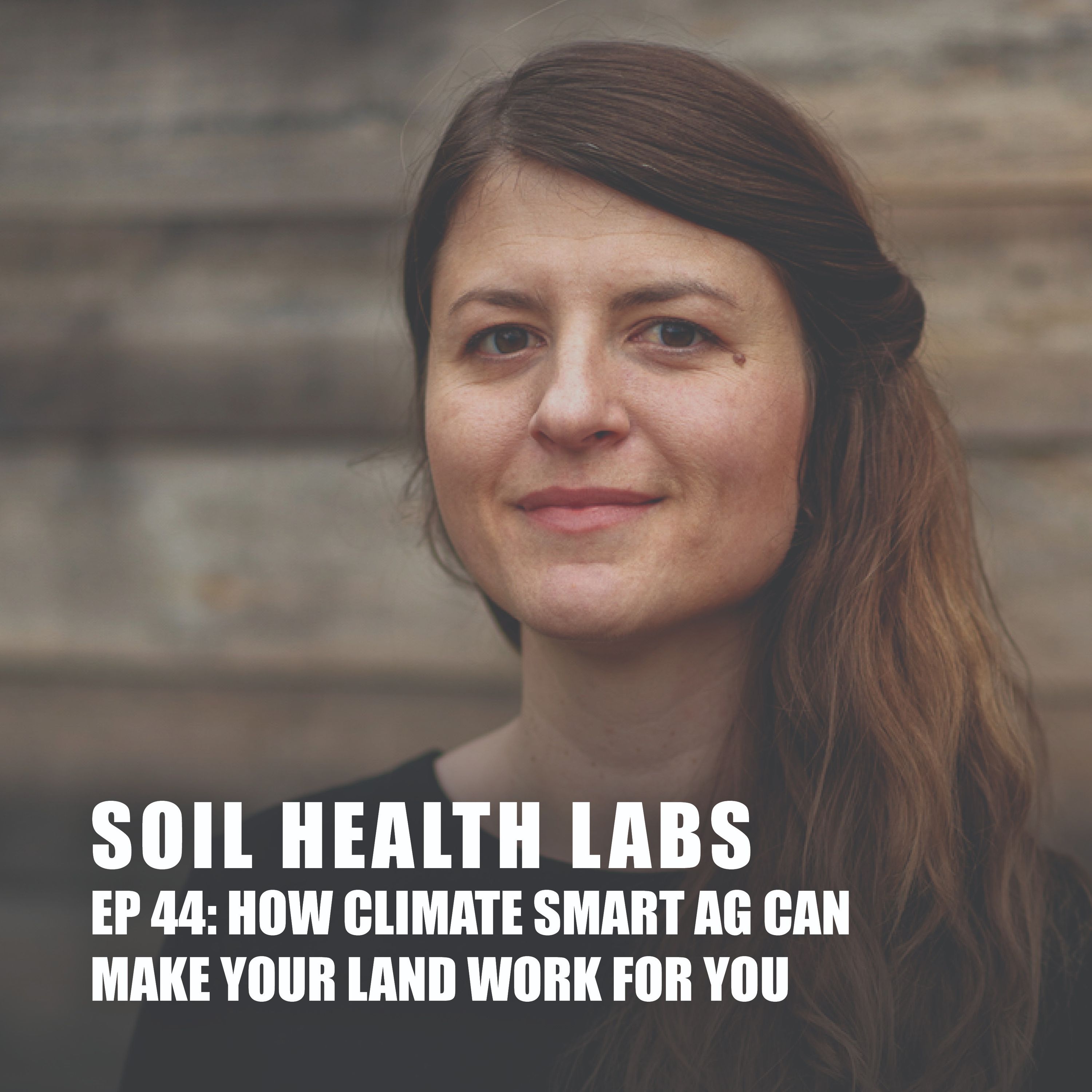
44 How Climate Smart Ag Can Make Your Land Work For You episode artwork

EPISODE · Dec 19, 2022 · 52 MIN

44 How Climate Smart Ag Can Make Your Land Work For You

from Soil Health Labs · host Soil Health Labs

What’s the soil food web got to do with it? This is a special podcast to prepare our audience for the upcoming Climate Smart Agriculture enhancements to the EQIP and CSP programs, amongst others. In our previous podcast recorded in November 2022, we spoke to South Dakota NRCS’s Jessica Michalski and Kent Vlieger about some of the programmatic and practical aspects of the Climate Smart initiative, the potential opportunities for producers and what you as a producer can do to best prepare for the enhanced funding opportunity. In this podcast, we speak to soil scientist/biogeochemist Dr. Andrea Jilling from Oklahoma State University’s Plant & Soil Sciences about some of the scientific underpinnings of the effect of climate smart practices that are extensively discussed in the previous podcast. Yes, we nerd out a little, but we think that you, our listeners are ready and will take this discussion in their stride and see how it may benefit you, especially as you think about your conservation plan and how the Climate Smart enhancements may benefit you. Topics that we discuss include: • What does the soil food web have to do with climate smart ag? Can you use climate smart ag to enhance nutrient efficiency? Just how diverse is organic matter, what is the rhizosphere? • How plants harness solar energy, and why they invest so much in below ground development, especially root exudates. • What do root exudates have to do with enhancing nutrient efficiency? • What does it mean when we say “carbon is the energy currency of the soil”? • How diverse is organic matter? Can we distinguish between particulate organic matter (POM) and mineral, or clay/silt associated organic matter? • What and has recent science done to shed more light on how view mineral associated organic matter? • How do POM and mineral associated organic matter work together to immobilize and release nutrients? • What do plant-soil interactions look like over the lifecycle of the plant in releasing and immobilizing nutrients, what are the management possibilities in the future, and what can we do now to optimize plant-soil interactions? • How do these principles work with soil minerals like phosphorus and why are pH hot spots at a microscopic scale are a big deal? • What kinds of change could you expect in your soils if you decided to go all in for climate smart ag? • What are scientists like Dr. Jilling thinking about for the future in agriculture? Will new research try to leverage more producer collaboration? Also, Dr. Jilling provides some parting words on resilience. Dr Jilling can be found at: https://experts.okstate.edu/andrea.jilling For related articles on how soil health (and climate smart practices) can add real value to the farm see: Successful farming’s: “Living Roots, Low input costs: Turning Cover Crops into Cash Crops Boosts Profits and lowers costs” https://www.agriculture.com/crops/cover-crops/living-roots-low-input-costs No Till Farmer’s “How No-till improves land values” https://www.no-tillfarmer.com/articles/12090-how-no-till-improves-land-values

What’s the soil food web got to do with it? This is a special podcast to prepare our audience for the upcoming Climate Smart Agriculture enhancements to the EQIP and CSP programs, amongst others. In our previous podcast recorded in November 2022, we spoke to South Dakota NRCS’s Jessica Michalski and Kent Vlieger about some of the programmatic and practical aspects of the Climate Smart initiative, the potential opportunities for producers and what you as a producer can do to best prepare for the enhanced funding opportunity. In this podcast, we speak to soil scientist/biogeochemist Dr. Andrea Jilling from Oklahoma State University’s Plant & Soil Sciences about some of the scientific underpinnings of the effect of climate smart practices that are extensively discussed in the previous podcast. Yes, we nerd out a little, but we think that you, our listeners are ready and will take this discussion in their stride and see how it may benefit you, especially as you think about your conservation plan and how the Climate Smart enhancements may benefit you. Topics that we discuss include: • What does the soil food web have to do with climate smart ag? Can you use climate smart ag to enhance nutrient efficiency? Just how diverse is organic matter, what is the rhizosphere? • How plants harness solar energy, and why they invest so much in below ground development, especially root exudates. • What do root exudates have to do with enhancing nutrient efficiency? • What does it mean when we say “carbon is the energy currency of the soil”? • How diverse is organic matter? Can we distinguish between particulate organic matter (POM) and mineral, or clay/silt associated organic matter? • What and has recent science done to shed more light on how view mineral associated organic matter? • How do POM and mineral associated organic matter work together to immobilize and release nutrients? • What do plant-soil interactions look like over the lifecycle of the plant in releasing and immobilizing nutrients, what are the management possibilities in the future, and what can we do now to optimize plant-soil interactions? • How do these principles work with soil minerals like phosphorus and why are pH hot spots at a microscopic scale are a big deal? • What kinds of change could you expect in your soils if you decided to go all in for climate smart ag? • What are scientists like Dr. Jilling thinking about for the future in agriculture? Will new research try to leverage more producer collaboration? Also, Dr. Jilling provides some parting words on resilience. Dr Jilling can be found at: https://experts.okstate.edu/andrea.jilling For related articles on how soil health (and climate smart practices) can add real value to the farm see: Successful farming’s: “Living Roots, Low input costs: Turning Cover Crops into Cash Crops Boosts Profits and lowers costs” https://www.agriculture.com/crops/cover-crops/living-roots-low-input-costs No Till Farmer’s “How No-till improves land values” https://www.no-tillfarmer.com/articles/12090-how-no-till-improves-land-values

NOW PLAYING

44 How Climate Smart Ag Can Make Your Land Work For You

0:00 52:27

No transcript for this episode yet

We transcribe on demand. Request one and we'll notify you when it's ready — usually under 10 minutes.

Eat to Live Jenna Fuhrman, Dr. Fuhrman Our health is our most precious gift and smart nutrition can change your life. Each month, join Dr. Fuhrman and his daughter, Jenna Fuhrman as they discuss important topics in the world of nutrition. Eat to Live will change the way you eat and think about food. Kaizen Blueprint Aldo Chandra "Kaizen" is a Japanese term for continuous improvement. This podcast provides a blueprint to learn about health, wealth, relationships and everything else in between. Through our podcast, we strive to inspire, educate, and motivate our audience to cultivate a mindset of lifelong learning, productivity, and personal development. By sharing insights, strategies, and practical tips, we aim to guide listeners on their journey towards realizing their fullest potential, fostering success, and creating lasting positive change. PodSights Health & Wellness podsights.ai Transform your wellbeing journey. Get trusted, evidence-based answers to your health, fitness, and mental wellness questions. Make informed decisions about your health. Visit podsights.ai to create your own wellness podcast. Tips, News and Stories for Older Adults Esther C Kane CAPS, C.D.S. "Tips, News, and Stories for Older Adults" delivers weekly insights tailored for seniors. We bring you summaries of curated news, practical advice, and inspiring stories that matter to the 55+ community. From health and finance to technology and lifestyle, our content keeps you informed and engaged. Sourced from trusted outlets, each episode offers valuable information for navigating your golden years. Join us as we explore aging with positivity, wisdom, and engaging stories. Your perfect companion for staying active, learning, and embracing life's later chapters.

Frequently Asked Questions

How long is this episode of Soil Health Labs?

This episode is 52 minutes long.

When was this Soil Health Labs episode published?

This episode was published on December 19, 2022.

What is this episode about?

What’s the soil food web got to do with it? This is a special podcast to prepare our audience for the upcoming Climate Smart Agriculture enhancements to the EQIP and CSP programs, amongst others. In our previous podcast recorded in November 2022,...

Can I download this Soil Health Labs episode?

Yes, you can download this episode by clicking the download button on the episode player, or subscribe to the podcast in your preferred podcast app for automatic downloads.
URL copied to clipboard!