
EPISODE · Jan 30, 2026 · 17 MIN
451-脑部炎症诱导的神经元表观遗传重构与突触病变研究
from 聊聊Sci
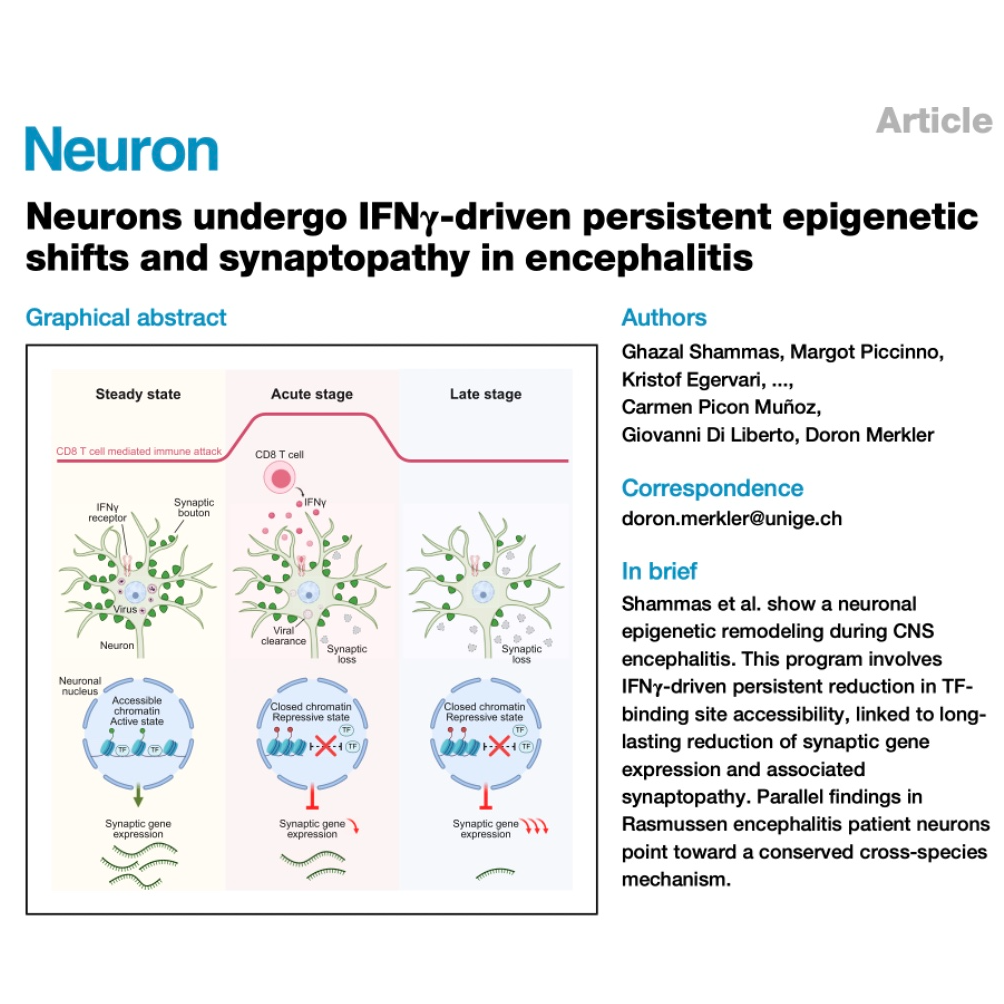
这项研究探讨了病毒性脑炎引发长期神经功能障碍的生物学机制。研究发现,即使在病毒清除后,神经元也会因干扰素-γ (IFNγ) 信号诱导产生持久的表观遗传转变,导致突触相关基因表达受损。这种被称为突触病 (Synaptopathy) 的现象并非源于神经元死亡,而是由于染色质结构改变引起的神经回路功能障碍。通过小鼠模型和对拉斯穆森脑炎 (RE) 患者样本的分析,研究人员确认了这种免疫驱动的基因重塑具有解剖特异性,且受损程度在海马体中尤为显著。实验证明,阻断神经元中的 IFNγ 信号可预防突触流失并缓解认知缺陷。这些发现为治疗慢性神经炎症疾病中的突触损伤提供了全新的潜在靶点。 References: Shammas G, Piccinno M, Egervari K, et al. Neurons undergo IFNγ-driven persistent epigenetic shifts and synaptopathy in encephalitis[J]. Neuron, 2025. 前往小宇宙评论区与主播互动
Embed this episode
Ready to play
451-脑部炎症诱导的神经元表观遗传重构与突触病变研究
0:00
17:41
1×
No transcript for this episode yet
Similar Episodes
No similar episodes found.
Similar Podcasts
Forfeiture Book Review: Ecocide and Sci-Fi
JP et al.
A whizz bang review of the complex themes in the new ecological Sci-Fi novel, FORFEITURE by JP Nebra
Deep Dream State
Neural Nets And Pretty Patterns
Deep Dream State is a full-cast dystopian sci-fi and desire horror audio drama by Neural Nets and Pretty Patterns. As the originating work of desire horror, it locates the uncanny inside wanting itself. While conventional horror positions you against a threat, desire horror implicates you in it. The horror emerges from recognition: the realization of why characters stay, and why surrender feels like relief. Since 2017, the show has used research in dream science, surveillance studies, behavioral economics, and advertising technology to examine systems of control through immersive sound design and full-cast performance.
Frequently Asked Questions
How long is this episode of 聊聊Sci?
This episode is 17 minutes long.
When was this 聊聊Sci episode published?
This episode was published on January 30, 2026.
Can I download this 聊聊Sci episode?
Yes. Use the download control on the episode player to save the publisher-provided media file.
URL copied to clipboard!