
EPISODE · Feb 9, 2026 · 16 MIN
490-长新冠胃肠后遗症的过氧化物酶修复机制
from 聊聊Sci
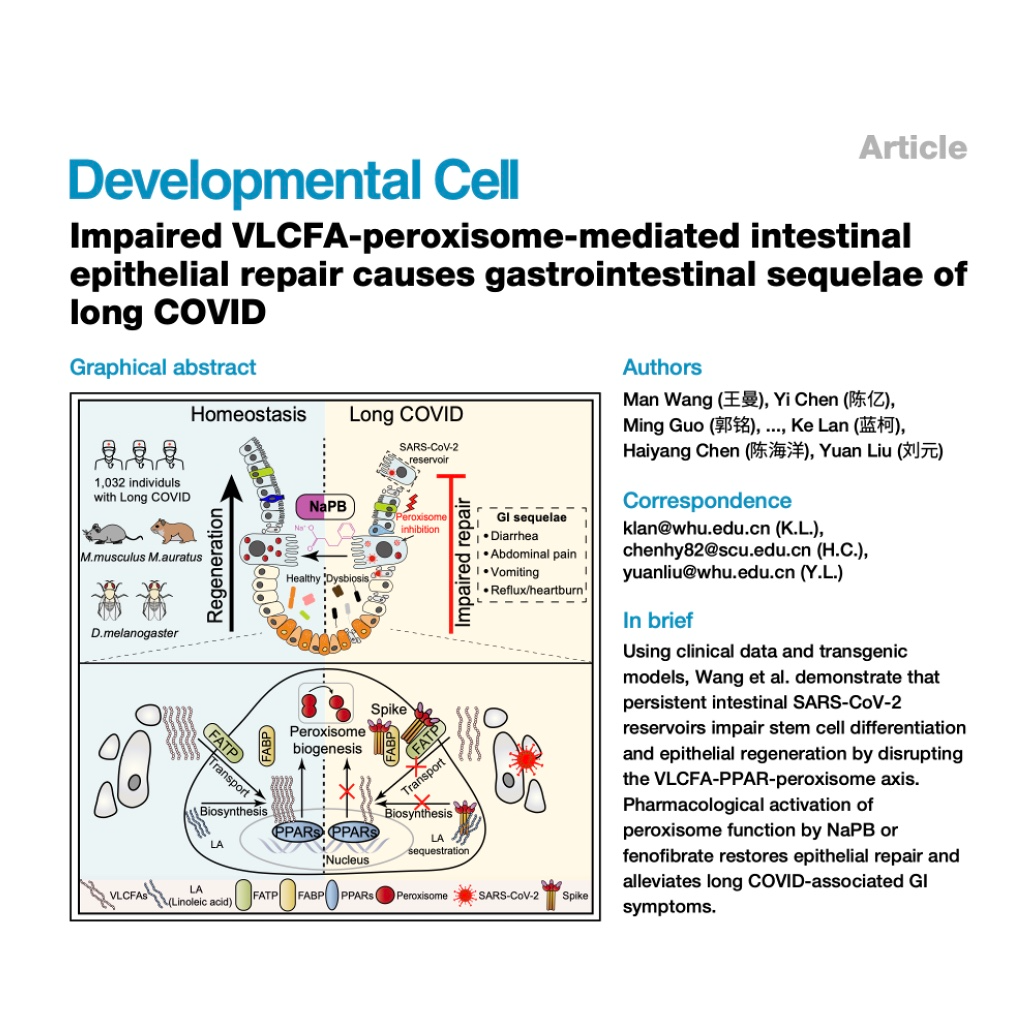
这项研究揭示了长新冠(long COVID)引发持续性胃肠道症状的分子机制,指出肠道病毒库是导致后遗症的关键。研究发现,新冠病毒的刺突蛋白(Spike)会直接干扰肠道内的极长链脂肪酸(VLCFA)代谢,进而抑制PPAR信号通路并导致过氧化物酶体数量减少。这种代谢紊乱阻碍了肠道干细胞的分化与上皮组织的修复,引发慢性腹泻、肠道炎症及菌群失调。通过在小鼠和果蝇模型中的实验,研究证实使用苯丁酸钠(NaPB)或非诺贝特等药物可以恢复过氧化物酶体功能,有效缓解消化系统症状。这些发现不仅阐明了病毒如何长期破坏肠道稳态,还为治疗长新冠肠道并发症提供了潜在的临床方案。References: Wang M, Chen Y, Guo M, et al. Impaired VLCFA-peroxisome-mediated intestinal epithelial repair causes gastrointestinal sequelae of long COVID[J]. Developmental Cell, 2026.前往小宇宙评论区与主播互动
Embed this episode
Ready to play
490-长新冠胃肠后遗症的过氧化物酶修复机制
0:00
16:18
1×
No transcript for this episode yet
Similar Episodes
No similar episodes found.
Similar Podcasts
Forfeiture Book Review: Ecocide and Sci-Fi
JP et al.
A whizz bang review of the complex themes in the new ecological Sci-Fi novel, FORFEITURE by JP Nebra
Deep Dream State
Neural Nets And Pretty Patterns
Deep Dream State is a full-cast dystopian sci-fi and desire horror audio drama by Neural Nets and Pretty Patterns. As the originating work of desire horror, it locates the uncanny inside wanting itself. While conventional horror positions you against a threat, desire horror implicates you in it. The horror emerges from recognition: the realization of why characters stay, and why surrender feels like relief. Since 2017, the show has used research in dream science, surveillance studies, behavioral economics, and advertising technology to examine systems of control through immersive sound design and full-cast performance.
Frequently Asked Questions
How long is this episode of 聊聊Sci?
This episode is 16 minutes long.
When was this 聊聊Sci episode published?
This episode was published on February 9, 2026.
Can I download this 聊聊Sci episode?
Yes. Use the download control on the episode player to save the publisher-provided media file.
URL copied to clipboard!