
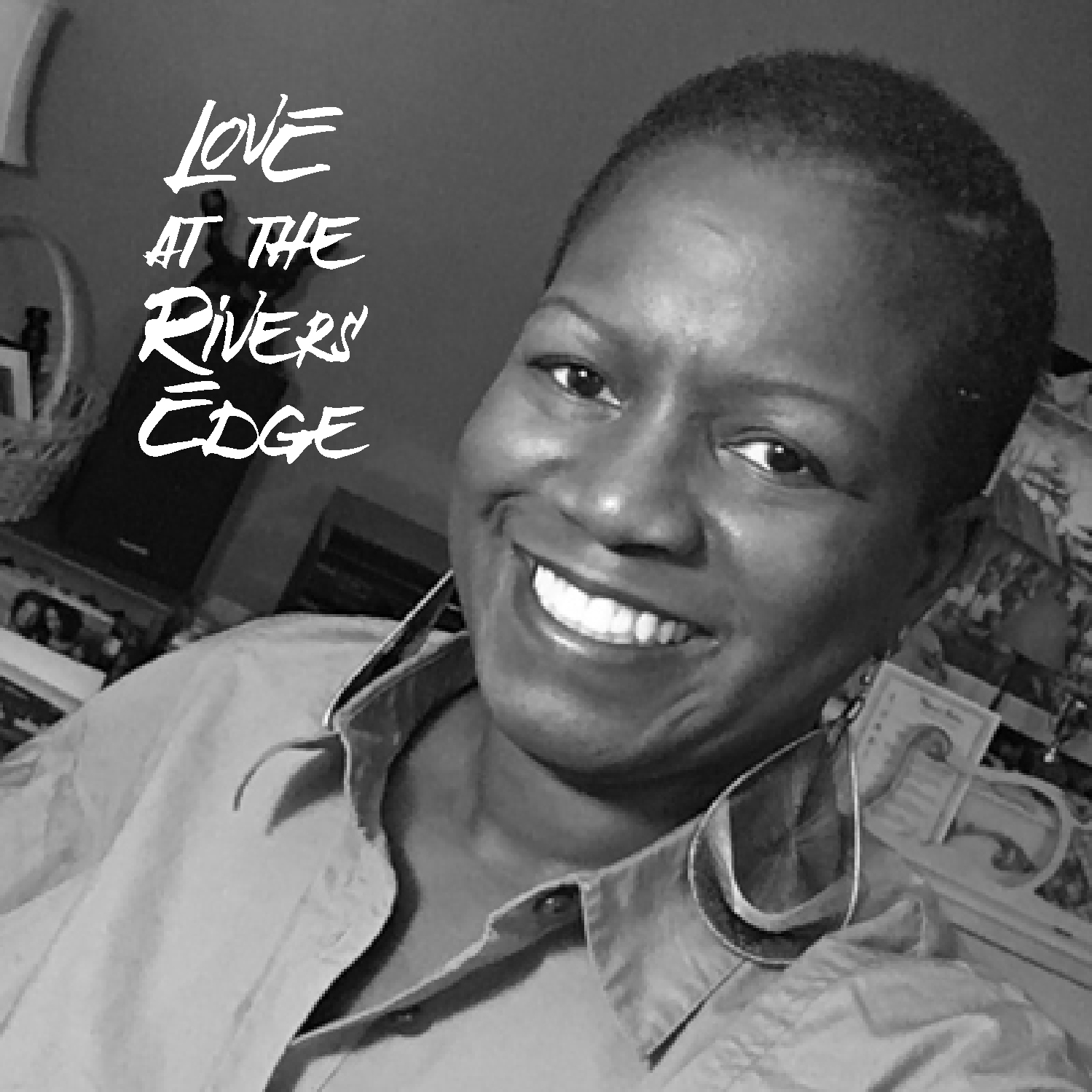
EPISODE · Aug 26, 2020 · 34 MIN
5: Love at the Rivers Edge: How One Activist Artist Bridged Race & Place With Shakespeare:
from ART IS CHANGE: Strategies & Skills for Activist Artists & Cultural Organizers
Threshold Questions and Juicy Quotes:Can collective creation change settled world views?I mean, there are a couple of Mexican families in Brussels. They're no black folks. So, I would always kid that I was like, you know, that's a cute little house, and if I bought that, I'd be okay. Like, yeah. You know, for some of those students, this was prayerfully life changing in how they see folks and communities that are different than them and for our students from Normandy.Can we build lasting bridges between communities separated by race and culture?You’ve got to have people love each other. You’ve got to have people like, "Can't wait to see you at rehearsal."... because then on stage, I got your back ... that experience it was so affirming to me about the power of just having people just talk to each other, you know, so they fell in love with each other. I fell in love with them. What kind of leadership grows community ownership and accountability? I'm humbled by the whole experience. You know, because often people don't know or really care who the director is, and that's okay. That's my goal. So, it's nice to just be on the ferry and nobody know what my roll was in it and hear people like, this is so cool. Oh my gosh, I can't believe we're doing this.LinksBlackberry ProductionsSt. Louis Shakespeare Festival: Shakespeare, in the StreetsArt and Upheaval,Wedding Community Play.CHIPS Health: Community Health-In-Partnership Services (d/b/a CHIPS Health and Wellness Center) is the place where uninsured and underserved people in the St. Louis metropolitan area can receive free primary and preventive health care services.Bread and Roses Missouri An organization with the mission of organizing arts and humanities projects about workers and their families. TranscriptMargaret Mischeaux Next week is a very big week. It will not only be the 24:1 festival, but it will also be the premiere of Shakespeare in the Street, Love at the River's Edge, a rendition of As You Like It with a little bit of a twist. We are combining the counties of Brussels and St. Louis's 24:1. So basically, we talk about the divides into two communities; our similarities, our differences, our very unique ways of living.Bill Cleveland: From the Center for the Study of Art and Community This is Change the Story, Change the World, a chronicle of art and transformation. I'm Bill Cleveland:.The voice you heard at the beginning of this week's episode was Margaret Mischeaux. A student and actress from Normandy High School, near St. Louis, who was one of the dozens of people touched by the story we are about to tell. We call this week's episode of Change the Story, Change the World, Love at the River's Edge. In it, we hear from actor, director, dancer and educator Kathi Bentley, whose life's journey has taken her from St. Louis, to the Freat White Way, and back again to the home of the Gateway Arch. Along the way, we learn how an aspiring young thespian grows to become a respected theatre professional, anti-racism activist, and recipient of the 2020 St. Louis Visionary Award. This tale of two cities segues nicely into another powerful story of two extremely different places: the very rural Brussels, Illinois, and the St. Louis ring city of Pagedale, Missouri whose citizens are brought together by way of the unlikely interlocutor of William Shakespeare's, As you Like It in the fall of 2019. Kathi's direction of this ambitious collaboration initiated by Shakespeare Festival St. Louis's Shakespeare in the Streets Program involved hundreds of community members from both towns, as well as the Normandy School’s Collaborative, Brussels High School, and Beyond Housing, a regional community development organization. The yearlong undertaking produced a performance that not only took audiences and actors from both towns across the Mississippi River to stages in each community, but it forever changed the story of both places. My conversation with Kathi took place on May 27th, just 38 hours after George Floyd's murder in Minneapolis, Minnesota.Part One, Love Hate.BC: How are you Kathi?Kathi Bentley: Um, I think I'm okay. I thought I was doing good, and then I made the mistak, of getting on social media and looking at stuff and I'm just you know, I mean I already knew about the killing in Minnesota and that mixed with man in Central Park, people dying of Coronavirus. It's just a lot. So today you know, so I you know how you wake up? I'm like, Oh, I'm doing good. And then I'm then I'm just yeah. BC: I mean, it's really weird. We're isolated, but we're bombarded.Yeah. Kathi, hopefully this conversation will be different because I want you to tell a story which of all the people in the world you know best, because it's yours. I'd like to begin by asking you to reflect that you're sitting across the table from your colleagues, and you're sharing with them what it is you do in the world. What's your work, what's your mission?KB: Okay! My mission is to bring people to together to create a space where we can jointly create, excavate, build, nurture, and activate stories from our shared experiences, or maybe not shared experiences, where we can have space for each other's unique experiences, and places where our experiences intersect. My work is about leading people to that place of self-discovery and affirmation that helps them to see themselves in a different way as storytellers, as members of a collective group of people. My work is to hold space for people who may not feel like they have a place or space to be who they are BC: What was the path that led you to that mission? What's the story of how you came to that work? KB: Well, you know, I think as a person who's always been connected to the arts, just for my entire life, as a dancer and an actor. I moved to New York to perform, and did that, and love-hated it a lot, and got connected with an organization in Harlem that helped me to see all these other ways that I could be creative and artistic. And they had to do with working with schools or community groups, or you know, just in ways that didn't look like the traditional ‘going to an audition’, and that was really gratifying. Like, oh, I can help build a curriculum around Harlem Renaissance and how it relates to being a young boy or girl in Harlem right now, you know, or in the 90s. So that that led me to look at my creative self in a different way. As somebody who could actually instigate these kinds of stories and not solely be someone who is given a story to recreate as an actor, so it had me very excited in and like, oh, okay, I could actually help people create, help people devise work and direct other people's stories and, you know… I think that my lifelong mission of building community, it's just been part of what I've been raised to value is that community is really, really important, and the only way I know how to do it is through the arts. So that just has been the center of how I do what I do, this community building piece that's really important to me.BC: What was that organization that you mentionedKB: Oh, Blackberry Productions. I'm still really good friends with the founder. She's like a sister, she's like a big sister to me, and we did a play together, and I thought she is Looney Tune. This woman, you know […] Stephanie Berry, and she was just the most talented and creative person that I had met. I mean, she just, it was like, you know somebody wakes up with, like 15 ideas, her feet hit the floor. That’s how I felt about her, and we had we came up with a bunch of stuff, we, we still, every time we talk, we get something new. But that as a young performer, she was so inspiring as far as just the limitless creativity that we have as human beings. So, I got to work with Blackberry Productions after we worked together as performers. I worked with the company for maybe five years or so in different capacities, writing grants, I mean, stuff that I was like, Okay, well, yes, and creating curriculum, you know, all that. Just really directing. That's when I first started directing was with her company, and I got really excited about that.BC: So, you ended up, you're in St. Louis. I'm in St. Louis, Missouri. What Took you from finding a new spark on the street in New York, back to St. Louis?KB: Yeah, right […] Well, yes, I'm from here, and then right after...
Embed this episode
What this episode covers
Shakespeare building bridges across rising rivers, a generational divide, and cultural and racial difference. Two acts, on two stages, in two states, 31 miles, (an hour and a half) apart -- including ferry. All this and more in, Change the Story / Change the World’s Episode 5: Love at the Rivers Edge.
NOW PLAYING
5: Love at the Rivers Edge: How One Activist Artist Bridged Race & Place With Shakespeare:
No transcript for this episode yet
Similar Episodes
No similar episodes found.
Similar Podcasts
No similar podcasts found.