#50 - On the Evolutionary Origins of Storytelling, Art, and Science episode artwork

EPISODE · Apr 24, 2023 · 2H

#50 - On the Evolutionary Origins of Storytelling, Art, and Science

from Increments · host Ben Chugg and Vaden Masrani

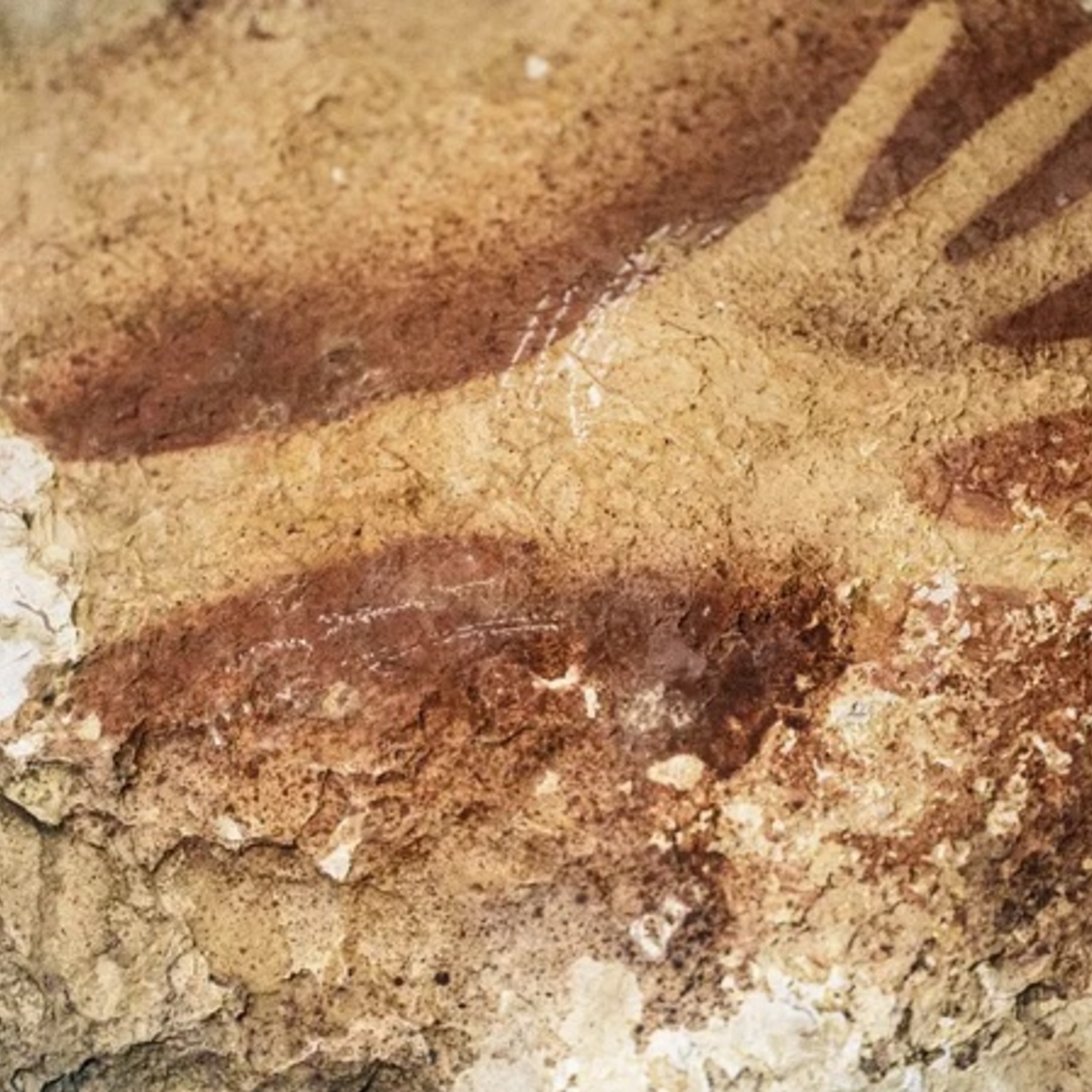
Fifty godd*** episodes! 'Tis been a ride full of debate, drinks, questionable arguments, Ben becoming both a dualist and a social media addict, and Vaden stalwartly not changing his mind about a single thing. To celebrate, we dive into a thesis which connects many strands of what we've discussed over the years: Brian Boyd's work on art and fiction. Boyd provides an evolutionary account of why we're heavily invested in both creating and consuming fictional narratives. If this was simply a fun habit without any real advantage, such a propensity would have been selected against long ago because creating fiction requires an enormous amount of time. This raises the question: What is the advantage of fiction? Why is producing it adaptive? Brian Boyd is a distinguished professor emeritus at the University of Auckland. His most well-known for his scholarship on Vladimir Nabokov, and is currently writing a biography on Karl Popper. You can understand why Vaden got so excited about him. Note: We spend a lot of time giving background context for Boyd's theory - if you want to skip all that and get right to the theory itself, we've added chapter markers to take you there. Added after publishing : Looks like chapter markers aren't working correctly on some players, discussion of theory begins at 00:40:43 We discuss Reflections on our 50th episode! Non-evolutionary theories of art and fiction, and why they fail Boyd's thesis that art results from playing with pattern and information Fiction as a kind of art which results from playing with social information How these theories explain why art is adaptive The link between art and creativity How Boyd's theory improves on the two other major evolutionary theories of art References On the Origin of Stories Stacks of Stories, Stories of Stacks. Essay from the book Stalking Nabokov Steven Pinker's thesis on art Geoffrey Miller's thesis Quotes We crave information. But because we have a much more open-ended curiosity than other animals, we have a special appetite for pattern. We crave the high yield of novel kinds of pattern. So we not only chase and tussle, we not only play physically, but we also play cognitively, with patterns of the kinds of information that matter most to us: sound, sight, and, in our ultrasocial species, social information. We play with the rhythm and pitch and shape of sounds in music and song; with colors and shapes in drawing and painting and mudpies or sandcastles; and with patterns of social information in pretend play and story. In the social world, we see patterns of identity (who are they?), personality (what are they like?), society (whom are they related to? whom do they team up with? how do they rank?). In the world of events, we see patterns of cause and effect. In the world of social events, we see patterns of intention, action, and outcome. (Stacks of Stories, Stories of Stacks - Boyd) To sum up: I’ve explored the hypothesis that art—or at least many forms of art—exploit visual aesthetics for no direct adaptive reason. Making and looking at art does not, and probably never did, result in more surviving offspring. There are, to be sure, adaptive explanations why certain visual patterns give human beings aesthetic, intellectual and sexual pleasure: they are cues to understandable, safe, productive, nutritious or fertile things in the world. And since we are a toolmaking, technological species, one of the things that we can do with our ingenuity, aside from trapping animals, detoxifying plants, conspiring against our enemies and so on, is to create purified, concentrated, supernormal, artificial sources of these visual pleasures, just for the sheer enjoyment experienced by both maker and viewer. (Pinker) In the 1950s, when Desmond Morris supplied chimpanzees in his care with paint, brushes, and paper, they threw themselves into painting provided they received no external reward. Those who were offered food would make a few perfunctory strokes and break off quickly to seek another tasty morsel. But those whose motivation remained uncorrupted by “payment” developed a fierce commitment to painting. They painted intensely, persisting, while the session lasted, until they thought a sheet finished, though they would never glance at their work later. (On the Origin of Stories, pg 94) Our capacity to understand other minds so well, which arises especially from our cooperative disposition, allows us to understand false belief: we appreciate clearly that others may not know information relevant to the situation that we happen to know. That also means that we realize * we * may not know what we need to know, and that realization drives human curiosity. (Stacks of Stories, Stories of Stacks - Boyd) Very young children do not readily think offline, away from the here and now. They do not easily recall their recent past, but they can easily use the present props of toys, whether homemade or manufactured, to conjure up scenarios involving agents that hook their attention. They learn to think in a sustained fashion in ways decoupled from the here and now, first by using physical props as fellow agents, then gradually by raiding the readymade stories and characters of their culture. By building on our sociality, fiction stretches our imaginations, taking us from our immediate present along tracks we can easily follow offline because they are the fresh tracks of agents. (Stacks of Stories, Stories of Stacks - Boyd) In the 1989 TV movie The Naked Lie the unpleasant and self-centered Webster shows no sympathy for a prostitute who has been killed. When Victoria asks him, “What if it were your sister?” he sneers: “I don’t have a sister, but if I did, she wouldn’t be a hooker.” Later in the movie Victoria muses to another character: “You know that sister Webster doesn’t have? Well, she doesn’t know how lucky she is.” We easily follow Victoria’s initial counterfactual, Webster’s counterfactual refutation of her condition, and Victoria’s comically contradictory counterfactual consequence, the sister who, because she does not exist, cannot know how lucky she is not to do so if she has to suffer Webster as her brother. Stories help train us to explore possibility as well as actuality, effortlessly and even playfully, and that capacity makes all the difference. (On the Origin of Stories, pg 188) Contact us Follow us on Twitter at @IncrementsPod, @BennyChugg, @VadenMasrani Check us out on youtube at https://www.youtube.com/channel/UC_4wZzQyoW4s4ZuE4FY9DQQ Come join our discord server! DM us on twitter or send us an email to get a supersecret link What patterns have you been playing with recently? Tell us your story over at [email protected] Image Credit: Kinza Riza, from the Atlantic article.

Fifty godd*** episodes! 'Tis been a ride full of debate, drinks, questionable arguments, Ben becoming both a dualist and a social media addict, and Vaden stalwartly not changing his mind about a single thing. To celebrate, we dive into a thesis which connects many strands of what we've discussed over the years: Brian Boyd's work on art and fiction. Boyd provides an evolutionary account of why we're heavily invested in both creating and consuming fictional narratives. If this was simply a fun habit without any real advantage, such a propensity would have been selected against long ago because creating fiction requires an enormous amount of time. This raises the question: What is the advantage of fiction? Why is producing it adaptive? Brian Boyd is a distinguished professor emeritus at the University of Auckland. His most well-known for his scholarship on Vladimir Nabokov, and is currently writing a biography on Karl Popper. You can understand why Vaden got so excited about him. Note: We spend a lot of time giving background context for Boyd's theory - if you want to skip all that and get right to the theory itself, we've added chapter markers to take you there. Added after publishing : Looks like chapter markers aren't working correctly on some players, discussion of theory begins at 00:40:43 We discuss Reflections on our 50th episode! Non-evolutionary theories of art and fiction, and why they fail Boyd's thesis that art results from playing with pattern and information Fiction as a kind of art which results from playing with social information How these theories explain why art is adaptive The link between art and creativity How Boyd's theory improves on the two other major evolutionary theories of art References On the Origin of Stories Stacks of Stories, Stories of Stacks. Essay from the book Stalking Nabokov Steven Pinker's thesis on art Geoffrey Miller's thesis Quotes We crave information. But because we have a much more open-ended curiosity than other animals, we have a special appetite for pattern. We crave the high yield of novel kinds of pattern. So we not only chase and tussle, we not only play physically, but we also play cognitively, with patterns of the kinds of information that matter most to us: sound, sight, and, in our ultrasocial species, social information. We play with the rhythm and pitch and shape of sounds in music and song; with colors and shapes in drawing and painting and mudpies or sandcastles; and with patterns of social information in pretend play and story. In the social world, we see patterns of identity (who are they?), personality (what are they like?), society (whom are they related to? whom do they team up with? how do they rank?). In the world of events, we see patterns of cause and effect. In the world of social events, we see patterns of intention, action, and outcome. (Stacks of Stories, Stories of Stacks - Boyd) To sum up: I’ve explored the hypothesis that art—or at least many forms of art—exploit visual aesthetics for no direct adaptive reason. Making and looking at art does not, and probably never did, result in more surviving offspring. There are, to be sure, adaptive explanations why certain visual patterns give human beings aesthetic, intellectual and sexual pleasure: they are cues to understandable, safe, productive, nutritious or fertile things in the world. And since we are a toolmaking, technological species, one of the things that we can do with our ingenuity, aside from trapping animals, detoxifying plants, conspiring against our enemies and so on, is to create purified, concentrated, supernormal, artificial sources of these visual pleasures, just for the sheer enjoyment experienced by both maker and viewer. (Pinker) In the 1950s, when Desmond Morris supplied chimpanzees in his care with paint, brushes, and paper, they threw themselves into painting provided they received no external reward. Those who were offered food would make a few perfunctory strokes and break off quickly to seek another tasty morsel. But those whose motivation remained uncorrupted by “payment” developed a fierce commitment to painting. They painted intensely, persisting, while the session lasted, until they thought a sheet finished, though they would never glance at their work later. (On the Origin of Stories, pg 94) Our capacity to understand other minds so well, which arises especially from our cooperative disposition, allows us to understand false belief: we appreciate clearly that others may not know information relevant to the situation that we happen to know. That also means that we realize * we * may not know what we need to know, and that realization drives human curiosity. (Stacks of Stories, Stories of Stacks - Boyd) Very young children do not readily think offline, away from the here and now. They do not easily recall their recent past, but they can easily use the present props of toys, whether homemade or manufactured, to conjure up scenarios involving agents that hook their attention. They learn to think in a sustained fashion in ways decoupled from the here and now, first by using physical props as fellow agents, then gradually by raiding the readymade stories and characters of their culture. By building on our sociality, fiction stretches our imaginations, taking us from our immediate present along tracks we can easily follow offline because they are the fresh tracks of agents. (Stacks of Stories, Stories of Stacks - Boyd) In the 1989 TV movie The Naked Lie the unpleasant and self-centered Webster shows no sympathy for a prostitute who has been killed. When Victoria asks him, “What if it were your sister?” he sneers: “I don’t have a sister, but if I did, she wouldn’t be a hooker.” Later in the movie Victoria muses to another character: “You know that sister Webster doesn’t have? Well, she doesn’t know how lucky she is.” We easily follow Victoria’s initial counterfactual, Webster’s counterfactual refutation of her condition, and Victoria’s comically contradictory counterfactual consequence, the sister who, because she does not exist, cannot know how lucky she is not to do so if she has to suffer Webster as her brother. Stories help train us to explore possibility as well as actuality, effortlessly and even playfully, and that capacity makes all the difference. (On the Origin of Stories, pg 188) Contact us Follow us on Twitter at @IncrementsPod, @BennyChugg, @VadenMasrani Check us out on youtube at https://www.youtube.com/channel/UC_4wZzQyoW4s4ZuE4FY9DQQ Come join our discord server! DM us on twitter or send us an email to get a supersecret link What patterns have you been playing with recently? Tell us your story over at [email protected] Image Credit: Kinza Riza, from the Atlantic article. Support Increments

NOW PLAYING

#50 - On the Evolutionary Origins of Storytelling, Art, and Science

0:00 2:00:53

No transcript for this episode yet

We transcribe on demand. Request one and we'll notify you when it's ready — usually under 10 minutes.

Bible Read Me Charles Van Deursen Most people may have never read the Holy Bible from cover to cover for several good reasons. A couple of hinderances might be that the texts reflect an ancient culture and that much of it is not in chronological order. Here you will enjoy listening to a summary of daily portions of Scripture grouped in one week increments, chosen in the order that they occurred in history. By this time next year you will have gained a better understanding of the big picture of the Bible narrative as well as intriguing details that will help you to connect the events of ancient days with the life that you are now living. Just as wise King Solomon wrote, "There is nothing new under the sun," but many times it can be difficult to find the time to dig out and apply these nuggets of golden truth to your daily life.Charles Van Deursen presents the Scripture summaries in a literal, grammatical-historical context while using the language in the way that Christian Women’s Weight Loss | Faith, Food, Fitness Ondrea Lynn - Certified Personal Trainer and Nutrition Coach for Christian Women Are you tired of fighting the scale 24/7? Are you sick of fad diets that only get you temporary results? Do you wish you had an easy plan to follow so you don’t have to stress out about how to lose weight? Are you looking for a simple foundational weight loss framework that can fit into your busy day so it becomes a lifestyle? Do you wish you could workout in 15-minute increments instead of hours at the gym? Do you wish you have an exercise plan that gets you results while working out at home? Are you looking for ways to naturally speed up your metabolism? Do you want your pizza and spinach too? Are you ready to break free from binge eating, over eating, and sugar addiction? Are you ready to be free from past trauma and hurts that drive you to sabotage? Do you desire a stronger relationship with Jesus, even on your weight loss journey but unsure how that looks? Hey, I’m Ondrea Lynn and I’m so excited that you are here with me on Christian Women Weight Loss! I remember what Increments with Alishah Novin Alishah Novin Increments is a show for technologists about leveraging the in-between moments. Those moments you come up for air, and take a beat.They say music is about the space between the notes, and just like music - growth happens in those moments between projects. Increments won't always give you answers, but will create the space for you to find them Siblinghood of Recovery Angie Reno When I found out my son was deep in the throes of Substance Use Disorder (SUD), chaos became the norm. As each step became more challenging, the information on SUDs, treatment, healing, and basically everything that comes with an SUD Family crisis, became overwhelming. Inundated with so much information, I felt like I had crossed space and time and landed in a new world. I actually had: I had entered the world of Recovery. My goal through this Podcast is to condense what I learned into small increments, and provide anyone willing to listen a message of hope. The world of Recovery is filled with parents, children, and family members who walk together. We share what we learn, listen with heart, and provide a community of support. We are a Siblinghood of Recovery.

Frequently Asked Questions

How long is this episode of Increments?

This episode is 2 hours and 0 minutes long.

When was this Increments episode published?

This episode was published on April 24, 2023.

What is this episode about?

Fifty godd*** episodes! 'Tis been a ride full of debate, drinks, questionable arguments, Ben becoming both a dualist and a social media addict, and Vaden stalwartly not changing his mind about a single thing. To celebrate, we dive into a thesis...

Can I download this Increments episode?

Yes, you can download this episode by clicking the download button on the episode player, or subscribe to the podcast in your preferred podcast app for automatic downloads.
URL copied to clipboard!